| | In this edition, Wall Street’s push to manage money for everyday households is facing an existential͏ ͏ ͏ ͏ ͏ ͏ |
| |  | Business |  |
| |
|
 - Self-policing the casino economy
- KKR on Compound Interest
- China’s stability pitch
- Big Oil’s grim outlook
- Data centers > offices
|
|
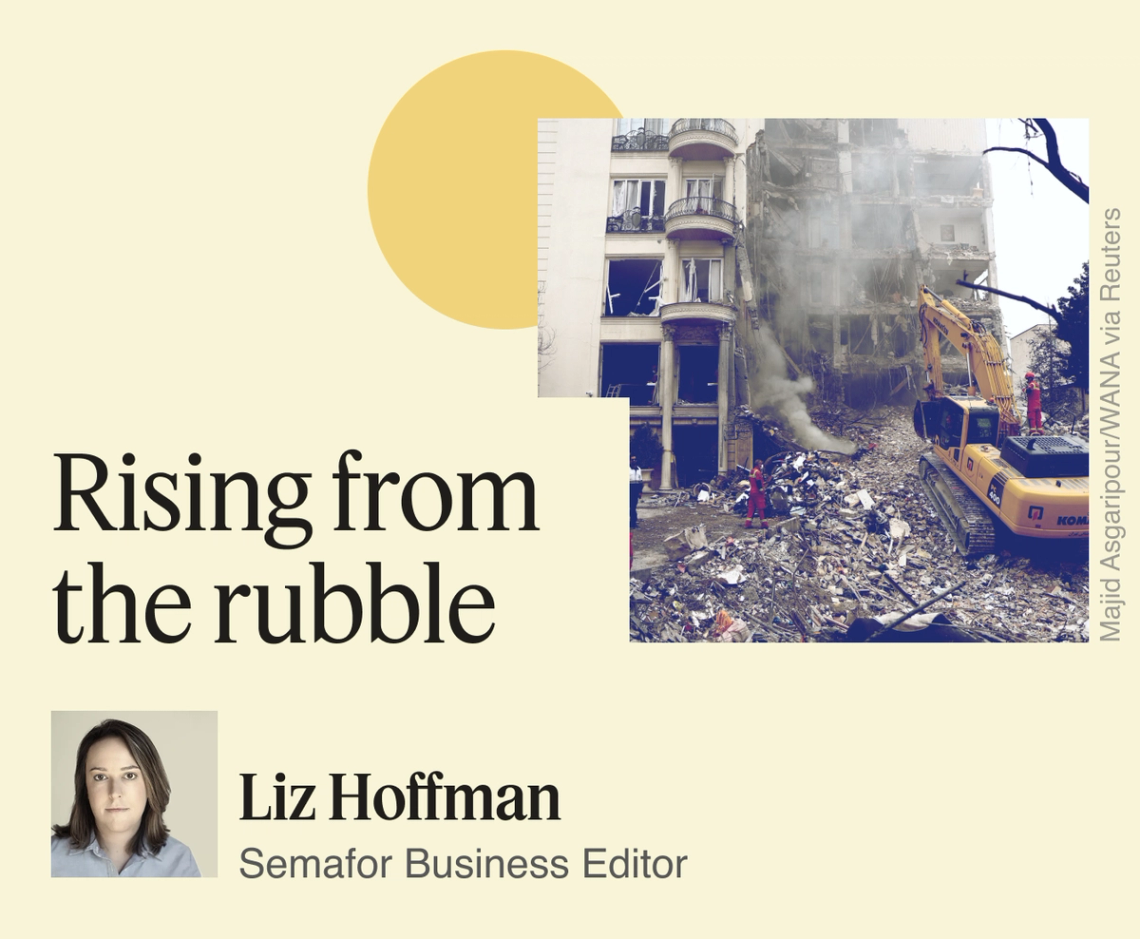 It’s too early to call a turning point for Iran, Venezuela, Ukraine, Gaza or, even further out the neocon wishlist, Cuba. But Wall Street is already thinking about the investment opportunities that could rise from the geopolitical rubble. Admiral James Stavridis, a former NATO supreme allied commander who is now at investment giant Carlyle, compared the outlook for Iran and other conflict zones to the rebuilding of South Korea in the mid-20th century. “Go forward 50 years and it’s the ninth-largest economy in the world.
That’s reconstruction,” he told me yesterday. “That could be [Iran], that could be Cuba, that could be Venezuela, that could be Ukraine. Those are investment opportunities that ought to be taken very seriously.” The fundamentals are enticing: Iran’s educated population across a country as big as France, Germany, Spain, and the UK combined, Cuba’s mineral and agricultural prospects, Venezuela’s oil, Ukraine’s grain fields and tech sector. The problem is that countries increasingly want their capital to stay put. President Donald Trump has made it clear he wants Wall Street investing at home. Saudi Arabia is directing more of its sovereign wealth toward domestic projects. The UK has been trying to pressure its pension funds to buy British stocks. BlackRock CEO Larry Fink channeled this push in his annual letter to shareholders yesterday. “For decades, capital chased returns around the world — often without enough benefit to the people back home. Money should still move freely toward opportunity,” he wrote. “But it doesn’t mean countries can’t also do more to help channel capital into their own growth.” US investors are spinning up patriotic investment plans, and corollaries are cropping up in the UK, Germany, and India. We talked to one of those investors, Andreessen Horowitz’s David Ulevitch, on a recent episode of our new show Compound Interest. He was hopeful that “America-first” capitalism will outlast Trump. But over the long term, money chases returns. And the smartest money runs toward investments others are too squeamish to touch. A new asset class rising from the global rubble — call it “Extraction, Stability, and Growth,” or ESG, just spitballing here — will test the push toward country-first capitalism. One more thing: Rohan, Semafor’s Eleanor Mueller, and I will be in Washington, DC Thursday interviewing the Trump administration’s top antitrust officials, including DOJ’s Omeed Assefi, FTC’s Andrew Ferguson, and FCC’s Brendan Carr, plus the UK’s competition chief. You can RSVP to attend here and send us the questions you want answered! |
|
Prediction markets seek to self police |
 Kalshi’s CEO Tarek Mansour. Marco Bello/Reuters. Kalshi’s CEO Tarek Mansour. Marco Bello/Reuters.Under pressure from federal and state lawmakers, Kalshi promised to ratchet up scrutiny of athletes and politicians who trade on their own contests. “All markets have bad actors,” a lawyer for the prediction market operator wrote. “We believe that staying ahead of bad actors means developing new technology and policies.” Kalshi and rival Polymarket are racing to police themselves before regulators do it for them. Washington has preferred a hands-off approach, but states — which rely on casino revenue and see gambling enforcement as their jurisdiction — are taking action. “Too many young people in Utah are getting exposed to addictive sports betting and casino-style gaming contracts that belong under state control,” Sen. John Curtis, R-Utah, said as part of a bipartisan push to ban prediction markets from providing contracts related to sporting events. (He has backup from his governor.) Prescreening politicians and celebrities might be doable — financial firms have long flagged “politically exposed persons” for extra scrutiny — but family members, staffers, and translators for star athletes will be harder. — Rohan Goswami |
|
Private markets’ crisis of confidence |
 Semafor/YouTube Semafor/YouTubeWall Street’s push to manage money for everyday households is facing an existential test of confidence. Money that poured into private equity, credit, and infrastructure funds is now pouring out as retail investors do what they can reliably be counted on to do: Blindly panic. Investors have demanded billions of dollars back in recent weeks from Blue Owl, Blackstone, BlackRock-owned HPS, Cliffwater, and other private lending firms. Just today, Ares and Apollo became the latest to limit investor redemptions. The question is whether this is a black eye for the whole industry or a shakeout that boosts better managers and kills off the sloppy ones. “Is this a market where if someone sneezes, everybody catches a cold?” Alisa Wood, who has overseen investment giant KKR’s push into retail products, said on the latest episode of Semafor’s Compound Interest show. She doesn’t think so. At KKR, “we like volatility. That’s where we can show our stripes,” she said. When there is “panic in the market… Our job is to hopefully be seen and show the world that we are that safe pair of hands.” |
|
Oil shock tests China’s stability pitch |
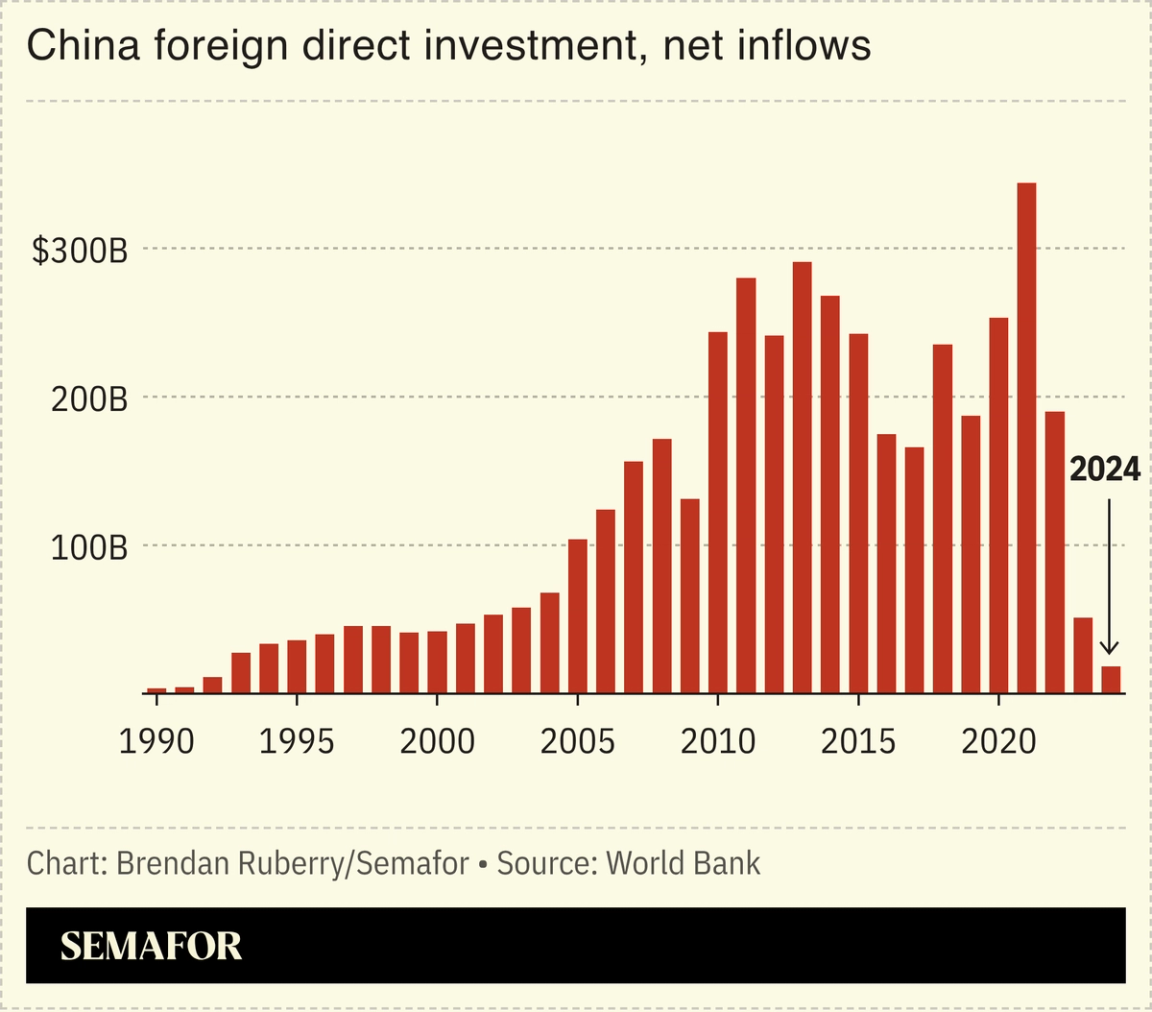 Beijing is taking advantage of global instability driven by the Iran war to pitch itself as a haven for business and investment. Premier Li Qiang told global business leaders at the China Development Forum that the country was a “cornerstone of certainty,” drawing a clear contrast to US volatility. Another Chinese leader will likely echo that message at the Boao Forum in Hainan, a mini-Davos for Pacific countries that opens today. At a Milken Institute symposium in Hong Kong, some investors said they were taking a fresh look at China, especially given the trade détente and planned (but now delayed) Trump visit. “I do see ‘animal spirits’ coming back,” said an executive at Ping An, China’s largest insurer. Room for disagreement: “China has more to lose than anybody” economically from a prolonged war in the Middle East, a Taipei-based economist tells Semafor’s Clay Chandler. It’s the world’s largest energy importer, with 30% of its oil coming through the Strait of Hormuz. And a global recession that saps foreign consumers’ appetite would sting an economy that depends on exports. |
|
Glum outlook at Big Oil’s annual confab |
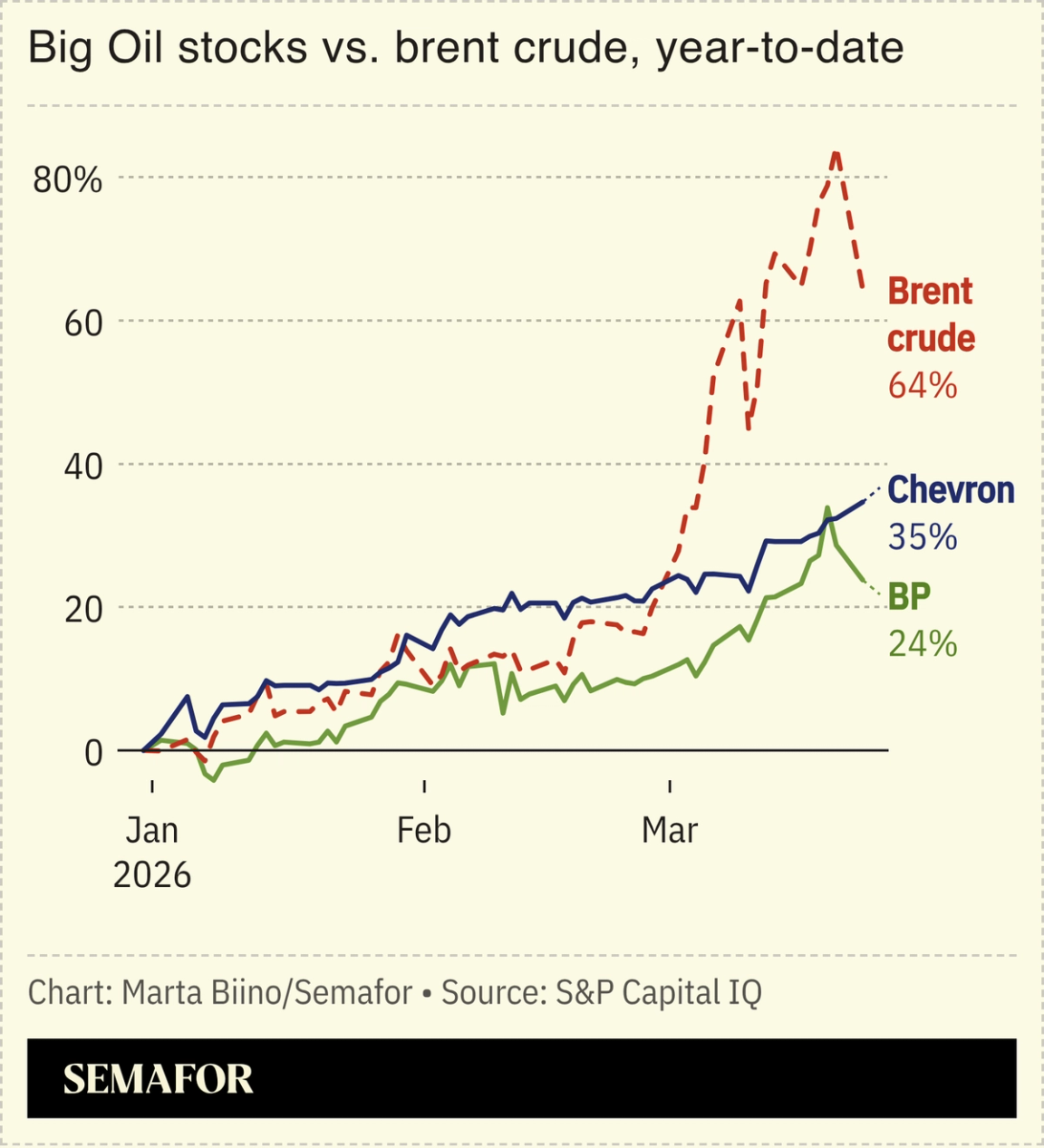 Oil prices are up. Oil executives’ moods are not. The Iran energy shock is a CEO’s worst nightmare: A financial windfall they’ll need to figure out what to do with, a global market they can’t control, and pressure from President Donald Trump to increase production — something few of them are excited about. A rebooting of Venezuela’s oil industry and a potential resolution this year of the war in Ukraine, which could release Russian oil from sanctions, could flood the market, driving down prices. At the other end of the risk spectrum, a drawn-out war in the Middle East risks a global recession that would sap energy demand. A 40% spike in prices “could restimulate some growth [in the industry], or not,” Chevron CEO Mike Wirth said at the CERAWeek conference in Houston on Monday. Gordon Birrell, who leads upstream operations at BP, told Semafor’s Tim McDonnell he won’t chase passing price signals: “Our watchwords are ‘capital discipline.’” Drillers carry painful memories of the early 2010s, when they overspent in shale. |
|
Data center construction overtakes offices |
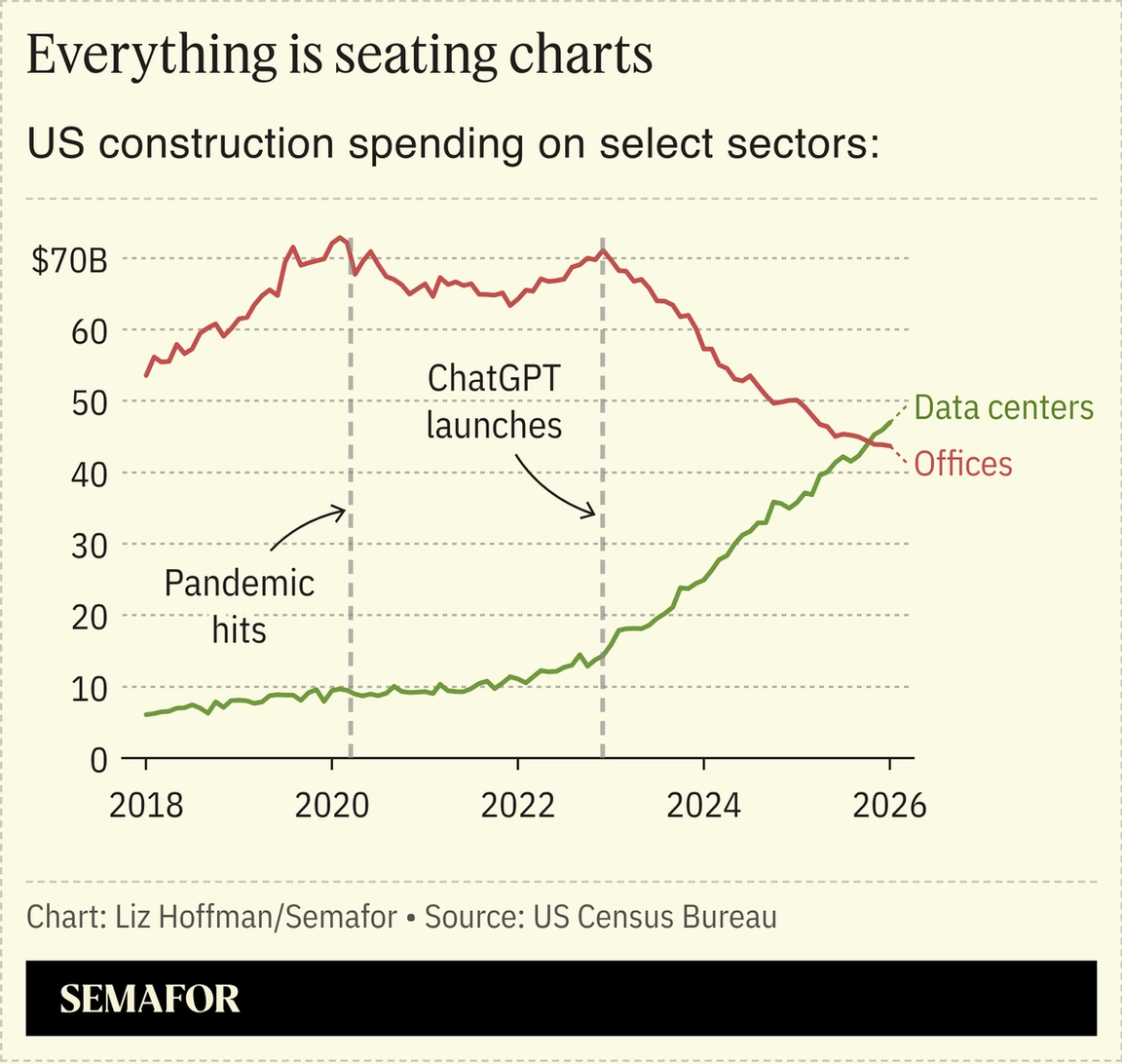 The US is now spending more on data centers than office buildings. New data from the Census Bureau, which began breaking out data-center construction in 2024, casts the financial rush into AI infrastructure in a slightly less alarming light: As Federal Reserve Chair Jerome Powell noted last week, the US has fewer workers, and so might not need as many cubicles. But it’s a potentially leading, and grim, indicator of an economy that’s growing healthily enough but increasingly devoid of workers. (Hat tip to Substacker Joey Politano for this data find.) |
|
 The Hustle is business as unusual. Get the bold, bizarre, and brilliant stories from the far corners of the business landscape—no ads or recycled headlines. Join more than 1.5 million readers who are thirsty for new ideas and find traditional news boring. Subscribe now. |
|
➚ BUY: CATL. American automakers are increasingly reliant on the Chinese battery giant, which the US views as a geopolitical threat. “Maybe by the year 2028 it will change because business relationships are always stronger and longer-lasting than politicians,” CEO Robin Zeng told WSJ. ➘ SELL: Cattle. Soaring beef prices have led processors to turn to AI-enabled solutions in an effort to get more meat off the bones. |
|
 Companies & Deals- Pacific quest: Sumitomo, the Japanese financial giant, is weighing a potential takeover bid for Jefferies, whose shares have slumped as it sorts through credit losses, the FT reports. SMFG owns a 20% economic stake in the Wall Street firm but controls less than 5% of the vote.
- Moonshot: Elon Musk said he’s starting work on his “Terafab” chip facility in Austin, a $35 billion factory jointly run by Tesla and SpaceX.
Watchdogs- Next chapter: After being ousted as the US’ top antitrust enforcer, Gail Slater is joining the policy shop run by Oren Cass, the right’s newest economic torch-bearer.
- Liberty, energy, fraternity: The Trump administration will pay TotalEnergies $1 billion to scrap two offshore wind projects and invest instead in fossil fuels.
Markets- Root and branch: Barclays analysts see 2,200 US bank mergers over the next 20 years, cutting the number of institutions in half.
- Slippery business: Sometimes a trade seems a little too well-timed. So it was with $580 million in oil bets minutes before Trump moved markets.
- New face: Shares in Estée Lauder dropped 7% Monday on reports of a potential merger with Spanish cosmetics group Puig, which owns Charlotte Tilbury and Carolina Herrera. Puig’s shares rose more than 10% Tuesday.
|
|
|


