| | Oil executives and the Trump administration have divergent outlooks for the global energy market.͏ ͏ ͏ ͏ ͏ ͏ |
| |  | | | CERAWeek Special Edition |
| |
|
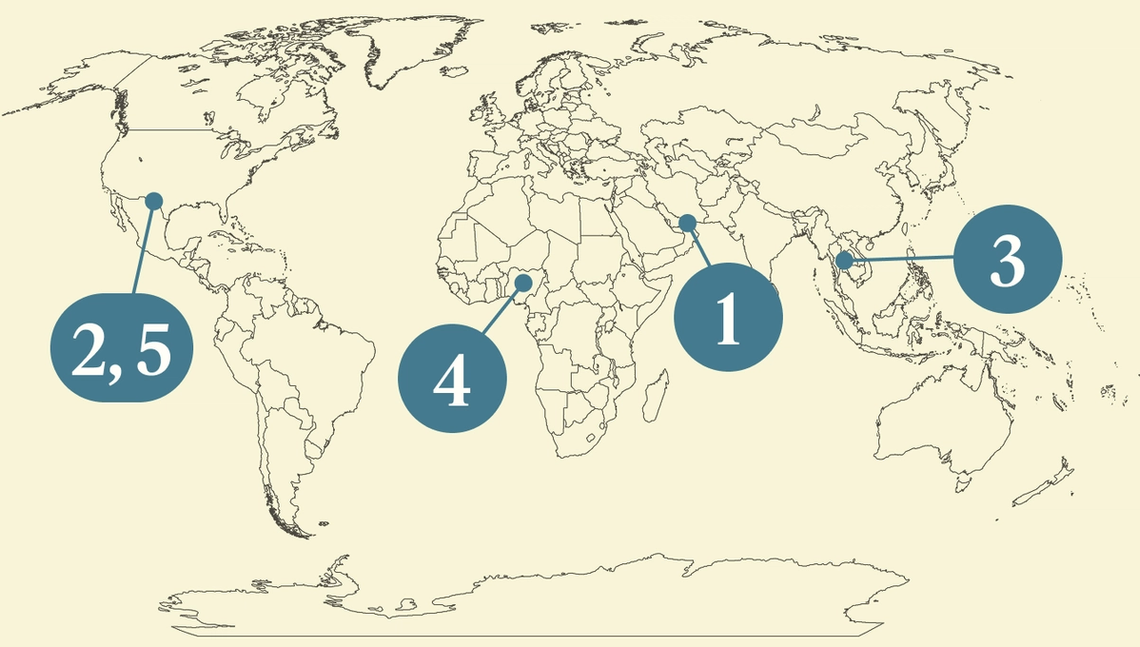 - Prices rise again
- Wind-for-gas swap
- Power price vulnerability
- Nigeria’s oil strategy
- Cyber threats to grid
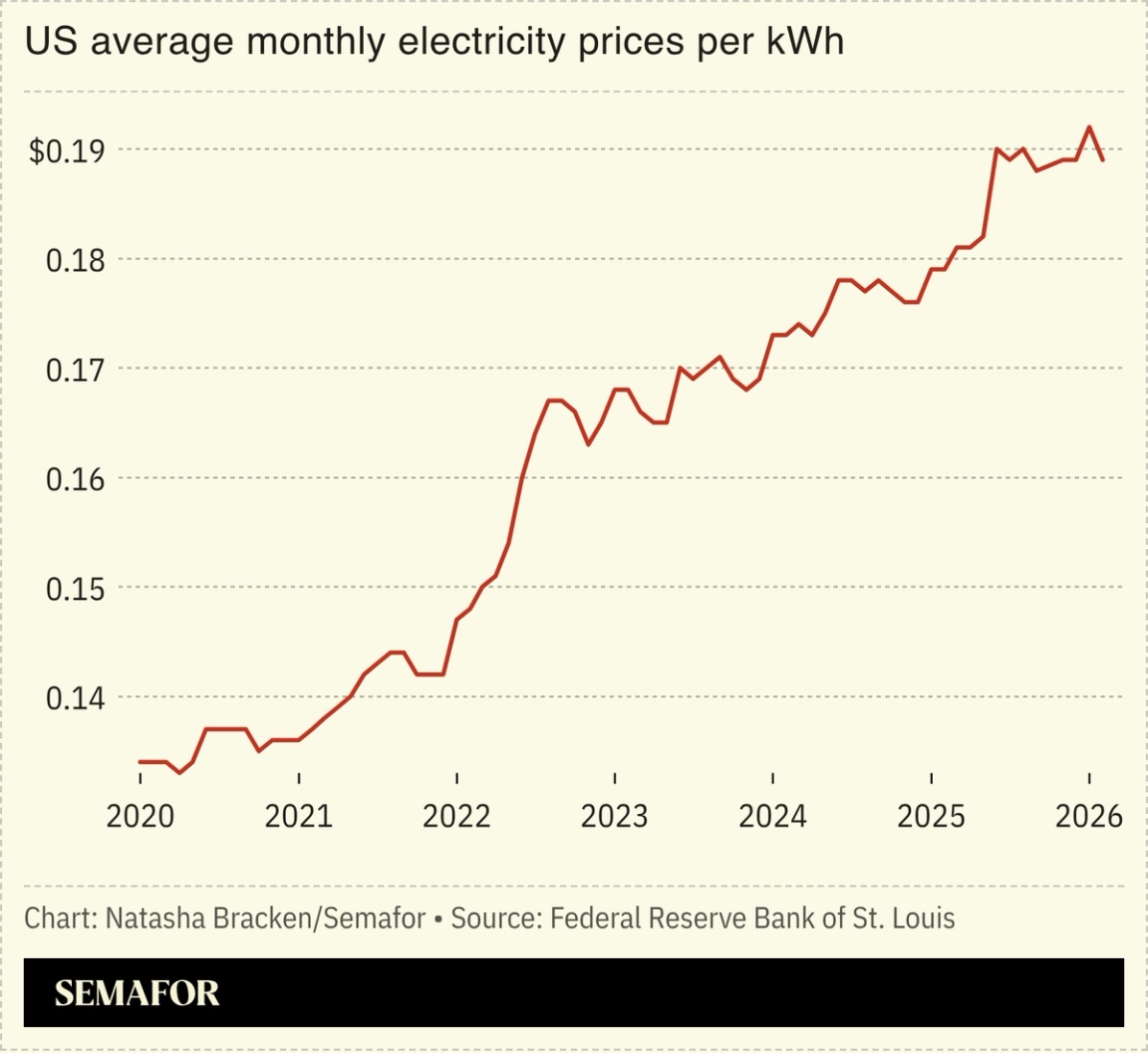
 House Dems have a new plan to fight energy costs. |
|
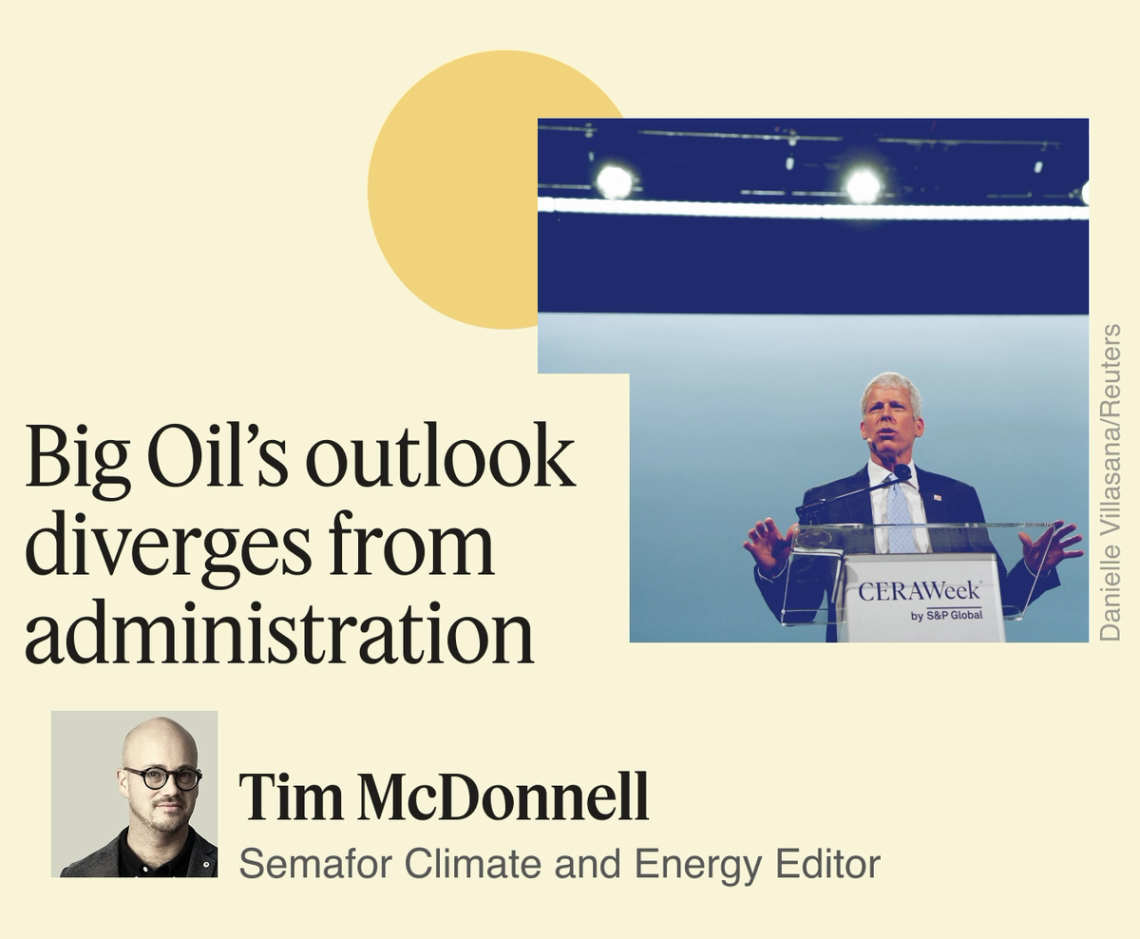 Oil executives and the Trump administration have divergent outlooks for the global energy market. Despite some ups and downs early this week, oil prices remain about 40% higher than they were before the Iran war started. But in his opening remarks at CERAWeek yesterday, US Energy Secretary Chris Wright described the recent price volatility as “a short-term disruption now that will lead to a multi-decadal benefit for global security,” adding that “markets will do what markets do” and drive more drilling to come online. Oil bosses are more skeptical. The price signal, Chevron CEO Mike Wirth told the conference, “could re-stimulate some growth, or not.” And he warned that prices are likely to go higher even if the strait reopens relatively soon, as Gulf countries work to bring damaged and shuttered production equipment back online and countries compete to refill their strategic reserves. “The markets right now are trading on scant information and perception,” he said. “There are real physical manifestations of the closure that aren’t fully priced into the future curve.” TotalEnergies boss Patrick Pouyanné largely echoed that sentiment, warning that issues with global energy supplies lasting more than three or four months would present an enormous risk to the global economy. Gordon Birrell, who leads upstream operations at BP, told me he doesn’t try to chase passing price signals. If the current moment demonstrates anything, it’s the value of having a geographically diverse portfolio as a hedge against disruptions and volatility in one place or another. BP’s average cost of production is among the industry’s lowest, at $6 per barrel, so it’s well-placed to pocket more cash during spikes like this but also to stay resilient when prices eventually dip, or even crash. “Our watchwords are ‘capital discipline,’” Birrell said. “So through the ups and downs of the oil cycle, we always make sure that we are investing in the very highest-return opportunities that we have.” Suffice to say, Big Oil is not exactly excited about this crisis, and may not be ready to jump to the administration’s aid. |
|
 Stringer/File Photo/Reuters Stringer/File Photo/ReutersOil prices again rose above $100 a barrel on Tuesday after Iran denied holding talks with the US, contrary to President Donald Trump’s assertion, and sent a wave of missiles into Israel. Trump appears to be seeking a diplomatic off-ramp after he postponed a threat to attack Iran’s power plants. Gulf nations are increasingly supporting US attacks on Iran, hoping to prevent Tehran from gaining long-term leverage over the Strait of Hormuz and don’t want to act as mediators. Speaking at CERAWeek, Sultan al-Jaber, CEO of the UAE’s state energy company ADNOC, which has curbed its oil and LNG output following strikes on its infrastructure, described Iran’s attacks in the strait as “an act of terrorism against every nation.” The US has been relatively insulated from oil and gas flow disruptions in the Middle East compared with Europe and Asia, but analysts say the impact on the world’s largest economy is still likely to be negative, despite potential increased shale production. EY-Parthenon Chief Economist Gregory Daco put the probability of a US recession at 40% this year, adding that “those odds could rapidly rise in the event of a more prolonged or severe Middle East conflict.” |
|
 The Trump administration signed a $1 billion agreement with TotalEnergies that will see the French energy giant abandon two offshore wind projects and redirect the funds toward the country’s fossil fuel industry. One of the scrapped projects would have provided enough renewable electricity to power more than one million homes in New York state and New Jersey; instead, taxpayer money will flow to the Rio Grande LNG plant under construction in Texas and other oil and gas activities in the country. TotalEnergies CEO Patrick Pouyanné said the company wasn’t renouncing onshore wind, but “in the US, where you have huge amounts of land and natural resources, offshore wind is not the most affordable way to produce electricity.” The deal comes despite growing warnings from experts about the risks of fossil fuel dependency, as price volatility from the war in Iran hits even countries with abundant fossil resources: Higher energy costs in the US are already being felt at the pump, inflationary pressures are intensifying, and transport and heating costs are rising. |
|
Power price vulnerability |
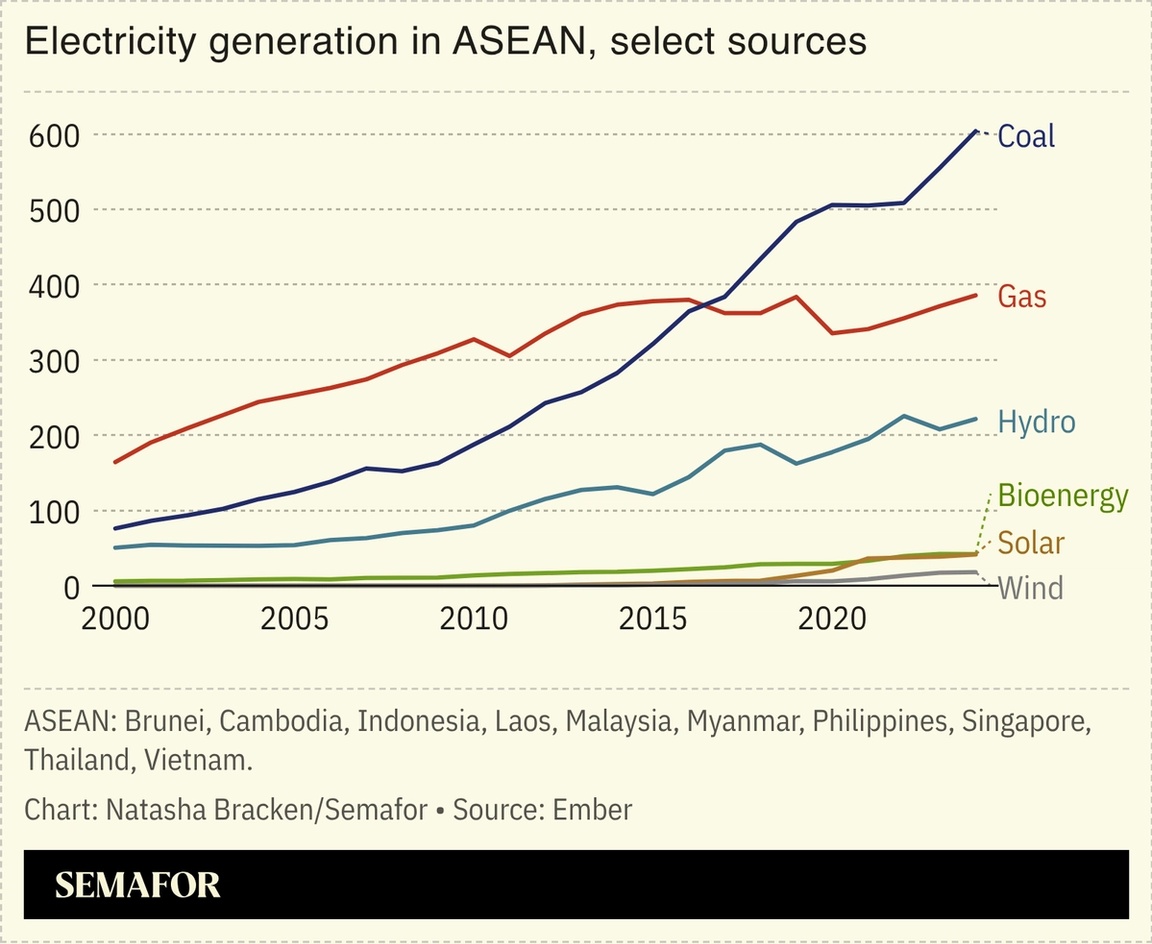 Southeast Asian countries’ planned expansion of gas power could increase the cost of generating electricity to $109 billion by 2030 based on future price projections — more than double the cost of generating the same amount of electricity with solar, according to analysis by energy think tank Ember. Gas generation is projected to double in the region, reaching 200GW under ASEAN’s 2030 energy transition scenario. Wood Mackenzie research found that rising gas and LNG prices will start feeding into the region’s power prices in the second quarter of the year, with Singapore — where gas accounts for 85% of generation capacity — and the Philippines likely to experience the earliest effects. Singapore plans to import up to 6GW of low-carbon electricity by 2035 while battery requirements in the Philippines illustrate how “the pivot to homegrown renewables can provide more options to buffer future energy shocks,” said Dinita Setyawati, a senior energy analyst at Ember. |
|
| |  | Tim McDonnell |
| |
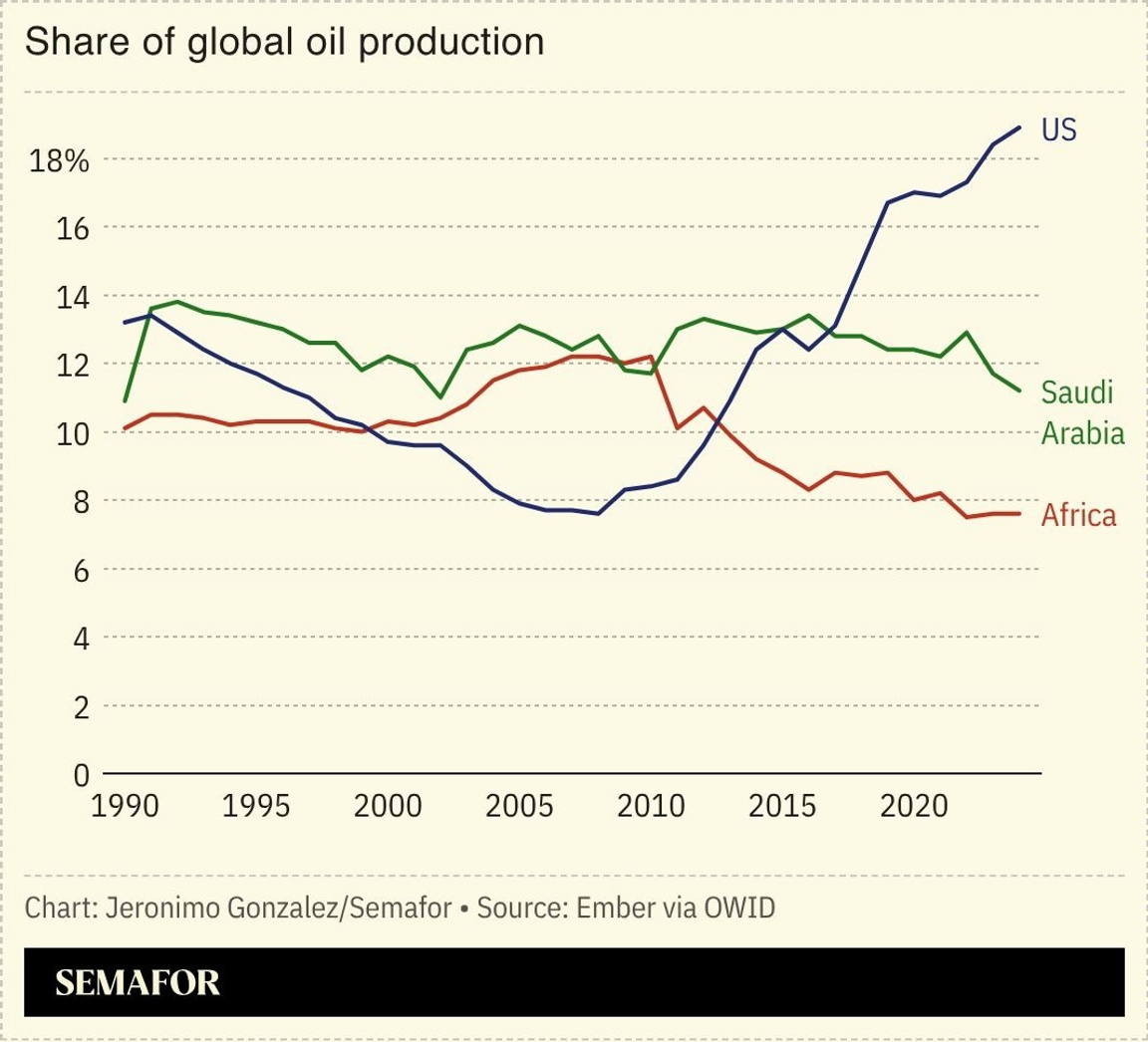 Nigeria’s controversial decision to scrap fuel subsidies left the country better prepared to capture a windfall from spiking oil prices, and protect consumers from higher costs, the top energy advisor to President Bola Tinubu told Semafor. For Nigeria, rising oil prices are a mixed blessing: As Africa’s top producer of crude, it stands to gain more from exports, but since the country still relies heavily on imported refined products it remains highly exposed to price shocks — drivers in particular, as well as the large number of people who rely on diesel generators for electricity. Getting rid of fuel subsidies — which Tinubu did upon taking office in 2023 — means more risk for consumers, with a presidential election coming in January. But it also makes Nigeria a more attractive destination for energy investors, Olubukola Verheijen, Tinubu’s special advisor on energy, said on the sidelines of CERAWeek. Since Tinubu became president, she said, the country has locked in more than $8 billion in new drilling projects, with another $20 billion under development. There are no plans to reintroduce fuel subsidies, Verheijen said, even though for now pump prices are 50% higher than they were before the Iran war started. Tinubu’s administration, she said, is counting on the market to solve that problem on its own. “We’ve been very deliberate in designing our economy to be much more disciplined and commercially driven,” she said. “The reforms we took were designed to drive our own energy security agenda and decouple from exactly this kind of volatility.” |
|
 This April, Sen. Mark Kelly, D-Ariz., will join global leaders at Semafor World Economy — the largest gathering of top global CEOs and officials in the United States — to sit down with Semafor editors for conversations on the forces shaping global markets, emerging technologies, and geopolitics. See the full lineup of speakers, including Global Advisory Board members, Fortune 500 CEOs, and top elected officials from the US and across the G20. |
|
 Carlos Barria/Reuters Carlos Barria/ReutersThe US electricity grid is increasingly vulnerable to cyberattacks, a senior US energy official told Semafor. As the grid expands to keep up with the AI race, “you have a growing surface of attack on which our adversaries can target us,” said Alexander Fitzsimmons, the Acting Undersecretary of Energy. “The threat landscape is certainly escalating and intensifying.” So far, the US has managed to avoid a large-scale breach of the grid by hackers, thanks to proactive efforts by utilities and government agencies to thwart intrusions. But what’s more concerning, Fitzsimmons said, is the likelihood that hackers have already penetrated the IT networks of critical infrastructure and are simply lying in wait “to hold it at risk for a time and place of their choosing.” Fitzsimmons said he’s particularly concerned about grids that serve key military installations within the US, which in some cases are managed by small municipal utilities in rural areas “where you have one person working on IT, and they’re expected to secure their network against foreign adversaries.” The Department of Energy is working to share more threat intelligence with utilities and help them test out grid hardware for security weaknesses, he said, as well as coordinating with allies on the issue. |
|
 Fossil Fuels - Australian oil and gas producer Santos said it has temporarily shut its Darwin LNG plant for planned equipment replacement work, interrupting exports at a time when LNG markets are under pressure.
- South Korea is set to ask the top 50 oil-consuming businesses to cut fuel use as part of a nationwide energy saving campaign, which will encourage staggered commuting hours, shorter showers, charging phones and EVs during the day and using washing machines only at the weekend.
FinancePolitics & Policy- Bahrain has proposed a draft resolution to the UN Security Council that would authorize countries to use force to protect commercial shipping in and around the Strait of Hormuz, while France suggested that states coordinate strictly defensive efforts to ensure safe navigation.
- Washington’s ambassador to the EU Andrew Puzder has warned the EU must implement its trade deal with the US or risk losing “favourable” access to LNG shipments. The EU Parliament is due to vote on Thursday on the deal, which includes an agreement for the EU to buy $750 billion worth of US energy by 2028.
- Meanwhile, independent net zero watchdog European Climate Neutrality Observatory warned that weakening carbon pricing and climate legislation as short-term relief to ease the energy price spike could undermine the competitiveness of Europe’s industrial base in the long-run and cause clean industrial investment to shift abroad.
Minerals & Mining |
|
|


