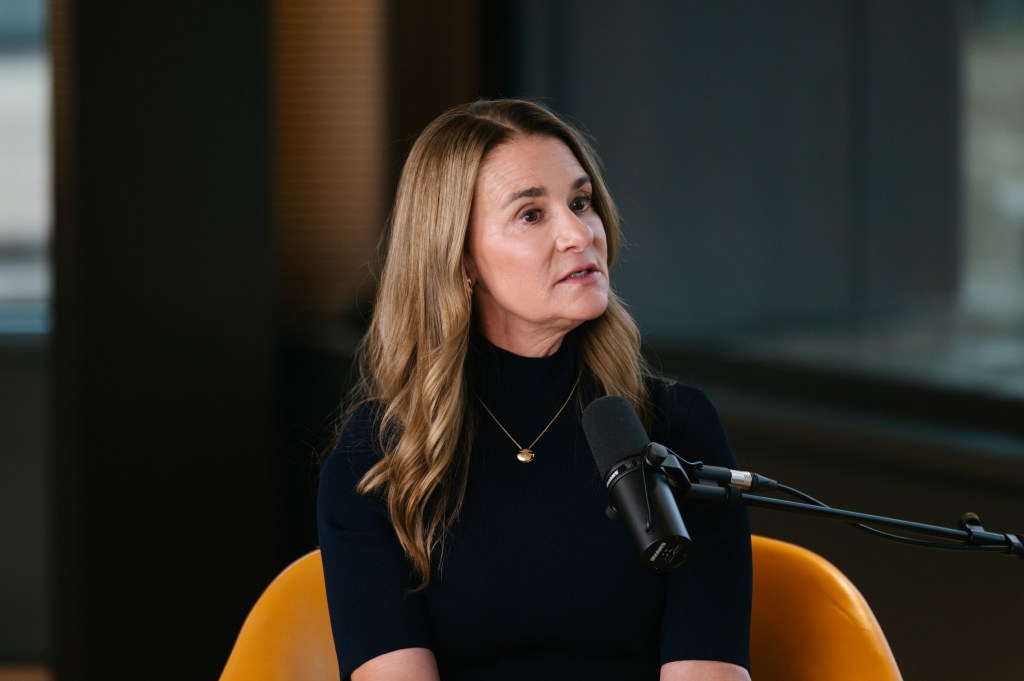
Melinda French Gates’ Pivotal Ventures started investing mainly as an LP in funds, but over the past few years has built a portfolio of direct investments in startups as well. That portfolio includes the women’s health clinic Tia, the pediatric health platform
Summer Health, and a new investment.
Pivotal recently put $3 million into a company called Binti,
Fortune is the first to report, a direct investment not attached to any fundraising round. (Binti last raised a $45 million round in 2021.) Binti offers AI-driven software for child welfare, both for social workers’ documentation and streamlining the fostering or adoption process for parents.
This investment caught my attention for what it tells us about what interests Pivotal as an investor today. With its investments in funds like Female Founders Fund and BBG Ventures, Pivotal is hoping to help create an ecosystem of companies that support
women’s well-being across fields as diverse as health and finance. With individual investments, focused on Series A and B stage companies, it’s taking a more targeted approach.
“We’re not going to invest in every single company, but the ones that we do, we want to really serve as a highlight and a model for innovation in the space,” Pivotal’s director of direct investments Brittney Gavini told me.
Binti certainly falls in that category. Binti founder and CEO Felicia Curcuru started nine years ago with a product that was like “TurboTax to be a foster or adoptive family.” It streamlined that complicated process, and the product now serves 550 agencies in 37 states. Then, the company built products for social workers, who often kept handwritten notes about children and families. “A social worker might make a note on a sticky note about a family, and then leave the agency, and then the family would get lost completely,” Curcuru saw while observing the field. The company built a SaaS solution that integrated information from separate departments—like field visits or emergency hotlines. It’s rolled out an AI product to help caseworkers cut down on time required for documentation. Its next step is to start working with states to convince them to not just add on to their legacy systems, but replace them entirely.
Gavini says that Pivotal invested in Binti as part of its “care thesis.” “How are we rebuilding the infrastructure of care across the country?” she asks. The company is tackling “infrastructure challenges that people aren’t thinking about day to day.”
Binti has options for where to go next—horizontally, applying its technology to govtech beyond child welfare, or vertically into child welfare, creating more solutions to make sure children have safe homes. That could include going to the root of the problem with solutions like workforce development programs. “We started with, let’s help more children get adopted. And then we’re like, Well, why do kids need to be adopted? Because their families are struggling,” Curcuru explains. “Let’s support the families to stay together with services.”
That kind of thinking appeals to Pivotal. “It’s just deep understanding of both what the problem is and how it’s actually being solved,” Gavini says. “Our bet is that as technology becomes commodified, the deep understanding of these spaces, especially in hard to understand and complicated spaces, is what is going to drive value for companies.”
Emma Hinchliffeemma.hinchliffe@fortune.comThe Most Powerful Women Daily newsletter is Fortune’
s daily briefing for and about the women leading the business world. Subscribe here.