News without an agenda. AP is a not-for-profit organization with no corporate parent, no shareholders and no government influence. Our mission is journalism, not profit margins. Your donation supports independent reporting that serves the public interest, not corporate shareholders. Donate today.
|
|
|
In the news today: The deadly collision between a jet and fire truck at New York’s LaGuardia Airport; Trump’s shift on Strait of Hormuz strategy raises questions about U.S. war preparation; and how Democrats are sharpening criticism of Vance as they look to the 2028 presidential race. Also, a rare look inside a private Sistine Chapel concert about angel encounters. |
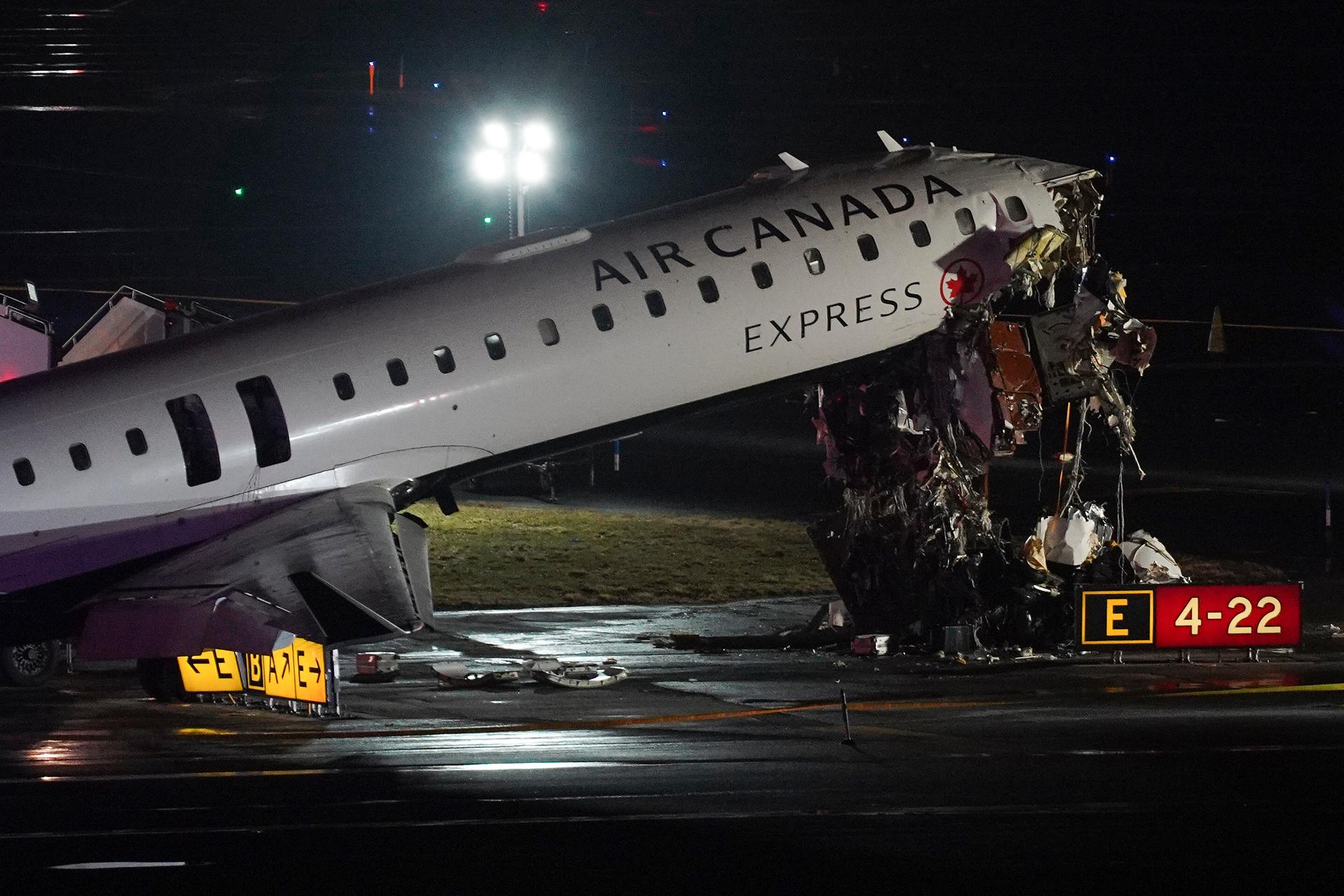
An Air Canada Jet sits on the runway at LaGuardia Airport, Monday, after colliding with a Port Authority aircraft rescue and firefighting vehicle after landing in New York. (AP Photo/Ryan Murphy) |
Pilot and copilot killed in collision at New York’s LaGuardia Airport |
They died when an Air Canada regional jet struck a fire truck on a runway while landing late Sunday night, crushing the nose of the aircraft. Around 40 passengers and crew members were taken to area hospitals, some with serious injuries. Most have since been released from treatment, authorities said. Read more.
|
|
|
-
The airport will remain closed until at least 2 p.m. Monday to facilitate the investigation, which is being led by the National Transportation Safety Board. Two Port Authority employees who were traveling in the fire truck suffered injuries that were not believed to be life-threatening, said Kathryn Garcia, executive director of the Port Authority of New York and New Jersey, which operates the airport. There were 72 passengers and four crew members aboard the aircraft, a Jazz Aviation flight operating on behalf of Air Canada, according to a statement from the airline. The flight originated at Montréal-Pierre Elliott Trudeau International Airport.
In the moments before the crash, an air traffic controller could be heard on a radio transmission giving clearance to a vehicle to cross part of the tarmac, then trying to stop it. “Stop, Truck 1. Stop,” the transmission says. The controller can then be heard frantically diverting incoming aircraft from landing.
|
|
|
Trump’s shift on Strait of Hormuz strategy raises questions about US war preparation |
At war with Iran, President Donald Trump is cycling through an increasingly desperate list of options as he searches for a solution to the crisis in the Strait of Hormuz. He has jumped from calls to secure the waterway through diplomatic means to lifting sanctions and is now escalating to a direct threat against civilian infrastructure in the Islamic Republic. Read more.
|
|
|
There is growing urgency for Trump as soaring oil prices rattle global markets and pinch American consumers months before pivotal midterm elections. Trump and his allies insist they were always prepared for Iran to block the strait, yet the Republican president’s erratic strategy has fueled criticism that he is grasping for answers after going to war without a clear exit plan. On Saturday came his latest attempt, via an ultimatum to Iran: Open the strait within 48 hours or the United States will “obliterate” the country’s power plants. Trump’s aides defended the threat as a hard-edged tactic to press Iran into submission. Opponents framed it as the failure of a president who miscalculated what it would take to get out of a geopolitical mire.
Over the course of about a week, Trump has repeatedly shifted his approach on the crucial waterway for global oil and gas transport. Trump tried his hand at a diplomatic solution last weekend when he called for a new international coalition to send warships to the strait. Allies turned him down. Trump then said the U.S. could manage on its own. On Friday he suggested other countries would have to take over as the U.S. eyes an exit. Hours later he indicated the waterway would somehow “open itself.”
|
|
|
Democrats sharpen criticism of Vance as they look past Trump to 2028 presidential campaign |
Although President Donald Trump is the top Democratic nemesis, some of the party’s most ambitious leaders are increasingly looking past him and at Vice President JD Vance. Read more. |
|
|
In the latest example, Kentucky Gov. Andy Beshear traveled to Vance’s home county in Ohio, where on Saturday night he said the vice president had abandoned the communities that he wrote about in the memoir that made him famous. “His book ‘Hillbilly Elegy’ was really hillbilly hate,” the governor said at a Democratic fundraiser in Butler County. “It is poverty tourism, because he ain’t from Appalachia.” Vance spokesperson Taylor Van Kirk brushed off Beshear’s criticism as coming from a flawed messenger. “Every time Andy Beshear attacks the vice president to try to get himself publicity, he ends up humiliating himself in the process, but maybe that’s something he’s into?” she said.
The broadside was not only a sign of Beshear’s own potential presidential aspirations, but a reflection of Vance’s status as the Republican heir apparent to the coalition that twice elected Trump to the White House. “With every day that passes, we get closer to a day when Donald Trump is no longer president. And we need to prepare for that day,” said Lis Smith, a Democratic strategist. “Right now, JD Vance is a clear front-runner for the 2028 nomination. And so we should begin defining him — not in 2027, not in 2028 — but today.”
|
|
|
|