Qatar LNG takes a hit

Get full access to Reuters.com for just $1/week. Subscribe now.


Power Up

Power Up


A Reuters Open Interest newsletter

By Ron Bousso, ROI Energy Columnist


Data refreshes every time you open this email. For more energy news, click here. Please send any feedback to powerup@thomsonreuters.com.

Hello Power Up readers,

The danger the Iran war poses to energy markets escalated significantly over the past 24 hours. On Wednesday, Iran said Israel attacked the South Pars gas field, the world’s largest and a vital source of energy for Iran, prompting Tehran to retaliate by targeting multiple oil and gas facilities across the region.

Iran’s most notable target was Ras Laffan, the site of Qatar’s core liquefied natural gas processing operations, which account for a fifth of global LNG supplies. The country’s state oil giant said the Iranian strike caused "extensive damage" to the site. Qatar had suspended production there shortly after the war started on February 28.

The attacks drew a furious response from U.S. President Donald Trump, who said Israel carried out the attack on South Pars without U.S. or Qatari knowledge. Trump also said Israel would not make any more attacks on Iranian facilities in South Pars unless Iran attacked Qatar, warning that the U.S. would attack those facilities if Iran acted against Doha.

Iran also targeted refineries in Kuwait and Saudi Arabia and gas facilities in the United Arab Emirates. All the while, the Strait of Hormuz remains mostly shut.

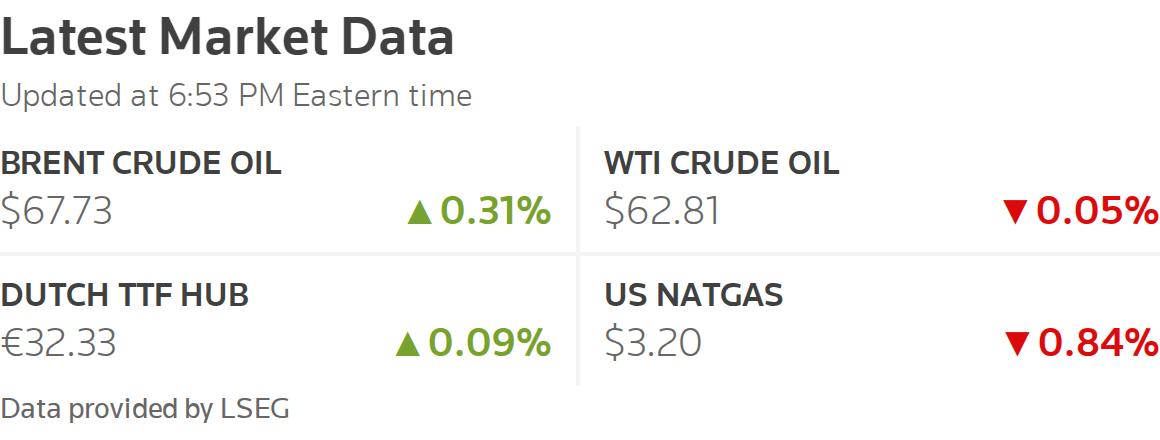
Oil prices surged on Thursday morning, with Brent rising above $115 a barrel. British and European benchmark gas prices soared by over 25%.

Iran’s threat last week to send oil prices to $200 may have sounded like bombast, but that outcome now looks more likely than President Trump’s prediction that prices would soon fall back to pre-war levels.

The latest escalation piles pressure on global energy markets which now face the prospects of long-term disruption to vital oil and LNG supplies.

More broadly, the Iran war has shattered the fragile coexistence among Gulf energy producers that long underpinned regional stability. Oil and gas markets will now carry a higher Middle East risk premium for years — if not decades. More on this below.

Here are some more headlines:

  • Electricity prices in Eastern Europe and Italy have climbed faster than in other parts of the continent so far in 2026, suggesting that Europe's most gas-dependent economies have been among the hardest hit so far from the ongoing Iran war, ROI Energy Transition Columnist Gavin Maguire wrote.
  • China boosted its vast crude stockpiles at the start of 2026, but is not yet using them to ease pressure after the Middle East supply disruption, ROI Commodities Columnist Clyde Russell wrote.
  • Finally, Reuters has produced some fantastic graphics on the Iran war, check them out here.

As always, don’t hesitate to contact me at ron.bousso@thomsonreuters.com or follow me on LinkedIn with any questions or thoughts.


Top energy headlines

  • Oil jumps above $119 a barrel on Middle East energy attacks
  • Energy prices surge as Iran attack on Qatar LNG plant threatens long-term exports
  • Iran targets energy facilities across Gulf after Israel struck its key gas installations
  • Iran attack wipes out 17% of Qatar’s LNG capacity for up to five years, QatarEnergy CEO says
  • Russia calls for 'safety island' around Iran's Bushehr nuclear plant


Battle scars

Now in its third week, the conflict has pushed the Middle East’s vast energy infrastructure directly into the line of fire. Tehran has targeted dozens of energy installations across the region, striking at its neighbours’ - and the West’s - economic lifeline and signalling its reach far beyond the battlefield.

The shock has served as a stark reminder that, for all the talk of diversification and energy transition, the global economy remains acutely vulnerable to disruption in the Middle East.

It remains unclear how and when the conflict will be resolved. But barring a change of regime in Tehran that would fundamentally alter inter-regional relations, the war will leave deep and lasting scars on the world’s most important energy hub, reshaping trade flows, investment decisions and risk calculations for years to come.

Read the full column
 

Sponsors are not involved in the creation of newsletters or other Reuters news content. Advertise in this newsletter or on Reuters' website

LiveIntent Logo
AdChoices Logo
 

Power Up is sent twice weekly. Think your friend or colleague should know about us? Forward this newsletter to them. They can also sign up here.

Want to stop receiving this email? Unsubscribe here. To manage which newsletters you're signed up for, click here.

This email includes limited tracking for Reuters to understand whether you’ve engaged with its contents. For more information on how we process your personal information and your rights, please see our Privacy Statement.

Terms & Conditions


© 2026 Thomson Reuters. All rights reserved.
3 Times Square, New York, NY 10036