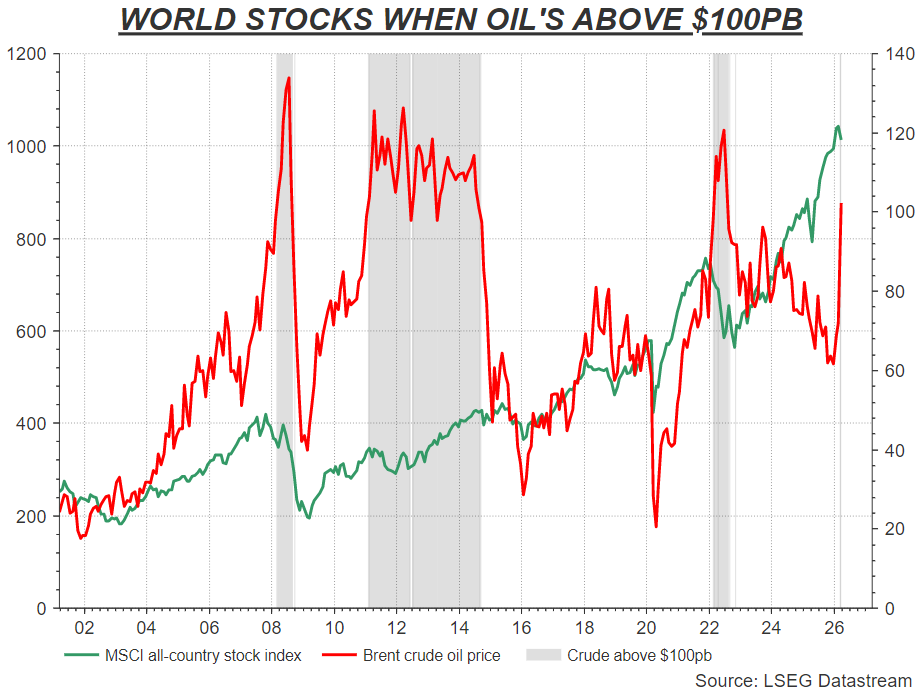
Energy prices surged on the latest escalation in the Gulf. Not only has crude jumped, but European gas prices also soared by around 25%. WTI continues to trade at a wide discount to Brent, partly due to the releases from U.S. strategic reserves, with the U.S. benchmark now around $97 a barrel.
Stocks tumbled around the world on Wednesday as traders digested the latest oil price spike and hawkish signals from central banks. All major U.S. indexes closed down more than 1% after the Federal Reserve held rates steady and projected only a single rate cut for the year.
The Bank of Canada and Bank of Japan also stayed put, with both signalling willingness to raise rates if higher energy prices led to elevated inflation. For the U.S., the energy shock comes as inflation already looks to be running hotter, with producer prices rising by the most in seven months in February - 3.4% - well above consensus forecasts.
The dollar firmed on the Fed’s hawkish signals while the yen wilted, approaching its weakest level in two years. Meantime, gold fell on the stronger dollar, touching its lowest level since February 6.
The mood in equities was dour early on Thursday too, with Asian stocks falling on soaring oil prices. Japan’s Nikkei shed more than 3% and South Korean's KOSPI fell by 2.8%, while European stocks were also down. Wall Street futures were up slightly ahead of the bell, however.
Further interest rate decisions will come later today from the European Central Bank and Bank of England, which find themselves in the same watch-and-wait boat on the Iran war’s economic impacts. As Fed Chair Jerome Powell put it on Wednesday, nobody really knows “how big this will be and how long it lasts”.
That’s especially true as the parameters of the conflict remain up in the air, with the Trump administration reportedly weighing deploying ground troops to the Middle East, according to a Reuters exclusive.
Away from geopolitics, the AI boom kept humming as Micron Technology posted a sharp second-quarter revenue jump on strong demand for AI memory chips and forecast third-quarter revenue above expectations. Still, its shares dropped 5% after hours as it flagged a $5 billion capex increase for 2026 - spending that investors remain uneasy about.
With that, onto today's column.