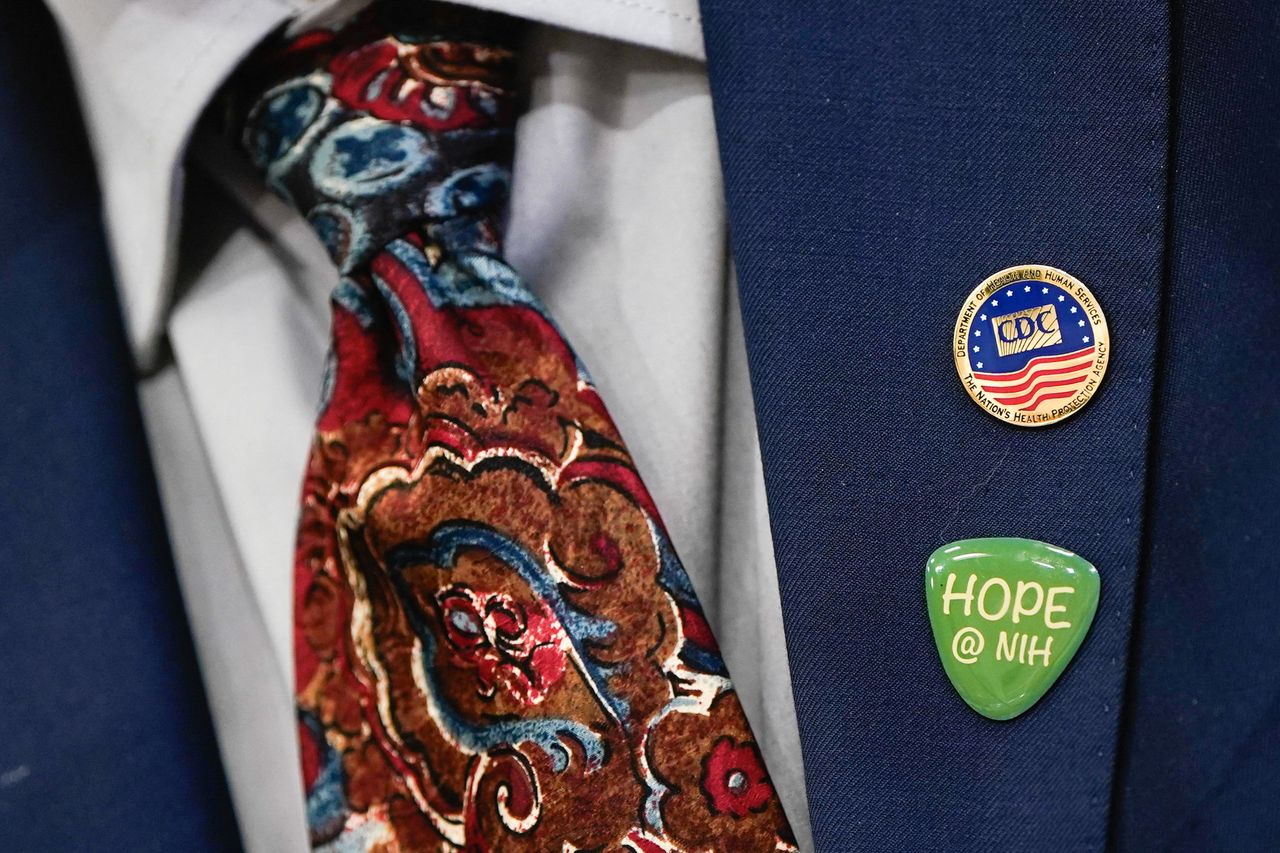
| |  | The Lead Brief | Jay Bhattacharya, who leads the National Institutes of Health, received a warm welcome from lawmakers in both parties on Tuesday during his first appearance before a House appropriations panel. Bhattacharya, who has also been tapped as acting leader of the Centers for Disease Control and Prevention, has emerged as one of the more broadly popular figures in the Trump administration, a calm amid the storm around other top health officials. “I'm glad you're in the position you're at, and I like you,” Wisconsin Democratic Rep. Mark Pocan told Bhattacharya. “If you need me to rescind those remarks, I will. But I want you to know that, because I think you're doing a very good job.” Bhattacharya empathized with concerns the panel’s Democrats expressed about a difficulty in getting more grants to early-career scientists, an underinvestment in women’s health research, the administration’s anti-DEI rhetoric and hiring more scientists at the federal agencies he oversees. Lawmakers expressed a mutual interest with him in getting research grants to more states around the country and accelerating the use of artificial intelligence to further biomedical research. Why it matters: The hearing comes as the White House is expected to release President Donald Trump’s budget request in the coming weeks. Although Congress has rarely followed the president’s budget, which is typically released at the beginning of February, it charts an administration’s policy priorities. The panel, which holds a powerful sway over NIH operations through its funding abilities, bucked last year’s budget request from the White House that called for a 40 percent reduction for NIH. Instead, Congress allocated nearly $49 billion to the agency, a slight bump over the previous year. HERE ARE SOME OF THE KEY POINTS FROM THE HEARING: On CDC The CDC faced staffing cuts as part of the Trump administration’s efforts to slim down the government, in addition to others who left their jobs following disagreements with the administration’s policies. Rep. Rosa DeLauro (Connecticut), the top Democrat on the panel’s health subcommittee, asked about the actions Bhattacharya was taking to bring back CDC staffers from administrative leave and retain staff at the agency. Bhattacharya said he’s been traveling to the CDC’s Atlanta headquarters often during his three weeks as acting director to talk with people and help implement a hiring plan “to address some of the gaps I think you're worried about.” He acknowledged that he had been critical of the agency during the coronavirus pandemic, but has since been impressed with the meetings he’s been having with CDC staff. “What I found was that there was a real openness to discuss things where there are disagreements within public health … a real sense of professionalism,” Bhattacharya, adding he is galvanized by how the CDC has been dealing with the massive measles outbreak in South Carolina that’s grown to nearly 1,000 cases. (In 2024, there were only 285 measles cases nationwide, according to the CDC.) “It's just been heartening to watch how the CDC, operating in full capacity, can work,” he said. “I'm committed to making sure that whoever the next director is has a CDC that's working.” → While other Trump administration officials have avoided encouraging vaccination, Bhattacharya has posted on social media about the importance of children receiving the measles shot to prevent infection. He’s also made similar comments in a Senate health panel hearing, which pleased lawmakers including Sen. Bernie Sanders (I-Vermont). What’s next: The clock is ticking on how long the Trump administration has to nominate a permanent leader to the CDC under federal law. Bhattacharya is the second acting leader of the agency after the White House fired its then-director, Susan Monarez, last August over disagreements with Health Secretary Robert F. Kennedy Jr. on vaccine policy. → The administration must name a nominee to lead the CDC by next Thursday. That’s 210 days after its first acting director, Jim O’Neill, took the helm on Aug. 28. (The clock is paused if the White House sends a nominee to the Senate for approval.) Rep. Madeleine Dean (D-Pennsylvania) asked to ensure that the agency’s operations continue, should there be any gap in appointing a permanent head. “We're working with folks to make sure that CDC’s activities continue without any interruption,” Bhattacharya said. “I personally am committed to making sure that happens.” On NIH Sixteen of the NIH’s 27 institutes and centers that focus on specific research priorities have no permanent director in place, with many led by acting directors. Several lawmakers, including Rep. Stephanie Bice (R-Oklahoma), asked Bhattacharya about his hiring process and timeline. “When the interviews reach my level [during the interview process], they've gone through this long process of scientific vetting,” he said. “Normally, that takes years. We've accelerated it.” Bhattacharya said that leaders and scientists at NIH have identified the best candidates and he is interviewing two to four people per week. “You’re going to start to see people appointed this month and you’re going to see a steady flow of those,” he said, adding that many of the acting directors have “done heroic things and they are amazing, excellent scientists in their own right” who will have the chance to apply for the permanent gig. Bhattacharya assured Rep. Steny Hoyer (D-Maryland) that ideological views wouldn’t play a role in who he recommends to fill the posts. “The recommendations I'm going to make are based on scientific leadership and scientific capacity for hiring each of those positions,” Bhattacharya said. “It's too important to leave to politics.” He also assured Hoyer that at NIH, which suffered personnel cuts as part of DOGE cost-cutting measures, there is a “hiring plan to make sure that all of the holes we identified are filled this year.” Bhattacharya, however, demurred when Dean, the Pennsylvania Democrat, asked whether federal job postings that require applicants to describe how they would “help advance the president's Executive Orders and policy priorities” could have a chilling effect on hiring. On China Rep. John Moolenaar (R-Michigan) asked about how the federal government can reduce its dependence on getting ingredients for medicines from countries such as India and China, in addition to increasing American biomedical research to offset the ramp-up China has made in its biomedical research efforts. (Moolenaar leads the House Select Committee on the Chinese Communist Party.) There’s a major focus by the Trump administration, Bhattacharya said, to ensure that the major elements of the pharmaceutical supply chain and manufacturing can exist in the United States. The NIH is researching ways to “reduce the technical cost of production of some of these elements” and manufacturing costs, he said, while also investing in new therapies. On federal research — Bhattacharya on any bottlenecks to releasing current NIH grants: “I don’t see a bottleneck now. … You all were very, very generous, actually, with NIH [funding] last year, and my job is to make sure every single dollar goes out — and it will go out by the end of the year — on excellent science.” “A lot of the concerns just seem like political noise to me. It’s not reality,” Bhattacharya added. “The reality is my colleagues at the NIH, some of them are behind me, they’re working very hard to make sure that they identify excellent research and that we spend every dollar on research that will advance the health of the American people.” → In response to specific questions about a potential drop-off in National Cancer Institute research grants being disbursed this year, Bhattacharya said he’d discussed the issue with NCI’s director Tuesday morning and the reports about a decline are lagging. There are roughly 22 new grants “that are out the door” and 150 that are soon to be disbursed, in addition to a “full portfolio” of more than 1,000 continuing grants, he said. “He assured me that we are on track to spend all of the NCI budget,” Bhattacharya said of his conversation with the director of the National Cancer Institute, Anthony Letai. — Bhattacharya on whether increasing women's health research falls under the administration’s pushback on diversity, equity and inclusion (DEI) policies: “It’s absolutely vital that the NIH invests in women’s health,” he said, including making sure women are represented in clinical trials. “That's not DEI, that's just how you answer basic biological questions to make women healthy,” he said, adding that it’s not just about women's health issues, such as menopause, but researching how common conditions such as heart disease manifest differently in women than in men. | 

_tstmp_1756933376-1920-1080.png)