| | In this edition: South Africa’s MTN overhauls its strategy, Bobi Wine flees Uganda, and growing reso͏ ͏ ͏ ͏ ͏ ͏ |
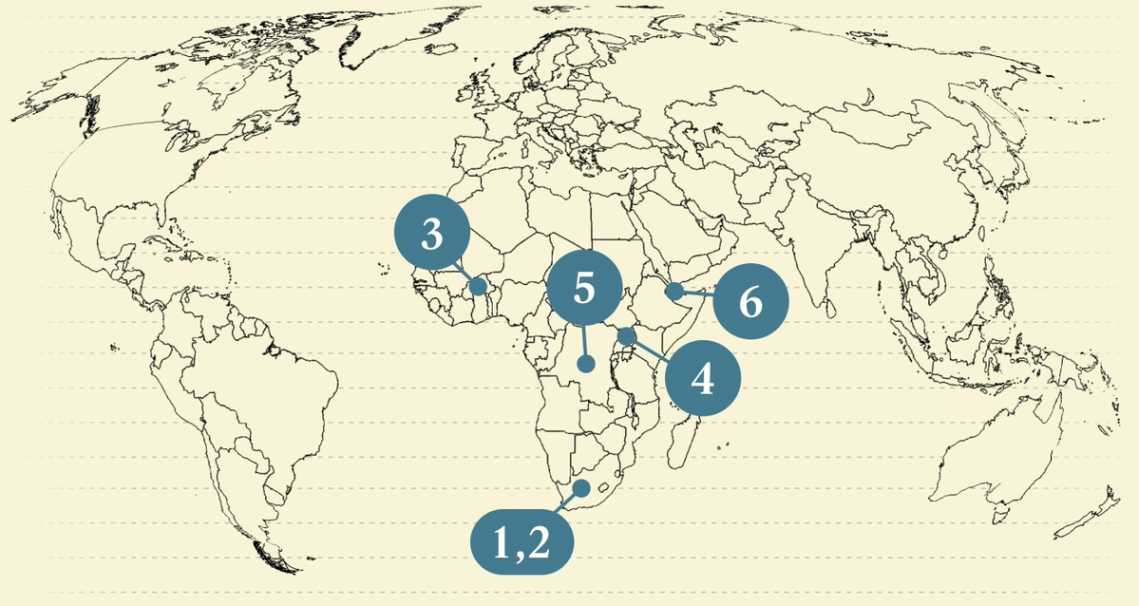
| |  Bamako Bamako | Kampala | Djibouti City |
 | Africa |  |
| |
|
 - MTN overhauls strategy
- Transnet hits obstacles
- US rebuilds Sahel ties
- Bobi Wine flees Uganda
- African resource nationalism
- Africa’s war vulnerability
 The Week Ahead, and remembering a trailblazing anti-slavery activist. |
|
S. Africa’s MTN revamps strategy |
 Iranian policemen on their phones, 2025. Morteza Nikoubazl/NurPhoto via Getty Images. Iranian policemen on their phones, 2025. Morteza Nikoubazl/NurPhoto via Getty Images.MTN Group, Africa’s biggest mobile operator, unveiled a strategic reset that put South Africa and Nigeria at the heart of its growth plans while Iran — one of its biggest money spinners — did not get a mention. On paper, Iran, where the US and Israel launched strikes two weeks ago, remains one of MTN’s most valuable assets: The Johannesburg-based company’s 49% stake in Irancell, Iran’s second-largest mobile operator, is worth roughly $300 million. The partnership generates millions of dollars in profits, but the income is stuck in the country because of US sanctions. MTN said it does not expect to retrieve its share of profits from Irancell — which amounted to $136 million in 2025 — any time soon. Instead, in a strategic reset announced alongside its 2025 earnings report, MTN presented itself as an Africa-anchored digital platform, using cash from its core mobile business and digital infrastructure such as towers to fund faster growth in its fintech operations. MTN swung into $1.6 billion profit in 2025 after unfavorable currency swings a year ago hit its bottom line. — Tiisetso Motsoeneng |
|
S. Africa’s Transnet hits snags |
| |  | Tiisetso Motsoeneng |
| |
 A Transnet freight train stands idle. Per-Anders Pettersson/Getty Images. A Transnet freight train stands idle. Per-Anders Pettersson/Getty Images.South Africa’s state-owned freight company Transnet is asking lenders to relax financial tests on loans as it prepares to roll over more than $200 million in debt in planned refinancing this year, it told Semafor, part of efforts to grapple with a mammoth debt pile. Transnet — the backbone of mining exports in Africa’s most industrialized economy thanks to its sprawling rail, port, and pipeline network — is contending with nearly $2.6 billion in outstanding borrowing. Transnet has in recent years grappled with a shortage of freight trains and inefficient ports that reduced income from exports, particularly mining. But its performance has improved in the last two years.The company is another wildcard in a national budget announced last month that is already strained by the Iran war, which has tightened markets and pushed up fuel costs. Transnet is calling for borrowers to take government sovereign guarantees in place of some commercial safeguards known as “loan covenants.” It has argued that the government backstop is more relevant than its own finances, which are strained by aging rail infrastructure, rolling stock shortages, and persistent theft. But the move nevertheless risks jacking up Pretoria’s fiscal exposure and raises fresh questions about whether Transnet’s liquidity squeeze could force state support. |
|
US eyes rebuilding ties with juntas |
| |  | Adrian Elimian |
| |
 Heads of state for Mali, Burkina Faso, and Niger. Mahamadou Hamidou/Reuters. Heads of state for Mali, Burkina Faso, and Niger. Mahamadou Hamidou/Reuters.A top US State Department official made his second trip to the Sahel in a month, underscoring how President Donald Trump’s administration is opening up to military-led governments in West Africa, reversing a stance taken by the Biden White House. Nick Checker, head of the State Department’s Bureau of African Affairs, met junta officials in Burkina Faso and Niger this month after his trip to Mali in February; Washington is nearing an intelligence-sharing deal with Bamako, as well. The visits show intensifying diplomatic engagement with the members of the Alliance of Sahel States, a coalition of military-run governments that have largely shut out Western powers. Efforts toward normalization with the juntas are “not an endorsement” of how they came to power, Checker told Semafor ahead of the trip’s announcement, and instead reflect “pragmatic cooperation,” leaving room for a credible transition to democracy over time. The push reflects twin priorities to rebuild a counterterrorism footprint in a strategically important region where jihadist insurgencies have expanded for years, and to secure access to critical minerals, said analysts. |
|
 Bobi Wine and his wife, Barbie Kyagulanyi. Michel Lunanga/Getty Images. Bobi Wine and his wife, Barbie Kyagulanyi. Michel Lunanga/Getty Images.Ugandan opposition politician Bobi Wine fled his home country to evade what he described as the government’s attempt to capture him following criticism of recent election results. He was the most notable challenger to President Yoweri Museveni in the last two presidential elections. Museveni extended his 40-year rule in January’s presidential poll, which was criticized by the UN and rights groups for severe repression of the opposition. Wine, a 44-year-old former pop star whose real name is Robert Kyagulanyi, posted a video message on X in which he announced a “brief exit” from Uganda, adding that he would return “at the right time.” He faulted the declaration of Museveni as the winner of the last two elections, claiming in his video post that Museveni “usurped the will of the people of Uganda and declared himself president on gunpoint.” Muhoozi Kainerugaba, the president’s son and the country’s military chief, has repeatedly threatened to arrest Wine since January’s vote. — Alexander Onukwue |
|
Mineral exports curbs across Africa |
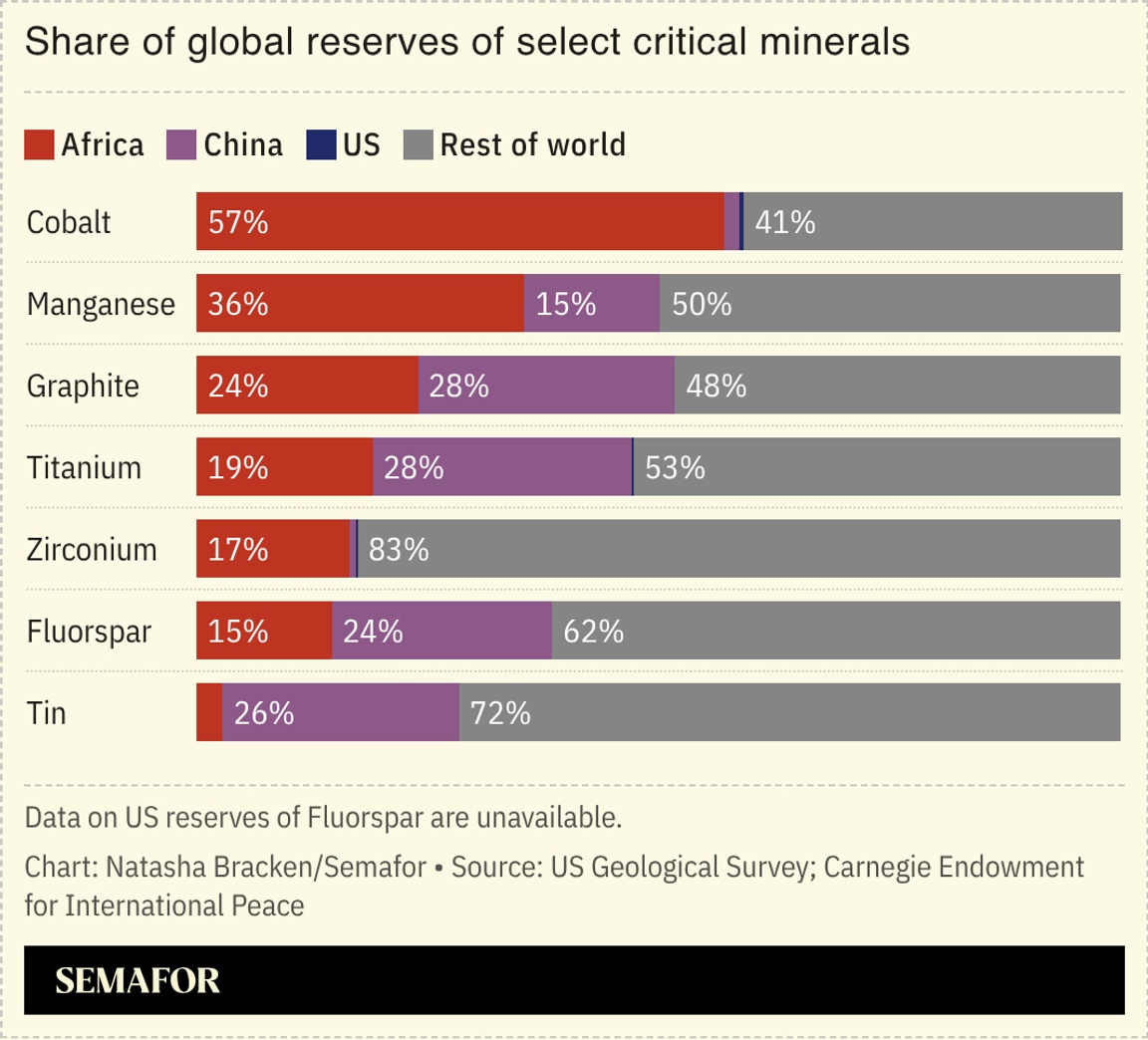 Rising mineral exports curbs across Africa are upending key Chinese supply chains, and as a result sending global commodity prices soaring. Several African countries have in recent months imposed restrictions on the export of their raw minerals in order to capture more of their value in the refining process: DR Congo implemented quotas on cobalt, and Ghana and Zimbabwe on lithium. The restrictions have squeezed Chinese refineries — the world’s biggest — forcing many to draw from domestic stockpiles. However, the moves may not lead to greater investment in Africa. Countries across the continent need to come up with incentives, and “it most likely isn’t by introducing bans,” one expert told the South China Morning Post. This story was originally featured in Semafor’s twice-daily global news briefing. Sign up to receive it in your inbox. → |
|
|
View: Horn of Africa’s vulnerability |
 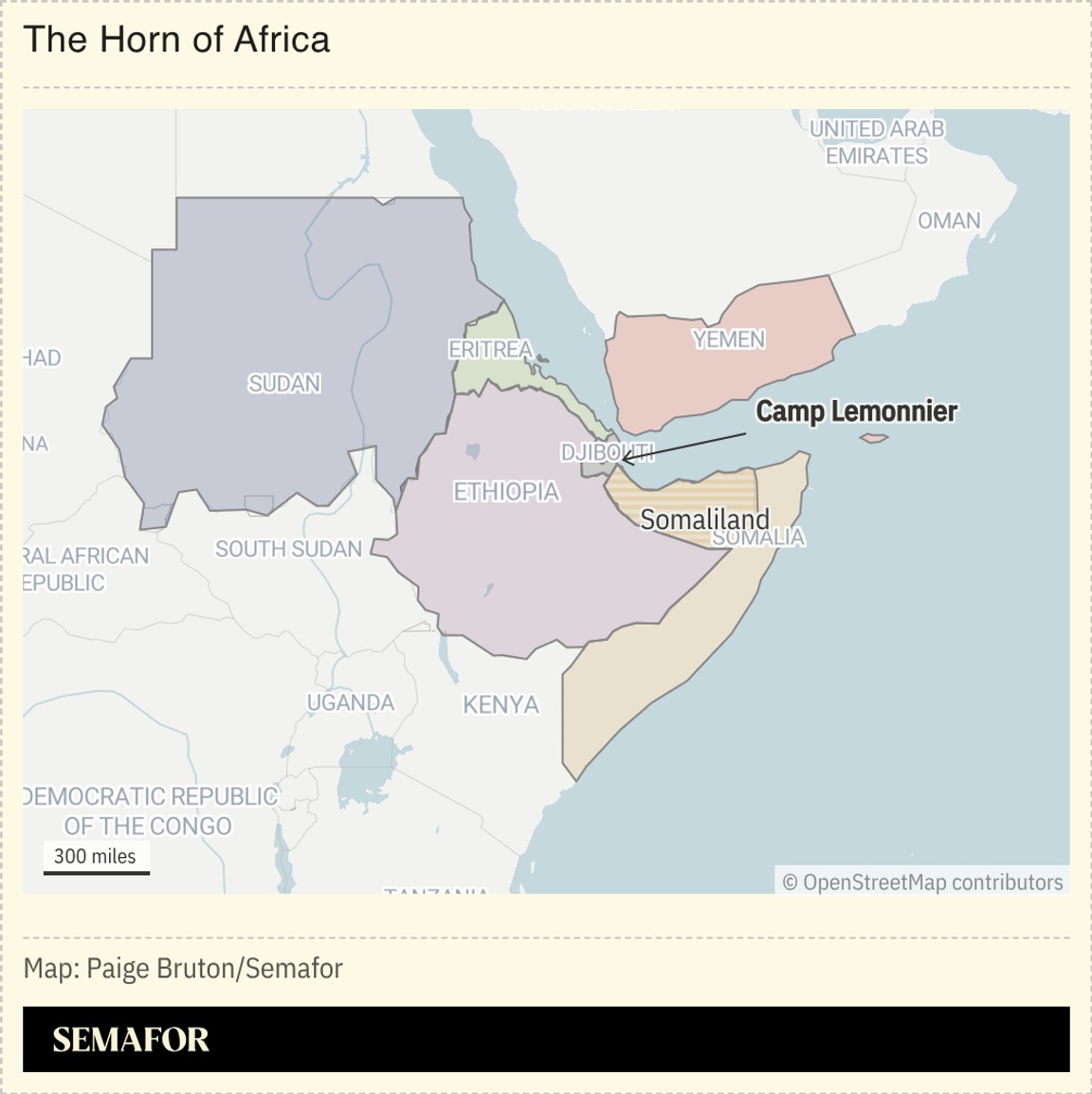 The Horn of Africa could become a new theater in the war between the United States, Israel, and Iran, a longtime African security journalist argued in a Semafor column. Djibouti, which hosts the largest US military base in Africa, is already exposed, while Somaliland is emerging as a potential host for an Israeli security presence, wrote Tomi Oladipo. Both sit at one of the world’s most important maritime chokepoints, where the Red Sea narrows into the Gulf of Aden. Meanwhile, the wider Horn of Africa grapples with fragile states, active jihadist insurgencies, and territories whose sovereignty is contested or unrecognized. “Hosting foreign military powers brings clear financial and diplomatic benefits,” Oladipo said. “But for Djibouti and Somaliland it may also carry risks. As the Iran war widens, bases that once symbolized security may become liabilities.” |
|
 Business & Macro
|
|
|