|
 |
Hello, readers of The Breakdown! We’ve spent a lot of time these past few months talking about the ways Robert F. Kennedy Jr. and his allies are trying to roll back federal support for vaccines—and all the consequences that could unleash. Today I take a look at a group of people who have taken it upon themselves to do something about it—people who have a rare perspective on what’s at stake if vaccine-preventable diseases return.
I learned about this organization while I was working on another article a few weeks back. That’s frequently how things go in journalism: You follow up on an aside you picked up an interview, or something you noticed while in the field, or a footnote you spotted in a report—and, lo and behold, you’ve discovered something else worth covering. But that kind of serendipity doesn’t happen unless there’s a publication where reporters like me have the time to do real reporting, and then to follow up on new leads.
That’s what The Bulwark provides. And it’s why I hope you’ll think about becoming a Bulwark+ member. Not only do our members get access to all our locked content—like the full version of today’s newsletter—but they get the satisfaction that comes with knowing they helped make our journalism possible. Sign up today for 20 percent off the normal price:
–Jonathan
Meet the Horrified Grandparents Fighting for Vaccines
They remember what diseases like measles are really like—and want the rest of America to know before it’s too late.
|
| ||||||||||||


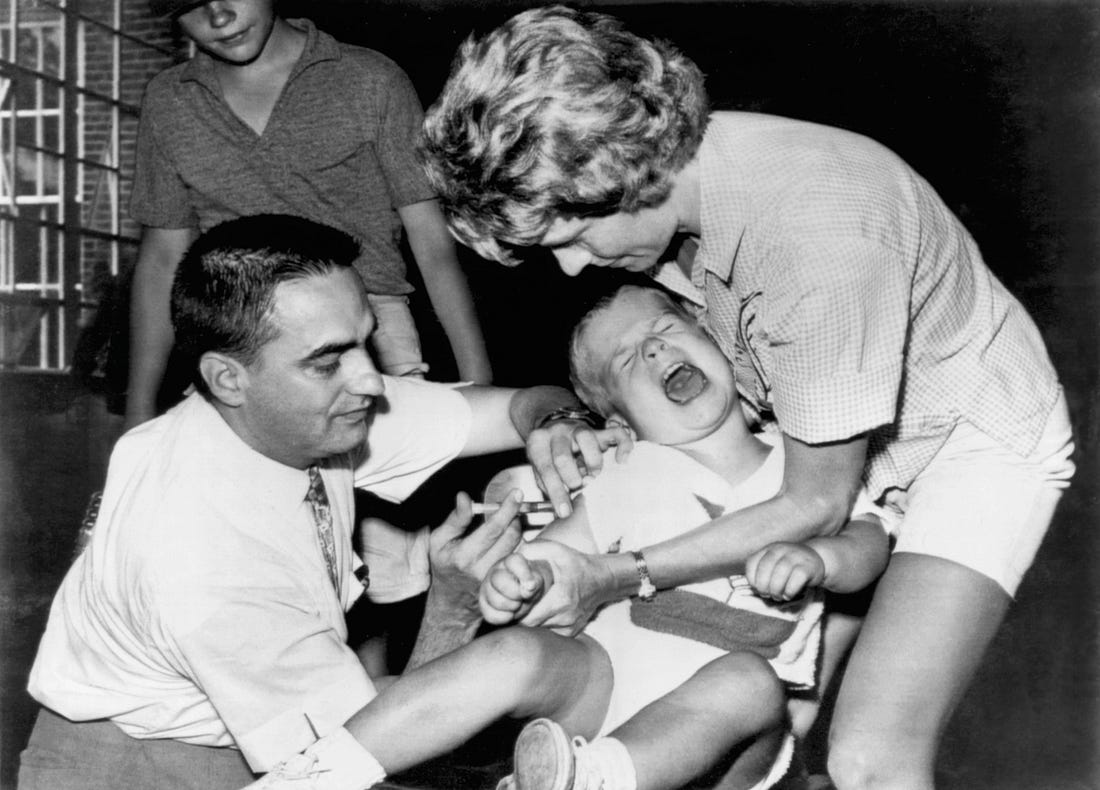 |
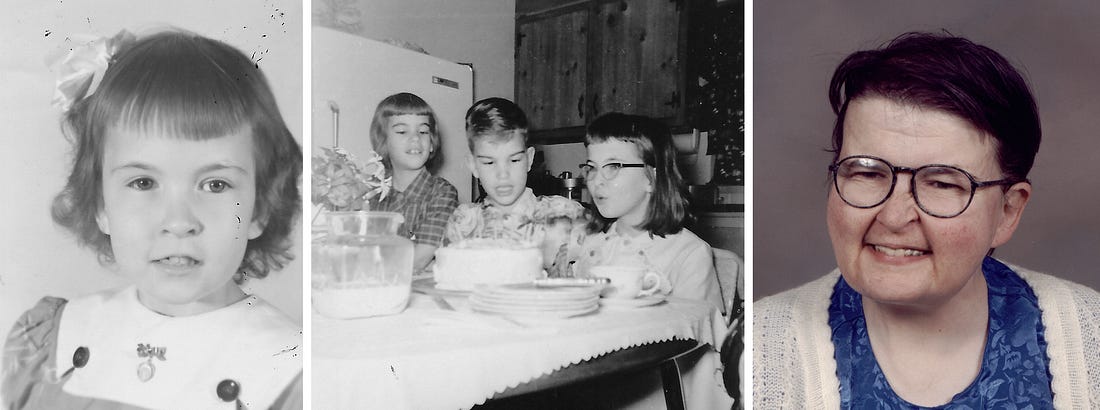
MOST AMERICANS HAVE no firsthand knowledge of what measles can do to people, because it has been half a century since the disease was circulating widely in the United States. But there are exceptions—like Therese Vogel, whose older sister Nancy got the disease when she was 4.
This was back in the 1950s, when hundreds of thousands of children got measles each year. And while most recovered fully within about two weeks, Nancy was one of the kids who didn’t. She developed encephalitis, a known, potentially devastating complication of active measles infection in which inflammation of the brain disrupts normal function.
Nancy was in the hospital for weeks, with a fever so bad that some of her hair fell out. She lost some of her verbal skills, struggling to regain them after coming home. And although she had hit all of her developmental milestones before the disease, she was unable to pick up reading like the other kids her age—or even her younger sister.
“I was at my mom’s side as she was teaching Nancy to read, and I basically picked it up easily . . . and I kind of thought, why is this so hard for her?” Therese, who is now 73, told me in a phone interview last week. “I think that’s when I must have realized there was something different about her.”
There was. The damage to Nancy’s brain was permanent, as it was in about 20 to 40 percent of cases of measles-induced encephalitis. She would never be able to read past a sixth-grade level, and once she got to the eighth grade the administrators at the Catholic school the two sisters attended told their parents that Nancy didn’t have the ability to keep going on a standard education track.
Nancy still had a life full of joy and meaning, Therese says—whether as part of a Girl Scout troop that made her an honorary member, even though she couldn’t complete the badges, or alongside other people with impairments at a “sheltered workplace” where she held down a job heat-sealing small manufactured goods inside of plastic bags. But as Therese went off to college, settled into a professional life, and started a family of her own, she found herself thinking constantly about what might have been for her sister.
“Sometimes she would say, I wish I could go to college,” Therese said of Nancy. “She knew that she wasn’t able to do the things that I did.”
 |
Therese said Nancy’s experience was one reason she decided to specialize in pediatric nursing. And since 2019, when Nancy died at the age of 70, Therese has been looking for ways to keep her sister’s memory alive. Last year, she found one when she heard about a fledgling organization—Grandparents for Vaccines—trying desperately to stop a comeback of diseases like the one that robbed Nancy of so many opportunities.
The cause is urgent. Already this year, authorities have documented more than 1,300 measles cases, putting the count on track to surpass last year’s total—which, in turn, was the highest in thirty years. And it’s no big mystery why this is happening. Fewer people are getting immunizations, thanks partly to an anti-vaccination movement that spreads misinformation and now has one of its champions, Robert F. Kennedy, Jr., leading the Department of Health and Human Services.
The goal of Grandparents for Vaccines is to push back against this movement, while getting Americans thinking about what’s at stake if the trends continue. And while that’s an awful lot to ask from a group of seniors, most of them political novices still learning the finer points of social media, they have two powerful weapons for making their case: ...