| | The IEA agrees to release oil reserves, the Pentagon headhunts for bankers, and the UK ejects heredi͏ ͏ ͏ ͏ ͏ ͏ |
| |  Tehran Tehran |  Tel Aviv Tel Aviv | Bengaluru |
 | Flagship |  |
| |
|
The World Today | 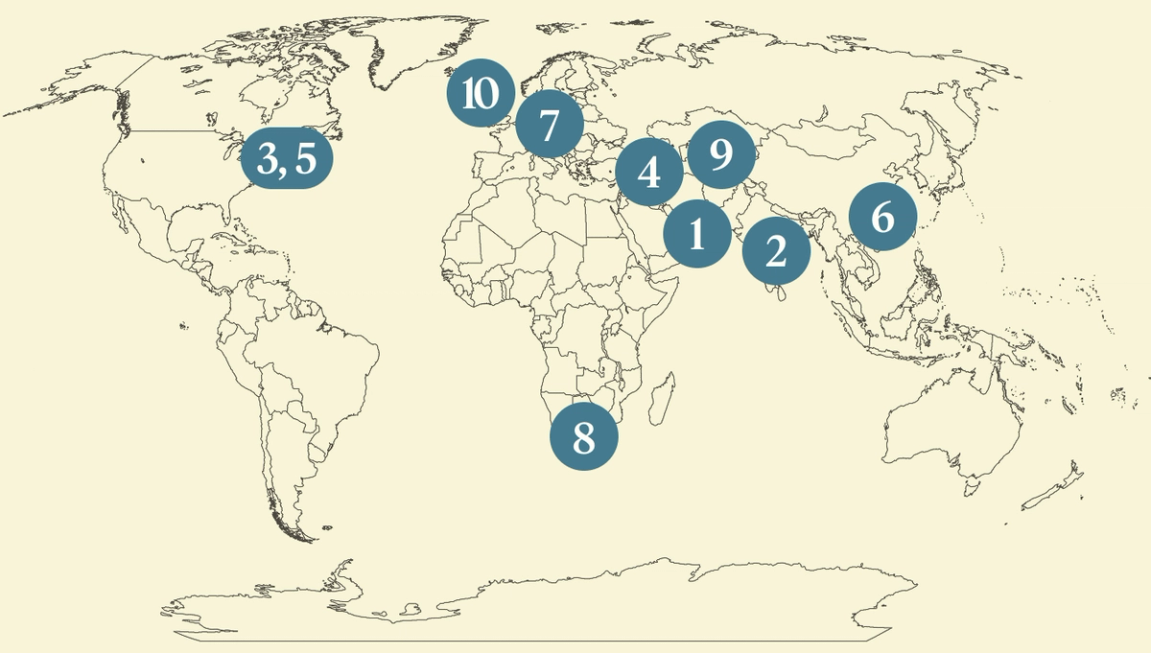 - IEA releasing oil reserves
- India faces LNG crisis
- An obsolete inflation report
- New Iran leader whereabouts
- Pentagon hunts for bankers
- HALO trade hits China
- Porsche under pressure
- Chinese cars in Africa
- Uzbekistan’s transformation
- UK’s noble lords ejected
 The life and times of George ‘Geordie’ Sutherland-Leveson-Gower. |
|
IEA oil release fails to calm markets |
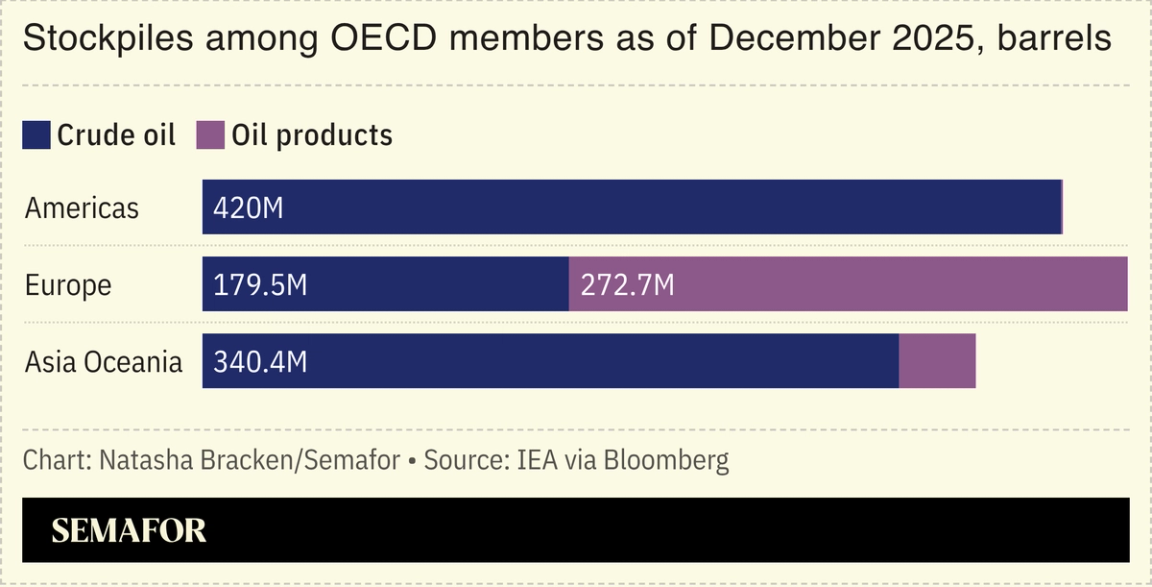 The International Energy Agency agreed on Wednesday to release 400 million barrels of oil to cushion a supply disruption triggered by the war in Iran. But the move did little to calm energy markets, as shipments through the Strait of Hormuz remain effectively frozen: Oil prices ticked up Wednesday on worries of a sustained interruption to global flows. US President Donald Trump suggested oil companies could use the strait, but strikes on ships have escalated and the US military declined to escort tankers until the threat of Iranian attacks subsides. Even as Tehran has jeopardized global oil supplies, it has shipped nearly 12 million barrels of its own crude to China since the war began. |
|
Energy crisis disrupts South Asia |
 Amit Dave/Reuters Amit Dave/ReutersThe energy crisis sparked by the Iran war is disrupting daily life in South Asia. The effective closure of the Strait of Hormuz has caused shortages in India of liquefied petroleum gas, used as cooking fuel: Restaurants across the country, which is the world’s second-largest LPG importer, warned they may have to close within days. “It is like a second COVID-19 lockdown for us,” a restaurant chain executive said. In Bangladesh, which imports nearly 95% of its energy needs, fuel prices have risen, leading to rationing, panic buying, and long lines. And food prices are up in Pakistan because of higher transportation costs, putting pressure on families during Ramadan. “The lesson is clear,” an energy analyst said. “Energy security cannot rely solely on imported oil.” |
|
US inflation report ‘obsolete’ amid war |
|
Iran’s new supreme leader ‘lightly injured’ |
 Majid Asgaripour/WANA (West Asia News Agency) via Reuters Majid Asgaripour/WANA (West Asia News Agency) via ReutersIranian officials said the new supreme leader was “lightly injured” but safe, after his absence fueled speculation that he was wounded in US and Israeli strikes. Mojtaba Khamenei has not been seen since he was selected last week to succeed his father, the late Ayatollah Ali Khamenei. To smooth Mojtaba’s succession, loyalists are trying to “deify” Khamenei, the Financial Times reported, by comparing his killing to that of the seventh-century Imam Hussein, whose martyrdom is a foundation story of Shia Islam; one relative called the former ayatollah “the master of martyrs.” While many Iranians, hoping for reform in the Islamic republic, celebrated Khamenei’s death, the destruction wrought by the ongoing conflict is now kindling a “sense of nationalism,” a Tehran-based sociologist said. |
|
Pentagon headhunts for bankers |
 Kevin Lamarque/Reuters Kevin Lamarque/ReutersThe Pentagon is building a new team of investment bankers steeped in private equity to invest $200 billion over three years in defense deals, aiming to counter China’s rise, Semafor’s Liz Hoffman scooped. The US Defense Department is going after bankers at firms including Goldman Sachs and Morgan Stanley as prime recruiting targets; a headhunter brief pitches a chance to deploy “more capital than most investors deploy in their entire careers.” President Donald Trump has long strived to direct a massive sovereign wealth fund akin to Gulf and Asian countries, using private capital to wield political power. The administration has hundreds of billions of dollars to invest in critical industries, but there’s been a bottleneck in finding deals, Hoffman wrote. |
|
 Bilt Rewards launched in 2019 with a simple idea. If you can get credit-card rewards for buying a round of drinks, why can't you get them for paying your rent? After a shambolic and short-lived partnership with Wells Fargo, the company is back with bigger ambitions: to be the platform powering 12% of the economy — housing services — plus a big chunk of what people spend on dining, workouts, healthcare, and other local services. On this week’s episode of Compound Interest, co-hosts Liz Hoffman and Rohan Goswami sit down with Bilt CEO Ankur Jain to unpack its Amex-Shopify-Square ambitions — and why every company wants to be a membership club. |
|
‘HALO’ trade comes for China |
|
Porsche plots a turnaround |
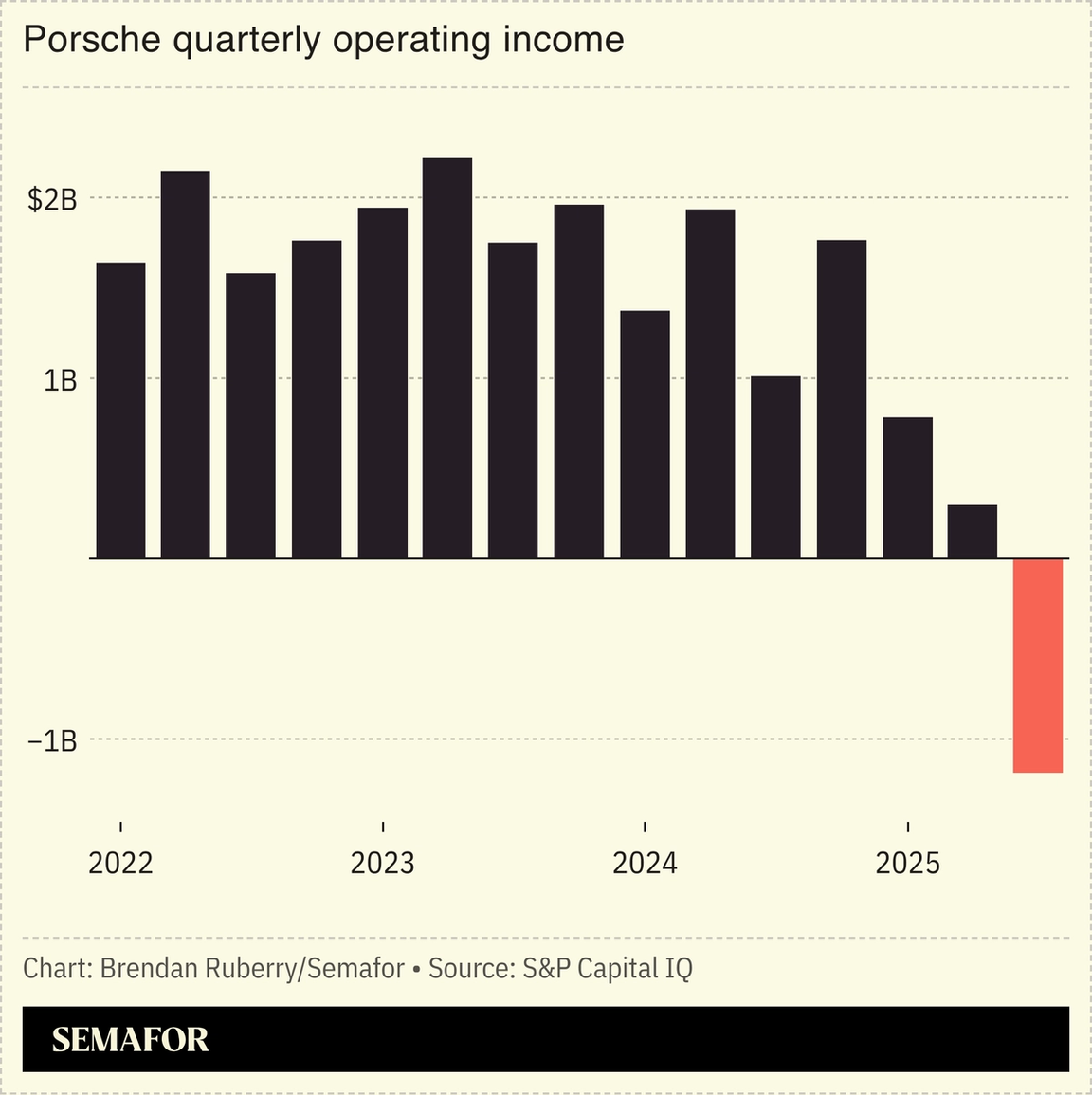 Porsche’s new CEO said the German sportscar maker would cut more jobs and focus on profits over sales in an effort to turn the company around. Porsche had a dour 2025, reporting a staggering 93% decline in operating profit. The downturn reflected the challenges facing Europe’s car sector, especially in China. The world’s largest car market “has delivered a lesson in humility” in recent years, a Bloomberg columnist wrote, as Porsche’s sales there gradually declined in the face of cheaper domestic competitors. The Iran conflict presents yet another challenge for Porsche, the company said, because of rising energy prices, supply chain disruptions, and dampened Middle East demand. |
|
Chinese cars threaten African brands |
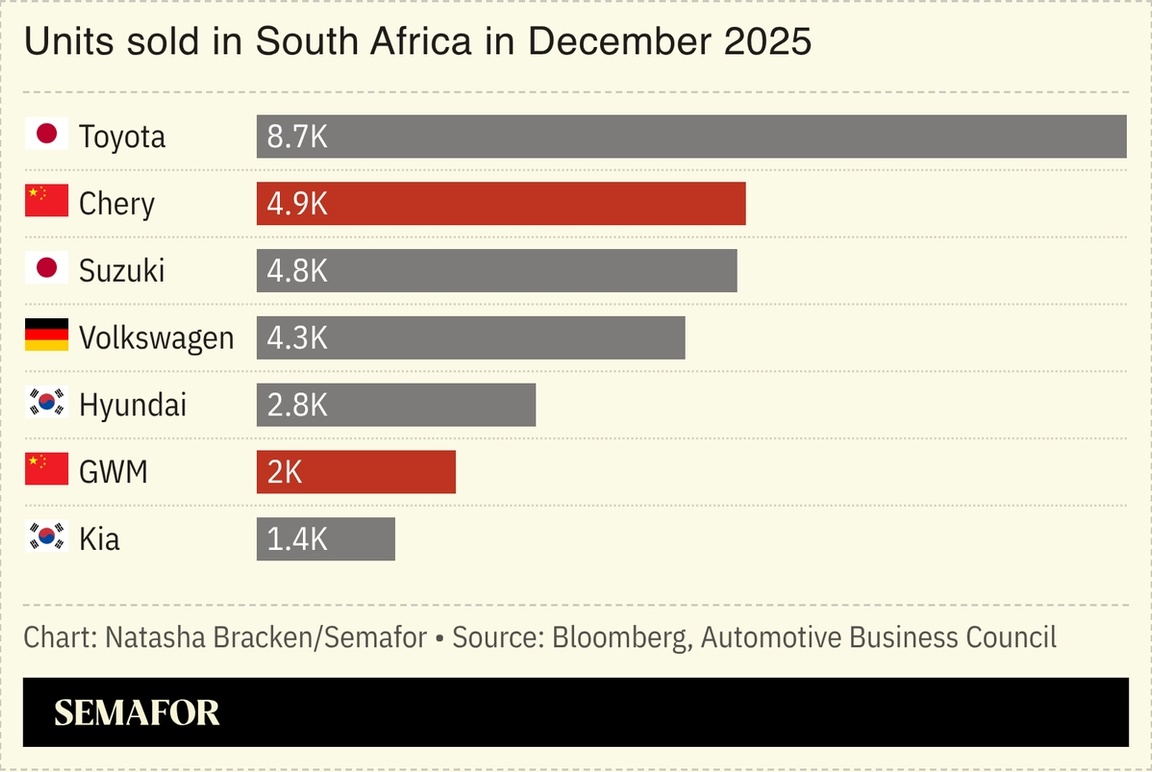 Chinese carmakers have rapidly displaced other Asian and Western brands across much of Africa, though their expansion risks hollowing out the continent’s industry, experts warned. While many Chinese brands only launched sales at the start of the decade, they have grown speedily: Anhui-based Chery is now South Africa’s number two seller just four years after re-entering the market. Competition from Chinese carmakers has put pressure on long-established firms, such as Mercedes-Benz, which is considering sharing its regional manufacturing facilities with Hebei’s Great Wall Motors. However, several manufacturers import their cars directly from China, dragging South Africa’s home-made market share down to a third from 56% just two decades ago, Bloomberg reported. |
|
Uzbekistan’s emerging digital ecosystem |
 Shamil Zhumatov/Reuters Shamil Zhumatov/ReutersUzbekistan’s first tech unicorn reached a $2.3 billion valuation, a sign of the country’s transformation. Since the death of longtime dictator Islam Karimov in 2016, Central Asia’s most populous country has enacted wide-ranging reforms, opening up the economy to outside investment and liberalizing trade. It has seen rapid growth with GDP increasing 7.5% in 2025. Uzum, a fintech company founded in 2022, has become a sort of national digital infrastructure, TechCrunch reported, thanks to the country’s young, educated population, high smartphone adoption rates, and few other online banking services. Overseas investors are betting on further growth: The European Bank for Reconstruction and Development lists the country among its top five investment destinations. |
|
|


