John Taylor "> John Taylor "> | | | Good morning. It’s Saturday, March 7, and I can’t believe our clocks are changing this weekend. Let’s savor these last hours before daylight saving time and learn more about a fascinating topic. Answering your questions In our first weekend edition of this year, we opened with a question about microplastics in the refrigerator and freezer. We got a great answer from The Post’s “Ask a Doctor” columnist Trisha Pasricha. But it led to many, many more questions from readers. We shared all of your questions with Trisha and she picked a handful to answer. I’m going to excerpt her answers; if you want to see them in full, read her column here. - What can we do about the microplastics already in our bodies?
The honest answer? We don’t yet have a proven way to remove them, and research on elimination strategies is in very early stages. The good news: Your body does clear some of the particles on its own. Scientists believe that the majority of microplastics we eat are likely being eliminated in feces — especially those 150 microns or greater, which are unlikely to cross the intestinal barrier. Small particles are the greater concern: One model estimated that about 30 percent of particles between 1 and 10 microns were absorbed by the human intestine, and nanoplastics (1 micron or less) may accumulate even more readily. - I get that microwaving food in plastic can release more microplastics but what about storing frozen food in plastic bags?
Prior studies have found heating plastic aggravates microplastic leaching, though it can also occur, albeit more slowly, during refrigeration over several months. You’d think that freezing food in plastic would be even safer. Well, here’s where it gets interesting: A small 2022 study from the European Commission’s Joint Research Centre found that when ultrapure water was frozen in plastic bags and then thawed, the thawed water contained detectable particles chemically consistent with the plastic bag material. In comparison, bags stored at room temperature released fewer particles in the same test. … I still use frozen veggies that come in plastic bags — but I’ve stopped heating them in that same plastic. Instead, now I steam or stir fry them on my stovetop. And if avoiding frozen plastics makes it significantly more difficult for you to eat vegetables, I’d rather you eat your veggies any day. - Should I stop using my filtered water pitcher? It’s made of plastic too.
This question is more complicated than meets the eye because you’re actually dealing with two issues: 1) Does the filter remove microplastics from your tap water effectively, and 2) does the plastic pitcher itself shed microplastics after the water has passed through the filter. Let’s first talk about the typical filters you might see in a standard pitcher, which are granular activated carbon. A ConsumerLab test of several such popular filter pitchers found results that were all over the map: One removed all detectable microplastics, while others reduced them by as little as 36 percent. … A handful are NSF-certified to reduce microplastics by at least 85 percent, so that’s an upgrade to consider when searching for options. … Now on to the pitcher itself. Suppose your water gets filtered and at least some microplastics do get removed. What happens when it sits there in a plastic pitcher for days on end? Many of these pitchers have parts that are made from polypropylene. We know polypropylene can degrade and shed particles over time — although there are other types of plastics in these pitchers about which we know even less when it comes to shedding. But the principle holds that at least some plastics can leach even at room temperature. - Which foods have a lot of microplastics?
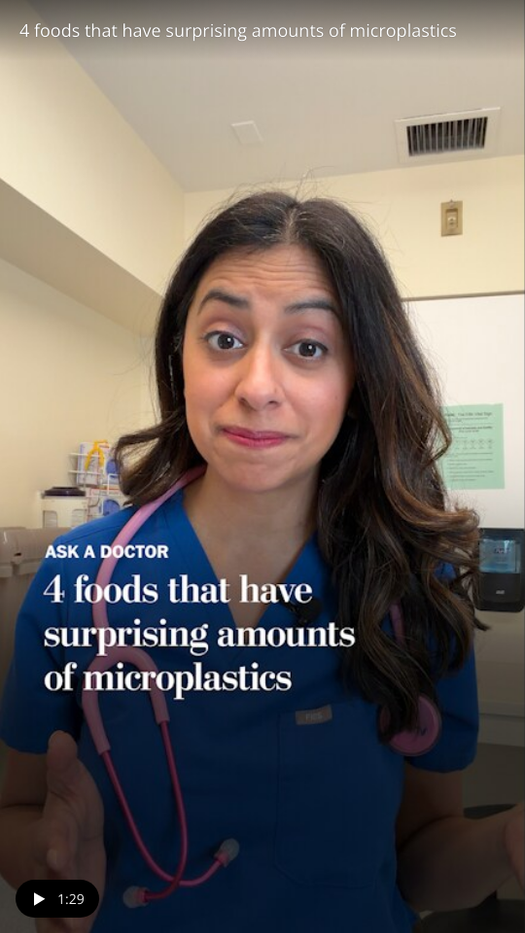
Most experts agree that ultra-processed foods are likely the biggest source overall in our diets. Food that comes packaged in plastic is obvious, but there are exposures during industrial processing that we don’t see. That’s one more reason to lean toward whole foods when you can. A few other surprising sources of microplastics based on limited research: - Nylon tea bags in plastic. These single-use tea bags are made out of plastic — and one bag steeped in hot water can release more than 11 billion microplastic particles.
- Instant rice. A 2021 study found that instant rice contains four times the plastic of regular uncooked rice.
- Breaded prepackaged nuggets. Breaded shrimp, breaded chicken nuggets — and even processed plant-based nuggets — may contain dozens if not hundreds of microplastics per serving.
- What about Invisalign or other plastic retainers and toothbrushes?
Yes, all of these release microplastics. A 2023 study documented microplastic detachment from several orthodontic aligners after seven days of artificial saliva exposure due to mechanical friction. The good news is that the majority of the particles detected were on the larger side (5-20 microns), and only a few, Invisalign among them, appeared to release particles less than 5 microns in size. My take: You wear retainers for several hours daily, and potentially for years on end. That’s a significant cumulative exposure. But the orthodontic benefits are real, and there’s no proven harm from aligner microplastics at this point. Keep them clean with gentle brushing (no hot water) and try to avoid eating or drinking hot beverages while wearing them. … Most toothbrush bristles are made of plastic, which can shed fragments during brushing (some studies estimate dozens of microplastics per day). You could certainly opt for alternatives like boar-hair bristles that come with their own trade-offs. Personally, I’m not throwing out my electric toothbrush over this (nor am I giving up flossing, which, for that matter, is also made from plastic). Oral hygiene matters for your overall health. To me, the far bigger win — with less of a health trade-off — is reducing exposure from ultra-processed foods and plastic water bottles. What else to know Thanks to Trisha and Theresa Tamkins, editor of The Post’s Well+Being team, for helping to coordinate this collaboration. You should read and watch everything Trisha does, and also subscribe to the Well+Being newsletter. You can sign up here. And thanks to Jamie Ross and Claire Wallace for making sure this newsletter got to your inbox. Keep reading Each weekend, The 7 team shares our favorite recent Post stories with you.  | Hannah Jewell | This animated explainer of what high blood pressure does to different parts of your body is eye-opening. Get yourself checked out — damage can happen even when you don’t have symptoms.  | Izin Akhabau | I loved this piece about a struggling opera singer who has become a car salesman and is using his talent to reach people online.  | Jamie Ross | I spend a lot of time thinking about what I’m going to eat on the weekend. So I’m grateful for food critic Elazar Sontag, who shared his favorite dishes of February to give me some inspiration. |