Policy changes, but facts endure. AP delivers accurate, fact-based journalism to keep the world informed in every administration. Support independent reporting today. Donate. |
|
|
By Holly Meyer and David Crary |
| |
|
By Holly Meyer and David Crary |
| |
|
Hi World of Faith readers, This week, Muslims in the U.S. are observing their holiest month as they face a sweep of worries. We look at the role of relics in Buddhism and how “Christ is King” has become a loaded phrase in U.S. political debates. |
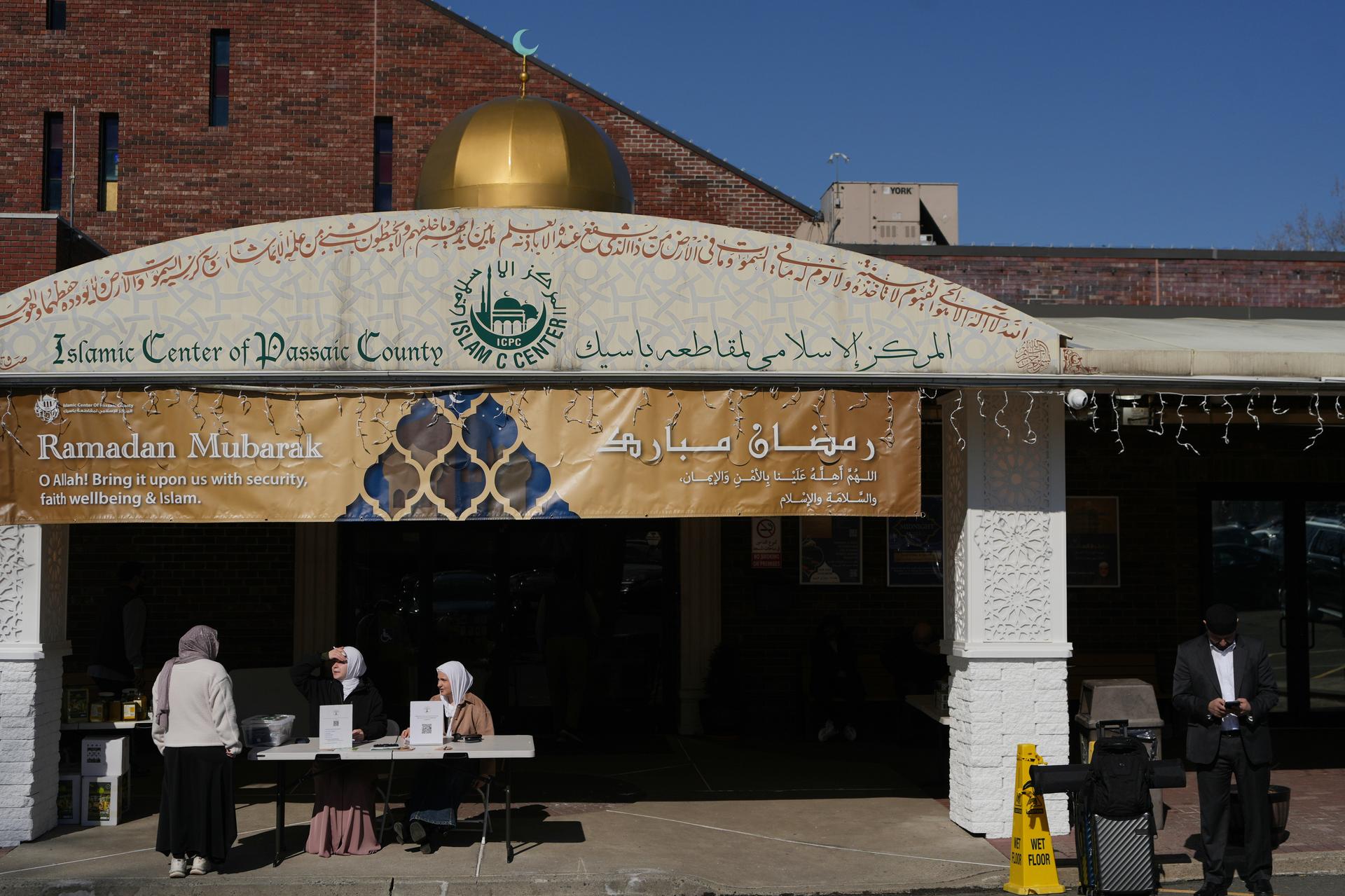
Volunteers prepare to encourage congregants to vote in the New Jersey primary elections during Ramadan outside the Islamic Center of Passaic County. (AP Photo/Luis Andres Henao) |
For US Muslims, immigration crackdown fears, new war worries and anti-Muslim rhetoric cloud Ramadan |
Muslims across the United States are observing Ramadan under rising fears tied to immigration raids, anti-Muslim rhetoric, and war in the Middle East. Community members in places like Paterson, New Jersey, and Minneapolis say many are striving to maintain the Ramadan spirit while grappling with a myriad of concerns affecting their communities. Read more.
|
|
|
-
Paterson’s Palestinian community — one of the largest outside the Middle East — had been grieving loved ones and trying to help the survivors of the Israel-Hamas war in Gaza even before the latest anxiety-fueling developments.
-
In Minnesota, where many people are reeling from the recent large-scale immigration crackdown, Ramadan came amid a powerful mix of emotion. Even after withdrawal of most of the immigration officers, some Muslims remain cautious about venturing out, even to attend prayers at their mosque.
- Coinciding with Ramadan, some Muslim groups have issued know-your-rights guidance for navigating immigration enforcement interactions, including for mosques.
|
|
|
Teeth, finger bones and blessings: Buddhist relics inspire belief |
Among the many distinctive aspects of Buddhism is a deep reverence for relics. In Southern California, for example, a Buddhist temple annually displays what it calls the “10,000 Buddha Relics" — including items described as a tooth and a finger bone of the Buddha. Read more. |
|
|
The annual display of relics takes place every Lunar New Year at Wei Mountain Temple in Rosemead, California. The actual number of relics contained in several glass display cases is far larger than 10,000, according to the temple’s founder.
The collection features bones and teeth believed to have come from the bodies of the Buddha, his relatives and disciples. It also includes colorful pearl- or crystal-like objects said to have been culled from the cremated ashes of Buddhist masters and the Buddha.
Relics in Catholicism and Orthodox Christianity are venerated as links to the saints or Christ, while Buddhist relics are primarily seen as living, active sources of blessings imbued with supernatural qualities.
|
|
|
‘Christ is king’ becomes a loaded phrase in US political debates, especially on the right |
On its own, the phrase “Christ is king” sums up a core tenet of the Christian faith, that Jesus is the divine ruler of the universe. But the ancient proclamation can morph into something political, controversial or even sinister, depending on the context. In recent years, “Christ is king” and similar phrases have been chanted at political rallies, posted on social media and proclaimed in speeches by voices on the right. Read more.
|
|
|
-
At times the phrase is used to support the notion of America as a Christian nation or as one that owes its allegiance specifically to the Christian God. Some current Cabinet officials and recent members of Congress have used the phrase in speeches and on social media.
-
Other times, political activists have paired “Christ is king” with anti-Zionist statements or negative Jewish stereotypes. The phrase has gained popularity among some far-right figures and their followers.
- The Network Contagion Research Institute’s 2025 report noted that while many “Christ is king” references on social media are strictly religious, the phrase has been “systematically co-opted by extremist figures.”
|
|
|
|