| | In this edition: Conflict threatens Gulf investment to Africa, Ramaphosa opens up about ‘racist’ US ͏ ͏ ͏ ͏ ͏ ͏ |
| |  | Africa |  |
| |
|
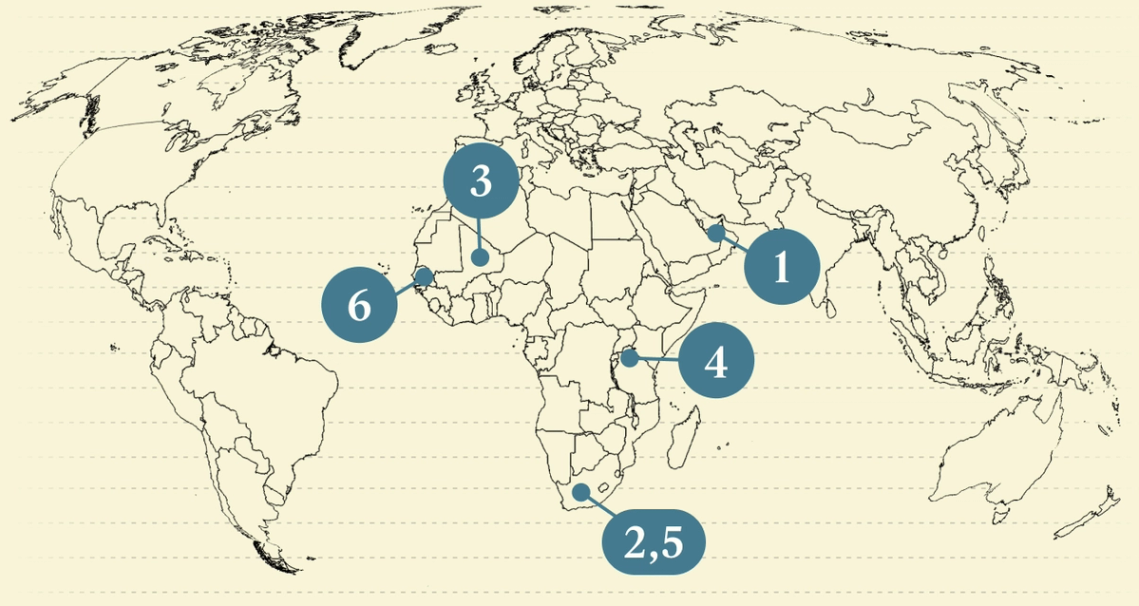 - Gulf investment threat looms
- Ramaphosa on US tensions
- US looks to Sahel juntas
- Aspen plots weight-loss push
- Showmax to shut down
- Weekend Reads
 Ethiopia’s digital policing experiment. |
|
Gulf states may review investments |
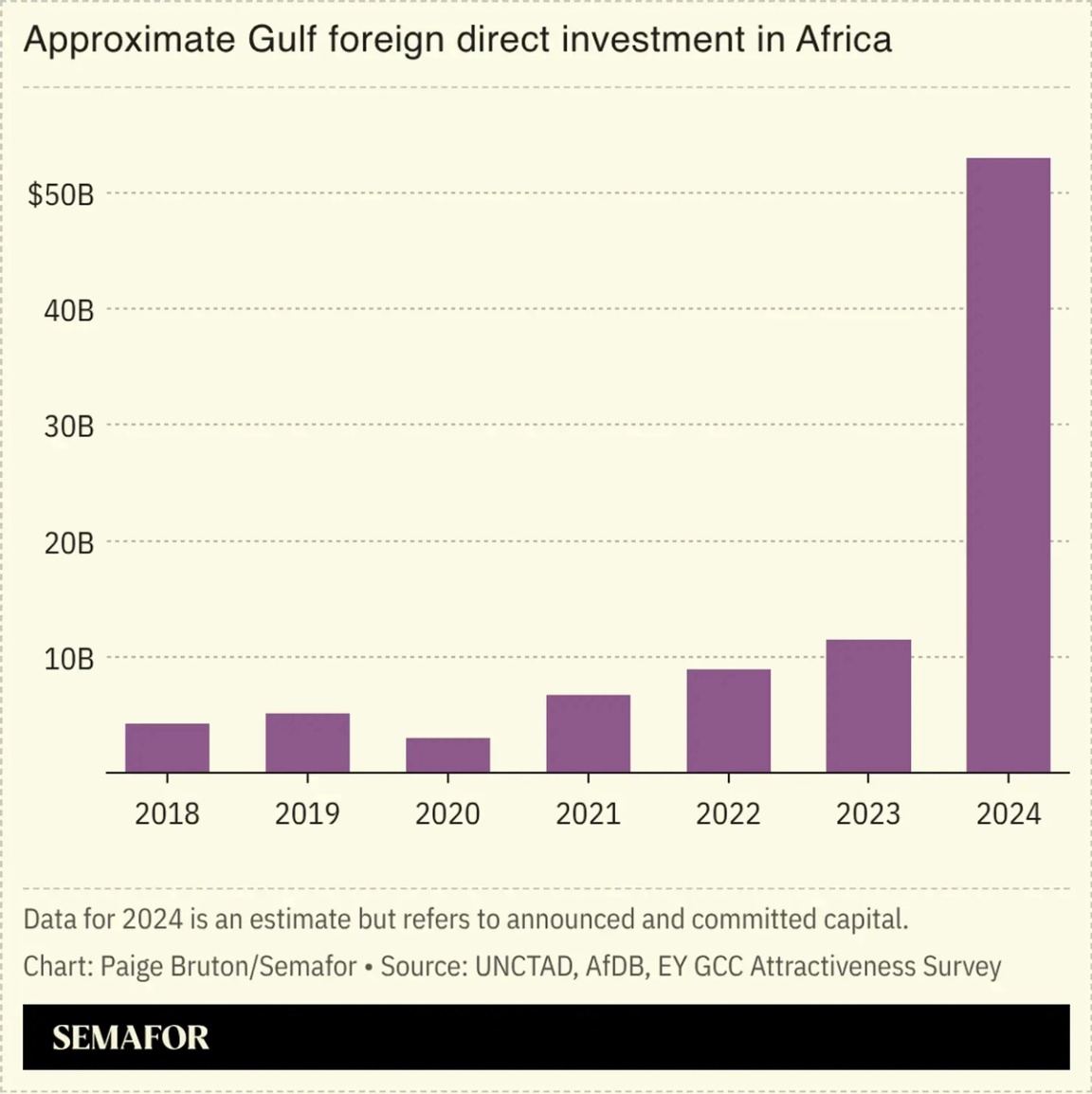 Gulf states could review their overseas investments and future commitments to ease financial pressure caused by the Middle East conflict, a shift that would deal a blow to many African countries. The Financial Times, citing an unnamed Gulf official, reported that a rethink could impact anything from investment pledges to foreign states to contracts with businesses. Gulf capital has helped African countries grappling with the impact of Western development aid cuts and China’s pullback from large infrastructure loans. The Gulf Cooperation Council has pumped more than $100 billion into Africa over the last decade across energy, ports, logistics, and tech, dwarfing the US and rivalling Europe. And as Semafor’s Saudi Arabia Bureau Chief noted this week, “the appetite to show that life carries on as usual by continuing to do outbound deals is high.” But any reduction in investment from the Gulf would compound the inflationary impact of surging oil prices and threats to remittances from the huge number of African migrant workers in the region if the conflict becomes a prolonged war. Most sub-Saharan African countries — even oil producers such as Nigeria — still import refined fuels, leaving them vulnerable to energy-price swings, and many are reliant on transfers from migrants living in the Gulf: In 2024, inbound remittances across the continent from abroad were roughly equivalent to foreign direct investment. |
|
Ramaphosa discusses ‘racist’ US policies |
 Chip Somodevilla/Getty Images Chip Somodevilla/Getty ImagesSouth African officials keep holding talks with their US counterparts despite tensions over Washington’s “racist” policies because of its “strategic” importance, President Cyril Ramaphosa said in a rare interview. US President Donald Trump has repeatedly accused Pretoria of carrying out a “genocide” against white South Africans, a claim widely rejected, and launched a program to admit Afrikaners as refugees. Ramaphosa told The New York Times the policy was “racist” — a word he used multiple times in the interview. South Africa last year said the US had applied pressure on Pretoria to end laws aimed at redressing wealth imbalances caused by apartheid, and Washington later slapped a 30% tariff on many South African exports — the highest on the continent. Business leaders in Africa’s biggest economy were given a reprieve after the US Supreme Court last month struck down Trump’s global trade tariffs. Ramaphosa said efforts to maintain ties with the US were bearing fruit and pointed to the fact that South Africa was not removed from the AGOA trade program, which gives some African countries duty-free access to the US, when the pact was recently extended by a year. |
|
US reengages with Sahel juntas |
 Mali’s Assimi Goita, Burkina Faso’s Captain Ibrahim Traore and Niger’s General Abdourahamane Tiani. Mahamadou Hamidou/Reuters. Mali’s Assimi Goita, Burkina Faso’s Captain Ibrahim Traore and Niger’s General Abdourahamane Tiani. Mahamadou Hamidou/Reuters.The Trump administration stepped up efforts to reengage with junta-led governments across the Sahel, sparking domestic criticism over its apparent abandonment of democracy-promotion efforts abroad. The White House has in recent weeks removed sanctions on Malian officials, signed up Burkina Faso and Niger to its new public health development initiative, and dispatched a senior State Department official on a tour of the Sahel. The Biden presidency had cut off military ties with the three countries after a series of coups between 2020 and 2023, but opponents argued that strategy ceded ground in the region to Russia. One Brookings Institution scholar told Semafor that the new effort “must make a return to civilian rule a prerequisite for any real rapprochement.” — Adrian Elimian |
|
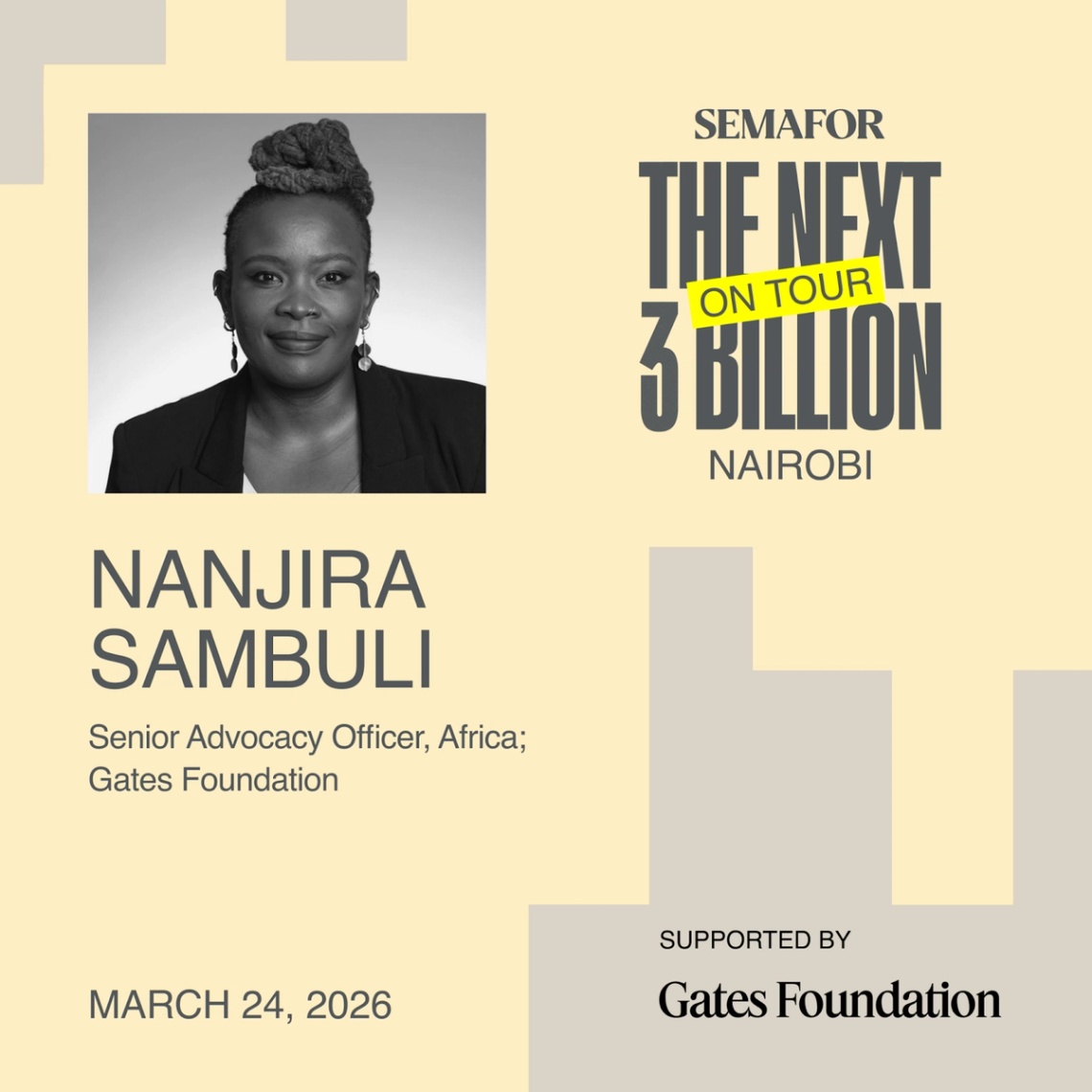 On Tuesday, March 24, Semafor will convene with leaders in Nairobi including Nanjira Sambuli, Senior Advocacy Officer, Africa, Gates Foundation, to discuss financial inclusion at the intersection of long-term capital, policy, and financial infrastructure. Bringing together investors, policymakers, and financial system leaders, the conversation will move beyond ecosystem-building toward action, mobilizing capital, strengthening infrastructure, and closing persistent access and affordability gaps. Join us as we dive into how coordinated public–private efforts can accelerate inclusive growth across East Africa and other emerging markets. March 24 | Nairobi | Request Invitation |
|
Aspen plans weight-loss drug push |
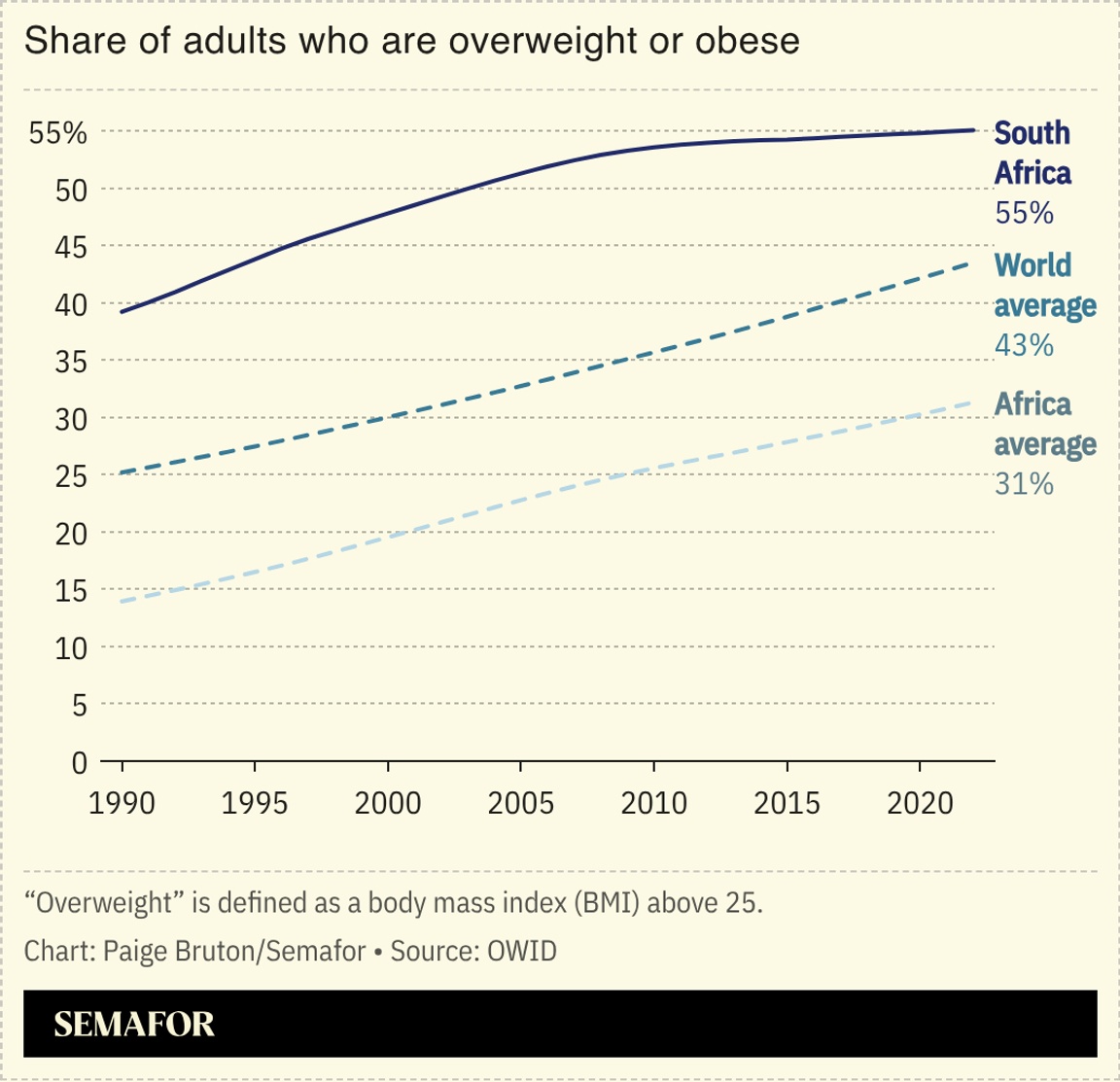 South African drugmaker Aspen, which sells US manufacturer Eli Lilly’s popular weight-loss drug Mounjaro in South Africa, is aiming to secure approval to sell the medication in other parts of the continent this year. Aspen’s CEO told investors that he expects sales of Mounjaro — which launched in South Africa in 2024 — to cross 1.3 billion rand ($77.7 million) in the year to June. The global weight-loss drug market is expected to reach $100 billion by 2030. Aspen, Africa’s biggest drugmaker, is looking to tap into the growing demand for weight-loss treatments in sub-Saharan Africa, where drugs which act as an appetite suppressant by mimicking a hormone called GLP-1 are not widely available. In South Africa, Mounjaro competes with Danish company Novo Nordisk’s weight-loss drug Wegovy. Africa’s biggest economy is grappling with a growing obesity crisis, driving demand for weight-loss medication. |
|
 Dong Jianghui/Xinhua via Getty Images Dong Jianghui/Xinhua via Getty ImagesFrench broadcaster Canal+ will shut South African video streaming app Showmax as it overhauls services offered by its newly acquired subsidiary MultiChoice. Launched in 2015, Showmax was an attempt to challenge global streaming giants — such as Netflix, Amazon Prime, and HBO — in the battle to reach Africa’s growing middle class by offering locally-made film and TV shows. Paying Showmax subscribers rose 44% between 2024 and last year, a signal of demand. But the surging inflation, lack of a large base of consumers with high disposable incomes, and low broadband access that have challenged other African streaming services have stifled Showmax’s ambitions. MultiChoice blamed “increased operating costs in Showmax” and a $138 million loss for a 9% fall in the group’s overall trading profit last year. MultiChoice had operated Showmax in partnership with NBCUniversal since 2024, investing more than $309 million in equity funding into the project to produce content, according to Variety. Showmax, in an email to subscribers, said it will be shuttered “in the near future,” without specifying a timeframe. — Alexander Onukwue |
|
 - Indonesia and Nigeria’s growing partnerships reflect a new era in South-South relations, Adamu W. Babagana argues in a London School of Economics blog post. Trade between the two countries rose from around $2.8 billion to over $5 billion between 2021 and 2023, led by food brands, petrochemicals, pharmaceuticals, and technology trading. The relationship reflects how “Global South countries are establishing new forms of cooperation that are less dependent on traditional Northern partners,” and instead are driven by shared interests and commercial opportunities, says Babagana.
- While most people are familiar with the history of European colonization of Africa during the 19th and 20th centuries, few are aware of the history of colonialism within Africa. As part of a new review in the journal Azania, Oxford scholars studied the Egyptian and Kush empires in North Africa, and the Dahomey and Songhai in West Africa among others, through their archaeological footprint. A purely European-centered understanding of colonialism “ignores African agency and political processes… Africans have been colonisers too,” the authors write.
- Senegal’s education system is slowly transitioning to a bilingual approach rather than mandating the use of French, Gaya Morris writes for Africa is a Country. Research suggests bilingual education — which includes Woloof or Sereer teaching alongside French — markedly improves learning outcomes. However, much of this push has been facilitated by learning materials like textbooks backed by USAID funding, which has now been slashed. “Now that we have put in all this effort, it would really be a shame to let this slip away,” one teacher tells the outlet.
- Botswana’s prized beef sector has been in decline for several years, leading to calls from President Duma Boko to increase the country’s national herd — or being forced to import beef within three years. While outbreaks of diseases like foot-and-mouth have made headlines in recent years, the “roots of the problem run deeper,” The Continent writes. Drought, poor genetics, and fragmented value chains are now colliding with climate change. “You can keep cattle and tomorrow they are stolen or die in a hailstorm, flood, drought, or disease outbreak,” one young farmer says.
|
|
 Business & Macro |
|
|


