| | In this edition, Wall Street’s presence in the Gulf is like having a nice house in a rough neighborh͏ ͏ ͏ ͏ ͏ ͏ |
| |  | Business |  |
| |
|
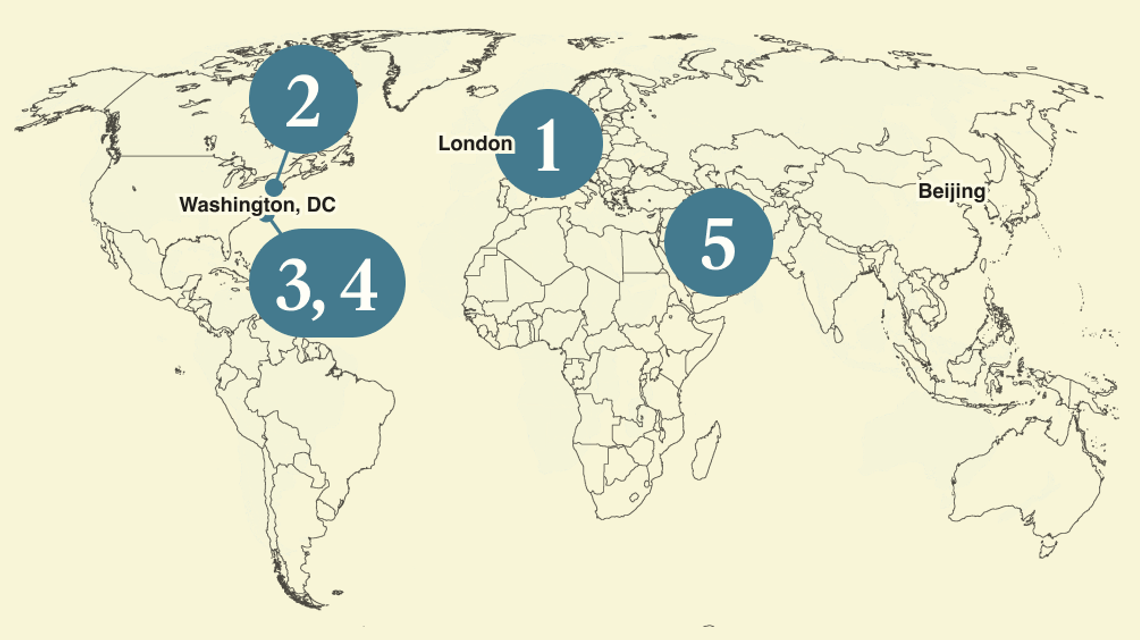 - Everybody wants to be a bank
- Prediction-market policies
- ‘BYO power’
- Wall St. home
- When should CEOs speak up?
 Draw me like one of your Wall St. boys |
|
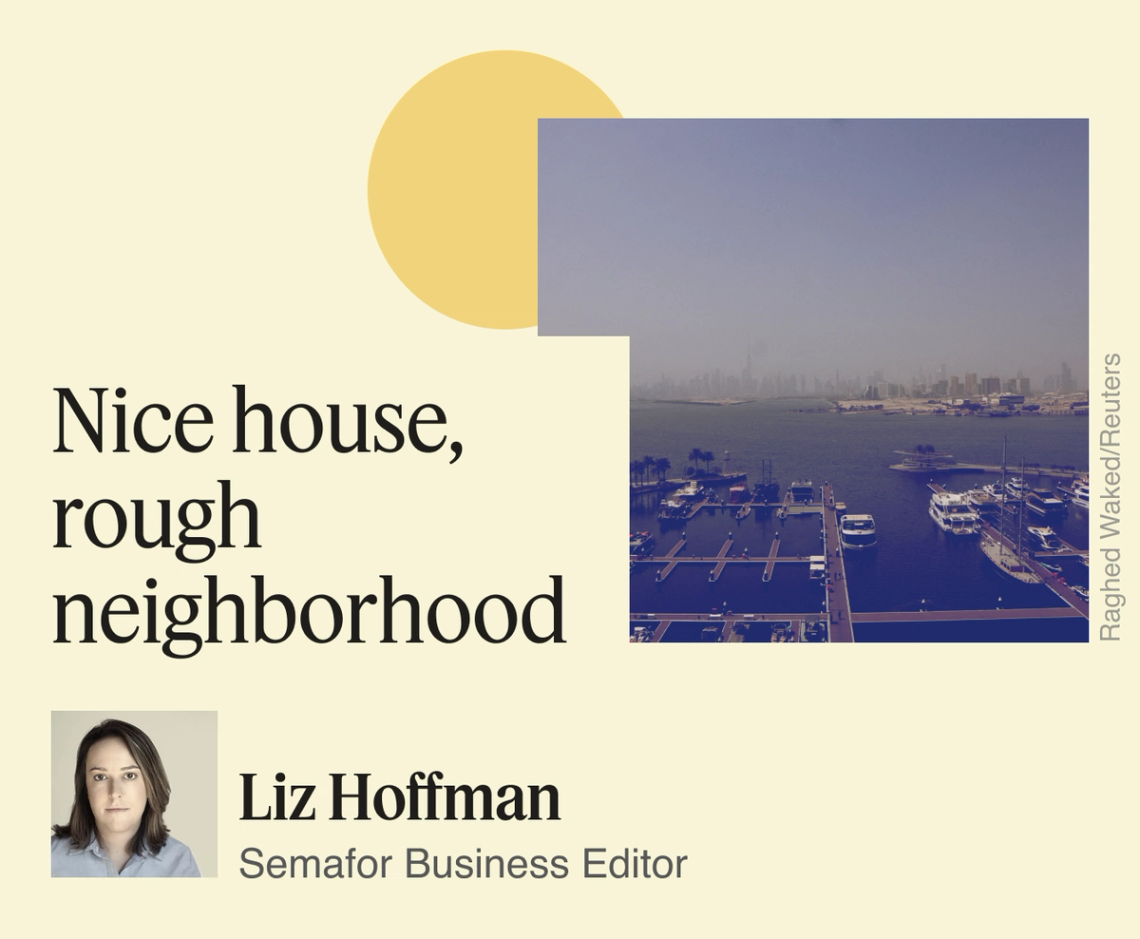 Wall Street spent the past few years rushing into the Middle East and now finds itself in a good house in a rough neighborhood. The widening war in Iran is a reminder that the Gulf, for all its modernization and courtship of the global high-finance set, remains a volatile place. A drone struck a hotel in Dubai’s Palm Jumeirah, and missile interceptors were fired near the financial center and the world’s tallest tower. Reopened airports are allowing expats to evacuate. How many of them will come back? The Middle East has become a playground for American financiers, who are salivating at the chance of tapping huge sums of money and shaping the region’s financial markets in their own image. But long before the missiles started flying, the economics of doing business in the Gulf were already changing — and not to Wall Street’s benefit. For two decades, Gulf governments played the role of rich aunt — writing checks, asking few questions, and happily letting New York bankers run the show. But Abu Dhabi, Doha, and Riyadh have morphed from deep-pocketed clients to fully fledged principals that are driving harder bargains in their dealings with Western financiers. They’re demanding better terms, more control, and richer economic returns in the form of domestic investment. Riyadh’s giant Public Investment Fund has shifted its spending toward projects at home. At the US-Saudi Investment Forum hosted by the Trump administration in November, most of the deals ran in one direction: toward Riyadh. The UAE is going a step further, making a play to manage not just more of its own money, but everyone else’s, too, raising the question of what happens if Wall Street’s best clients become their competitors. Twenty years ago, Western asset managers coming to Abu Dhabi would end meetings with Gulf sovereign wealth funds by saying, “This is how much we expect from you,” Khaled Al-Marri, CEO of real assets at Abu Dhabi sovereign fund Mubadala, told me in December at Abu Dhabi Finance Week, the Emirates’ answer to Davos and Milken. Now, Al-Marri said, “we are co-architects of deals together.” When the KKR executive sitting next to him chimed in about “partnership,” he was acknowledging that the power dynamic has flipped. Those partnerships can be profitable, but the easy money for Wall Street is disappearing. What remains is a harder bargain in an uncertain place — assuming the bankers choose to come back at all. |
|
Revolut wants to be a bank, too |
 Hiba Kola/Reuters Hiba Kola/ReutersContempt for the banking system was hard-coded into the DNA of fintech firms. Now they all want to be one. On Thursday, payment company Revolut said it would apply for a US bank license, the latest outsider to join the regulated club. PayPal in December applied for a slimmed-down state banking license, and UK payments firm Wise has applied for a non-deposit-taking bank charter, a few years after SoFi and Lending Club turned themselves into fully regulated banks. The political winds are at their backs: Jonathan Gould, who runs the Office of the Comptroller of the Currency, presented tech investor Palmer Luckey a novelty-sized charter for his new bank, calling it “an exciting day for the banking system” that “reflects the OCC’s commitment to a dynamic and diverse financial system that remains innovative and relevant over time.” And a reminder that we have Robinhood buying a bank on our 2026 bingo card. Even though it decided against a move in 2019, CEO Vlad Tenev has told Semafor he’s “not ideologically opposed.” |
|
How companies deal with prediction markets |
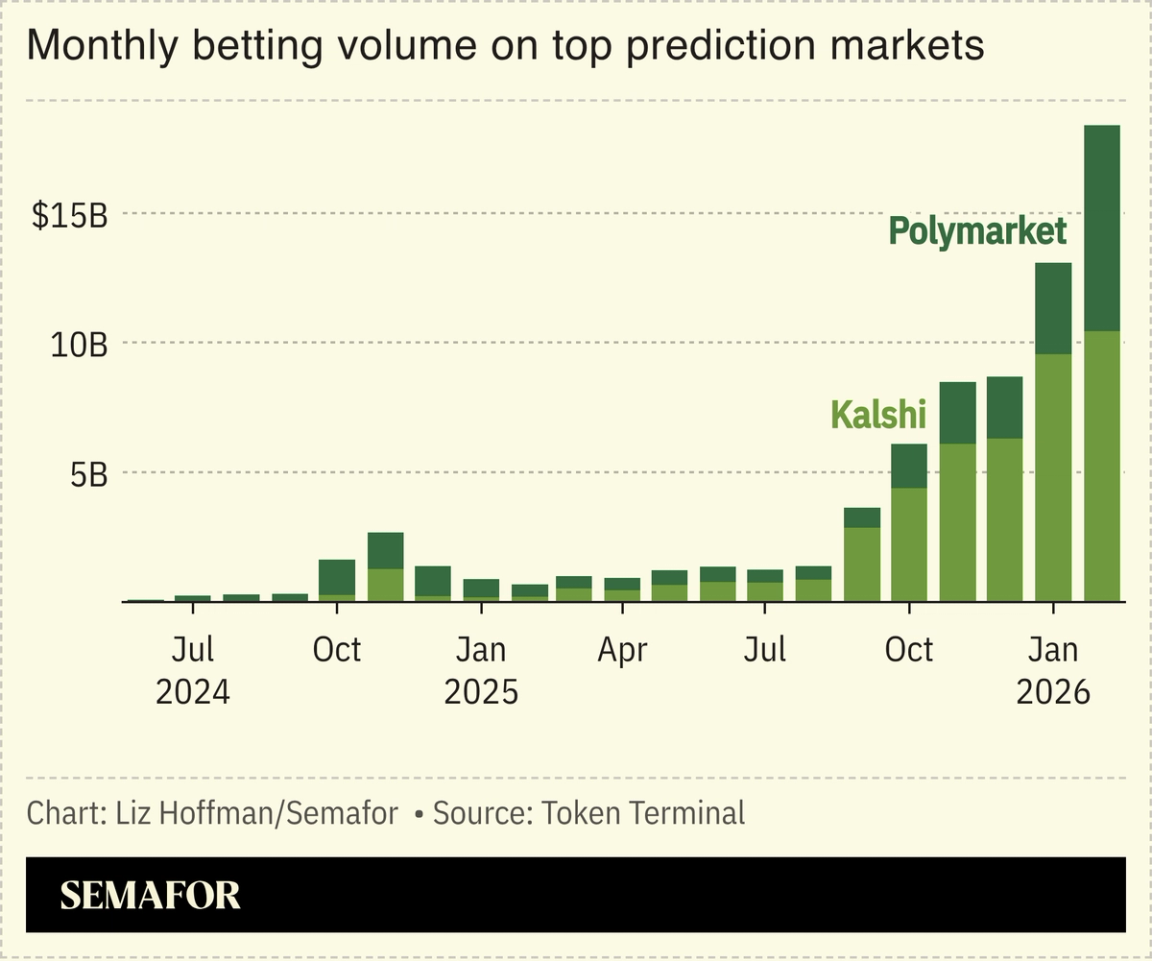 With prediction-market bets soaring on everything from what MrBeast will say during his next YouTube video to what Apple will unveil at its next event, the risk that corporate employees use insider information to bet on Kalshi and Polymarket is growing. But it seems companies — like government regulation — haven’t kept up. Semafor reached out to more than 100 companies, law firms, banks, PR shops, and hedge funds, and found that few had explicit rules around prediction markets. Others, like Google — whose 2025 Year in Search headlines appear to have been front-run by someone who knew the numbers ahead of time — had no comment. Some exceptions: OpenAI recently updated its company policy to clearly ban employees from using confidential info to bet on platforms like Polymarket and Kalshi — and then fired a worker who violated it. Ditto for MrBeast’s holding company, which instituted a similar policy and put an employee on leave after some Kalshi insider trading drama. United Airlines said its ethics rules don’t explicitly mention prediction platforms but do “prohibit using your position for your personal gain,” which would apply to Polymarket and Kalshi profits. If you’re reading this and would like to look front-footed on the largest corporate scandal about to hit your company, reach out. |
|
Trump to hyperscalers: BYO electricity |
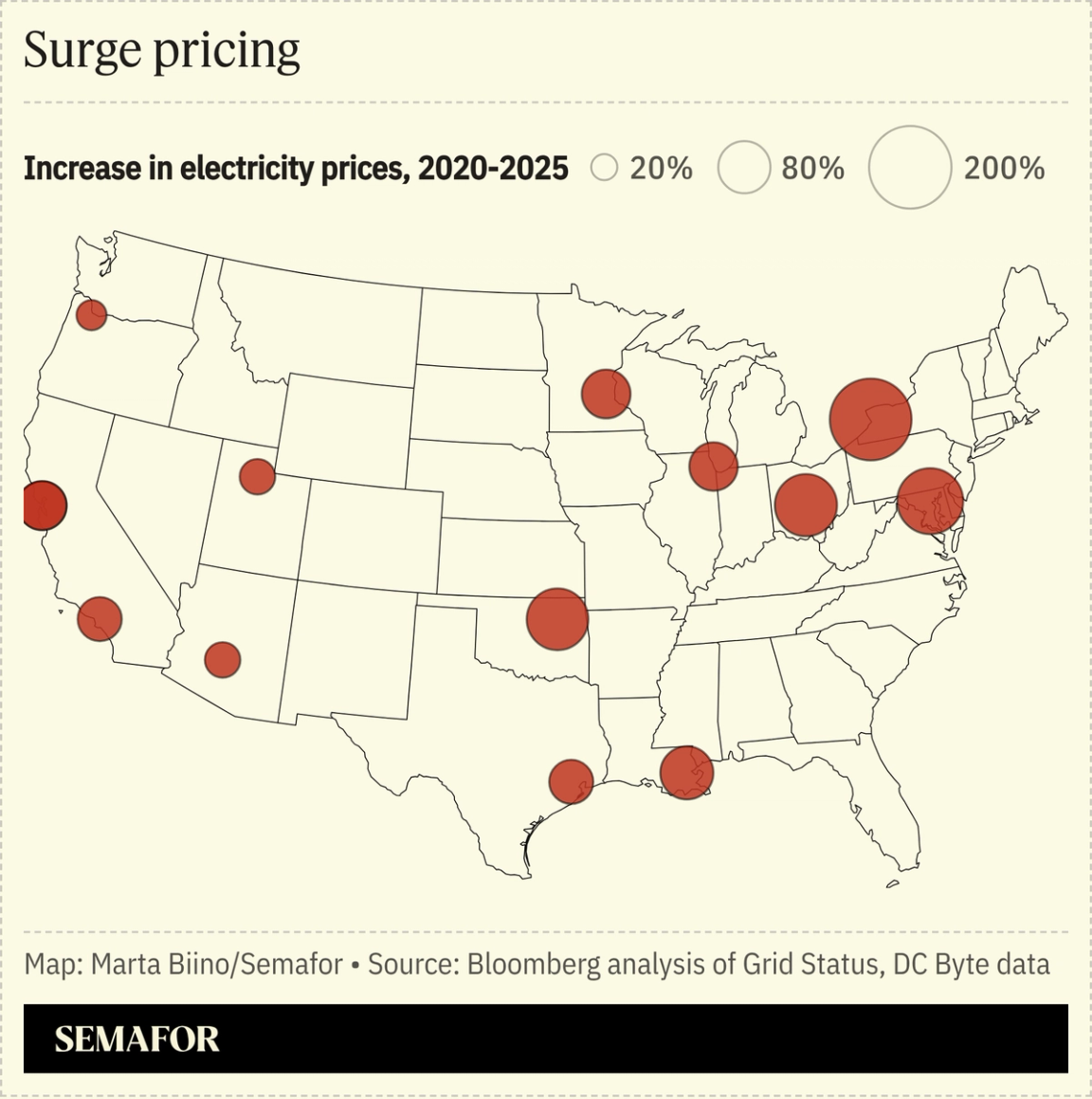 Top tech executives were at the White House on Wednesday promising to shoulder more of their data centers’ energy costs, a sign that both Washington and Silicon Valley are nervous about growing popular backlash to the AI boom. Amazon, Google, Meta, Microsoft, xAI, Oracle, and OpenAI signed a “ratepayer protection pledge,” which Trump said will have “a tremendous impact on electricity costs.” Data centers used 7% of all US electricity generated in 2025, according to Goldman Sachs, double their share from 2022. Right now the pledge is aspirational: It doesn’t include any specific new policies to help tech companies finance or build new energy projects, and the job of hammering out rate structures will ultimately fall to state and local regulators. The big drag on building out enough new power generation to keep prices in check is yearslong waitlists for gas turbines. But as electricity prices rise faster than inflation, polling moves against data centers, and local protests stop some projects, the politics are hitting Wall Street. After Democrats flipped two seats in November on the Georgia utility regulators’ board, analysts downgraded shares of the state’s biggest utility. “Good intent — but if it takes a White House pledge to prevent cost shifts, something’s broken,” Jamie Van Nostrand, who was the chair of Massachusetts’ utility regulator until October (and has a new Substack well-timed to cover the debate), tells Semafor. “A pledge alone won’t do it unless states give regulators the staff and expertise to enforce it.” |
|
Bessent breaks with White House on housing |
 Kevin Lamarque/Reuters Kevin Lamarque/ReutersTreasury Secretary Scott Bessent’s skepticism of bipartisan housing policy shows that Sen. Elizabeth Warren is getting under his skin. Bessent told House Republicans in a closed-door meeting Wednesday that Republicans should “take the lead” on the issue so they “don’t let the Democrats like Senator [Elizabeth] Warren get a hold of this issue,” Semafor’s Eleanor Mueller reports. (Warren has firmly grabbed hold — and follows Liz’s X feed). Outside the room, Bessent relayed concerns about a Senate-led bill that would force investors to sell any rental housing they build to individuals within seven years, a provision endorsed by the White House on Monday. One looming fight: Who is an institutional investor? The industry is pushing for a tighter definition of firms that own 1,000 homes or more. |
|
Uber CEO on (pre-war) Iran |
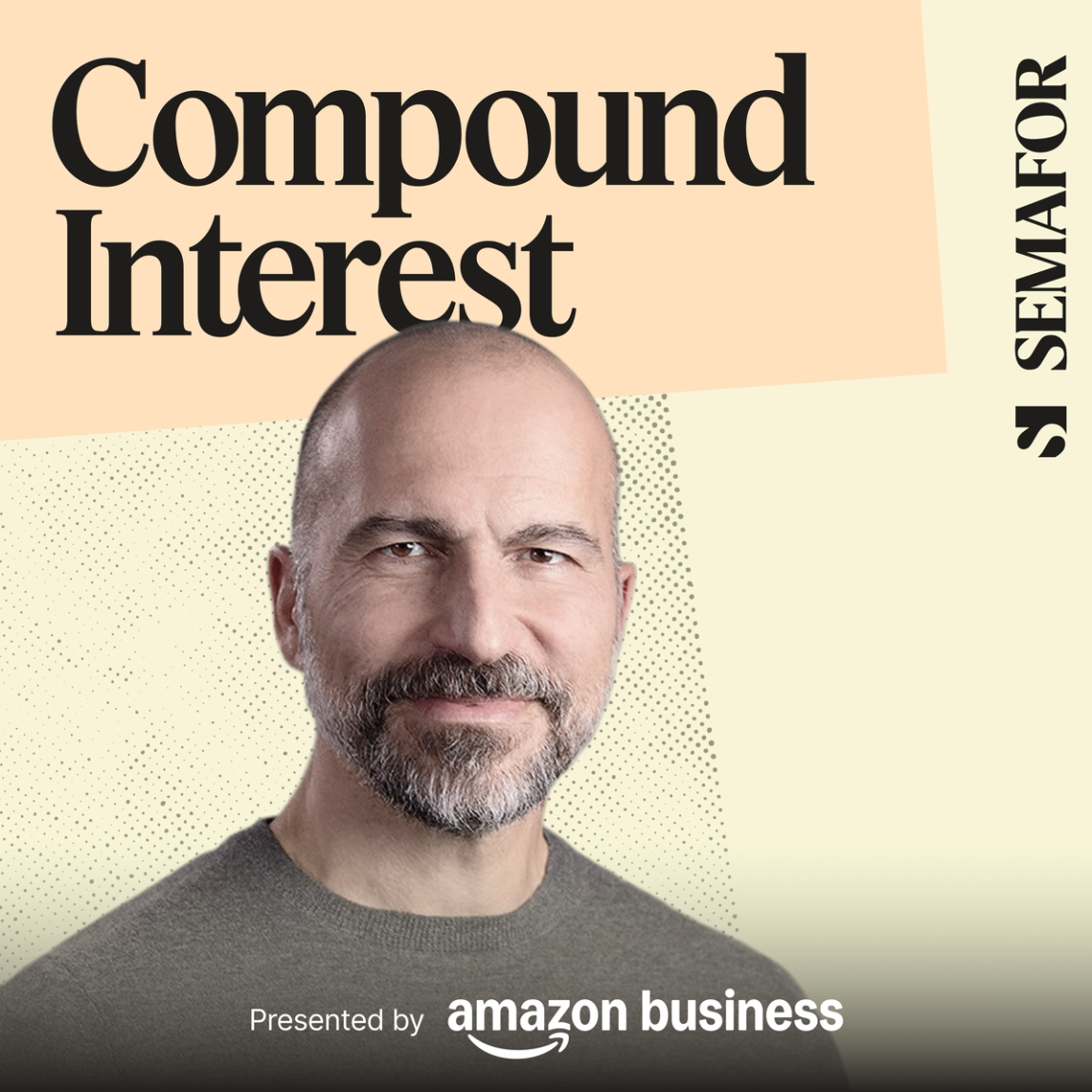 CEOs have spent the past few years retreating from speaking out on issues not directly tied to their business. That followed a period of solemn condemnations of societal ills and bland displays of allyship. In an unexpected moment on Semafor’s new business podcast, Compound Interest, Uber CEO Dara Khosrowshahi provided a middle path. We were speaking last week, after Tehran’s brutal crackdown on protests but before the US-Israel strikes. “I hope there’s regime change because that regime has been absolutely terrible for the people of Iran,” Khosrowshahi, whose family fled just before the 1979 Islamist revolution. “It’s a regime that has not earned its keep.” But he added that transformation should come “from the inside … Regime change driven by countries — driven by Western countries, especially — doesn’t have a good track record.” He said he had talked “very quickly” to President Donald Trump about it: “The fact that he cares matters.” CEOs might take note and stay quiet where they don’t have authority or chance to make a difference — but remember it’s OK to pick their spots. |
|
 There’s a reason more than 200,000 investors trust Opening Bell Daily. It’s the newsletter Wall Street actually reads. Get the best market analysis, insider picks, and actionable ideas in one daily briefing. Subscribe for free. |
|
➚ BUY: AI slop. Security firm DoubleVerify uncovered an AI boiler-room operation of more than 200 websites gulling advertisers into placing ads. (Weak opsec left their prompts exposed to researchers.) ➘ SELL: Human slop. Sweetgreen’s pivot to wraps is the latest attempt by a mainstay of the fast-casual sector to stay popular with younger customers who have fallen out of love with the slop bowl. |
|
 Companies & Deals- Fine print: Kalshi froze $54 million in bets on the death of Iran’s supreme leader after criticism that it was essentially monetizing assassinations.
- Cessation of hostilities: The Pentagon and Anthropic are in talks to resolve their standoff, the Financial Times reports, suggesting that the US military isn’t ready to overcommit to OpenAI and that Anthropic doesn’t want to give up on a whale of a customer.
- China chips: Nvidia has reportedly stopped making chips destined for China, concerned that Washington and Beijing won’t be able to see past trade disagreements. That would be a setback for China, whose homegrown chips still aren’t as powerful as those of US rivals.
Watchdogs- Bellwether report: The US added the most jobs in six months in February. The bad news: Hiring was strongest in education and health care, which tend to grow no matter how the economy is doing.
|
|
|


