And Africa and Europe are hit with rising energy bills.

Get full access to Reuters.com for just $1/week. Subscribe now.


Sustainable Switch

Sustainable Switch


By Sharon Kimathi, Energy and ESG Editor, Reuters Digital

Hello,

Today’s newsletter is focused on the U.S., Israeli strikes against Iran as we continue to look at governance concerns.

Firstly, we take a look at the vote that took place in the U.S., along with an explainer on whether the attacks against Iran are legal.

Then we look at the countries aiming for a peaceful solution such as South Africa, who have also been hit with supply chain issues.

See the below for more stories on the effects of the conflict in the Middle East:

  • How Dubai's safe-haven status is being put to the test
  • 'Everyone cheered': stranded Gulf travellers gamble on their route home
  • Exclusive: Euro zone banks face multiple threats from Iran war, ECB supervisor says
  • Comment: Trump's Hormuz shipping plan is too little, too late in race to avert energy shock
 

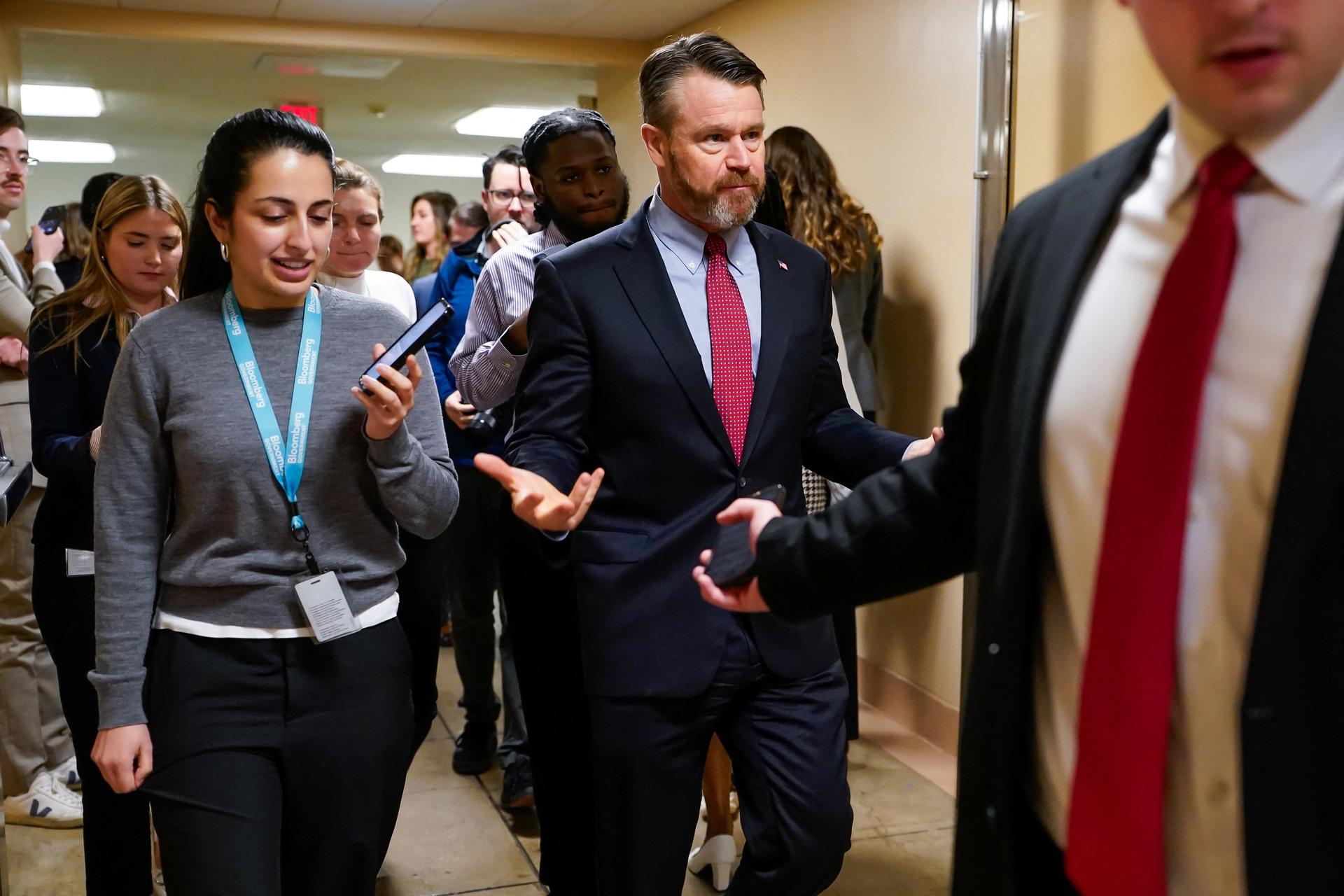
U.S. Senator Todd Young before a U.S. Senate on a bipartisan war powers resolution aiming to stop the military campaign against Iran. Washington, D.C., U.S. REUTERS/Elizabeth Frantz

Are the US strikes legal?

The attacks on Iran are pushing the boundaries of U.S. President Donald Trump's constitutional authority, according to legal experts.

Under the U.S. Constitution, the president commands the armed forces and directs foreign relations but only Congress has the power to declare war.

The Senate backed Trump's military campaign on Wednesday, voting to block a bipartisan resolution aiming to stop the air war and require that any hostilities against Iran be authorized by Congress.

Presidents from both the Democratic and Republican parties have conducted military strikes without congressional approval when deemed in the national interest but of a less intense nature in terms of ⁠duration and scope than what would be considered a war – a limit that Trump may be testing.

The War Powers Resolution (WPR) of 1973 also acts as a check on presidential power.

Under the WPR, the president can only involve the military in an armed conflict when Congress has declared war or provided specific authority or in response to an attack on U.S. territory or its military. It requires the president to report regularly to Congress, which the administration started to do on Monday.

Trump and Defense Secretary Pete Hegseth have both described the action as a war. Hegseth called it "the most lethal, most complex and most-precision aerial operation in history." Trump said it could last five weeks or more and cautioned that there will be more U.S. casualties.


Playing a mediating role

Meanwhile, South Africa’s President Cyril Ramaphosa told local media on the sidelines of the Africa Energy ⁠Indaba conference in Cape Town that he is willing to play a mediating role ‌in the Middle East conflict if asked.

"If the ‌opportunity ⁠were to open, we would talk and say: there must be a ceasefire. Dialogue is always the best way of ending conflict ⁠and then ending the war. And we want this war to come to an end ⁠immediately," he said.

Ramaphosa also said that the escalating conflict in the Middle East was already putting strain on the African continent's supply chains and causing higher energy prices.

"As we have seen with Russia-Ukraine and during the COVID-19 pandemic, shifting ⁠geopolitical sands underscore the vulnerabilities of import-dependent economies across Africa," Ramaphosa added.

Oil and gas prices have surged following the strikes on Iran and retaliation by Tehran that forced shutdowns of oil and ‌gas ⁠facilities across the region and disrupted shipping in the crucial Strait of Hormuz.

The interruption immediately pushed up the prices of energy supplies on financial markets in Europe. Among European countries, Britain, Italy, Belgium and Poland are the most reliant on LNG imports that pass via the Strait of Hormuz, according to data from the U.S. Energy Information Administration.

Click here for a story on how Britain's domestic energy price cap in July is forecast to rise by about 10% in response to a surge in wholesale prices tied to the conflict in the Middle East.

Want to keep up with the daily developments of the conflict? Click here to subscribe to the Reuters Iran Briefing newsletter keeps you informed with the latest developments and analysis of the Iran war. 


Talking Points


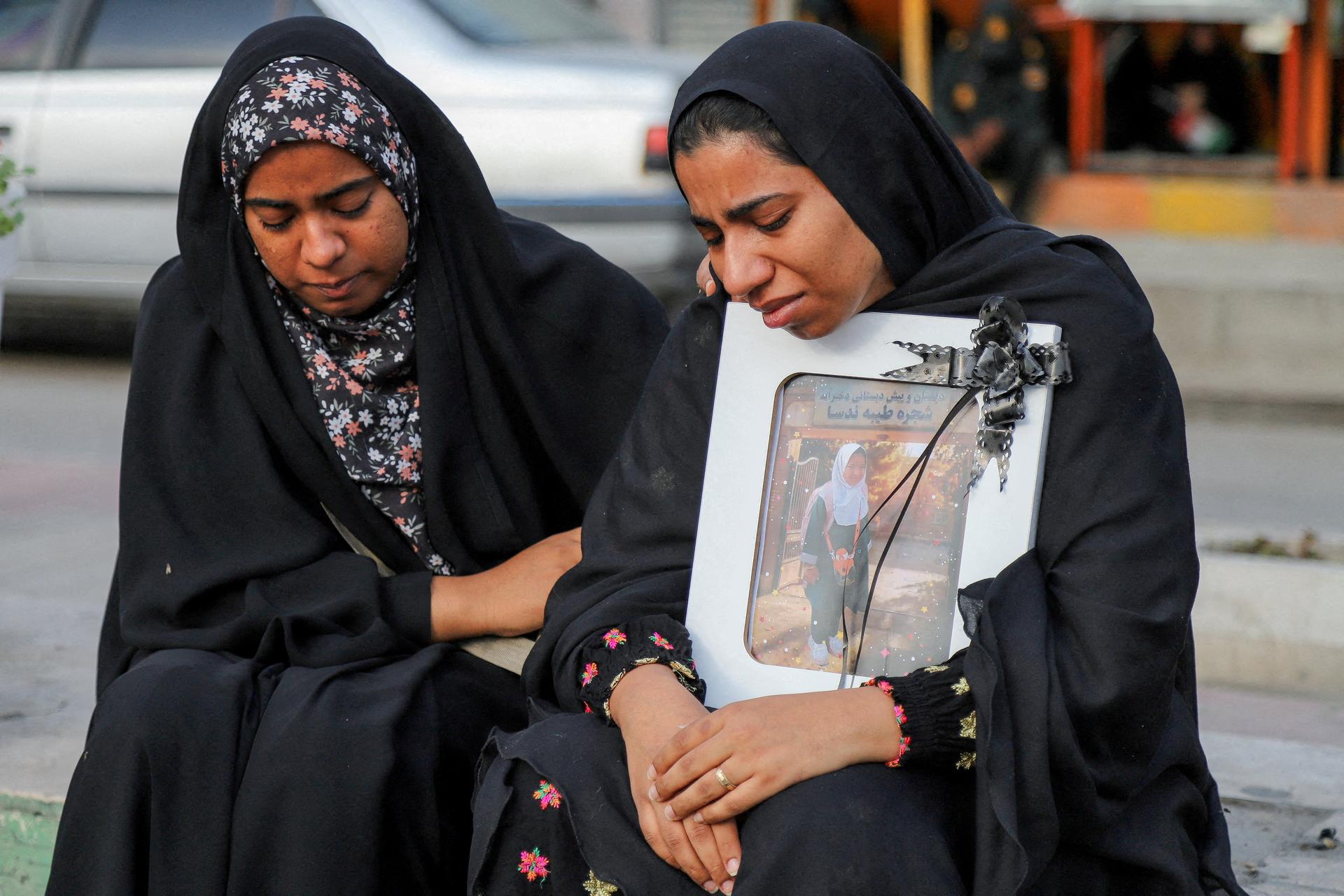
People mourn on the day of the funeral of the victims following a reported strike on a school in Minab, Iran. Amirhossein Khorgooei/ISNA/WANA (West Asia News Agency) via REUTERS

  • UN shocked over strike at school: The U.N. Independent ⁠International Fact-Finding Mission on Iran expressed deep shock over a U.S. and Israeli strike that hit the Shajareh Tayyebeh girls’ school in Minab in southern Iran on Saturday. Most of the victims appear to have been schoolgirls aged seven to 12, it said. A separate U.N. panel of experts said more than 160 children were killed, citing reports.
    • U.S. history revisions: The Trump administration has been targeting  cultural and historical institutions – from museums to monuments to national parks –  to remove what he calls "anti-American" ideology. An internal government database reported the scope of the Trump administration's effort to revise or remove information on African-American history, LGBT rights, climate change and other topics at hundreds of national park ⁠sites. 
    • DRC history dispute: KoBold Metals, a U.S. mining company backed by billionaires Jeff Bezos and Bill Gates, is in a dispute with Belgium's AfricaMuseum over who should digitise antique maps in the museum’s archive documenting how the mineral wealth of what is now ‌the Democratic Republic of Congo was exploited. Belgium's King Leopold II seized Congo in 1885, leading to widespread plunder and extreme brutality.
    • China’s five-year plan: China set out a five-year roadmap to turbocharge scientific breakthroughs and embed AI across its industrial economic machine at its annual parliamentary meeting on Thursday, outlining its priorities for the economy and sectors slated for policy support and funding. Click here for a summary of the main climate and power initiatives.  
  • U.S. tariff refunds: Judge Richard Eaton of the U.S. Court of International Trade in Manhattan ordered the government to begin paying potentially billions of dollars in refunds to importers who paid tariffs that the Supreme Court ‌said last month were collected illegally. He ordered the refunds to be made with interest. Click here for a story on how some small businesses can’t afford to pursue a refund as it would divert their time, money or both from the need to keep operations running.
 

ESG Spotlight

Hindu devotees catch flower pellets thrown by a priest as they are sprayed with coloured water in a temple’s premises for Holi celebrations. Ahmedabad, India. REUTERS/Amit Dave

It’s time for a little breather and a treat for your eyes. Click here for some surreal scenes from the colorful Holi festival in India.

The Hindu festival of Holi, also known as the Festival of Colors, heralds the beginning of spring. 


Sustainable Switch was edited by Elaine Hardcastle.


Sponsors are not involved in the creation of newsletters or other Reuters news content. Advertise in this newsletter or on Reuters' website