| | Donald Trump offers no fixed timeline for the US’ military campaign against Iran, the conflict disru͏ ͏ ͏ ͏ ͏ ͏ |
| |  | Flagship |  |
| |
|
The World Today | 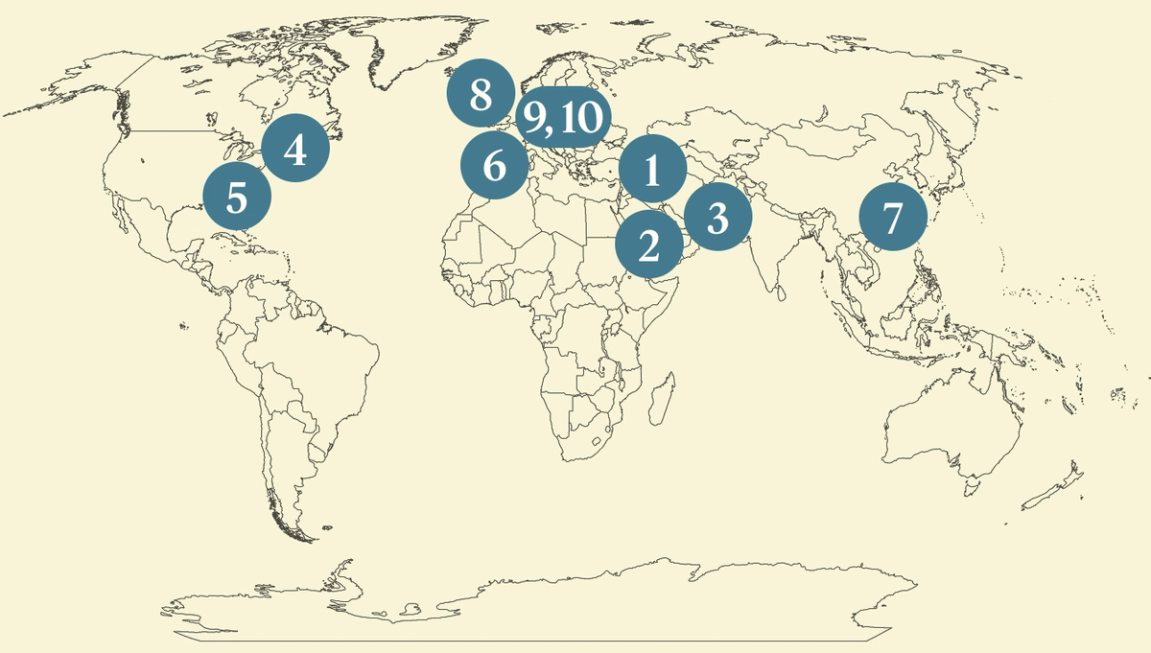 - No fixed timeline on Iran
- The Gulf weighs its options
- Energy production disrupted
- US stocks recover
- US munitions dwindling
- France’s nuclear overhaul
- BYD sales fall in China
- UK electricity prices up
- Shingles vaccine and dementia
- Early Rembrandt discovered
 A look back at Dubai’s blistering rise as a global financial hub. |
|
Trump suggests extended Iran conflict |
 Ken Cedeno/Reuters Ken Cedeno/ReutersUS President Donald Trump said Monday there was no fixed timeline for the military campaign against Tehran, signaling that the expanding Middle East conflict could last weeks. Even as the Pentagon chief rejected the idea of an “endless” war, Trump said “whatever the time is, it’s OK, whatever it takes,” suggesting it could extend beyond the initial plan of four to five weeks. The UAE and Qatar, which have been targeted by Iranian reprisals, are lobbying allies to pressure Washington into finding a diplomatic off-ramp, Bloomberg reported. Trump could also face domestic pressure: Six US service members have been killed, and polls suggest most Americans disapprove of the strikes. Rising gas prices could also dent Trump’s affordability messaging. |
|
Gulf debates how to respond to Iran |
 Smoke from an Aramco refinery. Stringer/Reuters Smoke from an Aramco refinery. Stringer/ReutersIran’s retaliatory strikes on Arab Gulf states have put the region in a quagmire, as it faces the prospect of all-out war with Tehran. The Islamic Republic has hit civilian targets and energy infrastructure in the six oil-rich states, with the apparent calculation that they could pressure the US back to negotiations. But this strategy might backfire, analysts said, by strengthening the Gulf’s resolve to confront Iran’s “unprecedented onslaught,” The Wall Street Journal reported. Gulf states have been on the defensive so far, pushing for diplomacy while leaving the door open to respond to Iran’s aggression, but if the regime’s strikes keep up, the UAE in particular “will undoubtedly flex its offensive capabilities,” a Gulf security expert wrote for Semafor. |
|
War disrupts Gulf energy sector |
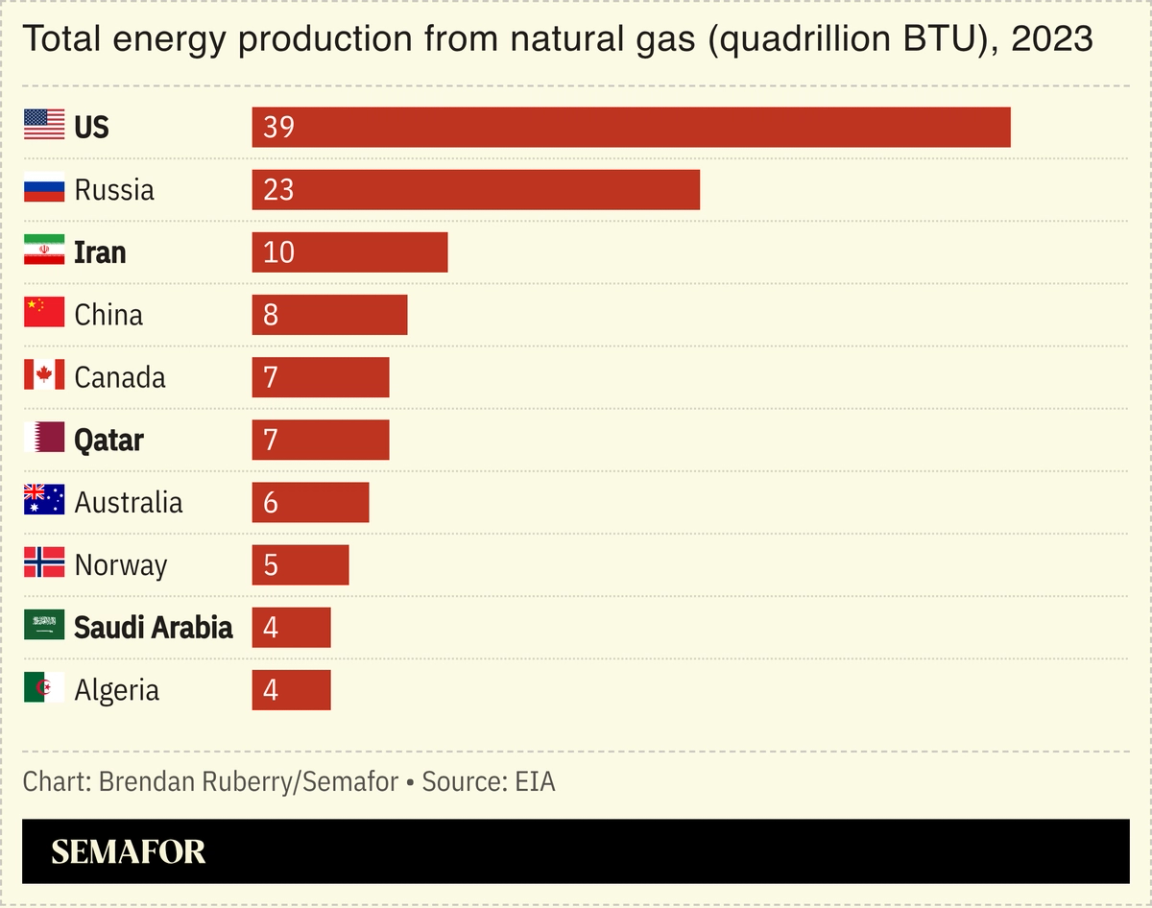 The swelling Iran conflict disrupted energy production in the Gulf, raising oil and gas prices and exposing the region’s lingering dependence on the sector. Saudi Arabia’s state-owned energy giant shut down its largest oil refinery on Monday after it came under attack, while Qatar halted LNG production. Tankers are also reluctant to pass through the main route for energy exports, the Strait of Hormuz, over fears of being caught in the crossfire. Despite years of economic diversification efforts, energy still underpins the region’s economies; it could yet become even more important if the war spirals and the international investors and residents that are crucial to the non-oil sector are spooked into leaving, Semafor’s Gulf briefing wrote. |
|
US stocks steady despite conflict |
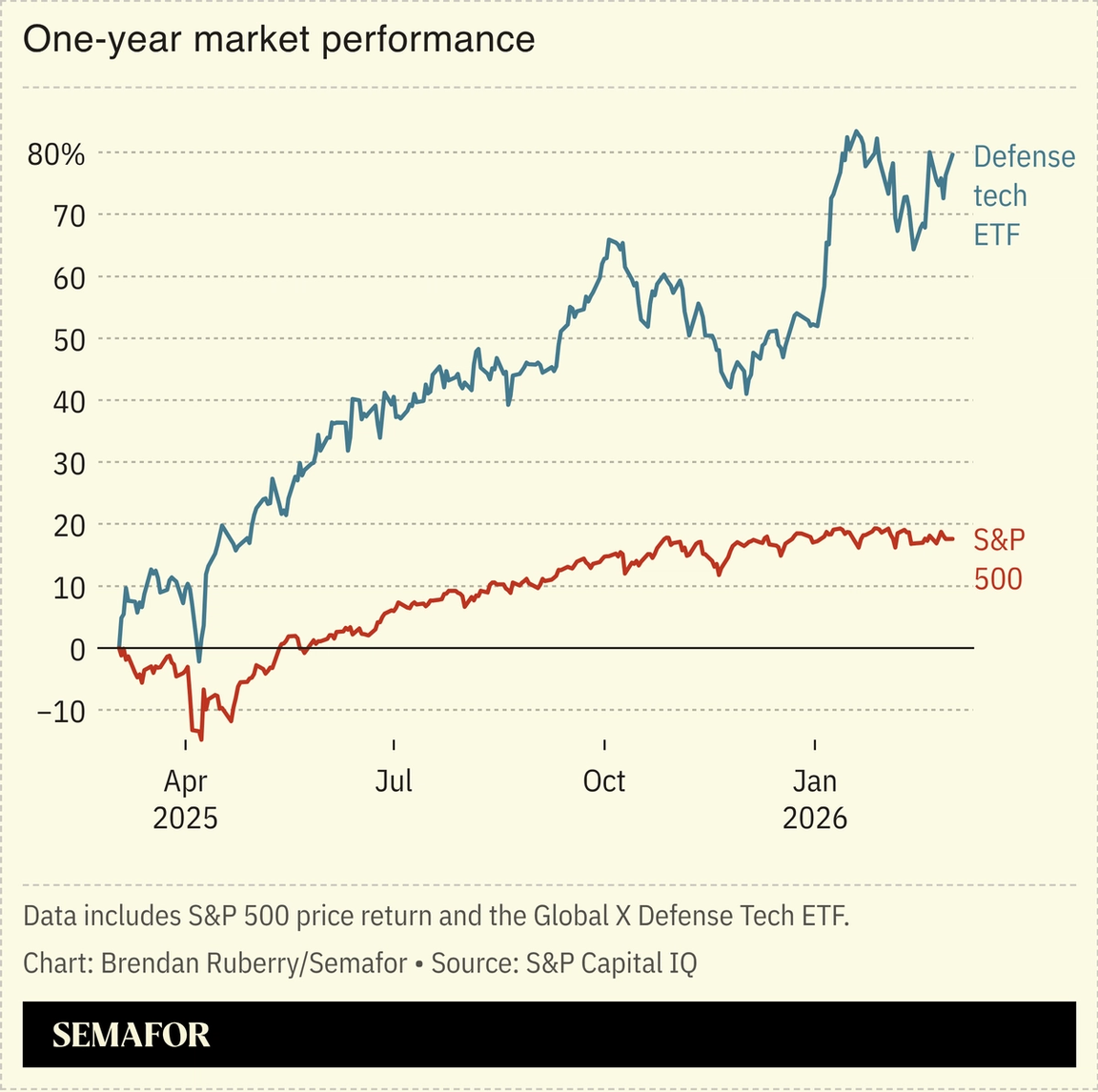 US stocks rebounded Monday after the US attack on Iran rattled global markets, with investors parsing the winners and losers of the Middle East conflict. Defense and energy stocks in New York rose while shares in travel companies plunged. “We remain in a bull market despite escalating geopolitical tensions,” one investment executive said. The US-Iran-Israel war is the latest test of the widely held notion that markets largely shake off global conflicts. Still, some signs of strain emerged beyond stocks: Ten-year bond yields rose on fears that rising oil prices could stoke inflation, and gold jumped. Outside the energy sector, prices for fertilizer and aluminum — both significant Gulf exports — could also surge due to shipping disruptions. |
|
US facing dwindling munitions stockpiles |
 US Navy/Handout via Reuters US Navy/Handout via ReutersAn extended US military campaign in Iran could be constrained by a munitions shortage. The Pentagon is racing to replenish its stocks of interceptors to thwart Tehran’s aerial retaliation of missile and drone attacks, but “we’re using them faster than we can replace them,” one analyst told The Wall Street Journal. Fighting off Iran’s proxies in the Middle East has already eaten into the US’ air-defense weapon supplies in the region, and while Israel’s involvement has eased the strain, it is also rapidly using up its own stockpiles. The US’ top military general reportedly warned before the attack began that any Iranian operation would be more difficult than Washington’s intervention in Venezuela, noting that weapons stockpiles could be a crucial limiting factor. |
|
 The Gulf has transformed from a bustling economic hub to the front line of a major war. Iran’s retaliatory strikes have hit bases and airports across the region. The Gulf’s cities have gone quiet, their airports grounded and streets empty as residents take shelter. The US-Israel assault that killed Iran’s supreme leader has unleashed a new and unpredictable phase of conflict. For the Gulf, the illusion of distance from volatility has been put on hold. Energy markets are bracing for volatility, diplomacy is strained, and the region’s stability is under pressure. Semafor Gulf is here to help you make sense of it. Four times a week, editor Mohammed Sergie and our team on the ground across Abu Dhabi, Dubai, and Riyadh will connect you with what’s happening on the ground, and how it affects business, energy, and diplomacy — bringing clarity to the most consequential story in the world.
|
|
France overhauls nuclear policy |
 Yoan Valat/Pool via Reuters Yoan Valat/Pool via ReutersFrance will increase its nuclear arsenal and may deploy the warheads to allied European countries for the first time, President Emmanuel Macron said Monday, marking a major overhaul of French policy. The announcement reflected Paris’ efforts to strengthen Europe’s security independence and deterrence amid questions about Washington’s commitments to the continent. Macron’s speech, planned long before a fresh conflict broke out in the Middle East, nevertheless “illustrated France’s willingness to take on a new role in a dangerous world,” The New York Times wrote. For decades, France’s nuclear program “hardly excited our neighbors, who felt protected by the American umbrella,” a Les Echos journalist wrote. That those neighbors are now interested marks “a strategic turning point.” |
|
BYD’s sales decline worsens |
 Rafael Martins/Reuters Rafael Martins/ReutersChinese EV giant BYD in February recorded its largest sales slump since COVID, as domestic demand waned. The expiration of government subsidies — coupled with a larger consumption slowdown and the extended Lunar New Year holiday — have hurt China’s carmakers and made overseas markets central to their growth plans: BYD’s exports increased in February, while sales in China fell 65%. The company is building its first European plant in Hungary, and is bidding to buy a Nissan-Mercedes-Benz plant in Mexico. To boost demand in China, BYD has teased a “disruptive technology” launch this week, likely linked to its next-generation charging technology, CnEVPost reported. |
|
Green tech drives up UK energy costs |
 Russell Cheyne/Reuters Russell Cheyne/ReutersThe UK’s high electricity prices are hurting its economy, and renewable energy may be part of the problem. In the early 2000s, British energy was among Europe’s cheapest; now only Germany has higher prices, a parliamentary report found. Gas price volatility is a factor, but that affects all Europe. The Financial Times’ chief economics commentator said Britain is especially vulnerable because it relies on gas to smooth intermittent renewable supply. The high costs have driven a decline in manufacturing as well as increased domestic prices. Wind and solar is cheap to run, but expensive to install, The Conversation noted, and often production is wasted because the UK’s grid is outdated and cannot move electricity to where it needs to be. |
|
Shingles vaccine may prevent dementia |
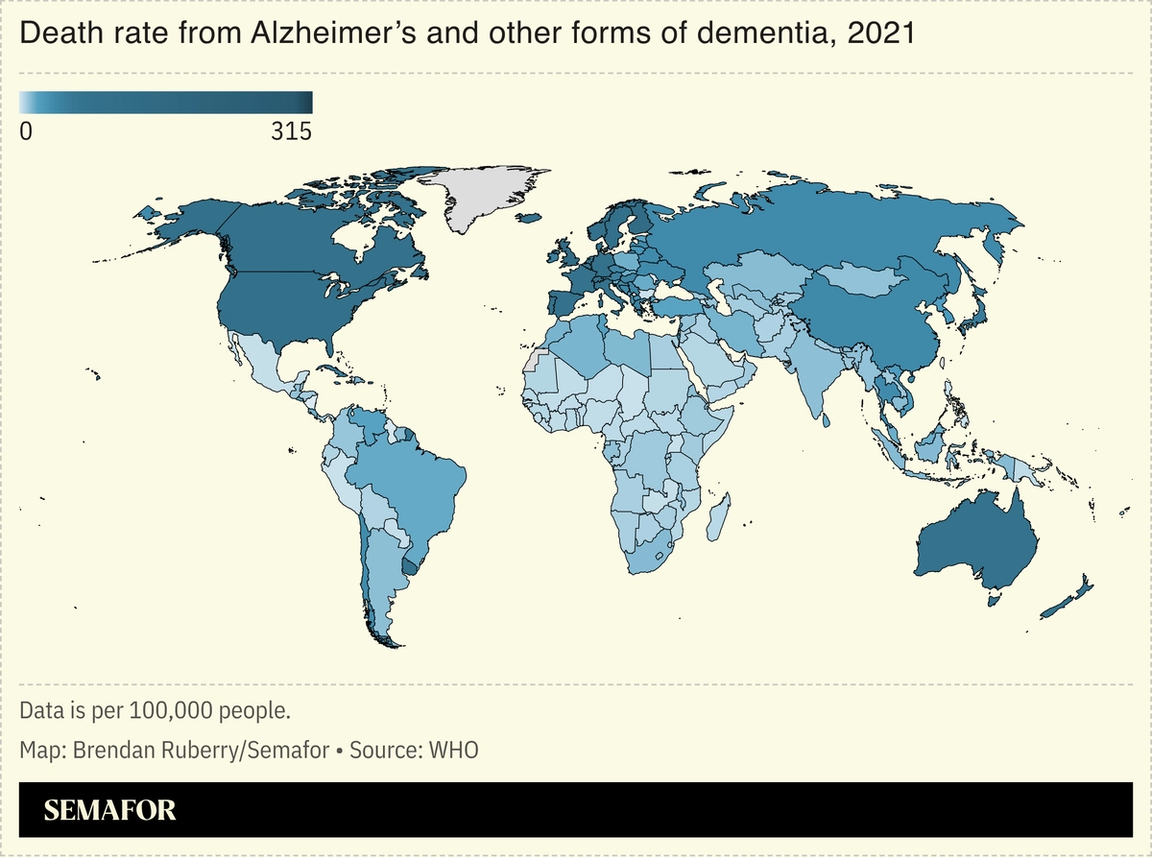 There is growing evidence that shingles vaccines protect against dementia. Researchers first noticed that shingles-vaccinated adults seemed to have lower rates of dementia after the release of the Zostavax shot in 2006. Several large-scale natural experiments, using staggered rollouts of the vaccine to different areas to study its impact, consistently found a 20% or higher fall in dementia rates for the vaccinated. Research into the more recent Shingrix vaccine hints at an even higher protective effect, Ars Technica reported: A study published this month suggested a 51% lower risk. Dementia cost the global economy $1.3 trillion in 2019, per the World Health Organization; there are 10 million new diagnoses a year, and that figure will rise as the population ages. |
|
|


