| | In this edition: The impact of the Middle East conflict on Africa, the unlawful detention of Tanzani͏ ͏ ͏ ͏ ͏ ͏ |
| |  Kigali Kigali |  Dar es Salaam Dar es Salaam | Gitega |
 | Africa |  |
| |
|
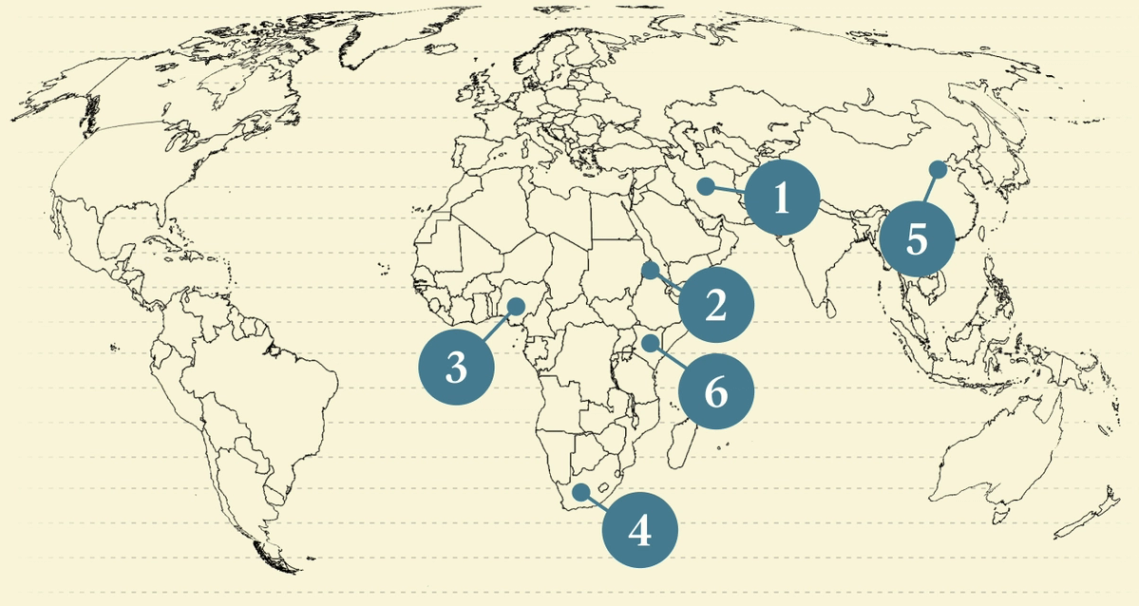 - Iran conflict hits oil prices
- Africa braces for fallout
- Opportunity in drones
- Mining project to restart
- China’s failed media push
- Opportunity in VC scarcity
 The Week Ahead, and the Tour du Rwanda winner. |
|
Middle East fallout on African oil |
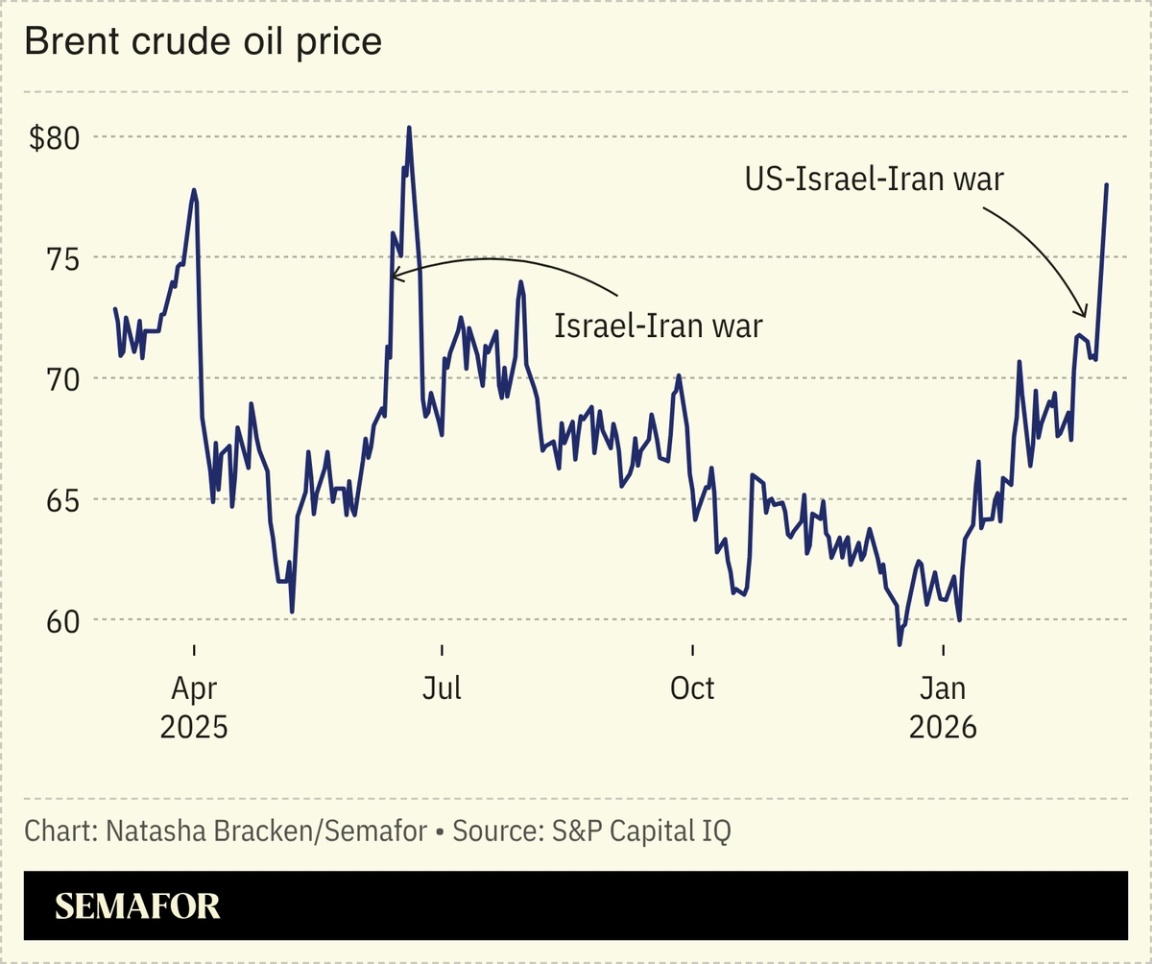 Oil prices jumped after the impact of the conflict between the US, Israel, and Iran expanded beyond Gulf states, offering short-term fiscal relief for African crude producers while raising fresh inflation risks for the continent’s fuel importers. JPMorgan said a prolonged conflict could push crude above $100 a barrel, helping bolster revenues at a time of strained public finances and heavy debt loads in producers such as Angola, Equatorial Guinea, and Nigeria. But Clementine Wallop, an analyst at consultancy Horizon Engage, warned that surging prices were not uniformly positive: “Higher crude prices mean higher fuel prices, and several of these countries have worked or are working hard to stop subsidy programs.” Nigeria and Angola have scrapped costly fuel subsidies, exposing consumers to global swings. In countries with limited refining capacity, tighter supplies of imported fuel could quickly lift pump prices and transport costs. The turmoil also clouds deepening Gulf-Africa ties, as Gulf states become critical investors across the continent. The African Union warned that further escalation could carry “serious implications for energy markets, food security, and economic resilience — particularly in Africa.” — Yinka Adegoke |
|
Impact of Middle East conflict on Africa |
 Members of the Islamic Movement in Nigeria stage a pro-Iran protest. Hamza Ibrahim. Members of the Islamic Movement in Nigeria stage a pro-Iran protest. Hamza Ibrahim.African countries could bear the brunt of a protracted conflict in the Middle East if global tensions spill over into new ideological or military standoffs, analysts warned. They could “get trapped in the messy middle,” the Institute for Security Studies think tank noted, warning that “North and East African states face particular exposure to direct risks from primary and proxy actors.” South Africa, which has repeatedly criticized Israel’s military operations in recent years, called for international law to be observed, while Kenya said “multilateral diplomacy” was the best way to resolve the crisis. Meanwhile, Africa’s biggest Shiite Muslim sect, the Islamic Movement in Nigeria, staged protests over the attacks on Shiite-majority Iran. Thousands took part in the demonstrations across northern Nigeria, waving photos of the late Iranian supreme leader, Ayatollah Ali Khamenei, and chanting slogans such as “Death to America, death to Israel.” Shiites are a minority in Nigeria, where the majority of the Muslim population is Sunni. One protester, among thousands who took to the streets of Kano, northern Nigeria’s commercial hub, told Semafor: “Our revenge will definitely come; Trump and Netanyahu should know that we will not let this go.” — Hamza Ibrahim |
|
Nigerian drone startup seizes opportunity |
| | Alexander Onukwue and Adrian Elimian |
| |
 The Terra Industries factory in Abuja. Alexander Onukwue/Semafor. The Terra Industries factory in Abuja. Alexander Onukwue/Semafor.Nigerian drone manufacturer Terra Industries has caught the eye of US investors amid heightened interest from Washington in the country’s security crises. The Abuja-based company, which was founded two years ago and sells to African government agencies and private companies, raised $34 million in January across two funding rounds that were led by Silicon Valley venture capital firms 8VC and Lux Capital. Nathan Nwachuku, Terra’s co-founder and CEO, told Semafor that the money raised speaks to “the current momentum [and] new contracts won.” The Trump administration is increasingly putting pressure on Nigeria to stem a wave of kidnappings — which the US claims mainly affects Christians — that are attributed to militant groups. Last month, Terra announced that it had formed a pact with an arm of the Nigerian military to form a joint venture company that will produce “high-technology systems” within the country for security and surveillance. Encouraging the use of drones is a growing feature of US security partnerships in Africa, said Michael O’Hanlon, of the Brookings Institution think tank. The vast Sahel region is “a problematic area for extremist violence,” he said, and drone technology is vital in covering large swaths of this terrain. |
|
Rio Tinto restarts South Africa project |
 The value of a mining project in South Africa that will be restarted, Rio Tinto announced, potentially reinforcing the supply of globally sought minerals. The Richards Bay Minerals’ Zulti South project has been halted for six years because of violent unrest including protests and extortion attempts, but the mining giant said relations with the local community and the security situation had now improved. The operation in KwaZulu-Natal province is focused on extracting zircon, rutile, ilmenite, and titanium oxide — critical ingredients in products such as paint, sunscreen, and smartphones. Construction is scheduled to start before the end of the month, reported Reuters, with commercial production expected to begin two years later. |
|
China’s failed Africa media push |
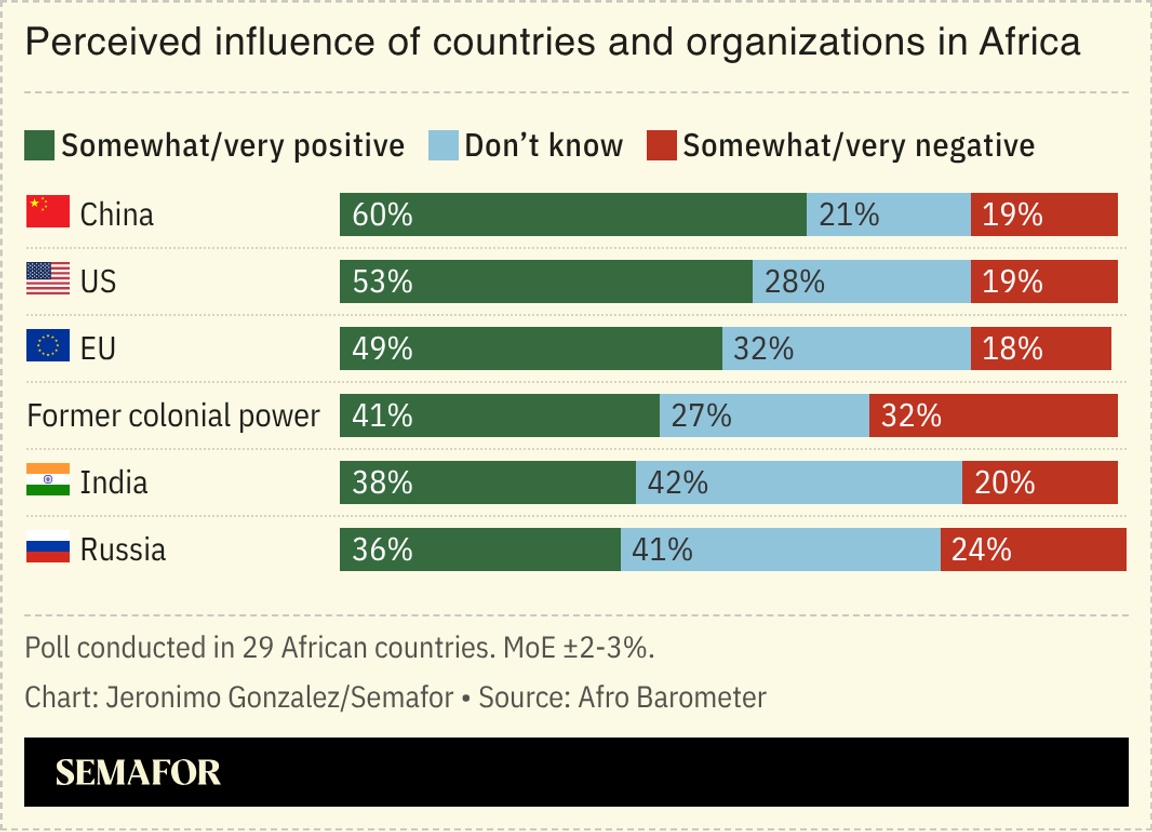 Beijing’s multibillion-dollar, decades-long campaign to expand Chinese media’s presence in Africa has largely failed, with consumers turning to other international outlets instead. Since the turn of the century, China has risen to become Africa’s biggest trading partner: State-backed firms have spent billions to gain control of the continent’s critical resources. The investment spree has boosted Africans’ views of Beijing, with China recently topping a favorability poll conducted by Afro Barometer. However media organizations have failed to keep up, with bureaucratic dysfunction and tighter political controls marking major roadblocks for Chinese firms. “Audiences are more attuned to news from the West than from China, which generates distrust,” a Nigeria-based analyst told Bloomberg. |
|
View: Opportunity in African capital |
 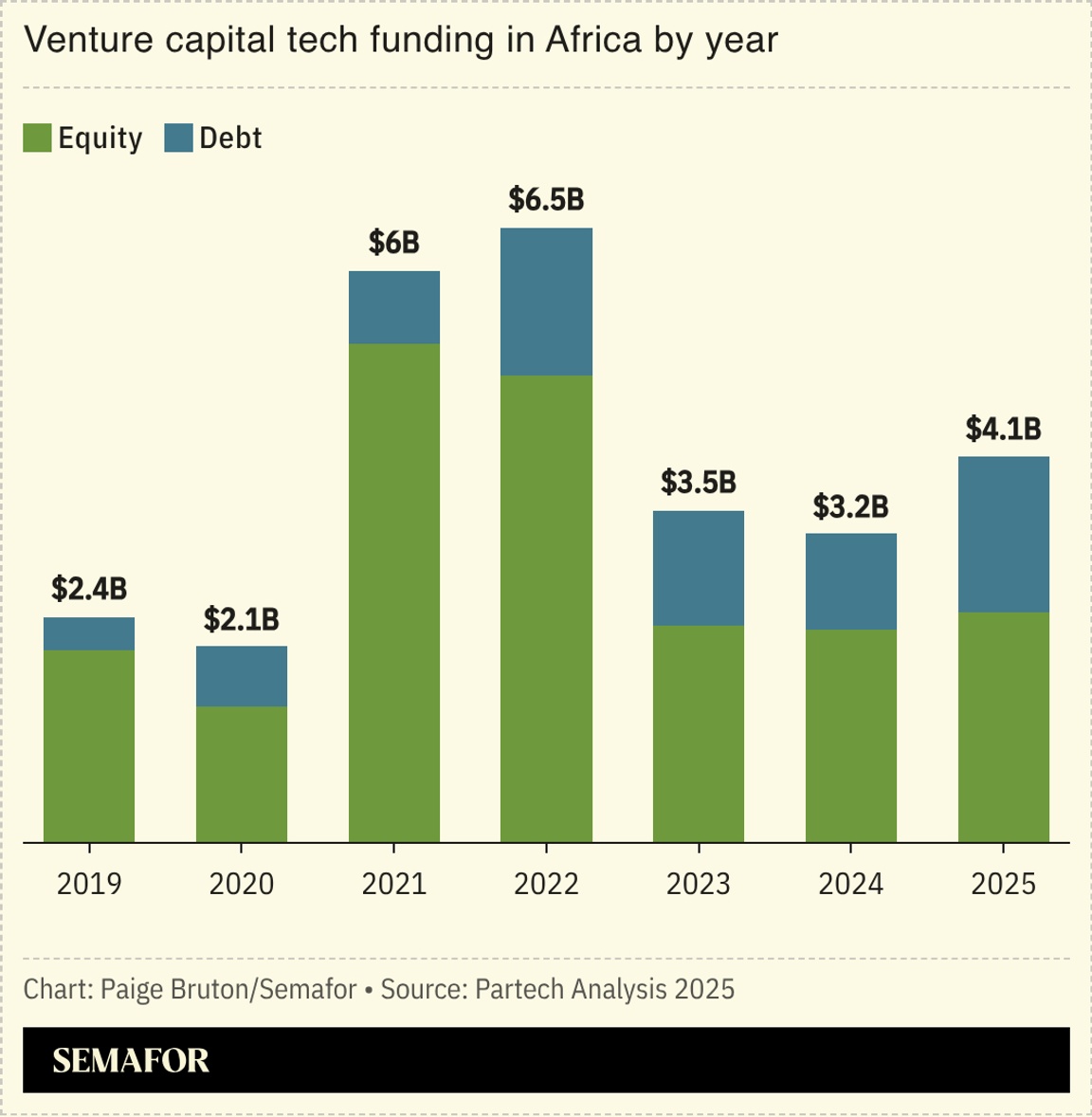 Investors must seize the growing momentum in African venture capital, the founder of a Nairobi-based VC firm argued in a Semafor column, pointing to signs for optimism. “Interest in African venture capital has risen sharply,” wrote Maurizio Caio, managing partner of TLcom Capital, fueled by venture-backed companies scaling into underserved markets and a steady stream of exits. Global exchanges such as the London Stock Exchange are also actively positioning to attract high-growth African listings. “Yet capital remains cautious. Returns data is thin. Risk perception is thick,” Caio said. He pointed to the “constraint” in the depth of capital as a key sticking point. “The opportunity is real. The question is whether global capital is prepared to price it correctly.” |
|
 Business & Macro
|
|
|