| | In this edition: Data concerns over US-Africa health deals grow, latest on the MTN deal, and Jesse J͏ ͏ ͏ ͏ ͏ ͏ |
| |  Pretoria Pretoria |  Lagos Lagos |  Nouakchott Nouakchott |
 | Africa |  |
| |
|
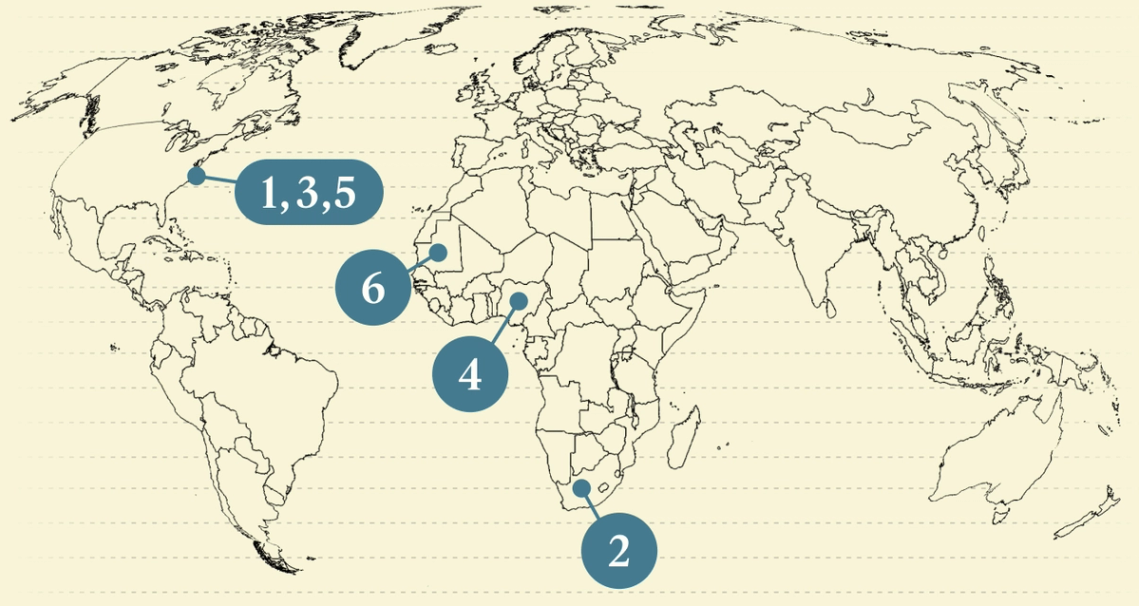 - US health deal concerns
- S. African budget fallout
- Afrikaner ‘refugees’
- MTN marks ‘turning point’
- Jesse Jackson’s Africa legacy
- Weekend Reads
 Building Afro-Caribbean ties through literature. |
|
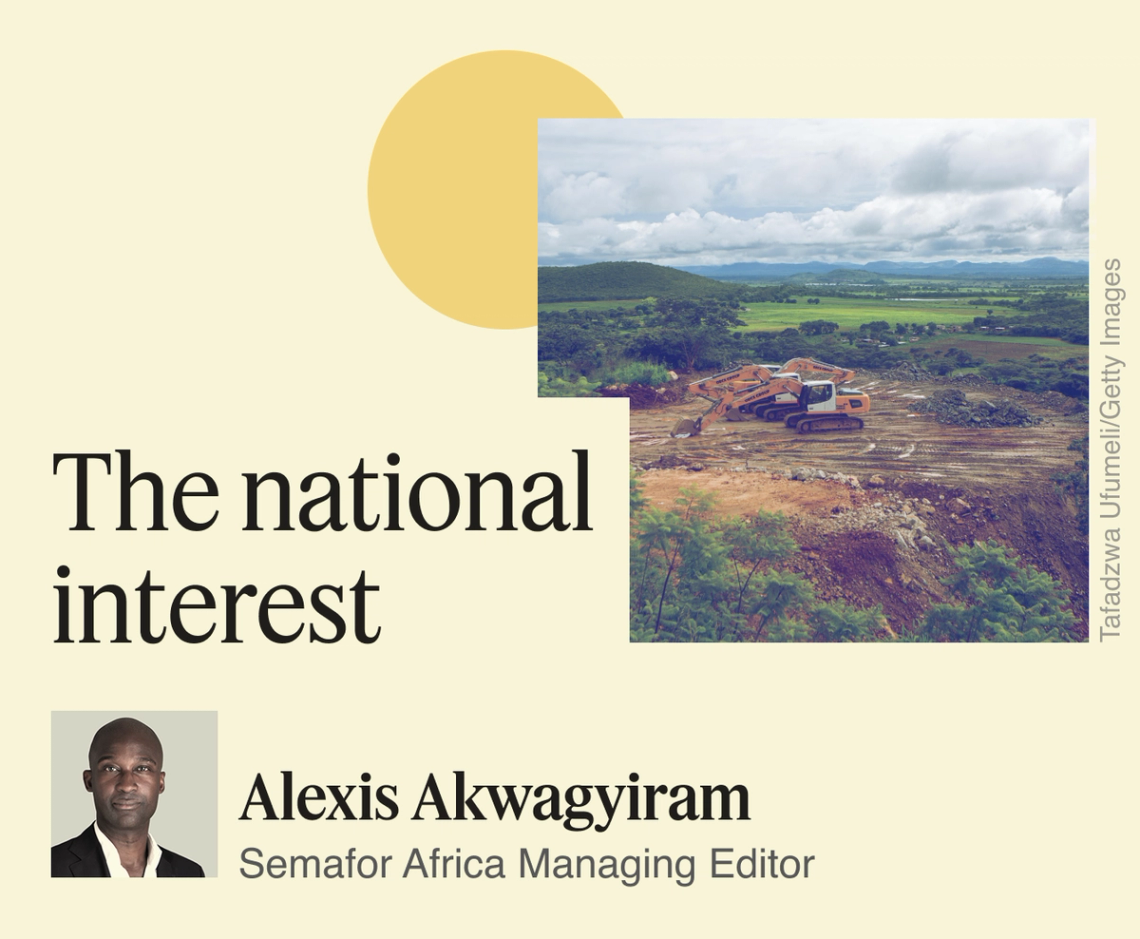 The market reaction to Zimbabwe’s suspension of lithium exports illustrates the central role African nations play in the global supply chains that underpin modern technology. The move, reminiscent of DR Congo’s restrictions on cobalt exports last year, caused Chinese lithium futures to rise more than 9% on Thursday. Zimbabwe and DR Congo, like many countries across the continent, want to capture the value of processing raw materials in order to create products and jobs to spark economic growth: At least 13 African countries have imposed similar export restrictions on various metals and minerals since 2023. A key question concerns the steps policymakers will take to make good on these vows. Progress on setting up processing plants remains slow in many countries. The highly technical and capital-intensive requirements, as well energy challenges, have hindered attempts to boost domestic upskilling. For countries to realize the “true potential” of their resources, the Africa Center for Strategic Studies, a Washington-based think tank, recommends strict mandates for skills transfer in mining deals, investment in infrastructure and human capital, and leveraging regional cooperation. Of those proposals, the notion of countries working together more closely has the greatest potential. It’s a pragmatic approach: Many nations that are rich in resources lack the capital needed to build vital infrastructure, yet they sit within regional blocs through which they could agree to share responsibility for different stages of processing. For this to work, we should look to the regional blocs — like West Africa’s Ecowas and the Southern African Development Community — to take the lead, since mineral deposits often cut across borders, and it’s easier to make agreements among a small number of nations than across the continent. The slow progress of the African Continental Free Trade Agreement and the bureaucracy of the African Union shows how ineffective an unwieldy pan-African vision can be. Zimbabwe said the ban was “taken in the national interest,” a phrase used by countries that impose export restrictions. A smart move would be to work with neighbors to achieve those interests. |
|
Concerns over US-Africa health deals |
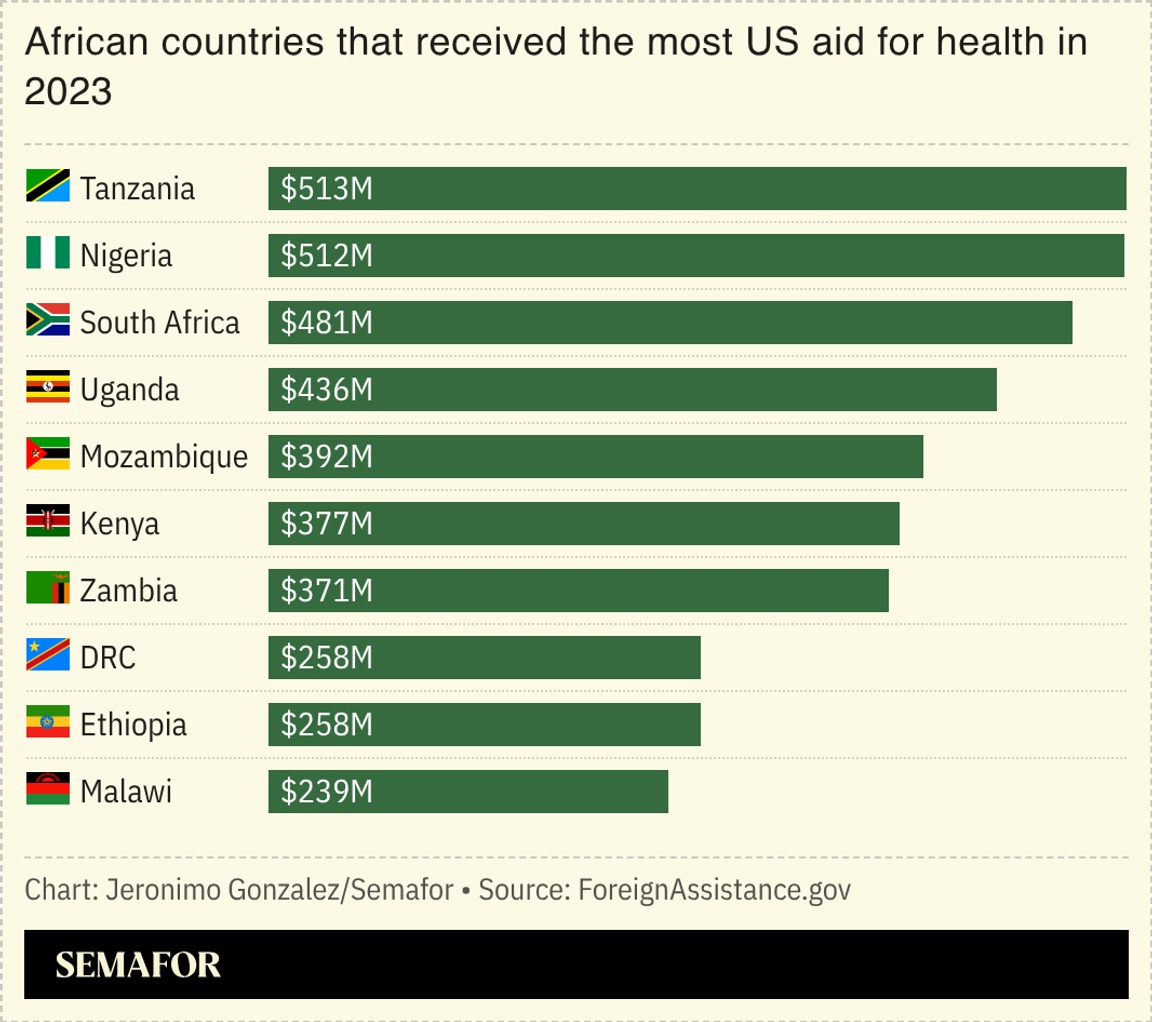 The head of the Africa Centres for Disease Control and Prevention warned of “huge concerns” over data and pathogen-sharing between African countries and the US under new health deals being pursued by the Trump administration. Zimbabwe this week withdrew from talks with Washington for a $367 million bilateral health agreement, citing worries about sharing sensitive health data. “The arrangement was asymmetrical,” a Zimbabwe government spokesperson said. Zambia is also trying to renegotiate a $1 billion-plus deal with the US, saying that an earlier version “did not align with the position and interests of the government of Zambia,” without elaborating on the sticking points, Reuters reported. The Trump administration has radically overhauled its approach to global health, focusing on bilateral deals tied to its “America First” strategy after dramatically paring back international aid including shutting down the US Agency for International Development. More than a dozen nations on the continent have agreed to health pacts with Washington in recent months: On Thursday, DR Congo signed a $1.2 billion agreement with Washington. Under a co-investment structure, the US will provide three-quarters of the funding over the next five years and Kinshasa will make up the rest. |
|
South Africa’s budget fallout |
 Olympia de Maismont/AFP via Getty Images Olympia de Maismont/AFP via Getty ImagesSouth Africa’s debt is projected to peak this fiscal year after rising for nearly two decades, the country’s finance minister announced, creating room for more infrastructure investment and tax relief in Africa’s largest economy. Unveiling the annual budget, Enoch Godongwana also said the government was working on a set of rules to try to ensure that public finances are sustainable over the longer term, which he referred to as a legal “fiscal anchor.” South Africa’s credit rating was finally upgraded late last year, marking its first boost since 2005. Its recent removal from a global financial watchdog’s “gray list” of countries monitored for money laundering has also contributed to improved investor sentiment. In a note to clients, Goldman Sachs said the budget announcements “came as a significant positive surprise to the market,” adding that it expects “further positive sovereign credit ratings action.” — Alexis |
|
Trump pushes for Afrikaner ‘refugees’ |
 Newly arrived South African “refugees” in an airport hangar in Washington. Chip Somodevilla/Getty Images. Newly arrived South African “refugees” in an airport hangar in Washington. Chip Somodevilla/Getty Images.The US is aiming to process 4,500 refugee applications from white South Africans each month, a pace that would far exceed President Donald Trump’s stated global refugee cap, according to a State Department document reviewed by Reuters. The contracting document reveals plans to install trailers on US embassy property in Pretoria to support processing efforts. It comes just days after the arrival in Pretoria of the new US ambassador to South Africa, the conservative media figure Leo Brent Bozell. The Trump administration launched the program to admit Afrikaners as refugees in early 2025, citing claims of violent persecution and land seizures targeting the community after apartheid. South African President Cyril Ramaphosa has pushed back strongly against such claims, culminating in a clash with Trump in the Oval Office last May. Critics argue the White House policy amounts to selective immigration that bypasses refugees fleeing far more acute humanitarian crises elsewhere. — Adrian Elimian |
|
MTN doubled investment last year |
 Afolabi Sotunde/Reuters Afolabi Sotunde/ReutersMTN, Nigeria’s largest telecom operator by subscribers, doubled investment in the country in 2025 to 1 trillion naira ($737 million), as part of a push to expand network capacity and maintain market dominance. The South Africa-based telecom network’s Nigeria unit saw subscriber numbers rise 8% year-on-year to 87.3 million, with double-digit increases recorded in the number of internet data users and for service revenue. Headline earnings before deductions doubled to about $2 billion, which the company attributed to “a more stable foreign exchange market, improved FX liquidity, and a sustained decline in inflation compared to 2024.” Telecom companies are riding a wave of growing smartphone and broadband penetration in Africa, especially as rising numbers of young people depend on the internet to make a living through social media and e-commerce. MTN faced infrastructure challenges in Nigeria last year with more than 9,000 incidents of vandalism of its cables. Still, 2025 marked “a significant turning point in our business performance and resumption of dividend payments,” the company said. — Alexander Onukwue |
|
View: Jesse Jackson’s legacy for Africa |
  Nelson Mandela and Jesse Jackson in 2005. Gianluigi Guercia/AFP via Getty Images. Nelson Mandela and Jesse Jackson in 2005. Gianluigi Guercia/AFP via Getty Images.The passing of Rev. Jesse Jackson this month comes at an inflection point, with much of the US-Africa policy architecture he helped build being “methodically unraveled” under US President Donald Trump, a former US diplomat argued in a Semafor column. “Jackson understood something many policymakers still miss: America’s racial politics at home shape its credibility abroad,” Alexanderia Baker-Haidara wrote. In 1997, Jackson said that America’s past racial ideology had “led to a disregard not only of African Americans, but of the entire African continent,” the diplomat noted, saying that for him “civil rights and foreign policy were inseparable.” She pointed to Jackson’s activism as helping drive pressure on the Reagan administration and US corporations to divest from apartheid South Africa. And later, she noted, as former US President Bill Clinton’s special envoy for democracy and human rights in Africa, Jackson pushed for electoral reform and civil society at a time when multiparty politics was spreading across the continent. |
|
 - In a small textile shop in the Mauritanian capital Nouakchott, Nevissa, 45, is celebrating her ninth divorce. “I was so happy when he left,” she tells New Lines Magazine. “Soon, I will have another husband and a lot of money. Everybody loves money.” Rapid urbanization has brought new financial pressures in the West African country: With unemployment among men on the rise, some women are searching for greater stability, according to a sociologist specializing in gender relations. “A Mauritanian woman is strong, she is a character, she is free,” Fatima, another Nouakchott resident, tells the outlet.
- Africa’s richest man, Aliko Dangote, has become famous for his dominance of Nigeria’s oil, cement, and fertilizer industries. However, the billionaire argues, it was only later in his career that he really got serious: Selling all of his overseas homes and supercars, he is currently working from a construction trailer in a dusty parking lot. With Nigeria’s young population booming, and the country’s economy flagging, Dangote is under immense pressure: “Some of us,” he said, “need to rescue the country.” In a New York Times profile that spans Dangote’s rise, his ethos, and his plans for the future, Dangote tells the outlet, “We cannot fail, we must deliver.”
- The UK’s vegetable supplies are becoming increasingly reliant on just two farms in northern Senegal, the BBC reports. While the country generally imports around 40% of its food, during winter this can swell to as high as 90% for fresh produce, as consumers increasingly expect some products like green beans and butternut squash to be available all year round. Senegal’s hot climate and abundant workforce — as well as changes to supply chains following Brexit — have led to increasing investment in G’s Fresh and Barfoots farms.
- What’s it like to be your nation’s only Olympian? For Samuel Ikpefan, Nigeria’s only athlete at the Winter Olympics, it was an opportunity to honor his father’s heritage. After the cross-country skier narrowly missed out on qualifying for his home team, France, he turned to Nigeria, without even knowing whether there was a federation to apply to. “I just started searching online,” he says. “I’m the first skier in Nigeria. There was nobody before me.” Ikpefan is now hoping to promote roller-skiing in Nigeria, a sport that can be practiced without snow.
|
|
 The Age Of Africa returns to Toronto at the Munk School on March 7, 2026, positioning the continent at the center of the global conversation. Under the theme “Africa at the Axis of Global Change,” policymakers, investors, and scholars will confront a new geopolitical reality: the twenty-first century is being reshaped from Africa outward. To request an invitation, contact theageofafrica@ccaapr.ca. |
|
|