| | In today’s edition: Looming Iran conflict prompts a race to export Gulf crude, and Etihad Airways go͏ ͏ ͏ ͏ ͏ ͏ |
| |  Dhahran Dhahran |  Ras Laffan Ras Laffan | Caracas |
 | Gulf |  |
| |
|
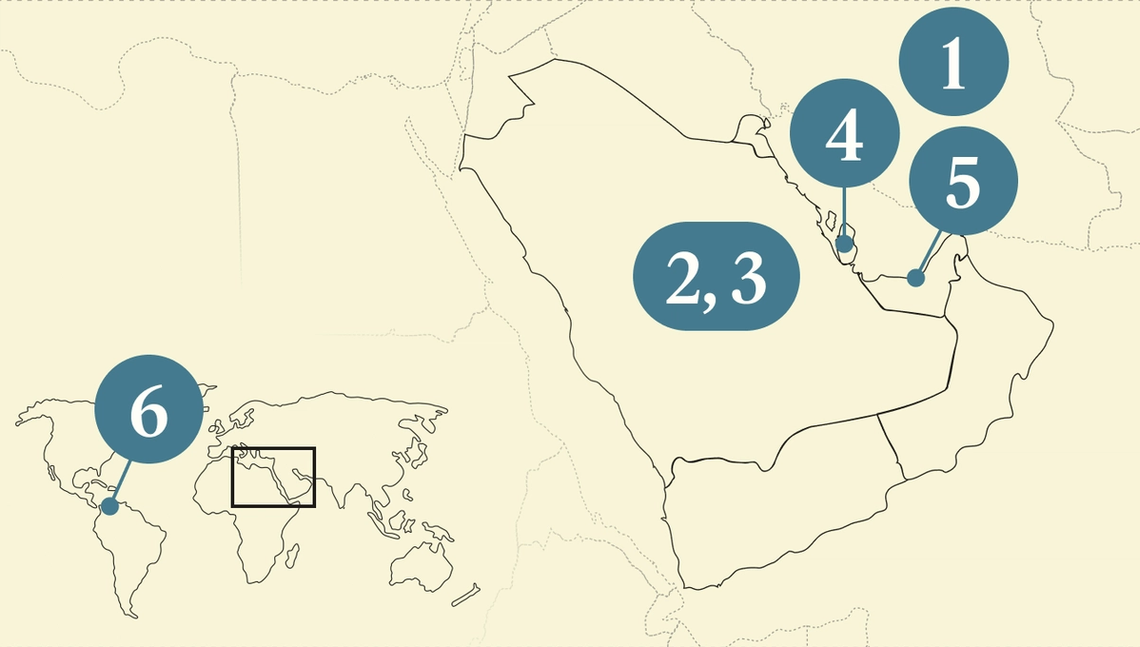 - Region braces for Iran strike
- Saudi boosts oil exports…
- … and starts shale gas field
- Qatar builds LNG plants
- Etihad’s hiring spree
- Venezuela seeks Gulf capital
 Why Gulf states should rethink their Iran strategy, and other weekend reads. |
|
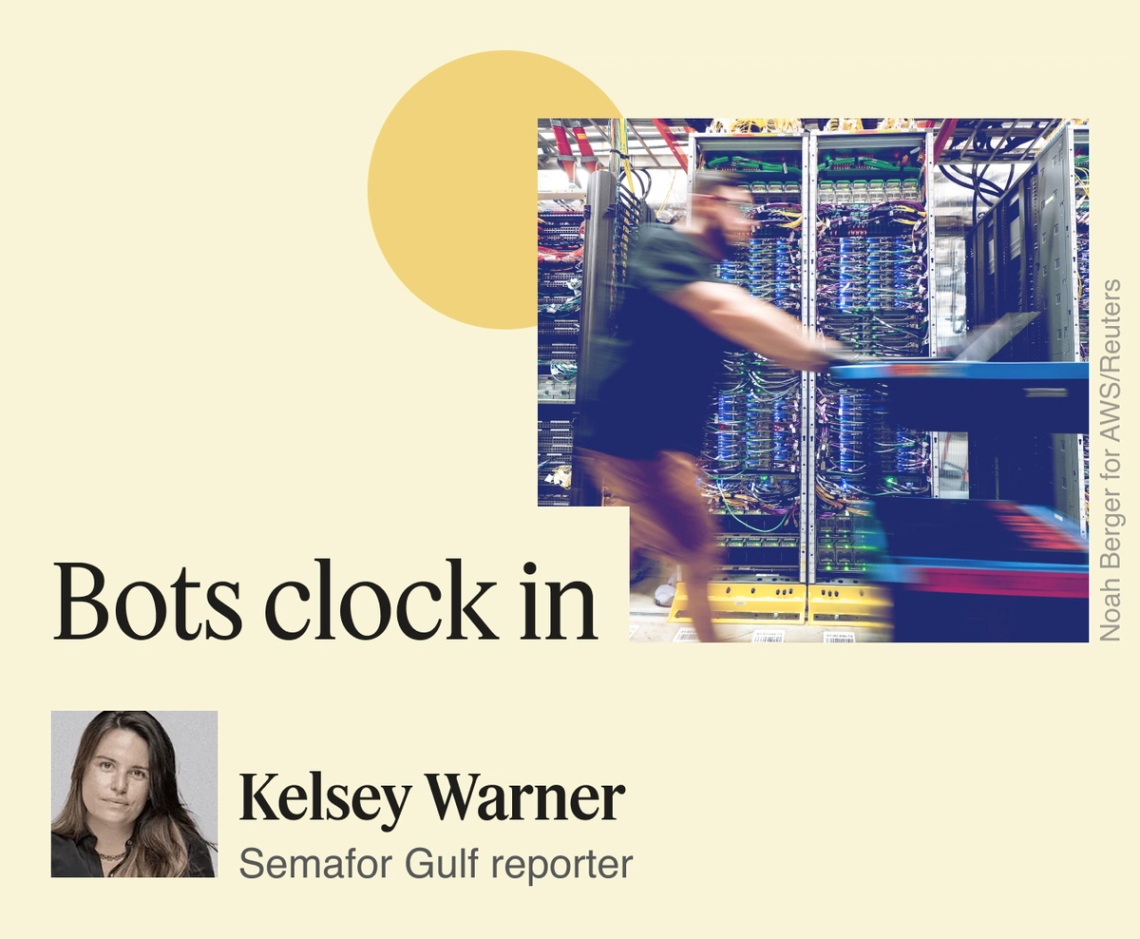 AI agents are officially coming for jobs in the UAE. Abu Dhabi AI firm G42 said this week that it will start “recruiting” AI agents. The move comes as US fintech firm Block announced plans to slash 40% of its 10,000-person staff, with AI tools picking up the slack. In the US, Block’s decision is spooking tech workers and rewarding Wall Street investors. The UAE has a different perspective. With only around 1.3 million citizens — and 10 million foreigners — the Emirates have long seen the potential of automation. Augmenting human labor is not simply a question of generating shareholder value but a means of survival. Defense group EDGE has invested for years in drones and autonomous system development out of strategic necessity, given the country’s population disadvantage. G42, which is aggressively expanding its global AI infrastructure business, is pushing that logic into its operations. Demographics aren’t the only driver. AI agents will function as a kind of outside contractor, with their developers compensated based on performance. That will allow G42 to tap global talent without having to pay for the visas, recruitment, and relocation costs required to bring humans to work in the country. G42’s chief augmented human capital officer (yes, that’s an actual title) describes the future of work as a reimagining of the “relationship between human talent and intelligent systems.” The company’s human staff may yet find their new coded colleagues just as useful or frustrating as other flesh-and-blood workers; for Abu Dhabi, it’s an early test of its AI-first vision of the future. |
|
Region preps for US strikes on Iran |
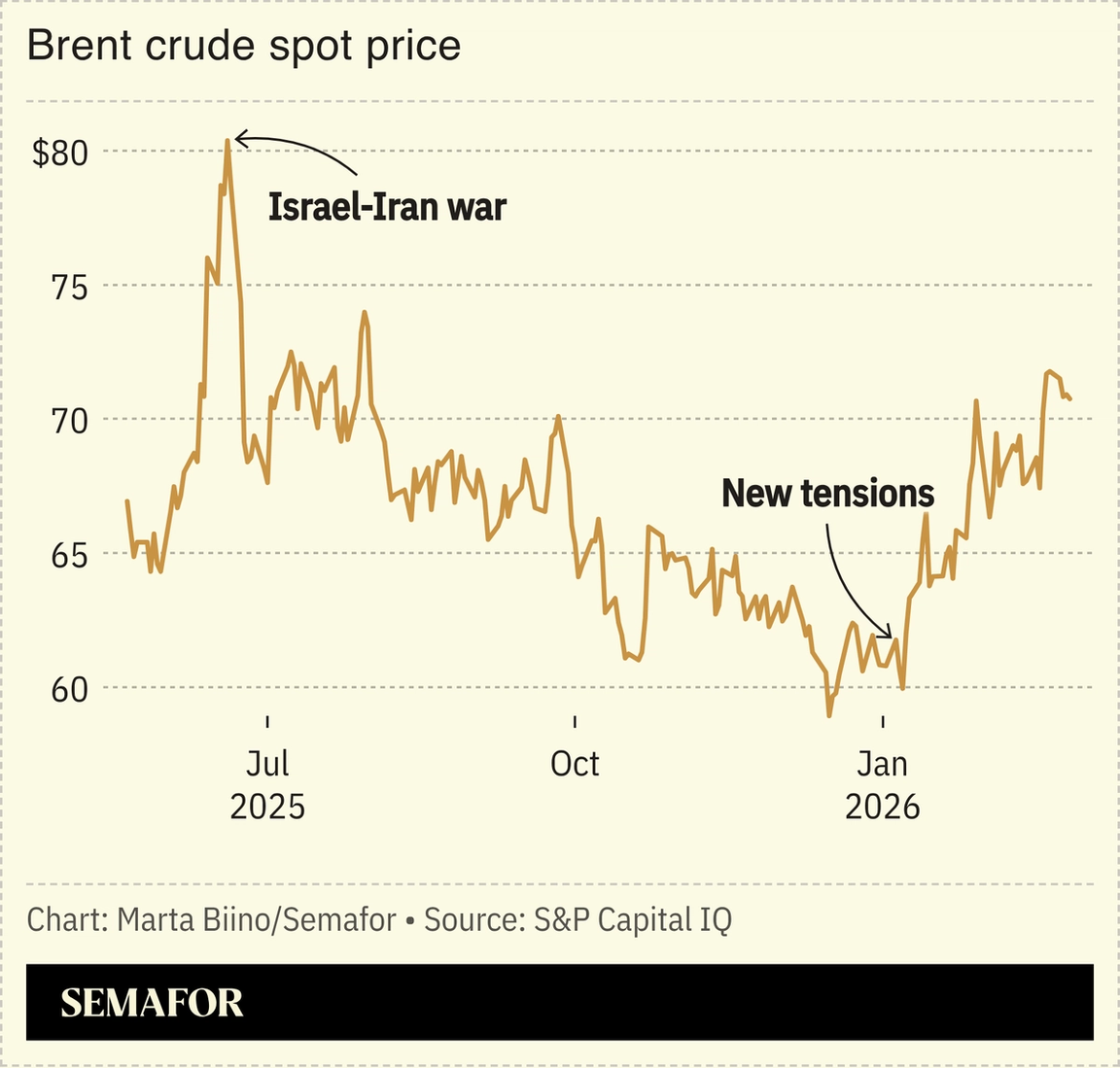 Signs are growing of possible US military strikes on Iran, with Washington allowing non-essential staff to leave Israel, China advising its citizens to exit the Islamic Republic, and oil prices edging up. The latest indirect talks between American and Iranian officials ended in Geneva yesterday without a resolution. Oman’s foreign minister, who was mediating the discussions, said “significant progress” had been made and technical discussions are due to follow in Vienna next week. Against that backdrop, US President Donald Trump has continued to threaten military action, including in his State of the Union speech on Tuesday. Gulf countries are urging restraint, as is China. Beijing is reportedly nearing a deal to sell anti-ship missiles to Iran and a Chinese intelligence firm has published images of US F-22 fighter jets in Israel, signaling to Washington it is keeping a close eye on developments. |
|
 Mohamed Al Hwaity/Reuters Mohamed Al Hwaity/ReutersSaudi Arabia’s oil shipments are on track to hit their highest level in almost three years amid heightened tensions between Washington and Tehran. Increased oil production is part of a contingency plan to limit disruptions to energy markets (and Saudi revenues) in the event of a US attack on Iran, Reuters reported. The kingdom has long used its ability to quickly lift oil output as a way to calm markets worried about supply disruptions. It also helps the country demonstrate its usefulness as a US ally. Crude shipments hit 7.3 million barrels a day in the first 24 days of February, according to Bloomberg analysis. The UAE is adopting similar tactics, with its production expected to hit record levels this month. A seasonal dip in domestic oil consumption for power generation is also freeing up more crude for export. Saudi Arabia, the world’s biggest oil exporter, is also hiring more supertankers to handle higher volumes. Crude prices have spiked over the past few weeks, rising above $70 a barrel as traders worry about the buildup of a large US military force in the region. — Matthew Martin |
|
 Ali Jarekji/Reuters Ali Jarekji/ReutersSaudi Aramco has started production at Jafurah, a giant shale gas field, moving it closer to its goal of becoming one of the world’s top 10 gas producers. Hitting its 2030 target to boost gas production by 80% could generate an additional $15 billion, free up crude for export by allowing for the replacement of oil-fired power stations, and help meet rising domestic demand. Some analysts have said that Jafurah, which is expected to ultimately cost over $100 billion to develop, could also drive a significant increase in Aramco’s profits and help it diversify from a reliance on oil sales. The Saudi government still relies on oil for a majority of its revenues, via dividends from Aramco. |
|
Qatar gets ‘oil equivalent’ boost |
 The number of barrels of oil equivalent per day of condensate, ethane, and liquefied petroleum gas expected from Qatar’s latest development of its mammoth offshore natural gas deposit. This week, QatarEnergy awarded contracts to build the onshore facilities for the North Field West project, which will boost the country’s LNG exports by 16 million tons a year by 2031. The associated liquids from gas projects typically receive less attention but are highly profitable and crucial to the economics of Qatar’s LNG industry. Over the next five years, Qatar plans to more than double its global LNG output to 160 million tons a year, a surge that should give its sovereign wealth fund hundreds of billions of dollars in fresh capital to deploy. — Mohammed Sergie |
|
Abu Dhabi’s aviation push makes headway |
 An Etihad Boeing 787-9 Dreamliner aircraft takes off from Geneva airport. Denis Balibouse/File Photo/Reuters. An Etihad Boeing 787-9 Dreamliner aircraft takes off from Geneva airport. Denis Balibouse/File Photo/Reuters.Abu Dhabi’s Etihad Airways capped a fourth straight year of profitability with record earnings in 2025, as strong passenger demand and fleet growth lifted performance and reinforced the emirate’s aviation push. The airline said premium cabins were a key driver, with first and business class demand exceeding expectations. Etihad is planning up to 3,000 new hires a year while steadily adding aircraft and new routes, a pace the carrier expects to maintain over the next several years as part of a $21.8 billion investment push by 2030. That feeds into Abu Dhabi’s ambitions to be an aviation hub: Zayed International Airport handled a record 32.5 million passengers last year. There is, though, intensifying regional competition. Emirates remains the world’s most profitable airline and its home base of Dubai International Airport handled more than 95 million passengers in 2025, while Saudi Arabia is preparing the launch of Riyadh Air and developing King Salman International as another regional hub. |
|
View: Venezuela’s path to oil relevance |
 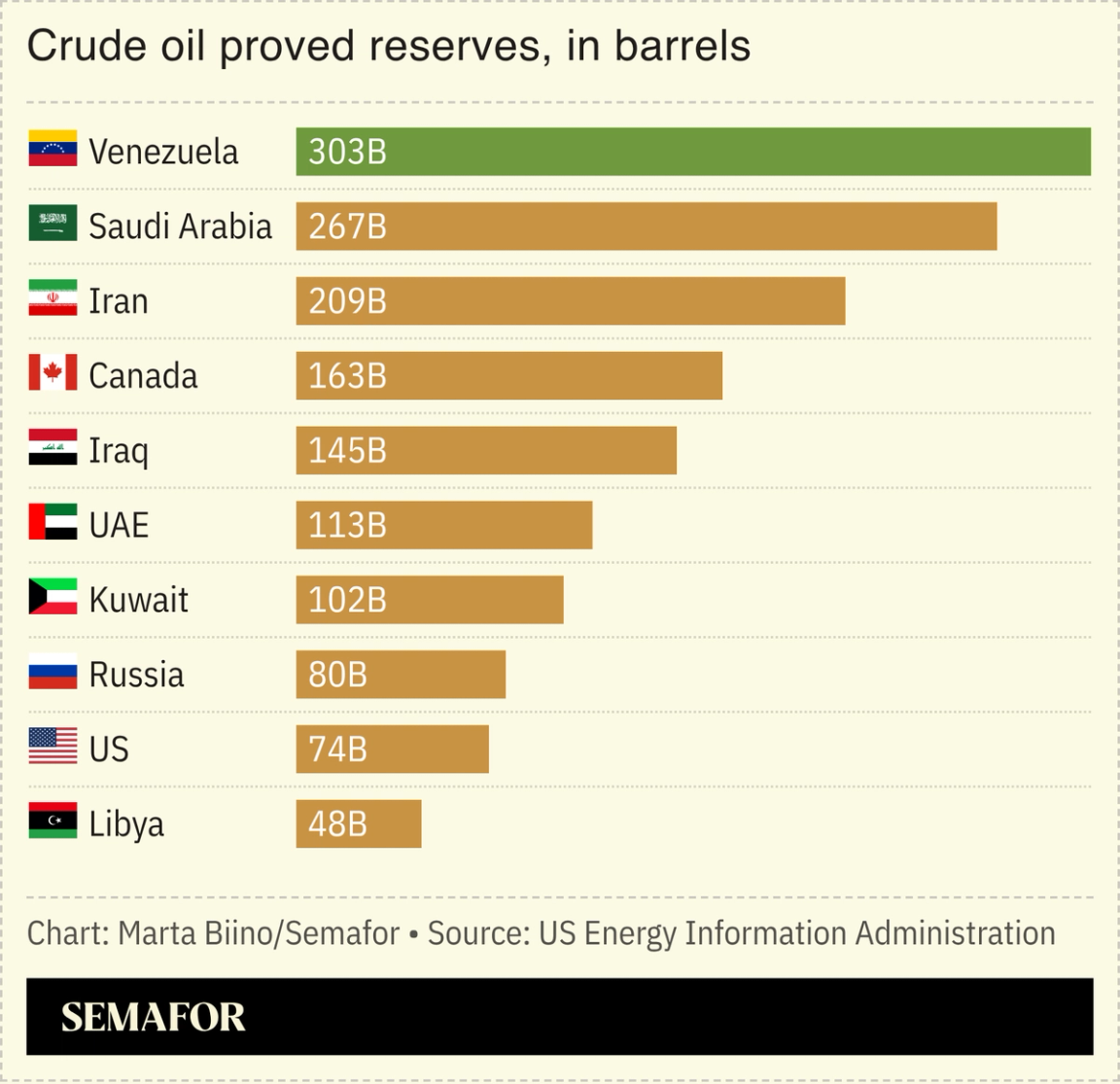 US and Gulf investors are eyeing Venezuelan oil deals after Caracas amended its hydrocarbons law, but deeper reforms and higher crude prices will be needed to unlock the country’s massive reserves, Amena Bakr, head of Middle East Energy & OPEC+ research at global commodities data firm Kpler, wrote in a Semafor column after visiting the Latin American nation. Venezuela aims to almost triple its oil output to 3 million barrels a day within five years, but the country’s oil is often relatively expensive to extract. “What surprised me most was hearing industry executives suggest production costs could be squeezed down to $15-$20 per barrel on average, and even below $10 per barrel in some projects,” Bakr wrote. “Independent consultants put the cost at $50-$60 per barrel, making much of the extra output uneconomical.” |
|
 On Tuesday, March 24, Semafor will convene with leaders in Nairobi including Nanjira Sambuli, Senior Advocacy Officer, Africa; Gates Foundation, to advance financial inclusion at the intersection of long-term capital, policy, and financial infrastructure. Bringing together investors, policymakers, and financial system leaders, the conversation will move beyond ecosystem-building toward action — mobilizing capital, strengthening infrastructure, and closing persistent access and affordability gaps. Join us as we dive into how coordinated public–private efforts can accelerate inclusive growth across East Africa and other emerging markets. March 24 | Nairobi | Request Invitation |
|
 Debt- Abu Dhabi sold $3 billion in bonds in its first issuance of the year, attracting more than $11 billion in investor interest. The oversubscription narrowed the pricing of the five-year bond to 20 basis points over Treasurys, and the ten-year to 25 basis points. The emirate’s last issue was in September. — Zawya
Defense- South Korea and the UAE agreed to pursue joint projects worth more than $65 billion, including $35 billion in military spending on air defense, aircraft, ships, and other systems. The UAE has pledged to invest $30 billion in South Korea and back Korean companies’ entry into the region. — Yonhap
|
|
|


