| | | | | | Did someone forward this newsletter to you? Sign up here to get it in your inbox. In today’s issue: - RFK Jr. shifts away from talking about vaccines and leans into his food-related initiatives ahead of November midterms
- Federal vaccine panel scheduled to meet in March amid lawsuits challenging federal immunization policy changes
- Sen. Bill Cassidy (R-Louisiana), who leads the Senate’s health panel, commits to holding a hearing to discuss the rising costs of medicine as Sen. Bernie Sanders (I-Vermont) makes a push for a Trump-like drug pricing proposal
Good afternoon, and welcome to the Health Brief newsletter. Do you have any story tips or health policy intel? Shoot me a note at megan.wilson@washpost.com. If you prefer to message me securely, I’m also on Signal at megan. 434. This newsletter is published by WP Intelligence, The Washington Post’s subscription service for professionals that provides business, policy and thought leaders with actionable insights. WP Intelligence operates independently from the Washington Post newsroom. Learn more about WP Intelligence. | 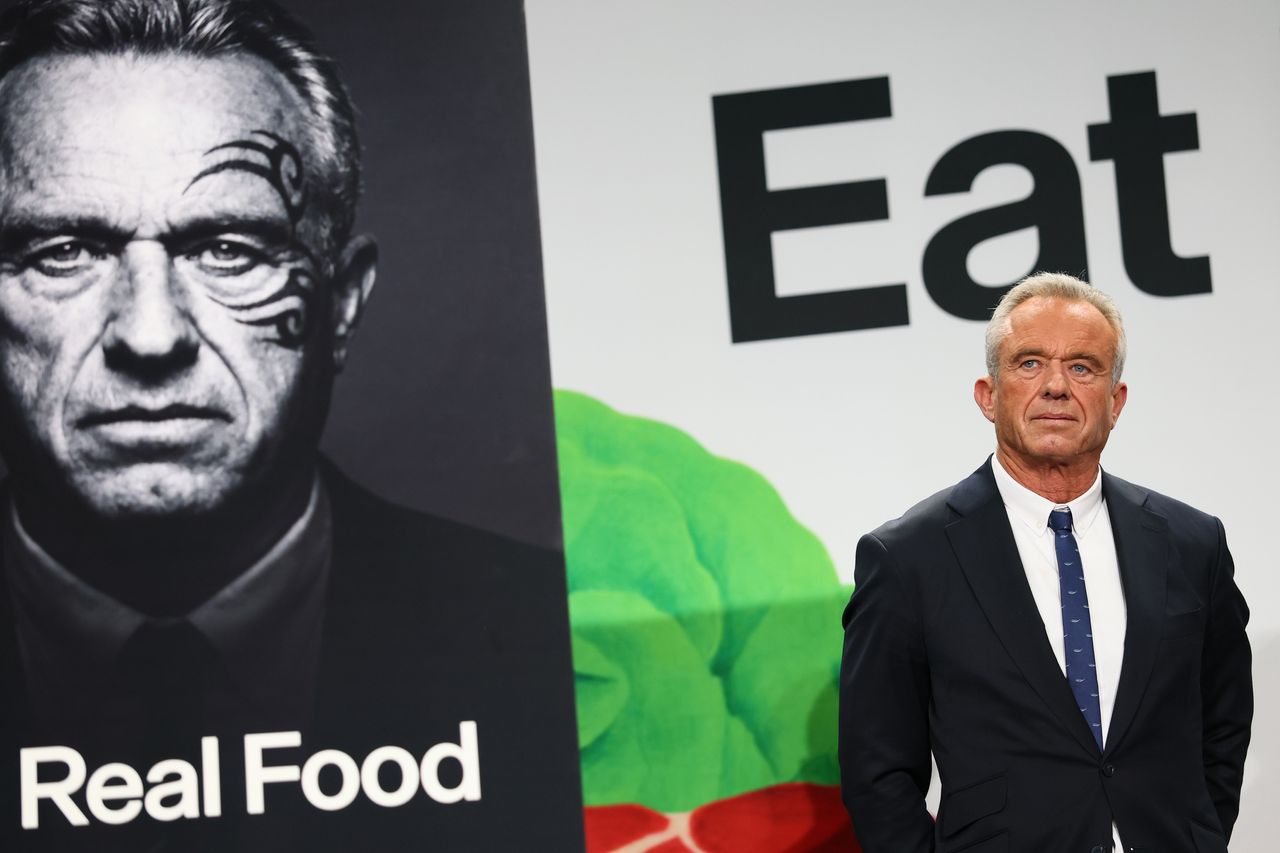 | | As his moves on vaccine policy have been less popular, Health Secretary Robert F. Kennedy Jr. has been touting updated federal dietary guidelines, urging Americans to “Eat Real Food.” (Michael M. Santiago/Getty Images) | | | |  | The Lead Brief | With assistance from Rachel Roubein and Lauren Weber When Health Secretary Robert F. Kennedy Jr. appeared before a room of county officials from around the United States, the conversation centered on the administration’s changes to dietary guidelines and combating chronic illness with a better diet. Vaccines didn’t come up once during the 30-minute discussion Kennedy had with J.D. Clark, president of the National Association of Counties (NACo), during the group’s legislative conference earlier this week. Counties run or support hospitals and health clinics, in addition to managing public health departments. Several states are grappling with the largest measles outbreak in decades, driven by a decrease in vaccinations. “Counties are ground zero for changing behavior” around nutrition, Kennedy said onstage at the conference held at the Washington Hilton. “One of the things that we can do at the county level is to focus more on prevention rather than treatment.” Kennedy received standing ovations at the beginning and end of his talk with Clark. → This shift to food fits with the latest story from my colleagues at The Post, Rachel Roubein and Lauren Weber, which examines Kennedy’s increase in messaging initiatives related to food and nutrition — and away from messaging on vaccines. “Vaccines are not popular issues to talk about,” an administration official who is close to the White House told my colleagues. “It goes back to polling.” Public polling shows that independent voters valuable to Republicans in tight elections largely disapprove of Kennedy’s handling of vaccine policy. Meanwhile, the public is broadly supportive of imposing more regulations on food dyes and ultra-processed foods. → It’s been an important midterm play as Republicans seek to hold onto control of the House and Senate in November. The White House has tapped Kennedy to tour the country to discuss the administration’s emphasis on eating “real food” — and being active as a part of battling obesity, diabetes and other chronic illnesses that are driving up health care costs. He’s also leaning into the administration’s attempts to curb drug pricing despite previously alleging the industry was “mass poisoning” Americans. → Kennedy has been credited with bringing into the fold voters who may not have otherwise voted for President Donald Trump in the 2024 presidential election thanks to his Make America Healthy Again movement. My colleagues talked with a GOP operative who said that although issues such as crime, immigration and the economy are generally bigger issues for Republican candidates on the campaign trail, MAHA messaging may help galvanize some voters who wouldn’t normally show up in a low-turnout election. “The Trump administration will be aggressively showcasing our MAHA wins on the road to remind the American people of how we continue to break Washington, D.C.’s broken status quo to deliver meaningful change,” White House spokesman Kush Desai told The Post in a statement, adding that the MAHA agenda has “mass appeal” that cuts across ideological lines. | | | | | | Numbers Game | $100 million That’s how much Tony Lyons, who leads MAHA political advocacy groups, told Lauren he plans to raise to support Republican candidates in the midterms. Lyons co-founded American Values, a political action committee that raised more than $51 million in the 2024 campaign cycle, according to federal campaign records. It’s now rebranded as MAHA PAC. Lyons also runs nonprofits MAHA Action and the MAHA Center, which recently dropped $8.5 million on a Super Bowl ad featuring boxer Mike Tyson. | | | | | | Immunization Update | As the administration is working to pivot away from its vaccine messaging, an influential federal vaccine panel is set to meet next month and plans to discuss adverse effects associated with covid-19 shots, according to a recent regulatory filing. The Advisory Committee on Immunization Practices (ACIP), which makes recommendations to the Centers for Disease Control and Prevention on vaccine policy, is scheduled to meet on March 18 and 19. The February meeting had been delayed amid a legal battle with a collection of medical and public health groups led by the American Academy of Pediatrics. Part of the previous request had been to stop this month’s ACIP meeting. The agenda: ACIP will hear from working groups about covid-19 vaccine injuries, long covid and “ACIP recommendation methodology,” according to the agenda, which is subject to change. Why it matters: If accepted by the CDC, ACIP’s recommendations can shape how doctors discuss vaccinations with their patients and impact state requirements and health insurance coverage. Insurers, however, largely committed to covering vaccines that had been recommended by the CDC before last year’s changes. The meeting could ultimately influence debates around liability and future vaccine guidance, which could play a role in how many Americans decide to get the shot. The backstory: The panel is stocked with members handpicked by Kennedy, who said in December 2021 that the covid-19 shot was the “deadliest vaccine ever made.” Earlier that year, Kennedy filed a petition on behalf of Children’s Health Defense, the anti-vaccine group he founded, urging the federal government to revoke emergency authorization for covid vaccines and refrain from approving future ones for “all demographic groups because the current risks of serious adverse events or deaths outweigh the benefits.” As the nation’s top health official, Kennedy announced last May that the federal government would no longer recommend the covid shot for healthy children or pregnant women, blindsiding CDC officials. Kennedy has also curtailed research and development around mRNA technology, the foundation of covid shots made by Pfizer and Moderna. In December, the CDC released a study showing the safety and efficacy of the covid-19 shot in children and adolescents. Researchers studying covid’s vaccine safety acknowledge rare heart issues in some young men, but have argued that coming down with the virus makes a person 10 times more likely to develop myocarditis than from the shot. | | | | | | Litigation Report | The federal government’s actions on vaccines face another legal challenge, this time from 15 states led by Democrats. - The states filed suit on Wednesday, arguing that Kennedy appointed “unqualified” people to serve as members of ACIP, who then issued a controversial recommendation to eliminate the universal hepatitis B birth dose, the states allege, “without requisite deliberation, analysis, or process.”
- The lawsuit also alleges that when the CDC unilaterally reduced the number of recommended vaccines for children, bypassing deliberation by the vaccine advisory panel, the government “acted in a manner that is arbitrary and capricious and contrary to law.”
- The states are asking a federal judge to declare the changes to the vaccine schedule — and the Kennedy-selected members of ACIP — unlawful and “to have them set aside.”
California Attorney General Rob Bonta, who is co-leading the lawsuit, said the changes have weakened Americans’ confidence in vaccines, which will lead to an increase of infectious diseases. “The Trump administration’s attacks on science are irresponsible and dangerous,” Bonta said. The vaccine schedule changes “will also drive up costs for states, including increased Medicaid spending and new expenses to combat misinformation and revise public health guidance,” he added. The other states involved: Arizona, Colorado, Connecticut, Delaware, Maine, Maryland, Michigan, Minnesota, New Jersey, New Mexico, Oregon, Pennsylvania, Rhode Island and Wisconsin. - The lawsuit names Kennedy and Jay Bhattacharya, the acting CDC director who also leads the National Institutes of Health, as defendants.
“This is a publicity stunt dressed up as a lawsuit,” said Andrew Nixon, a spokesperson for the Department of Health and Human Services. “By law, the health secretary has clear authority to make determinations on the CDC immunization schedule and the composition of the Advisory Committee on Immunization Practices.” The administration has sought to emphasize that the childhood vaccination changes align the U.S. with other developed nations. | | | | | | Health on the Hill | Sen. Bill Cassidy (R-Louisiana), who leads the Senate’s health panel, committed to hold a hearing on drug pricing, and reiterated that Kennedy would testify before the committee “in the near future.” The moves came at the start of a Senate Health, Education, Labor and Pensions Committee markup of higher education, health-related cybersecurity and organ donation bills. → The panel’s ranking member, Sen. Bernie Sanders (I-Vermont), had submitted several different amendments to the health-related bills that would have compelled Kennedy to testify before the committee and enact policies to lower prescription drug costs by linking medicine prices to wealthy countries abroad. But, instead, Sanders said he’d reached an agreement with Cassidy to have a hearing on drug prices. Cassidy also teased a hearing featuring Kennedy — more on that below. “We absolutely will have a hearing about the high cost of prescription drugs,” Cassidy said. “And we have a date.” A spokesperson for the committee didn’t respond to an inquiry about the timing of the hearing. Why it matters: The international reference pricing proposal from Sanders is similar to Trump’s most-favored nation drug pricing push. The Trump administration has been urging lawmakers to work on legislation that would turn the concepts contained within deals he made with 16 pharma giants into law — despite a lukewarm reception from GOP lawmakers, who view the policies as price controls. Meanwhile, officials including Centers for Medicare and Medicaid head Mehmet Oz have also been trying to sway industry into supporting the idea, though it doesn’t appear to be working. 288 DAYS: A KENNEDY APPEARANCE Before casting a key vote to confirm him last February, Cassidy said Kennedy would “come before the committee on a quarterly basis, if requested.” In September, Cassidy publicly asked Kennedy to return to Capitol Hill to “share his side of the story” after the White House fired Susan Monarez as director of the CDC amid clashes with Kennedy over vaccines. Cassidy has been critical of the administration’s actions on vaccines, and has peppered other witnesses — including Bhattacharya and Casey Means, Trump’s nominee for surgeon general — about their views on immunizations. Sanders said during the markup on Thursday that it had been 288 days since Kennedy last appeared before the health panel, adding, “I think that is of concern to all members of this committee” given the changes to vaccine policy. “I cannot put a gun to his head and [have him] show up, but they’ve assured us that they will come,” Cassidy responded. “We anticipate that in the near future, that’s the best I can do for you. But we continue to ask the secretary to honor that commitment.” When asked about any potential dates for Kennedy to appear, HHS deferred to the committee. | | | | |


_tstmp_1756933376-1920-1080.png)