| | The US and Iran fail to reach a nuclear deal, Xi Jinping continues his military purge, and scientist͏ ͏ ͏ ͏ ͏ ͏ |
| |  | Flagship |  |
| |
|
The World Today | 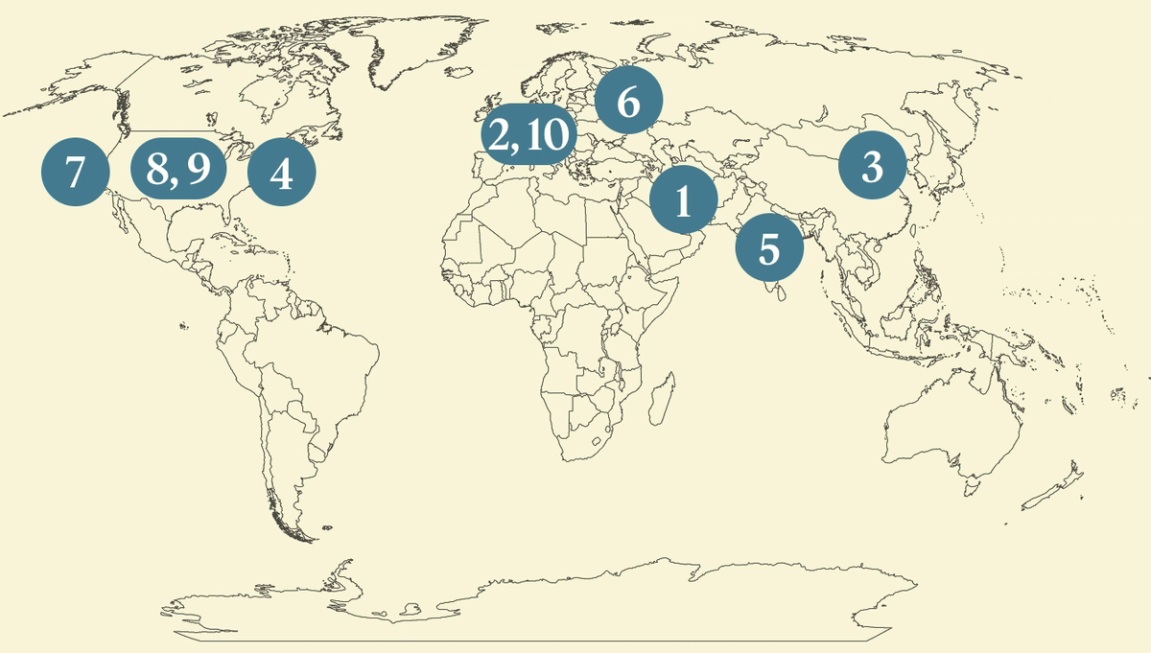 - No US-Iran nuclear deal
- Davos boss quits over Epstein
- Xi’s military purge widens
- Trump’s possible shakeup
- India’s strategic hedging
- Global debt surges on AI
- Nvidia shares slide on AI
- Tech pledge on power costs
- Fighter jet innovations
- Schrödinger’s color theory
 A book exploring the exile and assimilation of Iranian revolutionaries. |
|
US-Iran talks wrap up with no deal |
 Majid Asgaripour/WANA/Reuters Majid Asgaripour/WANA/ReutersThe US and Iran failed to strike a nuclear deal after hours of talks on Thursday, raising the specter of a military conflict. A US official said the meeting was “positive” and Iran said talks progressed “very intensely and very seriously.” But many in the White House saw the negotiations as a final attempt to reach an agreement to curb Tehran’s nuclear ambitions before resorting to military action. Iran may try to avert a US strike by offering President Donald Trump a bevy of financial incentives, including investments in the regime’s oil and gas reserves, the Financial Times reported. The potential commercial offer drew comparisons to Trump’s push for US companies to be involved in Venezuela’s oil industry after Nicolás Maduro’s ouster. |
|
Davos head resigns over Epstein ties |
 Børge Brende. Denis Balibouse/File Photo Børge Brende. Denis Balibouse/File PhotoThe head of the World Economic Forum, Børge Brende, resigned following an investigation into his ties to Jeffrey Epstein, the latest global elite to be felled by dealings with the sex offender. Harvard’s former president, Larry Summers, former Prince Andrew, and the UK’s ex-US ambassador, Peter Mandelson, are all in hot water. Brende is among other high-profile Norwegians, including the crown princess and a diplomat, to be implicated over links to Epstein. He is also the second WEF chief to be run out by scandal, a bad look for a forum whose core mission is promoting global stability. But Brende’s departure paves the way for BlackRock’s Larry Fink to further put his own stamp on the forum’s annual Davos summit. |
|
China military purge campaign expands |
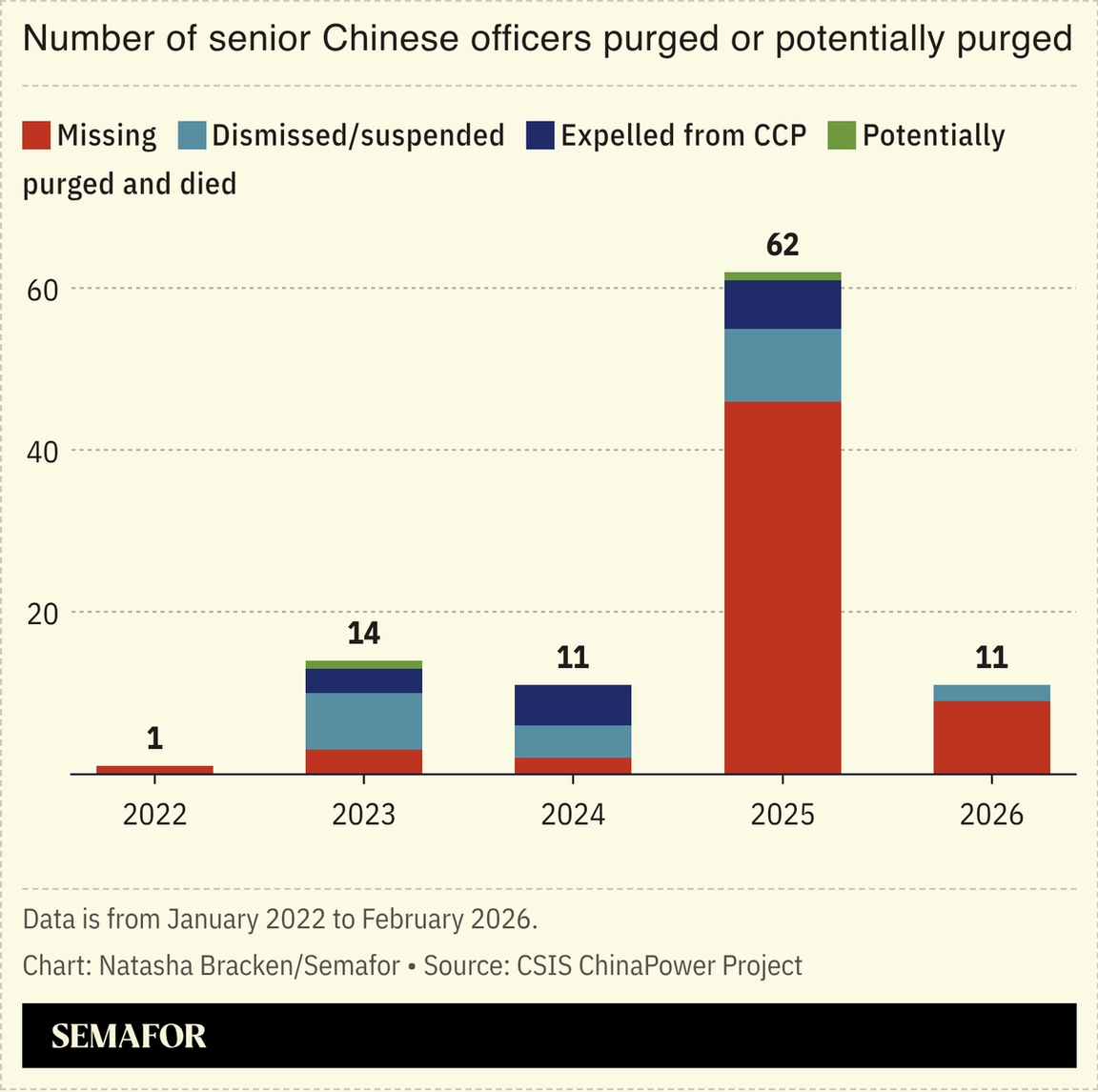 China removed nine military officials from its legislature ahead of a critical set of political meetings, marking an expansion of leader Xi Jinping’s purge campaign. Xi in recent years has supercharged an effort aimed at rooting out military corruption — since 2022, some 100 top officers have been dismissed or sidelined, a recent study estimated. That most recently included Xi’s top general, who was seen as a close confidant. The latest removals come less than a week before China’s two main political bodies gather for the “two sessions,” the annual legislative meetings where policymakers set the country’s military, economic, and diplomatic agenda. |
|
Republicans mull Cabinet shakeups |
 Kenny Holston/Pool via Reuters Kenny Holston/Pool via ReutersSenior Republicans are preparing for some of US President Donald Trump’s top advisers to possibly exit as the midterm elections draw closer, Semafor’s Washington team reported. Several high-ranking Trump officials, including the heads of Homeland Security and the FBI, have recently been the subject of bad headlines, but the president has shown a lack of appetite for firings, a contrast from his first term, which saw dramatic Cabinet shakeups. Democrats, who are hoping to retake the House and Senate this November, have vowed to heavily scrutinize any future Trump nominees, leaving Republicans wondering whether the White House will try to make any replacements before the election. |
|
The new middle-power trio |
 Stephane Lemouton/AFP via Getty Images Stephane Lemouton/AFP via Getty ImagesA recent spurt of intercontinental diplomacy shows India’s heft as a middle power hedging between traditional geopolitical blocs. Prime Minister Narendra Modi visited Israel this week, days after hosting more than a dozen world leaders at an AI summit in New Delhi. Attendees included the leaders of Brazil and France, who, along with India, represent a new geopolitical troika, an Indian scholar argued: All three democracies hold significant weight in their respective regions, and advocate a foreign policy doctrine of strategic autonomy and multi-alignment. New Delhi has doubled down on that approach since its relationship with Washington was upended last year, despite a recent reset, a Chatham House expert wrote. |
|
AI, defense spending fuels global debt |
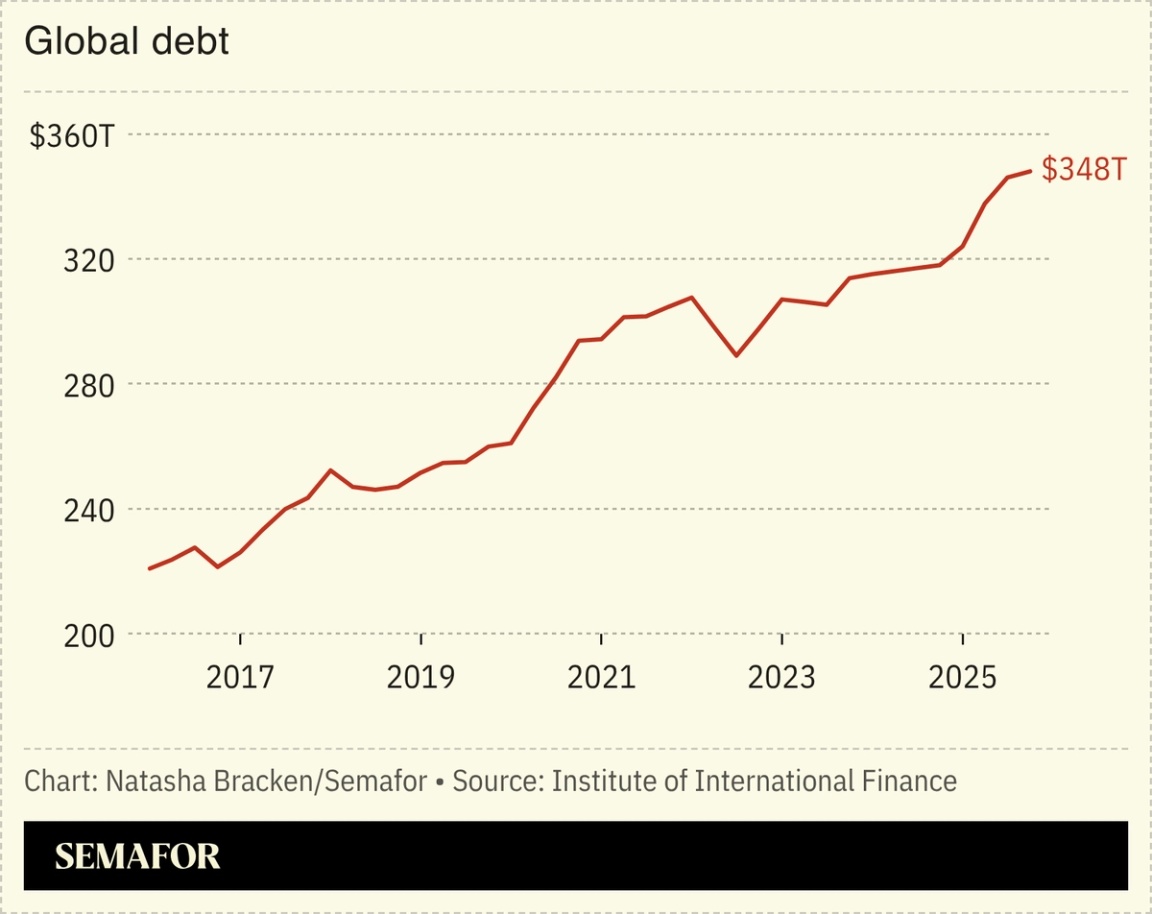 Estimated global debt leaped almost $29 trillion to a record $348 trillion last year, fueled by increased governmental spending on defense and AI. A report found that total debt-to-GDP ratios fell for a fifth consecutive year in 2025, to around 308% of GDP, but that the fall was entirely driven by lower debt burdens in the private sector. European governments, in particular, have dramatically boosted military spending to bolster defenses against Russian aggression, and could see their debt-to-GDP ratio climb a further 18 percentage points by 2035. Meanwhile, analysts estimate that AI’s rapid infrastructure buildout could drive up to $1.5 trillion in additional borrowing by US tech companies in the coming years. |
|
Nvidia stock falls despite sales growth |
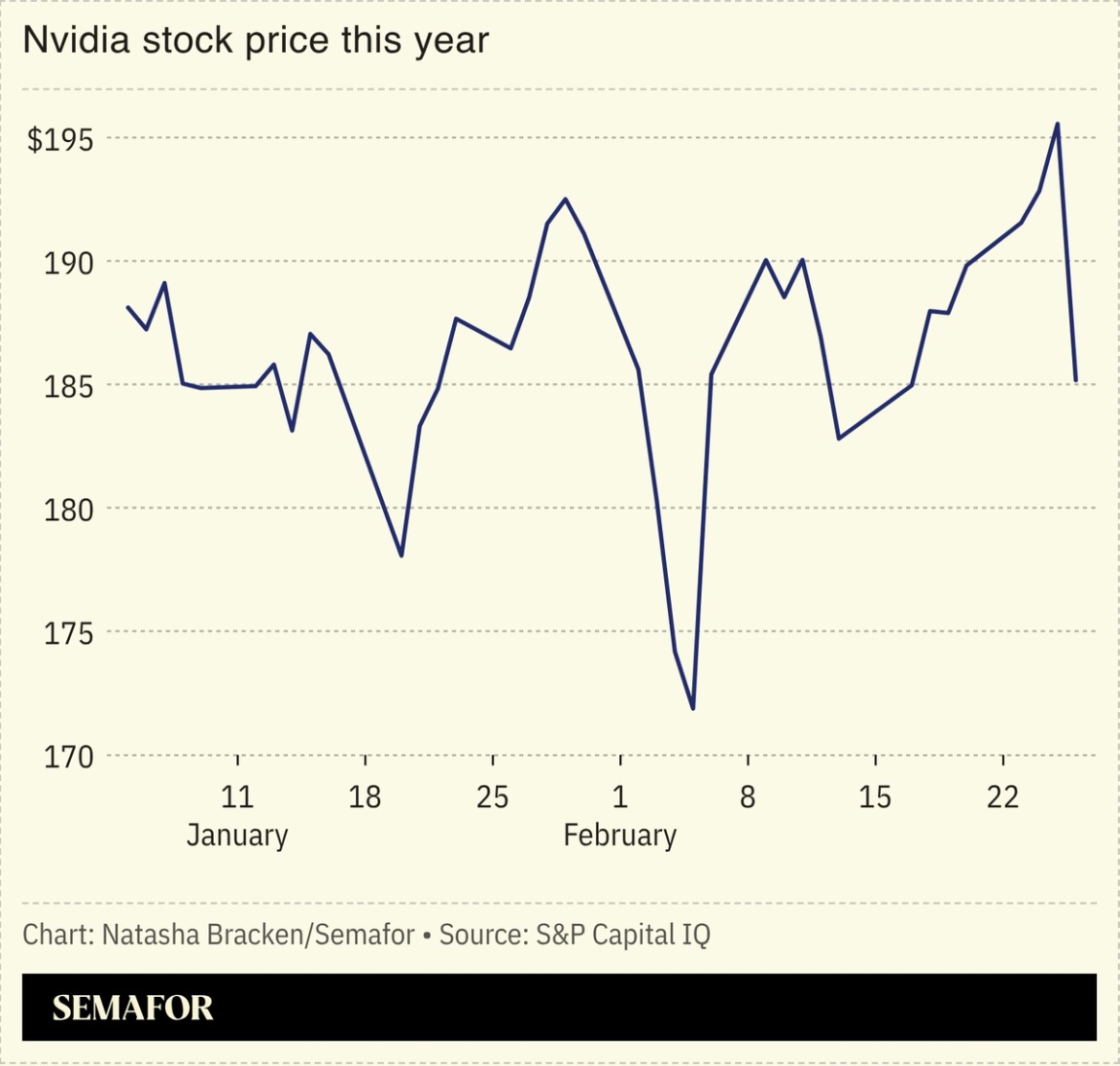 Nvidia’s stock slid Thursday despite the US chip giant posting strong earnings, a reflection of the volatile nature of today’s AI trade. The company’s quarterly revenue and projections both exceeded expectations, but investors remain skeptical about whether booming AI spending can be sustained. A question mark also hangs over Nvidia’s China business, after the US government approved sales of the company’s H200 chips to Chinese customers, though it’s unclear if Beijing will sign off. Largely, “emotions, not logic, [are] driving the stock market right now,” one strategist said. Tech stocks have seesawed in recent weeks on concerns about the sky-high AI expenditures.
|
|
 What does happiness look like in the digital age? The 2026 World Happiness Report, powered by new global data from Gallup, reveals striking generational shifts in wellbeing. From rising loneliness to changing patterns of social connection, the findings challenge assumptions about technology, social media, and happiness. In partnership with Gallup, Semafor will bring together leaders across research, policy, media, and technology to explore what the evidence means—and how institutions and communities can foster deeper connection in a rapidly evolving digital world. Join us for The State of Happiness in 2026: Wellbeing in the Digital Age for a forward-looking conversation on resilience, belonging, and the future of human connection. March 19 | Washington, DC | RSVP |
|
US tech firms set to sign energy pledge |
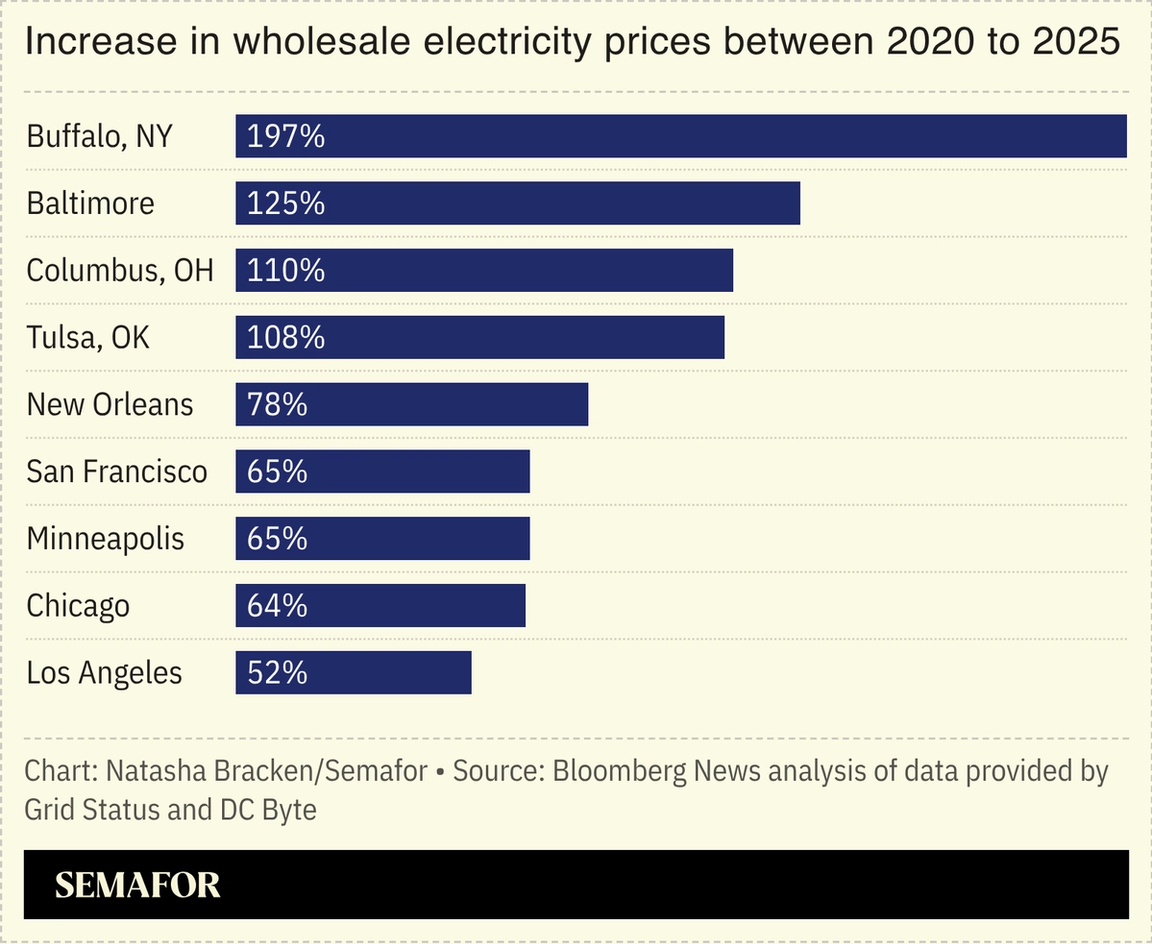 US tech giants are expected to sign a pledge next week to build or buy their own energy supplies to power data centers. The White House gathering, Axios reported, is part of President Donald Trump’s election-year efforts to address voters’ concerns over rising energy costs as a result of the facilities. Several companies have already moved toward providing their own electricity rather than straining local grids, following pressure from politicians and communities. But some analysts argue Trump should instead push the tech firms to invest in upgrading the grid infrastructure — to the benefit of everyone — rather than build out a new “shadow grid.” Trump “essentially envisions a bespoke new power system built in parallel to the existing one,” Semafor’s energy editor wrote. |
|
F-35 uses AI to ID targets |
 Eva Marie Uzcategui/Reuters Eva Marie Uzcategui/ReutersA fighter jet used AI to identify targets for the first time. Modern air combat usually happens beyond visual range, meaning pilots have to rely on sensors rather than eyesight to tell friend from foe. Sophisticated software can present sensor information comprehensibly, allowing pilots to make combat decisions rather than puzzle over readings. Lockheed Martin said the test version on its F-35 “can enable faster and superior operational decisions.” But one 2025 report warned that |
|
|


