| | In this edition, Blue Owl’s woes may be a blessing in disguise for private credit, and PayPal is ref͏ ͏ ͏ ͏ ͏ ͏ |
| |  | Business |  |
| |
|
 - Kalshi insider trading
- Paypal M&A math
- Epstein ties hit Davos boss
- Carr warms to CBS
- Wall St. cop cracks down
 UBS is still paying for Credit Suisse takeover |
|
 The trouble at Blue Owl may be a blessing in disguise for the private credit industry, which has gone from Wall Street’s shiny toy to the dumping ground for its anxieties. A quick recap: Blue Owl is the $300 billion poster child for private credit. Founded by alumni of Goldman Sachs, KKR, and Blackstone, it has tripled in size over the past four years and endured some growing pains. Late last year, investors in its publicly traded loan fund — one of the industry’s most aggressively marketed — got spooked and asked for their money back. Their withdrawal requests exceeded Blue Owl’s industry-standard limit of 5% per quarter. Last week, it sold $1.4 billion of loans at essentially face value to give investors 30% of their money back and said it would wind down the fund, known as OBDC II. This was, a bit unfairly, described as “halting redemptions.” This certainly wasn’t a proud day at 399 Park Ave., but it’s the sign of a good actor — Blue Owl could have slow-walked those withdrawals and collected fees for another year and a half. But here’s the thing to keep in mind: If Blue Owl were a bank, it would already be out of business. Banks are vulnerability machines. They transform overnight deposits into decade-long loans, and once depositors lose confidence, the spiral is usually fatal. There’s a reason old banks built those cavernous marble lobbies — to prevent panic-inducing lines from spilling onto the street. Private credit, for all the worries about what panic in the opaque market could do to the bigger financial system, does a better job than banks of matching the money it borrows to the money it lends. Banks turn overnight deposits into long-term loans. Private credit firms raise money with the promise that they’ll return it in five to seven years, then lend it out for about as long. Just 8% of Blue Owl’s money is, practically speaking, runnable. The redemptions at OBDC II was a kind of bank run, but the bank was tiny in the scheme of things at Blue Owl. The firm is liquidating that bank without a death-spiral fire sale: It got 99.7 cents on the dollar for the loans it sold last week. It likely sold its most pristine loans to keep that number high, leaving its remaining portfolio a little heavier on clunkers. (Here’s one, and you can look through every loan it owns and find a few more.) And you can question how honest private credit firms are about their marks. (We did!) But if you think private credit loans are toxic garbage, consider that before they lose money, the private equity underneath them will be wiped out. I don’t see a line of withdrawal requests at Blackstone’s retail buyout fund. The episode should make private credit rethink its recent romance with retail investors, who reliably panic when given the chance. I suspect Blue Owl is done with mom and pop for a while. But it’s also proof that duration mismatch is a feature, not a bug, of banking — one that private credit has shown it can largely avoid. |
|
Kalshi investigates insider trading |
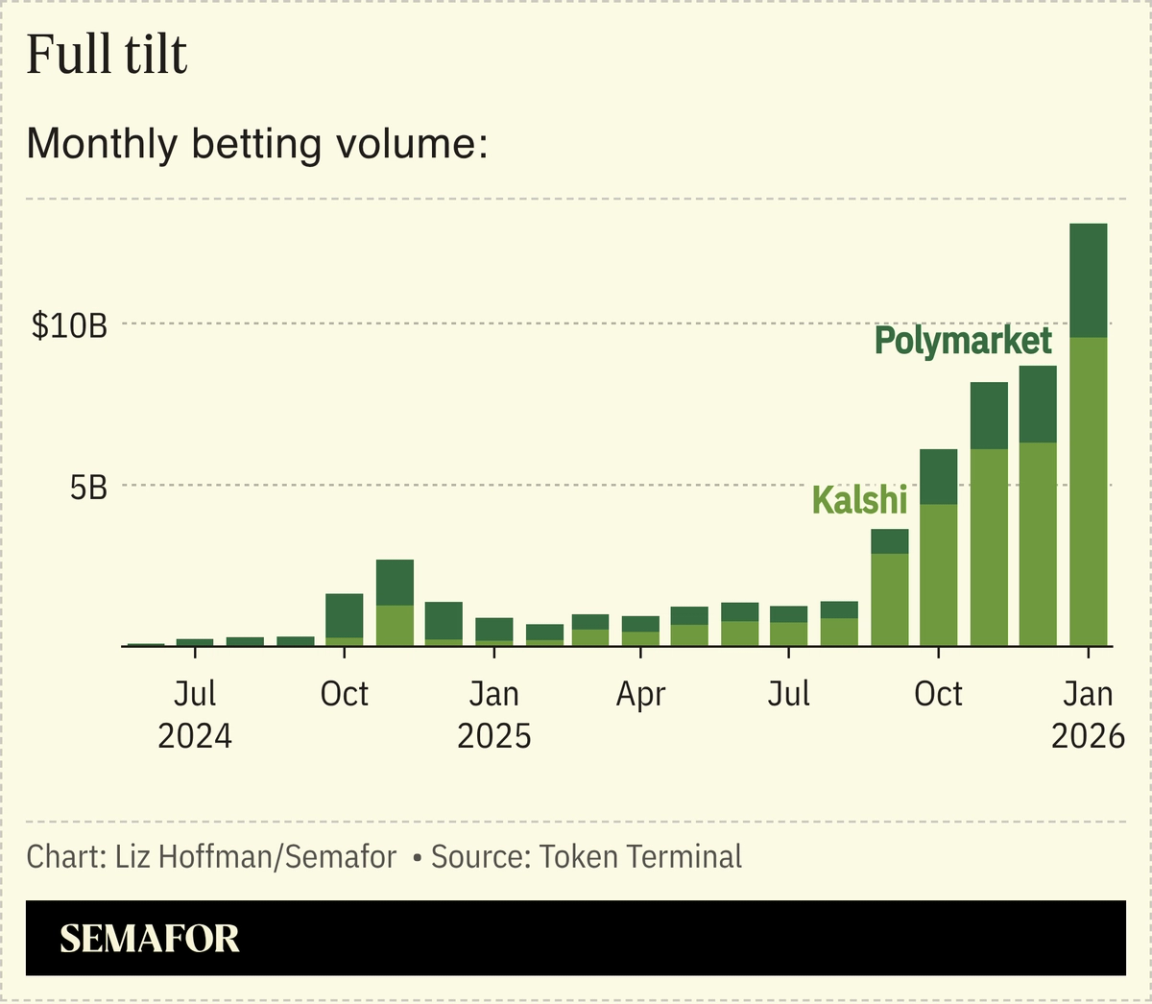 Kalshi reported an employee of YouTube star MrBeast to federal authorities for allegedly using inside information to place well-timed bets on its platform. It’s the first time Kalshi has done so — a recognition that, even in the wild west of prediction markets, insider trading is bad for business. “If people don’t trust [our markets], they’re not going to use them,” Robert DeNault, Kalshi’s head of enforcement, said in an interview. “And if we can’t get them to use them, we don’t get pricing accuracy.” A growing number of bets that seemed too on the nose — on the capture of Nicolás Maduro, the winner of the Nobel Peace Prize, the Super Bowl halftime show, Google’s 2025 Year in Search rankings, and that proof of aliens exists, to name a few — have put Kalshi and rival Polymarket on the defensive. Complicating their enforcement efforts, and any case that regulators will now undertake, is that insider trading law is squishy, and less about fairness than about misappropriation of information. The strongest legal case here may belong to Beast Industries itself, which owned the information (related to MrBeast’s upcoming video content) that informed the employee’s wagers. Beast Industries’ CEO told CNBC Thursday it suspended the employee as it investigates whether he violated a policy it put in place a few months ago on employee use of prediction markets. Kalshi’s DeNault said the vast majority of trades flagged through its internal alert system are cleared after investigation. Remember the big wager on Iran strikes, which the internet was convinced was a Pentagon staffer? “That’s just a person who had a lot of confidence in a trade and was wrong,” DeNault said. |
|
Unpacking PayPal’s M&A machinations |
 Fabrizio Bensch/Reuters Fabrizio Bensch/ReutersPayPal isn’t currently in talks to sell itself — to Stripe or anyone else — and has been working for months with bankers to prepare for a potential activist campaign or unwanted takeover bid, Semafor’s Rohan Goswami scooped. The process followed a steep decline in PayPal shares that executives worried could leave the company vulnerable, according to people familiar with the matter. Bankers began working with PayPal under former CEO Alex Chriss, who was ousted earlier this year. Bloomberg reported that Stripe is considering an acquisition of all or parts of PayPal this week. PayPal declined to comment. Incoming CEO Enrique Lores officially starts next week. Quick sanity check: It’s hard for privately held companies, even big ones like Stripe, to buy a big public company — especially if it doesn’t want to be bought. Stripe can’t pay with its own shares, and would need rock-solid debt commitments to rebut any stiff-arm from PayPal. The rare cases require messy workarounds, like the tracking stock that allowed privately held Dell to buy EMC in 2016. They also need the enthusiastic support of the company being acquired and deep pockets, both of which allowed Mars, the family-controlled food giant, to buy Kellanova last year for cash. |
|
 Yves Herman/Reuters Yves Herman/ReutersJust as Davos was starting to regain its relevance, the World Economic Forum’s leader, Børge Brende, is stepping down over his ties to Jeffrey Epstein. Brende, who had stayed in touch with Epstein through mid-2019, just a few months before he died in custody, is the latest global elite felled by his dealings with Epstein. Larry Summers, who had already left OpenAI’s board, on Wednesday said he would resign from his Harvard teaching post, and Andrew Mountbatten-Windsor and the UK’s former ambassador, Peter Mandelson, have both been arrested. Brende is the second chief of the World Economic Forum run out by scandal, a bad look for a forum whose core mission is promoting global stability. But it does clear the air for the organization, paving the way for BlackRock’s Larry Fink to further put his own stamp on the place. Fink — and his ability to get Trump over to the Swiss Alps this year — put the gathering squarely back on the map. He is seen as favoring Christine Lagarde, head of the European Central Bank, to take over WEF, though her huffy exit this year from a dinner stacked with US government officials may make things awkward. |
|
FCC’s Carr takes a victory lap |
 Paul Morigi/Getty Images for Semafor Paul Morigi/Getty Images for SemaforFCC Chair Brendan Carr took a victory lap at Semafor’s Restoring Trust in Media event on Wednesday, gushing about an overhauled CBS under David Ellison and Bari Weiss. President Donald Trump’s most effective regulator has roamed far beyond the traditionally narrow domain of the FCC and told Semafor’s Ben Smith that he doesn’t feel constrained by his agency’s historically narrow remit over the airwaves (but not streaming). CBS’ fate offers a guideline for companies looking to merge, scale, or just stay alive: Carr forced CBS to appoint a “bias monitor” — newsrooms call them ombudsmen — to oversee coverage, got the network’s owner, Paramount, to gut its DEI programming, and pushed the network’s down-the-middle coverage rightward. “They’re doing a great job,” Carr said. Asked which network the FCC will investigate next, Carr said: “We’ll see.” |
|
Clayton wants companies to name names |
 Shannon Stapleton/Reuters Shannon Stapleton/ReutersWall Street’s top federal prosecutor wants more corporate executives, and fewer faceless entities, in the dock. The Southern District of New York is changing a longstanding approach to corporate fraud prosecutions, hoping to incentivize companies to flip on their executives and let the government bring individual charges instead of fines that are ultimately paid by shareholders. Jay Clayton’s new approach rewards companies for early and full cooperation, including turning over evidence they gather about exactly who did what. Companies must also quickly repay victims, who can wait years for fines to be paid and doled out by lawyers. “After self-reporting, the only thing companies need to worry about is making victims whole and being maximally cooperative, including providing information about who did what,” Assistant US Attorney Nicolas Roos told Semafor. The fact that (almost) nobody went to jail in the aftermath of the 2008 financial crisis, despite companies admitting to widespread wrongdoing, helped fuel populist political turns in the US and Europe. Clayton said that corporate corruption cases are particularly ripe for individual accountability: “People pay bribes,” he said in an interview earlier this month at the Southern District’s Manhattan offices. It should be “rare” that a company is charged for violating the Foreign Corrupt Practices Act and no individual charges are brought, he said. |
|
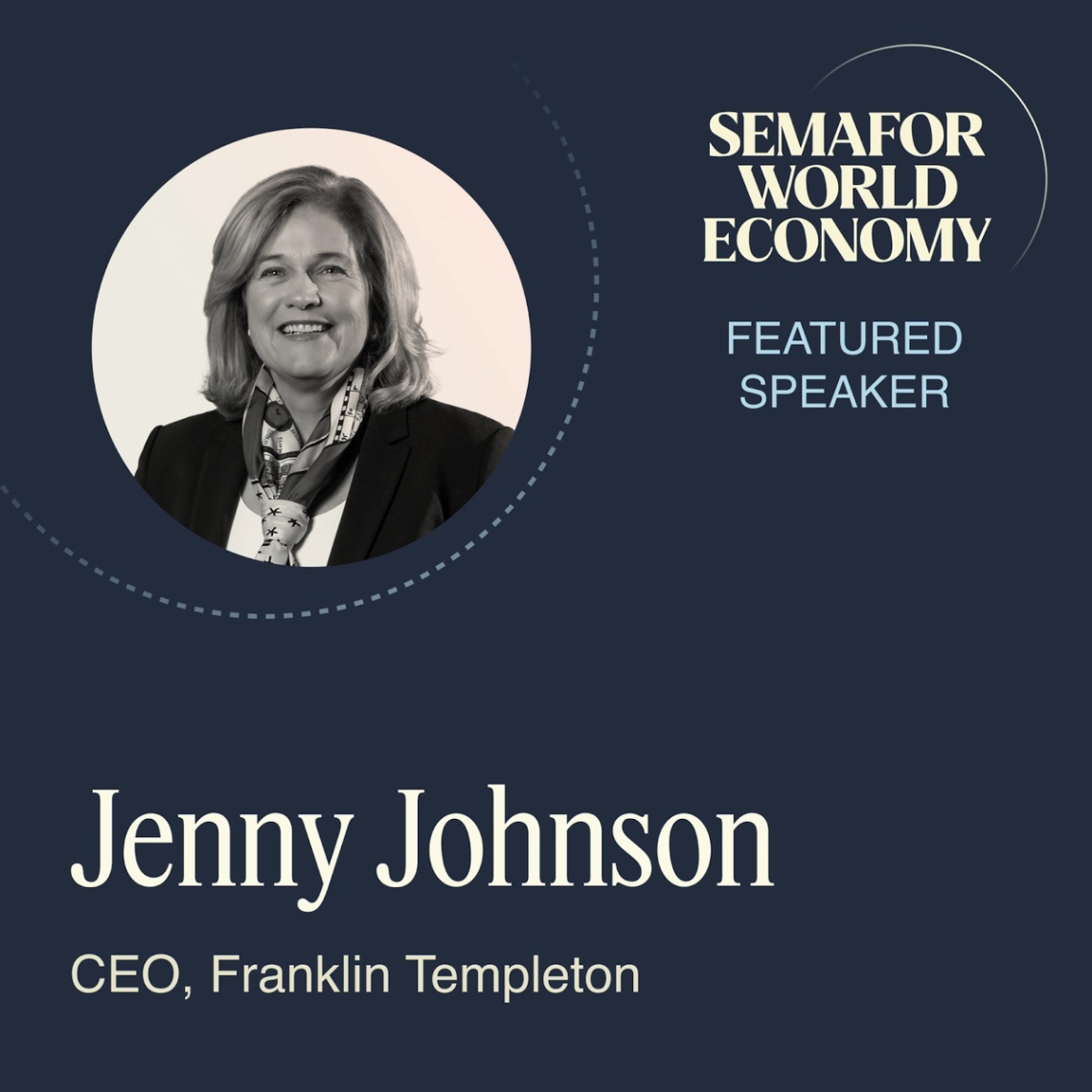 This April, Jenny Johnson, CEO of Franklin Templeton, will join global leaders at Semafor World Economy — the premier convening for the world’s top executives — to sit down with Semafor editors for conversations on the forces shaping global markets, emerging technologies, and geopolitics. See the first lineup of speakers here. |
|
➚ BUY: I’m Lovin’ It. McDonald’s is introducing its “biggest and boldest burger yet” with the “Big Arch,” in a direct response to consumer complaints. ➘ SELL: Where’s The Beef? Trump boasted of lowering meat prices in his State of the Union speech as his administration talks of “ending the war on protein,” but data shows prices on both have increased since he took office. |
|
 Companies & Deals |
|
|


