| | Stock markets fall on a fresh wave of tariff uncertainty, Ukraine reconstruction costs rise, and fur͏ ͏ ͏ ͏ ͏ ͏ |
| |  | Flagship |  |
| |
|
The World Today | 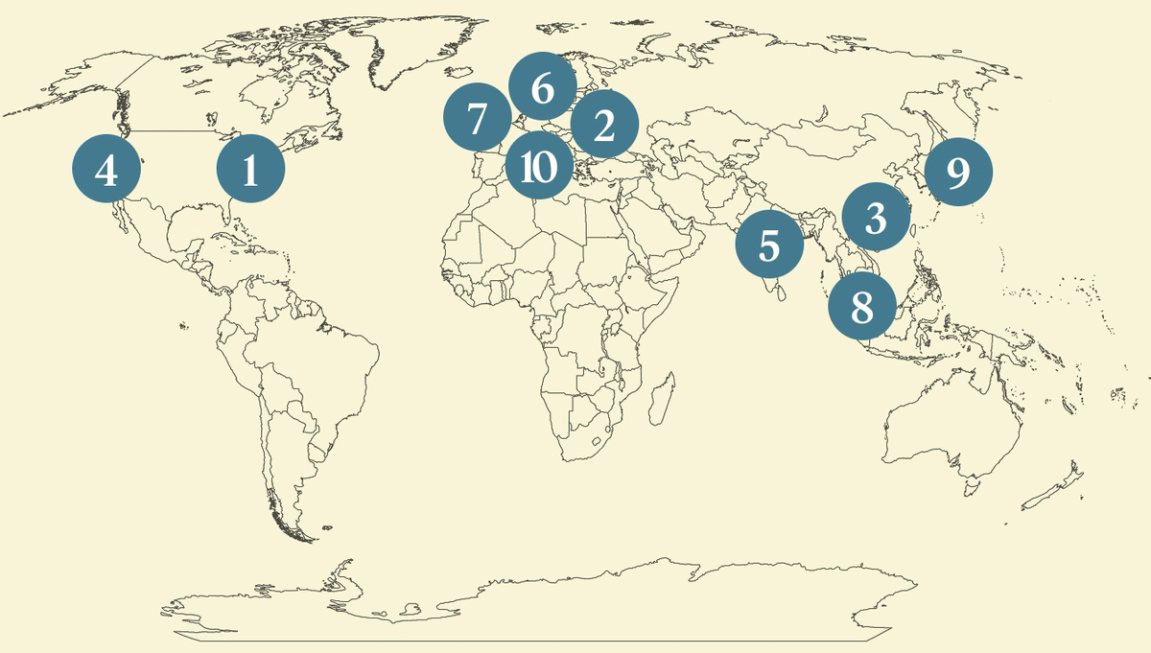 - Tariff uncertainty is back
- Ukraine’s resilient economy
- China flocks to AI apps
- OpenAI’s enterprise push
- India to get supercomputer
- Call for Novo Nordisk pivot
- UK’s Mandelson arrested
- China’s durian tastes change
- Elevators in demand
- Fur makes a comeback
 A “blend of memory and fable” that’s especially relevant this week. |
|
Stocks fall on tariff uncertainty |
 Brendan McDermid/Reuters Brendan McDermid/ReutersUS and European stocks fell Monday as President Donald Trump’s new global tariff hike triggered a fresh wave of market turmoil. “Uncertainty is back,” one banker told the Financial Times, noting that the risk of escalation between Washington and its trading partners is higher than it was a year ago. The US Supreme Court’s ruling invalidating most of Trump’s tariffs — which he responded to by imposing a blanket 15% duty — threw global trade agreements into flux. The European Parliament on Monday said it paused ratification of the US-EU pact. The feeling is reminiscent of early 2025, when Trump’s tariff policies “seemed to switch on a moment’s notice,” Reuters noted. For companies, “it’s impossible to plan,” EY-Parthenon’s chief economist said. |
|
Ukraine economy proves resilient |
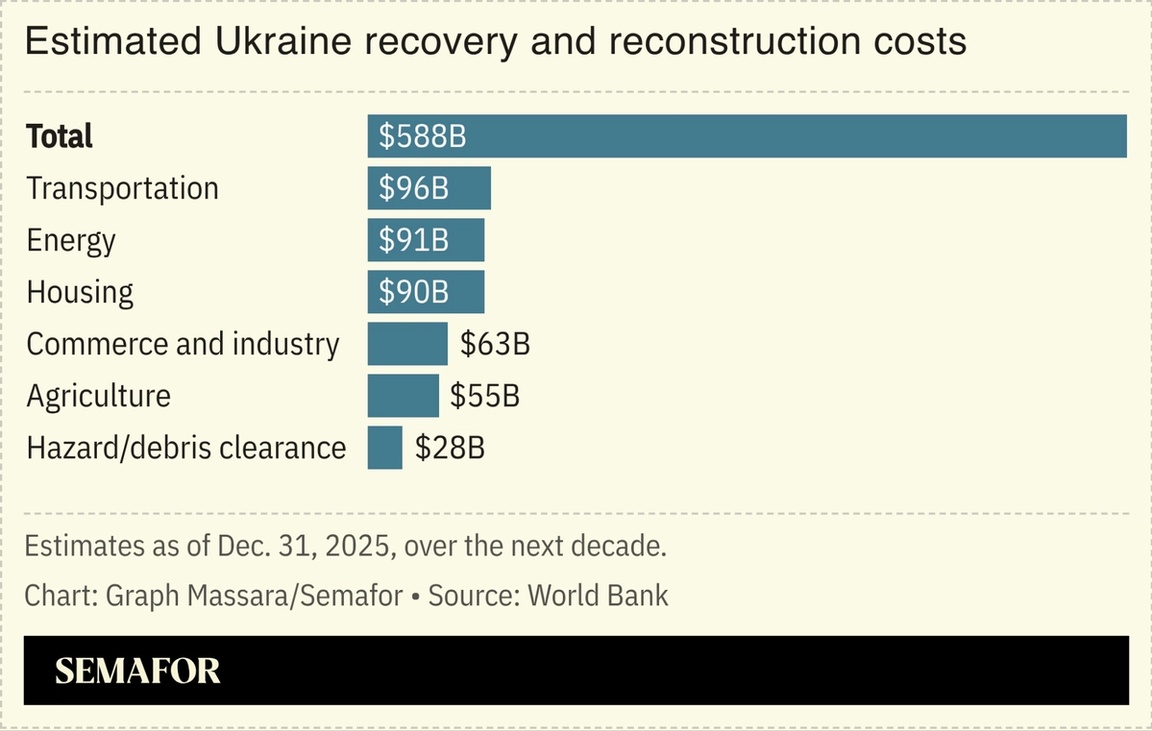 Ukraine’s economic reconstruction will cost about $588 billion over the next decade, according to new estimates released a day before the four-year anniversary of Russia’s full-scale invasion. Despite the considerable damage, which is most pronounced in the transportation, housing, and energy sectors, Ukraine’s economy has proven resilient. GDP has increased every year since 2023, and the war has spurred technical innovation that has bolstered Ukraine’s manufacturing sector. Domestic drone production in particular has been a boon for Kyiv’s efforts to more closely integrate into the EU’s industrial network. While Russia’s economy hasn’t collapsed either, it has been split in two, The Bell wrote: Military-related sectors are flourishing, but those unrelated to the war are in decline thanks to sanctions and high borrowing costs. |
|
AI promotions lure Chinese users |
 Aggressive holiday giveaway campaigns from China’s top AI companies appear to have paid off — at least in the short term. The tech firms gave away cars, shopping vouchers, and even cash to increase AI app engagement around Lunar New Year. China’s ByteDance said it logged 1.9 billion interactions during a widely watched new year’s gala; at one point, it processed 63.3 billion tokens in a single minute, equivalent to about 47 billion English words. Alibaba said nearly 200 million orders were placed through its AI agent interface, including 55 million cups of milk tea. “This is the commerce-as-interface thesis at scale,” a China tech analyst wrote, but it remains to be seen whether the holiday hype will create lasting consumer habits. |
|
OpenAI deepens consulting ties |
|
G42 making 8-exaflop computer for India |
 Rebecca Lewington/Cerebras Systems/Handout via Reuters Rebecca Lewington/Cerebras Systems/Handout via ReutersAbu Dhabi’s AI conglomerate G42 will build a national-scale supercomputer for India, deepening ties between the Gulf and the world’s most populous nation. California chipmaker Cerebras is also a partner on the project, which at eight exaflops of capacity makes it competitive with the world’s leading supercomputers (an exaflop equals 1 quintillion calculations per second). The new kit is intended for use by India’s private sector and government ministries; American tech giants Nvidia and Oracle announced a similar supercomputer project with the US Department of Energy last year, with the AI-powered equipment aimed at aiding scientific discovery. The India deal builds on other computing capacity buildouts from G42, through local partnerships in France, Italy, and Kazakhstan. |
|
Novo battles ‘obsolete’ accusations |
 Hollie Adams/Reuters Hollie Adams/ReutersInvestors called on Novo Nordisk to pivot to sectors beyond weight loss after disappointing trial results for a new drug saw the Danish pharmaceutical giant’s stock plummet. The Ozempic maker established the modern market for GLP-1 weight loss drugs, but its next-generation treatment, CagriSema, underperformed compared to a similar offering from US-based Eli Lilly. One Deutsche Bank analyst called Novo’s new drug “obsolete,” a characterization that the company’s CEO rejected. The question is now whether Novo veers into other fields like rare diseases and heart conditions. “Obesity and diabetes — it’s too risky to bet the entire company on these two franchises,” one investor said. |
|
UK authorities arrest Mandelson |
 Justin TALLIS / AFP via Getty Images Justin TALLIS / AFP via Getty ImagesBritish authorities arrested the country’s former US ambassador, Peter Mandelson, on Monday, as revelations from the Jeffrey Epstein files continue to reverberate globally. Police are investigating whether Mandelson passed confidential government information to the sex offender. His detention came less than a week after former Prince Andrew was arrested on suspicion of misconduct. Australia’s leader backed removing Andrew from the line of royal succession. The Epstein saga will remain in the headlines this week as Bill and Hillary Clinton testify to US lawmakers about their ties to the financier. Material consequences in the US have so far been confined to the private sector: Longevity influencer Peter Attia reportedly stepped down as a CBS News contributor over his relationship with Epstein. |
|
 This April, Tom Hale, CEO of Oura, will join global leaders at Semafor World Economy — the premier convening for the world’s top executives — to sit down with Semafor editors for conversations on the forces shaping global markets, emerging technologies, and geopolitics. See the first lineup of speakers here. |
|
Malaysia’s durian farmers face downturn |
 Edgar Su/Reuters Edgar Su/ReutersMalaysia’s durian farmers are seeing a downturn after years of high profits, thanks to an unexpected change in Chinese tastes. The foul-smelling but pleasant-tasting fruit is a luxury in China, and sales have held up despite the country’s wider economic downturn. But consumers have started seeking fresh durians, rather than the frozen ones Malaysia provides, and export prices are down 90% year-on-year. The problem is compounded because durian trees take 10 years to mature, and farmers bet heavily on demand continuing, leading to a glut, The New York Times reported. Malaysia is a key source of Chinese delicacies: Exports of swifts’ nests, used in Chinese bird’s nest soup, more than doubled to 484 tons last year, from about 200 in 2024. |
|
Elevators in demand as world ages |
 Jade Gao/AFP via Getty Images Jade Gao/AFP via Getty ImagesThe world’s aging population is good news for manufacturers of elevators. A German manufacturer told the Financial Times that the demand for more elevators was already visible in Japan, and Europe and China would not be far behind. The demographic shift is having profound impacts: A Japanese diaper maker pivoted from babies to the elderly, a growth market in the world’s oldest country, while an Irish baby formula factory shut in 2023 as Chinese demand collapsed along with its birth rate. Health care is also taking up a central economic role. In the US, it is projected to grow from $15,610 per person in 2023 to $24,200 by 2033, and is propping up the country’s labor market. |
|
|


