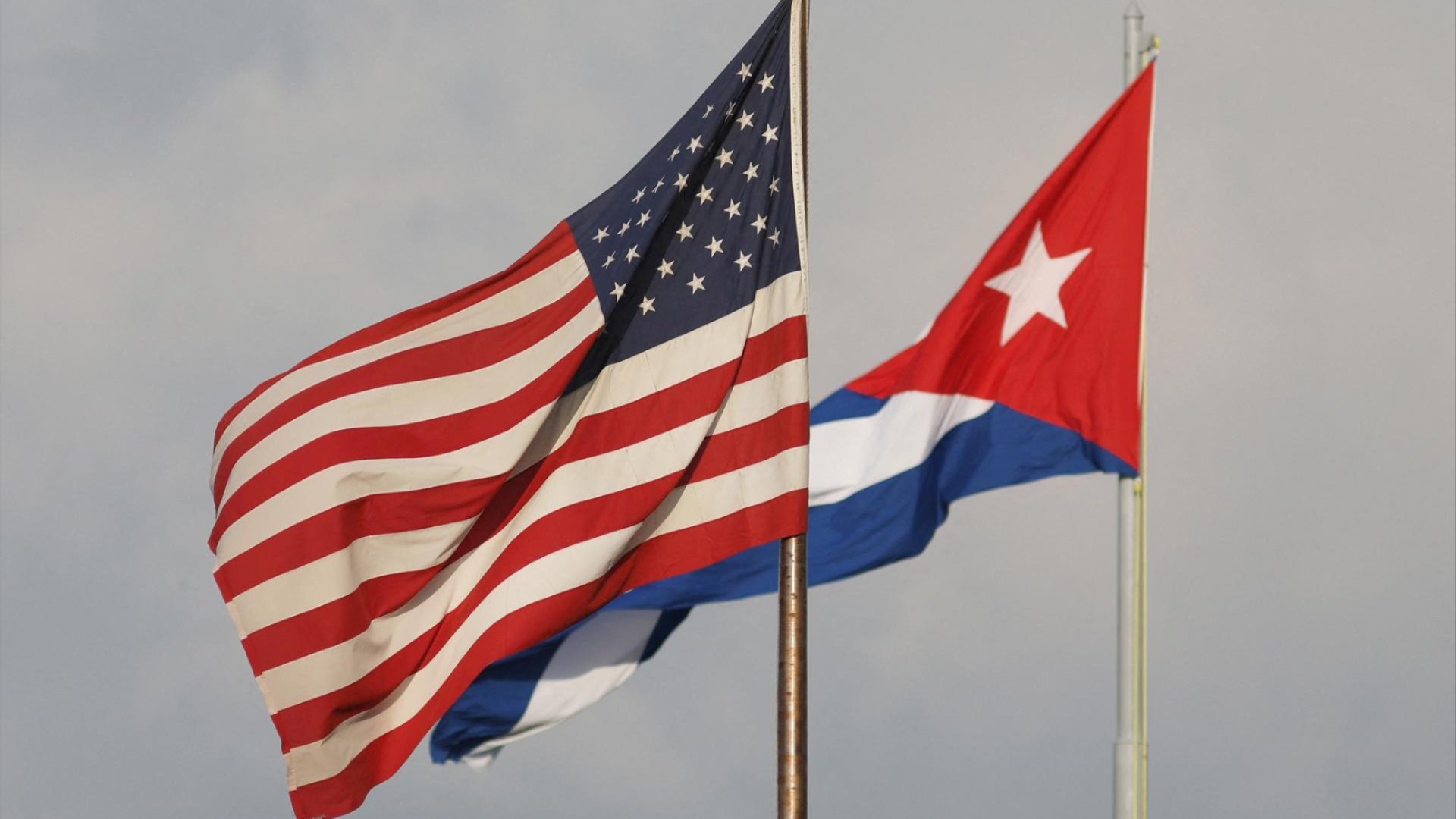
Today the U.S. Supreme Court will explore legal questions arising from the fraught history of U.S.-Cuban relations when it considers the scope of a 1996 law that lets U.S. nationals seek compensation for property confiscated by the communist-led Cuban government.
Context: The court will hear two cases centered on a federal law called the Helms-Burton Act, one involving ExxonMobil and the other involving the cruise lines Carnival, Royal Caribbean, Norwegian Cruise Line and MSC Cruises.
One of the law's provisions, called Title III, allows for lawsuits in U.S. courts against entities that "traffic" in property confiscated by the Cuban government after the revolution that brought Fidel Castro to power in 1959. While the two cases focus on distinct legal issues, both raise the question of just how powerful a remedy Congress intended Title III to be. Read more about the legal issues here.
Why it matters: The justices have never before interpreted Title III, which was long dormant due to presidential decisions to suspend it. But President Trump, who has taken a hard line toward Cuba, lifted that suspension during his first term in office, unleashing a wave of about 40 lawsuits filed in 2019 and 2020 that have slowly made their way through the courts. Read more about what to expect here.
Who: Richard Klingler of Ellis George for Havana Docks Corporation; Paul Clement of Clement & Murphy for Royal Caribbean; Morgan Ratner of Sullivan & Cromwell for Exxon; Pitt School of Law Professor Jules Lobel for Corporacion Cimex; Aimee Brown and Curtis Gannon of the DOJ for the U.S. as amicus curiae.