| | In today’s edition: Backlash over US comments on Israel’s biblical borders and Abu Dhabi plans a sup͏ ͏ ͏ ͏ ͏ ͏ |
| |  | Gulf |  |
| |
|
 - US gaffe on ‘Greater Israel’
- G42’s Indian supercomputer
- PIF expands gaming vertical
- UAE’s global energy bets
- Saudi makes HQ exemptions
 Celebrating the founding of a kingdom. |
|
Biblical border talk sparks backlash |
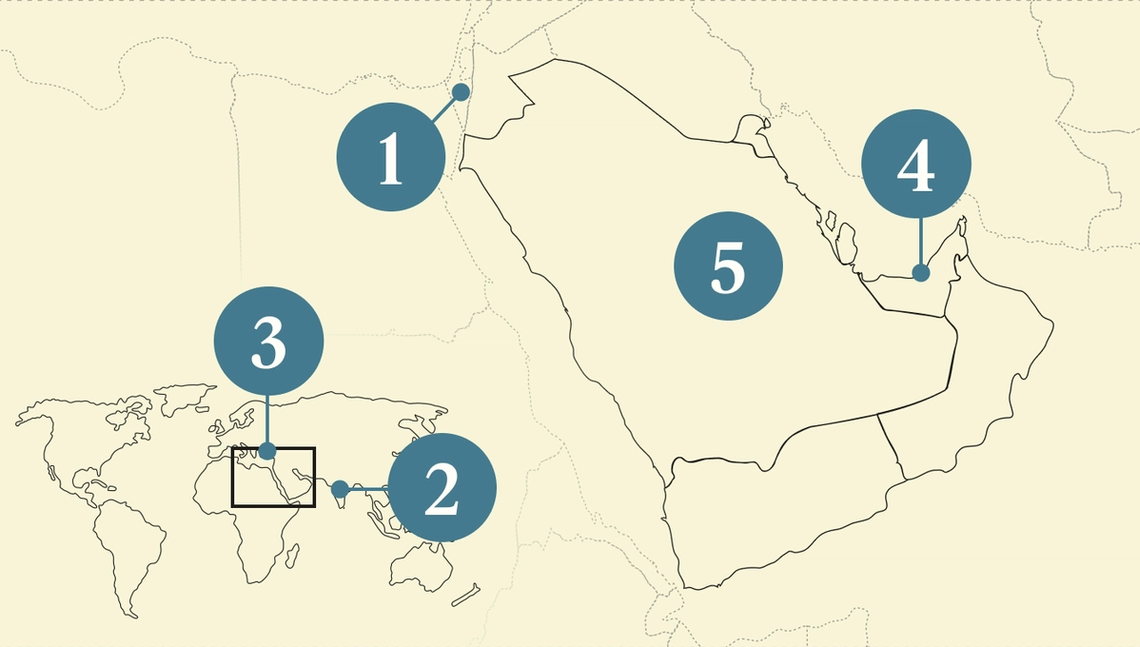
 US Ambassador to Israel Mike Huckabee. Ronen Zvulun/Reuters. US Ambassador to Israel Mike Huckabee. Ronen Zvulun/Reuters.God’s Biblical covenant with Abram — “To your descendants I give this land, from the river of Egypt to the great river, the river Euphrates” — sparked a diplomatic uproar this weekend after conservative podcaster Tucker Carlson asked US Ambassador to Israel Mike Huckabee whether Israel had a right to parts of Egypt, Iraq, Saudi Arabia, Syria, and Türkiye, as well as all of Jordan and Lebanon. Huckabee replied: “It would be fine if they took it all.” Gulf states and other Muslim-majority countries condemned the remarks, calling them “dangerous and inflammatory” and a threat to regional stability. The US Embassy in Jerusalem said the comments were taken out of context and that there was no change in policy. In the interview, Huckabee explained that Israel does not intend to conquer the entire Middle East and is focused on securing the areas it already controls. The intensity of the reaction reflects a longstanding fear among Arabs of an expansionist Israel, a concern periodically reinforced by some Israeli officials and US evangelical Christians such as Huckabee. That the ambition is implausible — Israel would have to displace tens of millions of people to realize “Greater Israel” — doesn’t matter: the notion widens divisions in a region Washington is trying to knit into a stable, prosperous bloc as part of its long-term strategic competition with China. (Long-term, but not by biblical standards.) — Mohammed Sergie |
|
G42’s 8 exaflop-computer in India |
 Courtesy Abu Dhabi Media Office Courtesy Abu Dhabi Media OfficeG42 will build a national-scale supercomputer for India, another pin on the map for the Abu Dhabi AI conglomerate and a boon for the UAE’s ties to the world’s most populous country. California chipmaker Cerebras is a partner on the project, which at 8 exaflops of capacity makes it competitive with the world’s leading supercomputers (an exaflop equals 1 quintillion calculations per second); other partners include Abu Dhabi’s Mohamed Bin Zayed University of Artificial Intelligence and India’s Centre for Development of Advanced Computing. No timeline was given, but once operational the new piece of kit is intended for use by India’s private sector and government ministries. The deal builds on other computing capacity buildouts from G42, through local partnerships in France, Italy, and Kazakhstan. — Kelsey Warner |
|
Gaming looms large for Riyadh |
 Ahmed Yosri/Reuters Ahmed Yosri/ReutersRiyadh continues to bet big on video games, adopting a multi-tiered approach to dealmaking. Gaming studio Scopely — which is owned by Public Investment Fund’s Savvy Games — is buying a majority stake in Turkish studio Loom Games, in a deal worth up to $1 billion. Savvy itself is in talks to buy China’s Moonton for a mooted $6 billion, but the biggest deals are still being done at the PIF level: The sovereign wealth fund is leading a $55 billion bid to take Electronic Arts private. Savvy is being entrusted with more PIF assets though. Its parent fund recently handed it a $3 billion stake in Take Two Interactive, the studio behind the Grand Theft Auto series. Last month, several other investments were also transferred, including PIF’s stakes in Nintendo, an expansion that could propel Savvy into the ranks of the world’s biggest gaming companies, if the EA stake is rolled in. |
|
UAE digs into overseas energy deals |
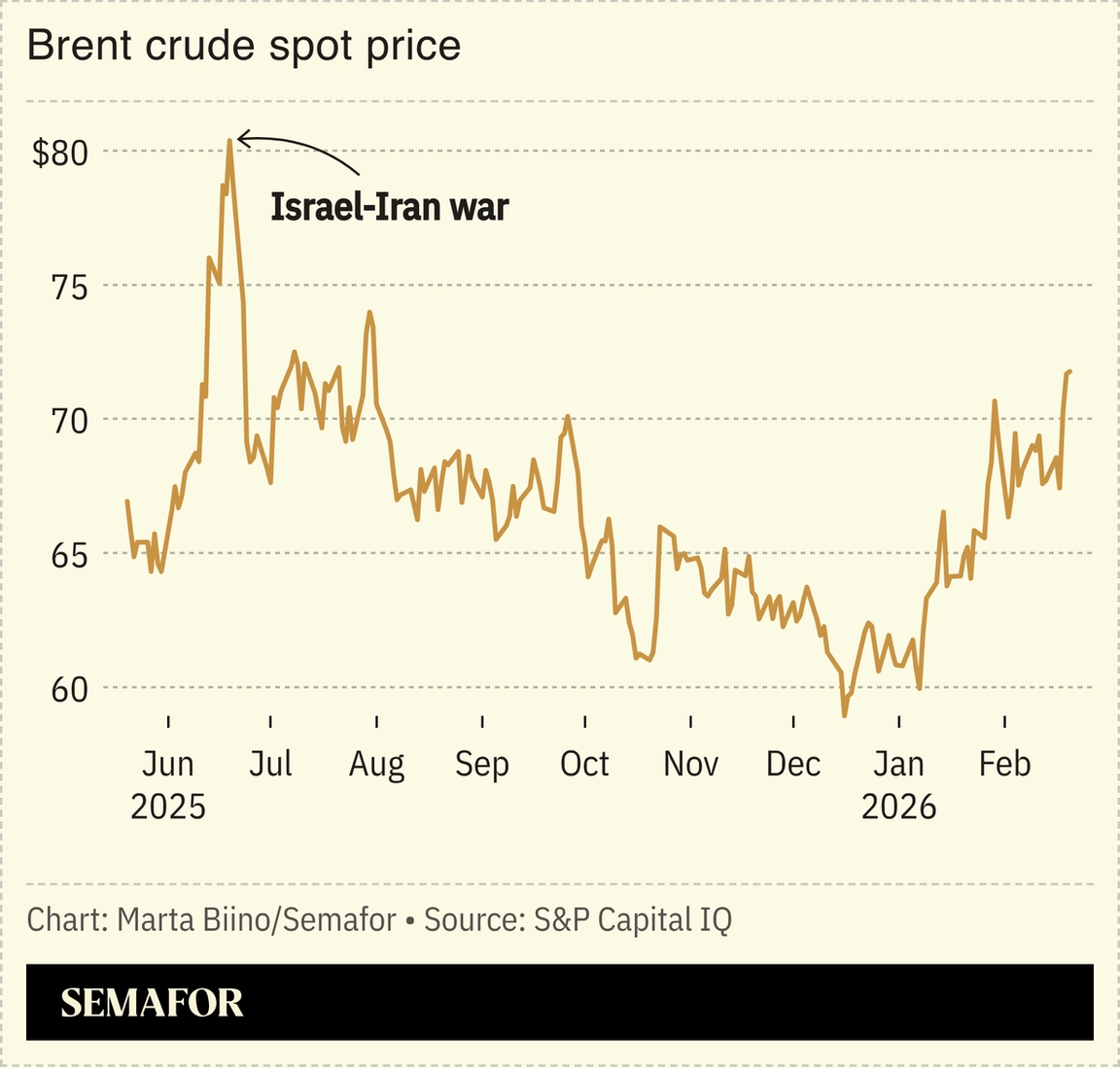 Abu Dhabi’s Mubadala Energy has bought into the offshore Nargis gas field in Egypt, as Emirati firms build up their foreign energy portfolios. It already has a stake in Egypt’s giant Zohr gas field, and its wider interests span Asia, the Middle East, and North America. In the US, it part-owns Caturus, which recently agreed a $950 million gas deal in Texas. Just as active is XRG, the international arm of national oil company ADNOC. Its recent deals have involved Azerbaijan’s Southern Gas Corridor, the Rio Grande LNG project in Texas, and an Argentinian LNG project. XRG also plans to invest billions of dollars in Egypt over the coming years with BP, via their Arcius Energy joint venture. The expansion comes amid an expected supply glut which has historically deterred some oil and gas companies from investing in additional output. ADNOC, Mubadala, and fellow Emirati energy player Taqa also jointly own Abu Dhabi’s main bet on renewables: Masdar, which has clean energy projects in around 40 countries. — Dominic Dudley |
|
 Hamad I Mohammed/Reuters Hamad I Mohammed/ReutersRoughly two years after Saudi Arabia blocked foreign companies without a regional headquarters in the kingdom from bidding for government contracts, it’s becoming more flexible. Exemptions went into effect at the end of last year that remove the requirement for a local HQ if the project is small enough (less than $267,000), technical enough, or an offer is cheap enough — an outsider bidding 25% under local competitors would qualify. Government entities can apply for the exemption via a Ministry of Finance platform, Asharq Al-Awsat reported. The Saudi government said in January more than 700 international companies had set up their regional HQ in the country so far. But the rule has led to some backbending by multinational firms: Visa has split its Gulf headquarters into two territories, setting up head offices in both Dubai and Riyadh. — Kelsey Warner |
|
 Semafor will convene with leaders in Nairobi on Tuesday, March 24 to advance financial inclusion at the intersection of long-term capital, policy, and financial infrastructure. Bringing together investors, policymakers, and financial system leaders, the conversation will move beyond ecosystem-building toward action — mobilizing capital, strengthening infrastructure, and closing persistent access and affordability gaps. Join us as we dive into how coordinated public-private efforts can accelerate inclusive growth across East Africa and other emerging markets. March 24 | Nairobi | Request Invitation |
|
 Checking In- Gulf airlines are on alert as US-Iran tensions rise, preparing for longer routes and higher costs if airspace over Iran tightens further. Most carriers are already skirting the area, but any escalation could still disrupt key Europe-Asia corridors. — The National
Cybersecurity- A cyberattack aimed at disrupting “essential services” in the UAE was thwarted, the national Cybersecurity Council said, without naming the culprit. The attack included ransomware and phishing campaigns targeting national platforms, according to the authority, adding that AI was used in “a qualitative shift in the methods employed by terrorist groups.”
Diplomacy- Kuwait has protested fresh maritime border claims by Iraq, saying maps Baghdad deposited with the UN last week infringe on its territory. The two countries have been at odds over the issue for years, but the dispute was heightened in 2023 when Iraq withdrew from an agreement over the shared Khor Abdullah waterway to the Gulf. — The New Arab
Sports- After months of speculation about his future in Saudi Arabia, Cristiano Ronaldo said he “belongs to” the country and wants to continue at his club Al-Nassr through 2027. The comments follow reports of tension over transfers and club management. Two days ago, US President Donald Trump posted an AI-generated video of himself playing football with Ronaldo at the White House and telling the Portuguese star: “We need you in America.” — ESPN
|
|
 Al-Nassr FC/Handout via Reuters Al-Nassr FC/Handout via ReutersSaudi Arabia celebrated its Founding Day yesterday, a public holiday created by royal decree in 2022. It is the newest holiday marking the oldest event: the establishment of the first Saudi state in 1727, which had Diriyah as its capital. It is part of a broader attempt to anchor national identity beyond religion. Diriyah is now a hub of construction activity, but Founding Day itself is a relatively quiet affair, unlike National Day in September, when streets are gridlocked and a party vibe prevails. The February holiday sees the flag of the first Saudi state line the streets of Riyadh and Jeddah, alongside an emphasis on state-planned events. The few who are celebrating aren’t painted green; they’re in traditional dress, giving the day its own budding identity. Anyone looking for more background should visit the restored At-Turaif district in Diriyah, where a museum sets it out like a storybook. |
|
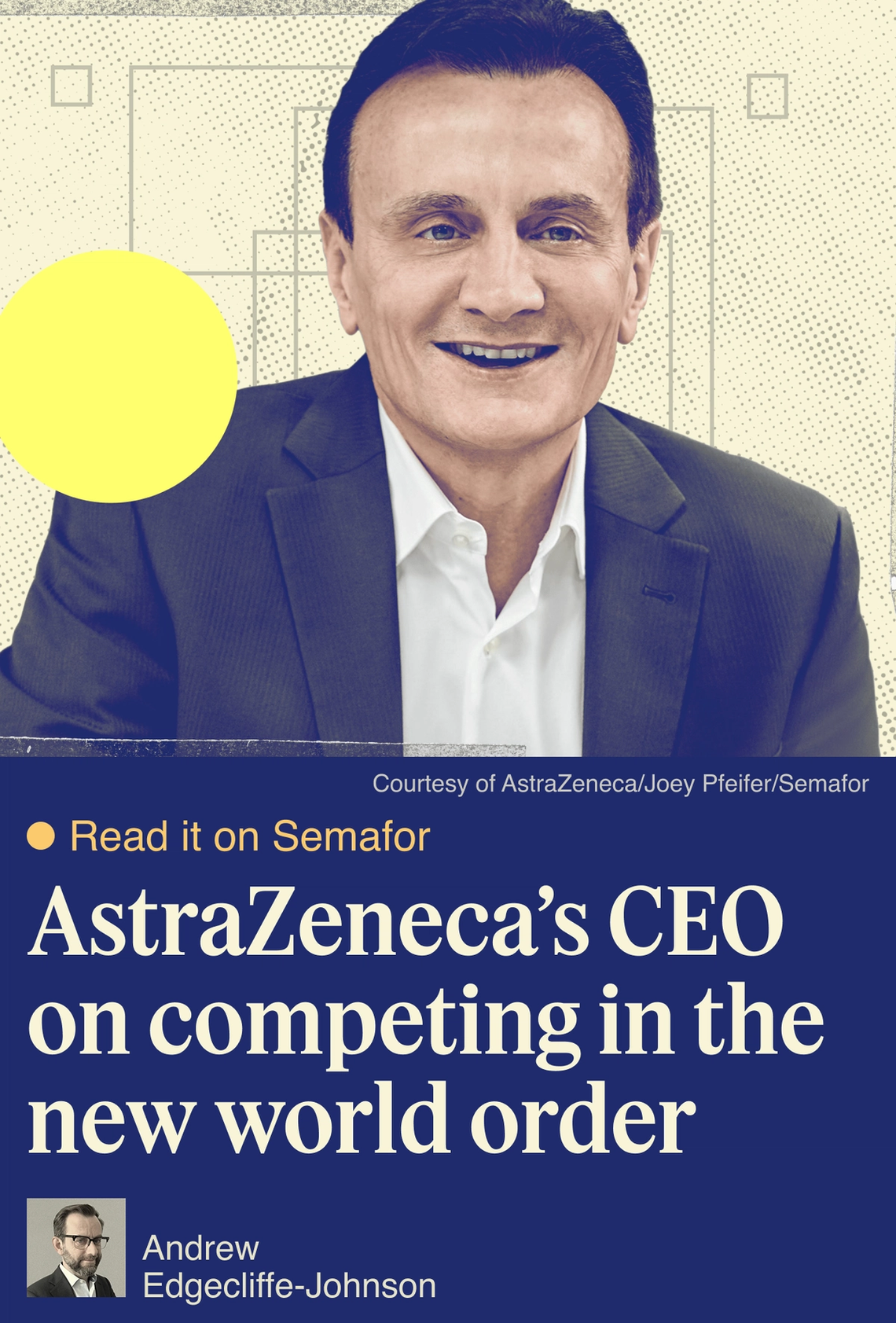 The CEO Signal: Pascal Soriot says Europe “cannot be naive” about the rivalry with the US and China. → |
|
|
|


