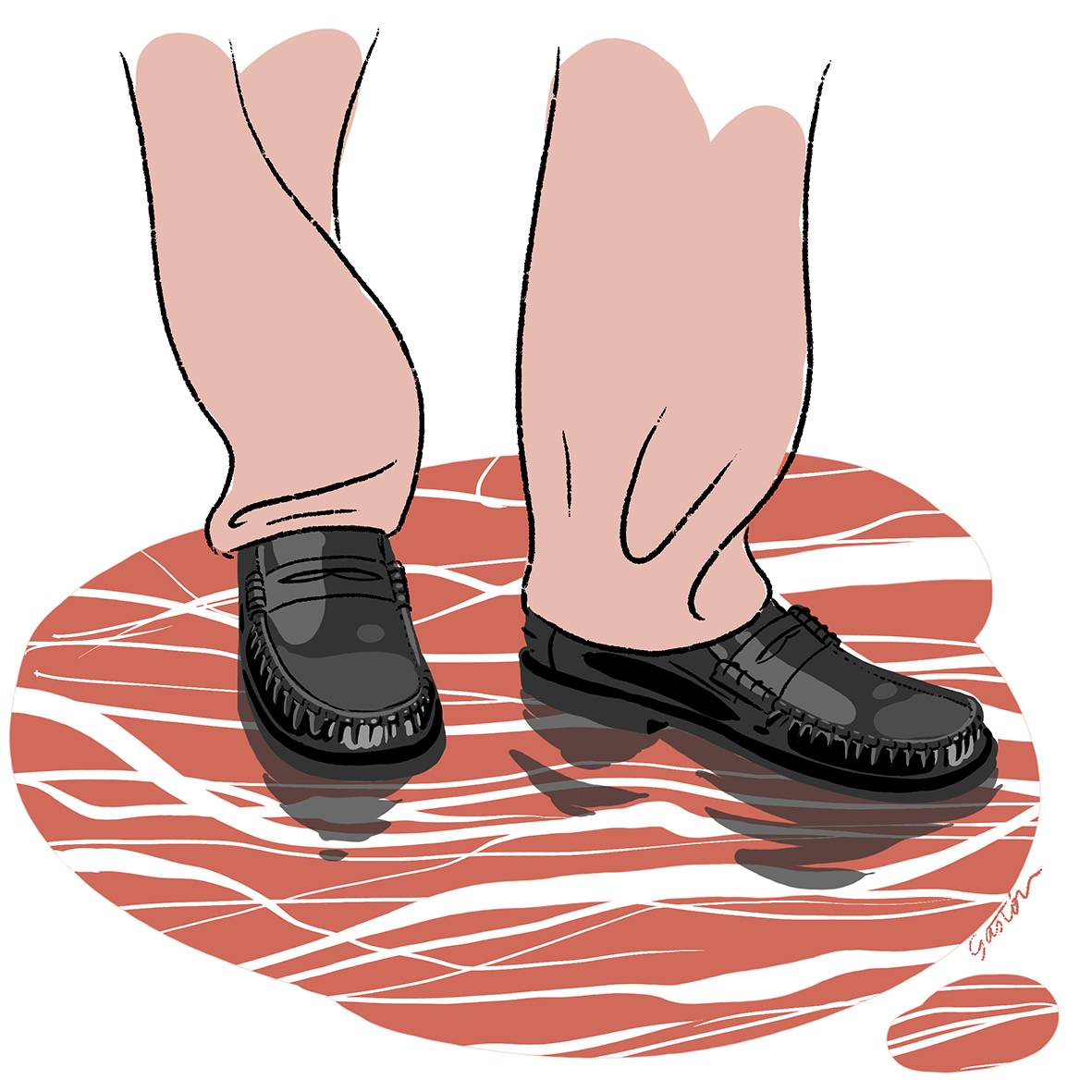
Pussy Riot’s Maria Alyokhina, Gommino loafers from Tod’s and Trump’s Board of Peace.
|
Saturday 21/2/26
|

|
|
London
Paris
Zürich
Milan
Bangkok
Tokyo
Toronto
|
|
|
|

Good morning from Midori House. For more news and views, tune in to Monocle Radio. Here’s what’s coming up in today’s Monocle Minute:
THE OPINION: Brand Milan is back in business
Q&A: What to expect from Trump’s Board of Peace
DAILY TREAT: Find your feet in the Tod’s Gommino loafers
FROM MONOCLE.COM: Pussy Riot’s Maria Alyokhina on protest, persecution and Putin
|
|
Fresh off a successful stint as Winter Olympics host, Milan has finally found its mojo
By Tom Webb
|

|
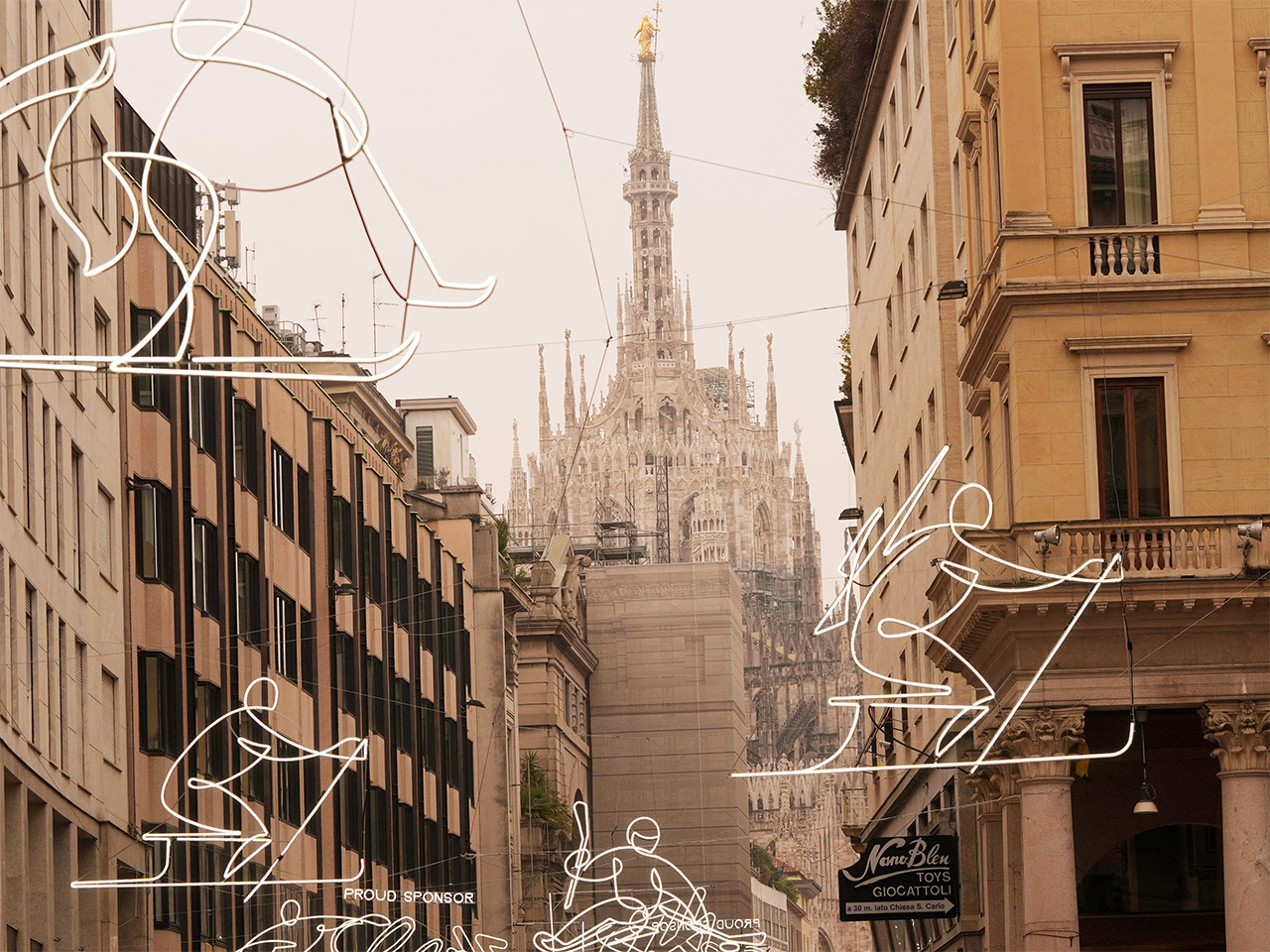
With persistent heavy showers drenching much of northern Italy earlier this month, Milan was not feeling particularly optimistic ahead of the Winter Olympics Opening Ceremony. Reporters spoke of a spirit split across the Lombard capital and the Alpine towns hosting events: enthusiasm was high in the towns, while Milan plodded along as if the eyes of the world were elsewhere. A little more than two weeks on, the Olympic torch has been extinguished but the clouds over Milan have finally lifted, revealing a city swinging with cranes and a sense of self-assurance.
“We haven’t felt this way since Expo 2015,” Monica Diluca from Università degli Studi di Milano tells Monocle as we walk through Milano Innovation District. Diluca pauses amid piles of rubble around the Decumano (the principal pedestrian boulevard) to gesture at a marked point: “This is here to remind us of the exact moment a decision was made to stop demolishing the original buildings from 2015.” It signifies a change in the city’s attitude: a shift towards renewal and long-term urban strategy.
| |
|
Mass construction: Milan has been buoyed by the Olympic spirit
|
|
“Milan is getting a new identity,” says Patricia Viel, co-founder of ACPV Architects, a firm that is responsible for transforming an entire business district on the city’s southern edge. “Modernity is very much embedded in the aesthetics of its evolution,” she adds. “[Milan has a] growing ability to attract international champions in the economic world”. Those “international champions” have made the Lombard capital one of Europe’s most multicultural cities; foreign residents now exceed 20 per cent.
The city’s global outlook has only broadened with the arrival of the Winter Olympics. “The Expo was a moment [when] we could restart a design season with architects from all over the world,” says Manfredi Catella, CEO of Coima, one of Italy’s most influential property-development and investment groups. “It marked the beginning of a transition for the city, which is continuing with the success of the Games.”
By hosting two global events, the city has proved to itself that – unlike neighbouring metropolises – it is able to deliver successful megaprojects with style and confidence. It’s certainly true for development; there are few other European cities with such a scale of brownfields or industrial sites that can be repurposed. Italy is not known for bureaucratic efficiency, though Milan has demonstrated a pragmatic performance on the world stage.
This edition of the Winter Games was designed with a focus on sustainability. This is perhaps most visible in the sprawling Olympic Village, which was slotted into the former rail yards at Porta Romana and will soon become student accommodation.
The feeling of Milan quietly looking over its shoulder at Rome is over. It has successfully crafted its own identity, one that embraces both its history and capacity for reinvention. Just take a ride on its near-century‑old streetcars adorned in Moncler advertising. People want to be here and they also want to be associated with the city’s renewed sense of purpose. After the last curling stone is packed up and the snowpants are hung to dry, Milan will have shown that it is now less self-critical, more confident and ruthlessly efficient.
Tom Webb is Monocle’s deputy head of radio. For more from Milan, check out our dedicated City Guide.
|
|
HITACHI ENERGY  MONOCLE MONOCLE
|
|
Q&A: Zizette Darkazally
‘I doubt that it will replace the UN’: How Trump’s Board of Peace will operate
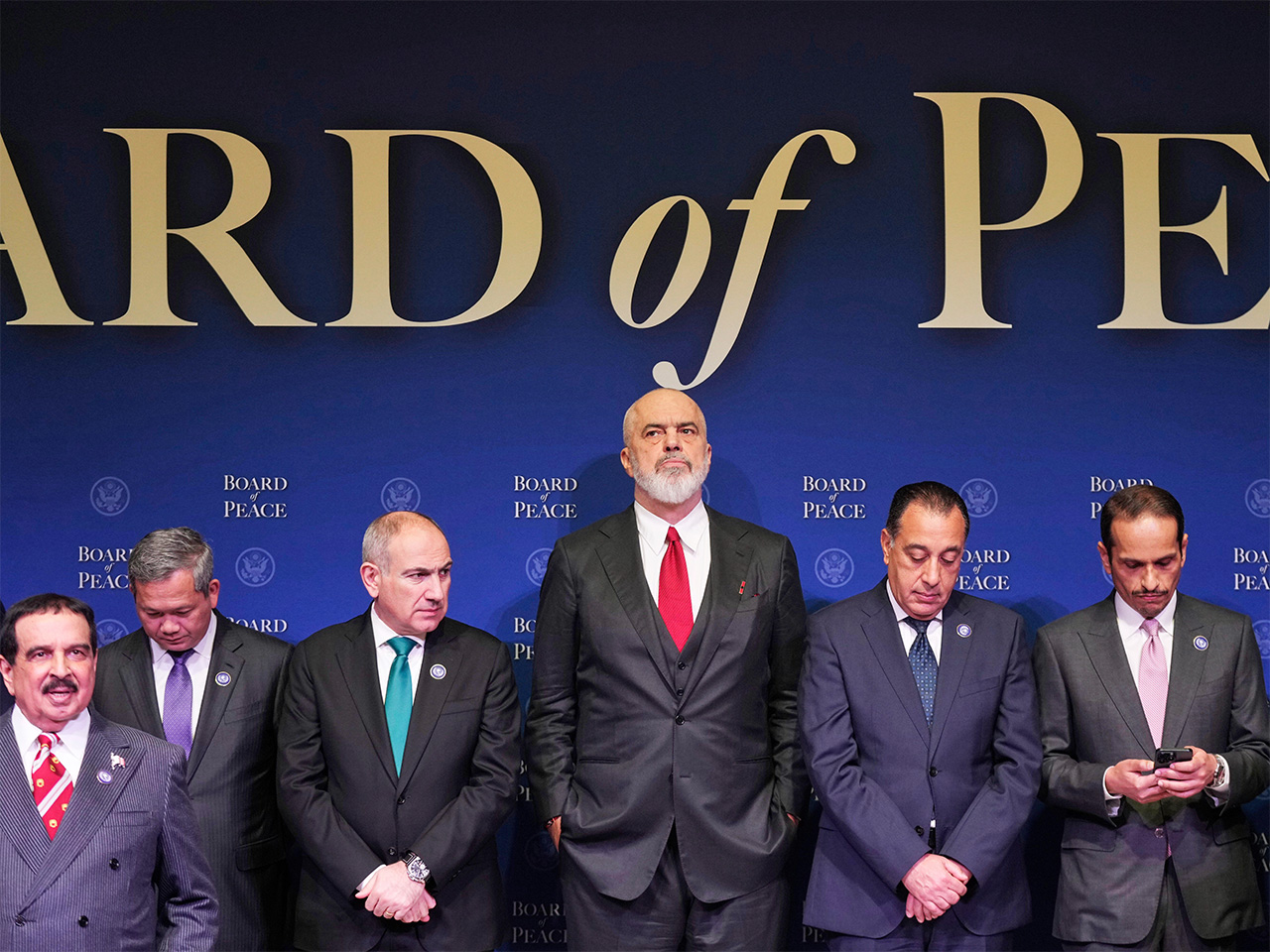
US president Donald Trump’s Board of Peace convened in Washington for the first time last week (writes Emma Nelson). During the meeting the US announced that it would commit $10bn (€8.5bn) to the reconstruction of Gaza, while other countries on the board pledged $7bn (€6bn). Whether or not the board was set up to replace the UN, Trump said that it would be working with the global body “very closely”. Monocle spoke with Zizette Darkazally, an associate fellow at Chatham House, about the new organisation.
| |
|
Tall order: Members of Trump’s Board of Peace
|
|
What purpose does the Board of Peace serve?
When Trump announced the Board of Peace in September, it was supposed to be a transitional entity that only focused on Gaza. But at Davos in January, Trump revealed that the board would address other conflicts. The inaugural meeting was a platform for the president to talk about his achievements and how he sees peace. And there were pledges: $10bn from the US and $7bn from other participants and personnel for an international stabilisation force.
We know who was at the meeting and who was not. What does that say about the make-up of the board?
There were countries who are members of the board but there were also observers in attendance. Some nations that joined are ideologically close to Trump’s ideas but others joined because they don’t want to undermine bilateral relationships with the US. The Arab countries made it clear that they are part of the organisation because they want to address what’s happening in Gaza. The EU, for example, sent an observer but has not joined the board. There are many different reasons why countries have joined the board and whether it can be a substitute for the UN. It’s premature to answer that question.
At last week’s meeting, Trump said that the Board of Peace would work closely with the UN to make sure that it runs properly. What does that mean?
There were mixed messages from Trump about the UN, so it’s unclear how the work with it is going to happen. The board still hasn’t functioned on the ground, so no one knows what it’s capable of accomplishing but I doubt that it will replace the UN. What matters is what the countries themselves decide to do and how they enforce these decisions.
Listen to the full conversation on ‘The Globalist’.
|
|
• • • • • DAILY TREAT • • • • •
Slip on a pair of Tod’s loafers
The classic Tod’s Gommino loafer takes its cues from the Italian driving shoe popularised in the 1950s. Designed as a summer shoe with precise pedal control for a growing set of Ferrari lovers, it appealed to motorists with an eye for Italian elegance.
The Gommino, meaning “rubber pad”, is characterised by its pebbled sole and heel counter. Today the City Gommino signals a gear change for the quintessential footwear thanks to a thicker rubber sole for navigating urban terrains.
tods.com
|
|
|
Sponsored by Hitachi Energy
|
|
|
|
|
|
FROM MONOCLE.COM: Russia
‘Anyone can be killed at any moment’: How Pussy Riot’s Maria Alyokhina remains firm in the face of persecution
Maria Alyokhina is a Russian political activist known for her work as a member of feminist performance art and protest group Pussy Riot. The collective was thrust into the global spotlight in 2012 after an audacious performance inside Moscow’s Cathedral of Christ the Saviour.
| |
|
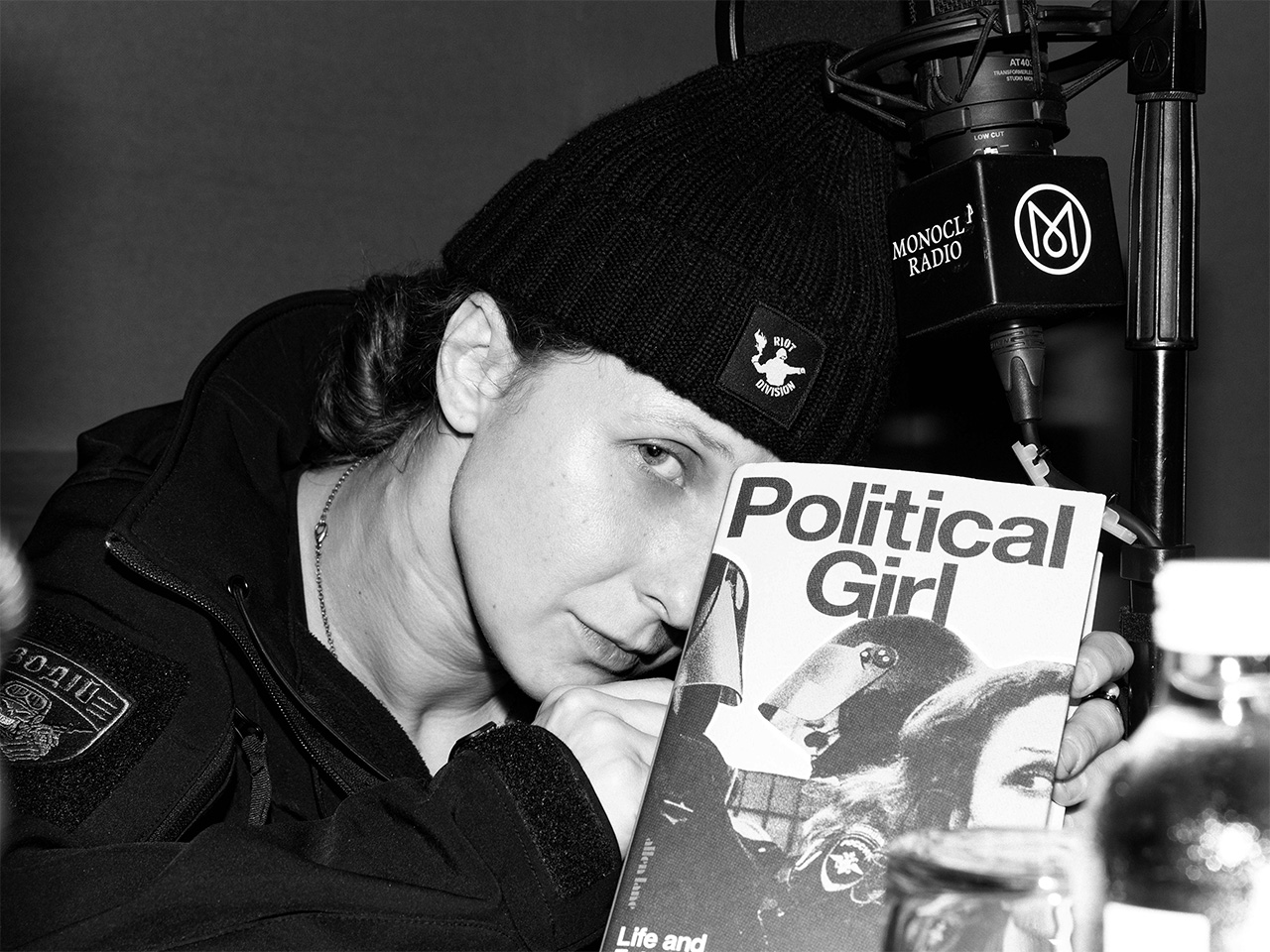
Call to action: Maria Alyokhina with her new book, ‘Political Girl: Life and Fate in Russia’
|
|
Alyokhina has recently released Political Girl: Life and Fate in Russia, which details intimate accounts of her work as an activist between 2014 and 2022. In the book, she recounts her near two-year-long imprisonment in a penal colony and reflects on the Kremlin’s suppression of LGBTQ+ rights in Russia. Monocle’s Georgina Godwin speaks to Alyokhina about the harsh realities of living under Vladimir Putin’s regime, the activist’s support for those still imprisoned and her hopes for the future of her country.
Read the full conversation here.
|
|
| | |