Policy changes, but facts endure. AP delivers accurate, fact-based journalism to keep the world informed in every administration. Support independent reporting today. Donate. |
|
|
By Holly Meyer and David Crary |
| |
|
By Holly Meyer and David Crary |
| |
|
Hi, World of Faith readers.
This week, Ramadan started for Muslims around the globe. We look at what’s behind a macabre dispute over the unburied body of the former president of Zambia. In time for Lent, we dive deep into Catholic confession trends. |
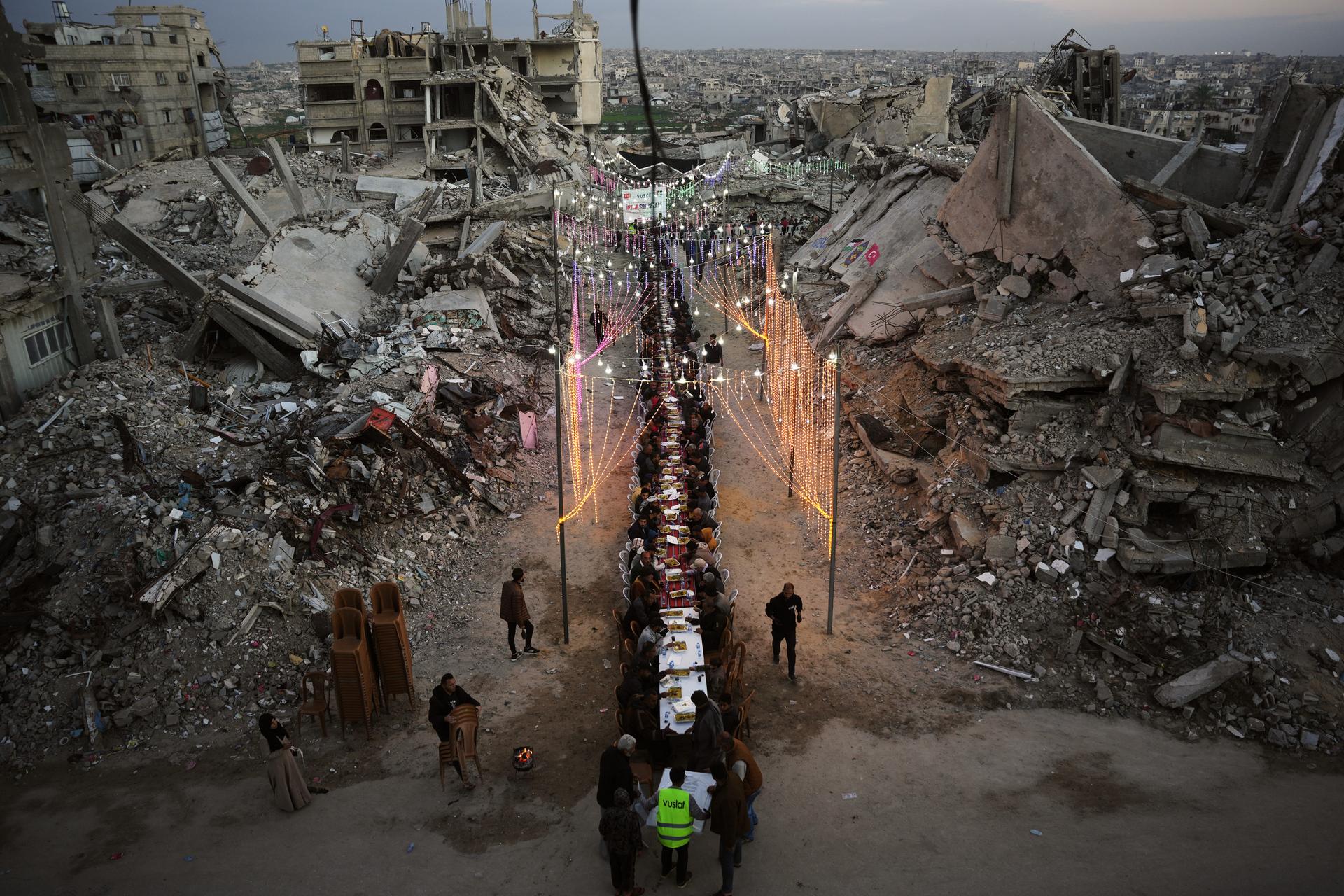
Palestinians sit at a long table amid the rubble of destroyed buildings as they gather for iftar, the fast-breaking meal, during the Muslim holy month of Ramadan in Khan Younis, Gaza Strip. (AP Photo/Abdel Kareem Hana) |
Ramadan arrives in Gaza under shaky ceasefire deal, but the festive spirit eludes many Palestinians
|
Ramadan – the Muslim holy month – has begun in Gaza under a fragile ceasefire deal, but many say the joyous spirit of the month has disappeared. They grapple with the hardships of their daily lives and the grief and losses of the Israel-Hamas war. Read more. |
|
|
During Ramadan, observant Muslims fast from dawn to sunset. It’s a time for increased worship, religious reflection and charity. In normal circumstances, the month often brings families and friends together to break their fast in joyous gatherings. But circumstances in Gaza are far from normal after the war and widespread destruction.
Some of the difficulties were on display at a charity kitchen where dozens crowded, many with their arms outstretched as they vied for a spot and held empty pots.
|
|
|
Unburied body of former Zambian president is embroiled in a dispute with the current leader |
A bitter feud in Zambia has left former President Edgar Lungu’s body unburied in a South African funeral home for more than eight months. The unusual dispute pits Lungu’s family against his longtime rival, Zambian President Hakainde Hichilema. Lungu, shortly before his death in South Africa, stipulated that Hichilema should be barred from coming near his body. Courts have sided with the Zambian state, but the family keeps resisting. Read more.
|
|
|
The body lies frozen in South Africa while Zambia endures a saga that offends traditional beliefs and raises many questions in a country where it is taboo to fail to bury the dead promptly and with dignity.
The fight over a corpse can seem bizarre to others, but Lungu’s directive resonates with many Zambians. Some have barred their enemies from attending their funerals, often blaming them for misfortune. Those quarrels are usually more private.
Belief in curses is also part of this. Hichilema’s supporters see Lungu’s will as casting a curse. In Zambia, traditional religion thrives alongside Christianity, and a spoken curse is dreaded by many as spiritually enforceable if provoked by injustice.
|
|
|
Catholics return to confession focused on grace, not a get-out-of-hell-free card |
The Lenten period for penance started this week with Ash Wednesday and Catholic priests are happily bracing for long lines outside the confessional. The faithful across the United States are embracing anew the sacrament that’s shifted from embarrassing recitation of sin to cathartic quest for grace. Read more.
|
|
|
The sacrament of confession is supposed to be a regular weekly or monthly practice. Penitents tell a priest their sins, pledge not to commit them again and receive forgiveness and a penance.
Many Catholics in the U.S. have been skipping confession altogether in recent decades, but these days parishes are noticing an uptick.
Priests say acknowledging sins and receiving absolution remains a core part of the ritual. But they say confession today often turns into an upbeat conversation, focused on God’s mercy and love.
|
|
|
|