| | Chinese tech firms unveil their latest AI models, AI leaders descend on India, and Tinder booms in S͏ ͏ ͏ ͏ ͏ ͏ |
| |  RIYADH RIYADH | BENGALURU | SHENZHEN |
 | Flagship |  |
| |
|
The World Today | 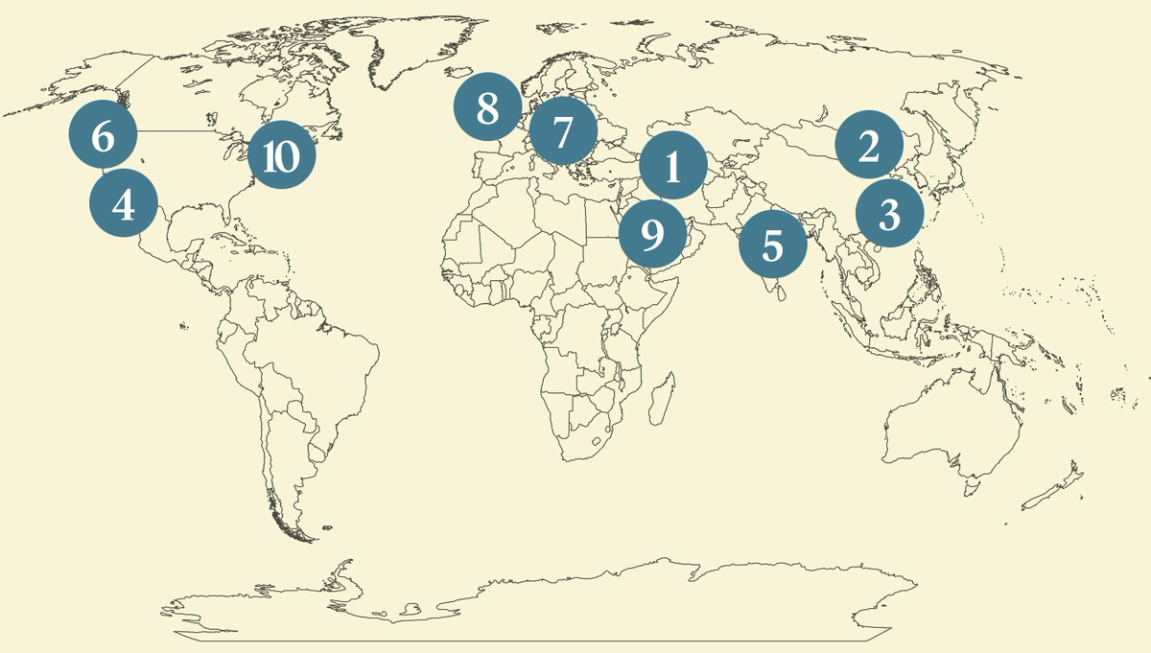 - US-Iran nuclear talks resume
- China’s message in Munich
- New year, new AI models
- Hollywood-ByteDance spat
- Tech leaders descend on India
- Existential threat to software
- US endorses Viktor Orbán
- GLP-1s eat snack earnings
- Tinder booms in Saudi Arabia
- Love in translation
 An under-appreciated Robert Duvall work, according to Robert Duvall. |
|
US-Iran tensions simmer ahead of talks |
 IRGC/WANA (West Asia News Agency)/Handout via Reuters IRGC/WANA (West Asia News Agency)/Handout via ReutersIran’s foreign minister met with the head of the UN’s nuclear watchdog Monday as Tehran signaled openness to a US deal in exchange for sanctions relief. The countries are set for another round of nuclear talks on Tuesday aimed at reaching an agreement and averting a war. US President Donald Trump prefers a diplomatic solution, and an Iranian minister told BBC that Tehran was willing to consider compromises, but military tensions are simmering. Washington ordered a second group of aircraft carriers to the Middle East, while Iran on Monday began a new military drill in the Strait of Hormuz. Tehran wants to “warn Washington that a war with Iran would have serious consequences for global energy markets,” one expert said. |
|
China enjoys the silence in Munich |
 Liesa Johannssen/Reuters Liesa Johannssen/ReutersBeijing argued at the Munich Security Conference that it is a reliable global partner, reiterating a well-worn narrative aimed at garnering influence amid US chaos. Much of the defense summit was focused on the breakdown of the transatlantic alliance: The US secretary of state did not mention China in his speech, and remarks by Beijing’s foreign minister garnered fewer headlines than previously. Beijing is enjoying that silence, the South China Morning Post wrote, and is hoping to seize on US-Europe tensions to make inroads with Washington’s allies. Yet even as China presents itself as a stable alternative, the country is expanding its nuclear arsenal, The New York Times reported, readying for “a new age of superpower rivalry.” |
|
China’s consumer AI ambitions on display |
 CFOTO/Future Publishing via Getty Images CFOTO/Future Publishing via Getty ImagesAlibaba unveiled its latest AI model Tuesday during a big week for China’s tech firms that Beijing is betting will turbocharge the country’s lagging economy. Giants like ByteDance and startups such as Zhipu also released upgraded models around Lunar New Year, while AI-powered humanoid robots stole the show at Monday’s annual new year gala, a variety show watched by millions. That the Chinese tech companies released the new tools around the consumption-heavy holiday — along with aggressive promotions and giveaways — shows how much they’re pushing AI as a consumer product. Beijing sees the tech as a much-needed tonic to counteract sluggish spending and a still-troubled property sector: Xi Jinping said building an “AI-plus strategy” is a top economic priority for 2026. |
|
Chinese AI video tool rankles Hollywood |
 Ruairi Robinson/X Ruairi Robinson/XChinese tech giant ByteDance said it would add “safeguards” to its new AI video generator following backlash from Hollywood. The Seedance 2.0 tool is so advanced that a 15-second clip of an AI-generated battle between Tom Cruise and Brad Pitt sent shockwaves through the US entertainment industry. Disney sent a cease-and-desist letter, and Hollywood trade groups accused ByteDance of using copyrighted works on a massive scale without permission. Actors’ unions have taken a firm stance against AI in film and TV, and China’s advancements threaten to complicate that debate: Chinese companies have long been accused of having a lax stance toward IP, from shoes to cars. |
|
India’s AI ambitions in the spotlight |
 Bhawika Chhabra/Reuters Bhawika Chhabra/ReutersThe world’s top tech executives are descending on New Delhi this week for an AI summit, part of India’s efforts to position itself as a global leader in next-generation technologies. Google, Microsoft, and Amazon are investing billions in the country; startups like Anthropic and OpenAI also have offices there. India has yet to produce an AI model that rivals its US or Chinese counterparts, but it is betting its competitive edge lies in the ability to deploy the tech at scale. AI adoption in India “is even more extreme compared with the rest of the world,” Anthropic’s CEO said at the summit. “We can do experiments with hundreds of millions of people.” |
|
AI poses existential threat to software |
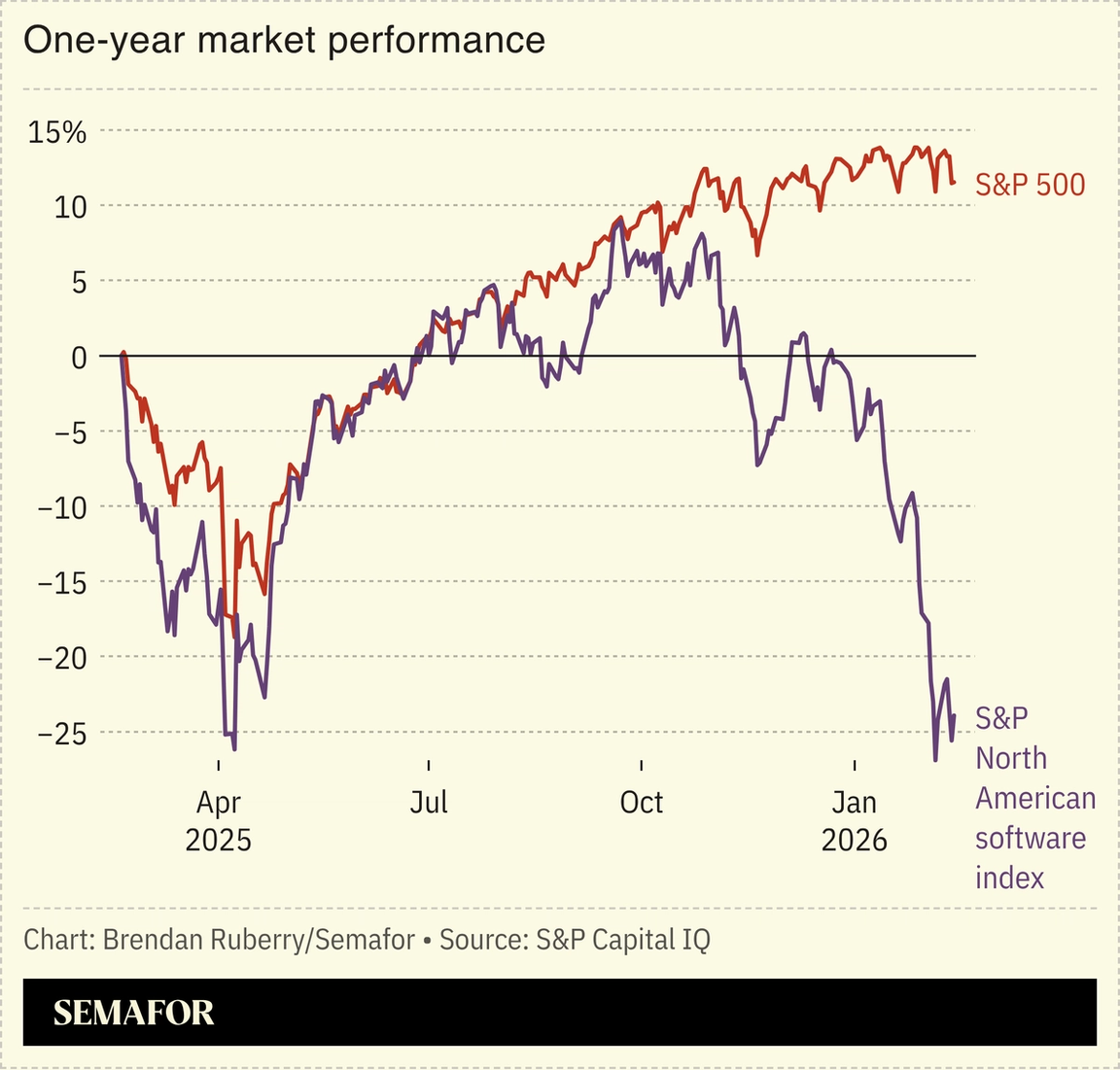 AI will send most software companies the way of print media in the 2000s, a top fund manager said. Software stocks have plunged in recent weeks following the release of AI tools that promise to automate tasks like writing documents and managing payrolls. Nick Evans, a Polar Capital fund manager, whose global tech fund beat 99% of peers in the last year, told Bloomberg that apart from infrastructure and cybersecurity, few software sectors will survive AI’s existential threat. The software selloff is among several event-driven swings traders have contended with recently, thanks to AI, tariffs, and geopolitical turmoil, prompting investors to increase exposure in Europe and emerging markets. “You almost get desensitized to it,” one Wall Street investment chief said. |
|
US backs Orbán as EU backs off |
 Péter Magyar. Bernadett Szabo/Reuters Péter Magyar. Bernadett Szabo/ReutersHungary’s relations with the US and EU will play a central role in the country’s elections this spring. The US secretary of state on Monday emphatically endorsed Hungarian Prime Minister Viktor Orbán in his bid to serve a fifth term, stressing the close relationship between the nationalist premier and US President Donald Trump. Hungary opposition leader Péter Magyar launched his campaign Sunday ahead of the April contest, vowing to return Budapest to its Western orientation. He wants to mend relations with the EU, which has withheld funds from Hungary over concerns of corruption and democratic backsliding. But Brussels is reportedly scaling back its criticism of Orbán to avoid perceptions of election interference. |
|
 This April, CEO of Bayer, Bill Anderson, will join global leaders at Semafor World Economy — the premier convening for the world’s top executives — to sit down with Semafor editors for conversations on the forces shaping global markets, emerging technologies, and geopolitics. See the first lineup of speakers here. |
|
GLP-1s bite into snack profits |
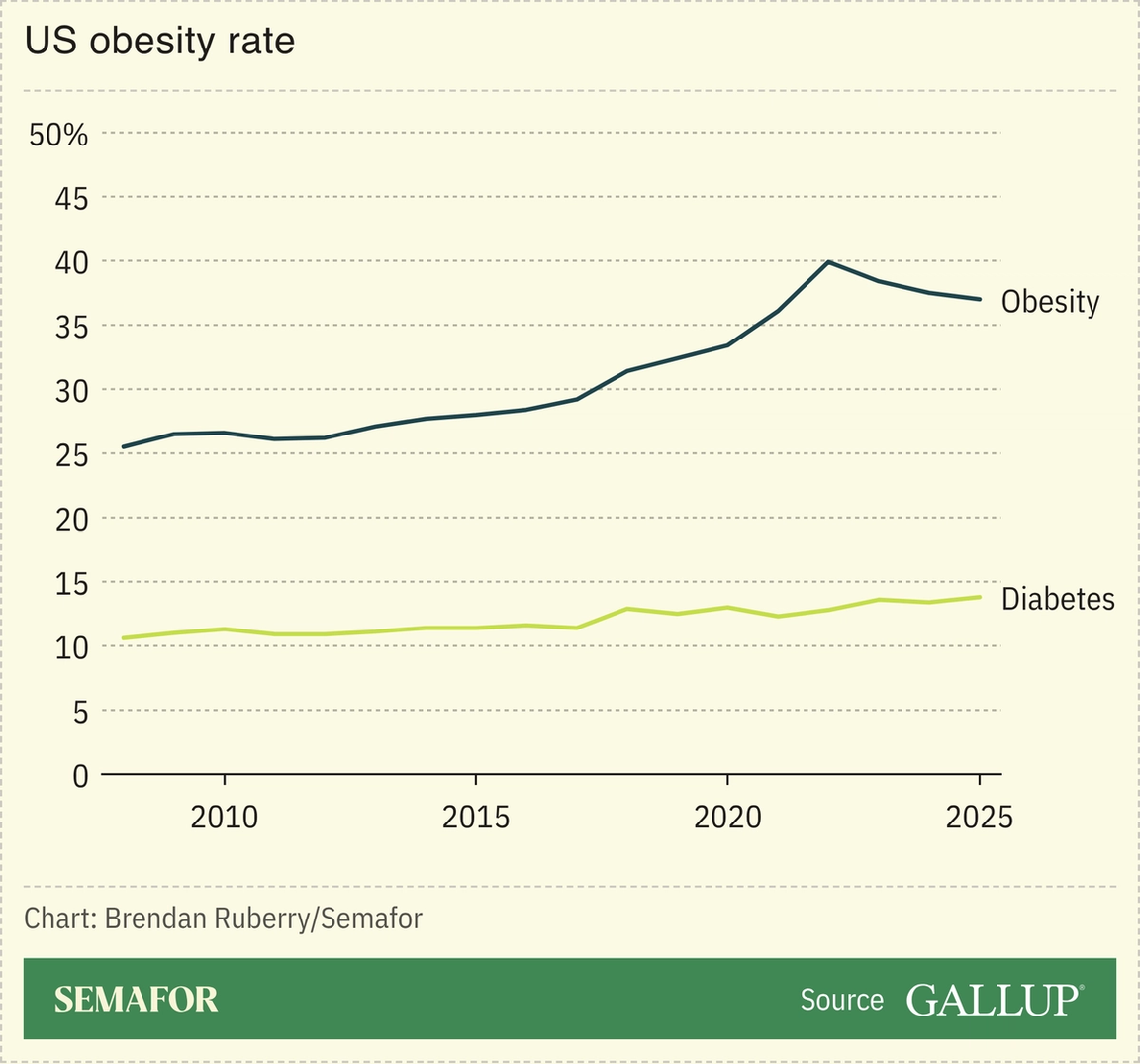 The widespread use of GLP-1s is weighing on snack companies’ earnings, even as the weight-loss drug revolution’s impact has yet to materialize in other data. Ice cream maker Magnum’s stock dropped on disappointing profits, and the UK’s largest fast-food chain saw its stock downgraded in view of the “rapid uptake” of the drugs, a Jefferies analyst said. But clear statistical evidence of any broader anticipated impacts, including declines in obesity, remains elusive, a Financial Times columnist wrote; in the US, though, Gallup recorded a marked drop in obesity from its 2022 peak. Meat purveyors may emerge as winners, however, as GLP-1 users seek out more nutrient-dense snacks like jerky sticks. |
|
Dating apps boom in Saudi Arabia |
 Ahmed Yosri/Reuters Ahmed Yosri/ReutersThe dating app Tinder is booming in Saudi Arabia as the country’s strict moral codes loosen. A decade ago, dating was impossible; young people were introduced to each other by parents, with marriage in mind. Now, young couples meet at festivals or in hip cafés in big cities, and dating app downloads hit 3.5 million in 2025, up from less than 1 million in 2019. Hotels even offered romantic package holidays for Valentine’s Day. But “these social changes exist in a legal gray area,” an academic told The Wall Street Journal: The kingdom still prohibits same-sex relationships and sex outside marriage, and judges could sentence people to flogging or even execution for consensual adult relationships. |
|
|


