Iran touts energy deals with U.S.

Global news you can trust.

Download the Reuters App.


Power Up

Power Up


A Reuters Open Interest newsletter

By Ron Bousso, ROI Energy Columnist


Data refreshes every time you open this email. For more energy news, click here. Please send any feedback to powerup@thomsonreuters.com.

Hello Power Up readers,

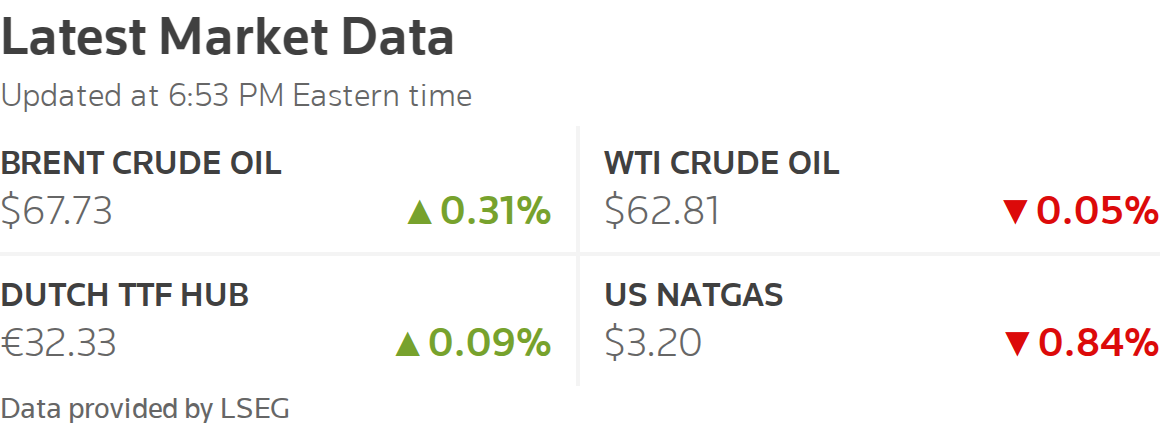
The oil market has steadied in recent days as the market awaits developments in U.S.-Iran talks. Iran is pursuing a nuclear agreement with the U.S. that could include energy, mining and aircraft deals, an Iranian diplomat was reported as saying on Sunday, days before a second round of talks between Tehran and Washington. But President Donald Trump is maintaining his threat of military action against Iran, dispatching a second aircraft carrier to the region.

Turning to another major oil nation, Russian oil producers could be forced to sharply cut output in coming months as tightening pressure from President Trump and European powers restricts the country's exports and its storage fills up, a development that would further dent the Kremlin's war chest. More on this below.

Here are a few more headlines:

  • OPEC+ is leaning towards a resumption in oil output increases from April, three OPEC+ sources said, as the group prepares for peak summer demand and price strength is bolstered by tensions over U.S.-Iran relations.
  • The U.S. eased sanctions on Venezuela's energy sector on Friday, issuing two general licenses that allow global energy companies to operate oil and gas projects in the OPEC member and for other companies to negotiate contracts to bring in fresh investments.
  • ROI Energy Columnist Gavin Maguire wrote that China, the world's top polluter, crossed a critical energy transition threshold in 2025 by deploying more clean power capacity than fossil fuel generation capacity for the first time.

As always, don’t hesitate to contact me at ron.bousso@thomsonreuters.com or follow me on LinkedIn with any questions or thoughts.


Top energy headlines

  • Oil prices edge higher ahead of US–Iran nuclear talks
  • Vitol backs proposed $3 billion LNG power plant for South Africa's Durban port
  • Climate Challenge: A Decade After Paris Agreement
  • Chevron-led consortium signs contracts for gas exploration off Greece
  • Hungary asks Croatia for help after Russian oil flows via Ukraine halted


Russian pressure

Russian crude exports have remained broadly stable in recent years despite sweeping Western sanctions and a sharp reduction in energy purchases by Europe. Moscow successfully redirected most of its seaborne crude to China, India and Turkey, often relying on a "shadow fleet" of ageing, uninsured tankers to circumvent restrictions while offering steep discounts.

That resilience is now under strain. Exports have slowed in recent months after Trump tightened sanctions and imposed tariffs on India over its purchases of Russian oil.

Demand has also been hit by a European Union ban on imports of fuels refined from Russian crude that came into force last month.

Russian seaborne crude exports fell to 3.4 million barrels per day (bpd) in January from 3.8 million bpd in December, and are currently tracking around 2.8 million bpd in February, according to analytics firm Kpler.

At the same time, the volume of Russian oil held on ships has climbed to a record high above 150 million barrels in recent months, while many tankers have also slowed their speeds – both signs of weaker buying.

The European Commission's proposal to impose a sweeping prohibition on any business that supports Russia's seaborne crude oil exports – which goes far beyond previous sanctions – would squeeze Moscow yet further.

Pressure on Russian exports is likely to intensify in the coming months as India, the largest buyer of seaborne Russian oil last year, prepares to curb purchases as part of a trade deal with the United States. Trump has said New Delhi agreed to halt Russian imports under the deal, though Indian officials have not confirmed that plan.

Read the full column
 

Get full access to Reuters.com for just $1/week. Subscribe now.


Sponsors are not involved in the creation of newsletters or other Reuters news content. Advertise in this newsletter or on Reuters' website

LiveIntent Logo
AdChoices Logo
 

Power Up is sent twice weekly. Think your friend or colleague should know about us? Forward this newsletter to them. They can also sign up here.

Want to stop receiving this email? Unsubscribe here. To manage which newsletters you're signed up for, click here.

This email includes limited tracking for Reuters to understand whether you’ve engaged with its contents. For more information on how we process your personal information and your rights, please see our Privacy Statement.

Terms & Conditions