| | In this edition: China scraps tariffs for 53 African countries, Mali strikes gold deal with Barrick,͏ ͏ ͏ ͏ ͏ ͏ |
| |  | Africa |  |
| |
|
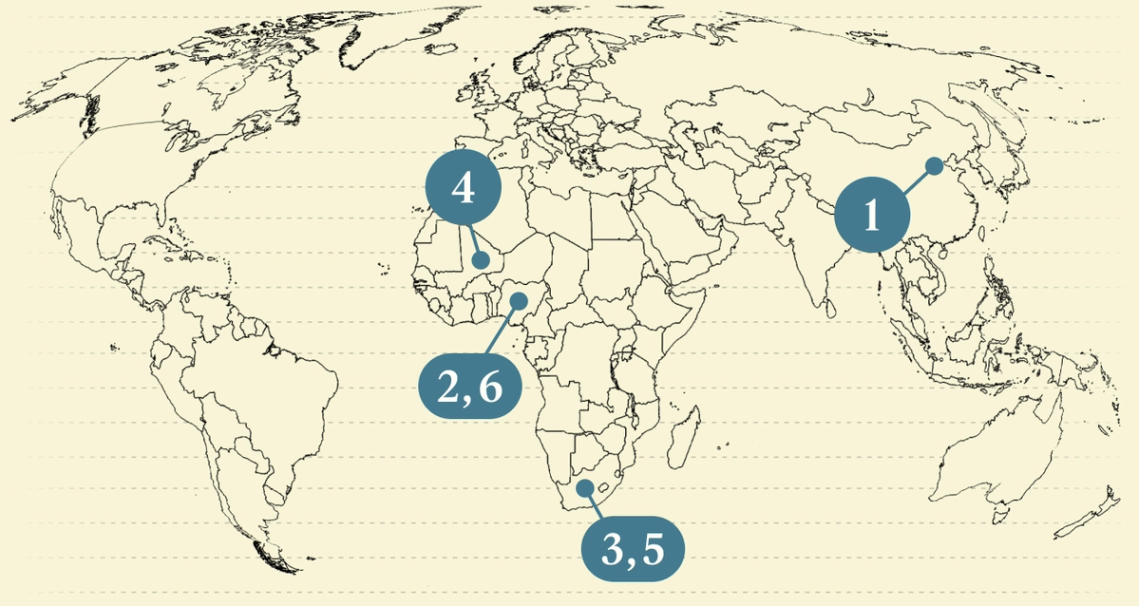 - China scraps tariffs
- Nigeria sets election date
- Platinum hails power boost
- Mali strikes deal with Barrick
- Adventure tourism boom
- Nigeria’s security challenge
 The first Nigerian film selected for Cannes. |
|
Beijing offers Africa tariff-free access |
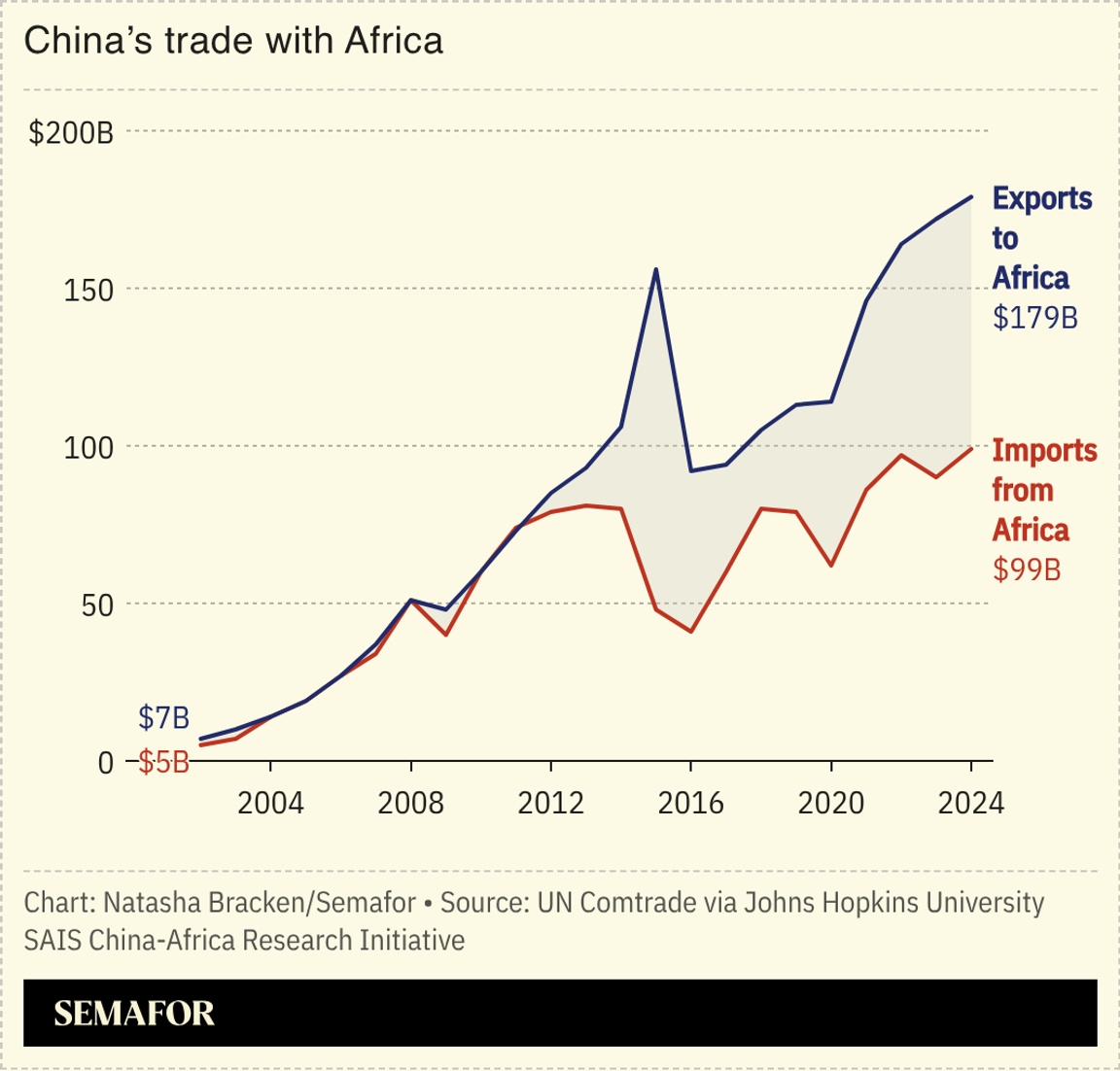 China will scrap tariffs for 53 African countries from May 1. The continent’s biggest trade partner already has a zero-tarriff policy for imports from 33 African countries but decided to expand the offering last year, moving in the opposite direction to tariff-heavy US trade policy under the Trump administration. Eswatini is the only African country that will miss out on the tariff-free access as it maintains diplomatic relations with Taiwan, which Beijing views as a breakaway province of China. Chinese leader Xi Jinping announced the zero-tariff expansion as African leaders gathered in Addis Ababa for the annual African Union summit, saying it would “undoubtedly provide new opportunities for African development.” Beijing’s announcement comes weeks after Washington’s extension of the AGOA sub-Saharan preferential trade pact. The world’s two largest economies are vying for control of African resources, including metals and minerals key for defense and electronics manufacturing. But the rush of capital could make African economies overly reliant on commodity exports, leaving them vulnerable to international price swings while failing to add value domestically. |
|
Nigeria announces election date |
| |  | Alexander Onukwue |
| |
 Posters of Nigerian President Bola Tinubu in 2023. Temilade Adelaja/Reuters. Posters of Nigerian President Bola Tinubu in 2023. Temilade Adelaja/Reuters.Nigeria’s election season officially kicked off as the presidential poll organizer announced Feb. 20, 2027, as the voting date. Campaigning is already well underway ahead of a contest that will test the popularity of President Bola Tinubu’s attempt to overhaul one of Africa’s largest economies and resolve multiple security crises. He is expected to seek reelection, despite not yet declaring his intentions. Pro-Tinubu campaign posters began appearing around major Nigerian cities last year. Tinubu launched his presidency in 2023 by scrapping fuel subsidies and removing a currency peg, changes that drove up inflation and sparked a cost-of-living crisis. But his policies have helped to attract investment into Africa’s biggest oil producer and boosted economic growth. He is likely to be pitted against familiar heavyweights, some of whom are banding together to form an opposition coalition. Atiku Abubakar, a former vice president who came second in the last election, and Peter Obi, a former state governor who came third, are part of that coalition, but it remains unclear who will emerge as the candidate. Both are still considered Tinubu’s strongest challengers going into 2027. |
|
Platinum chief hails S. Africa power boost |
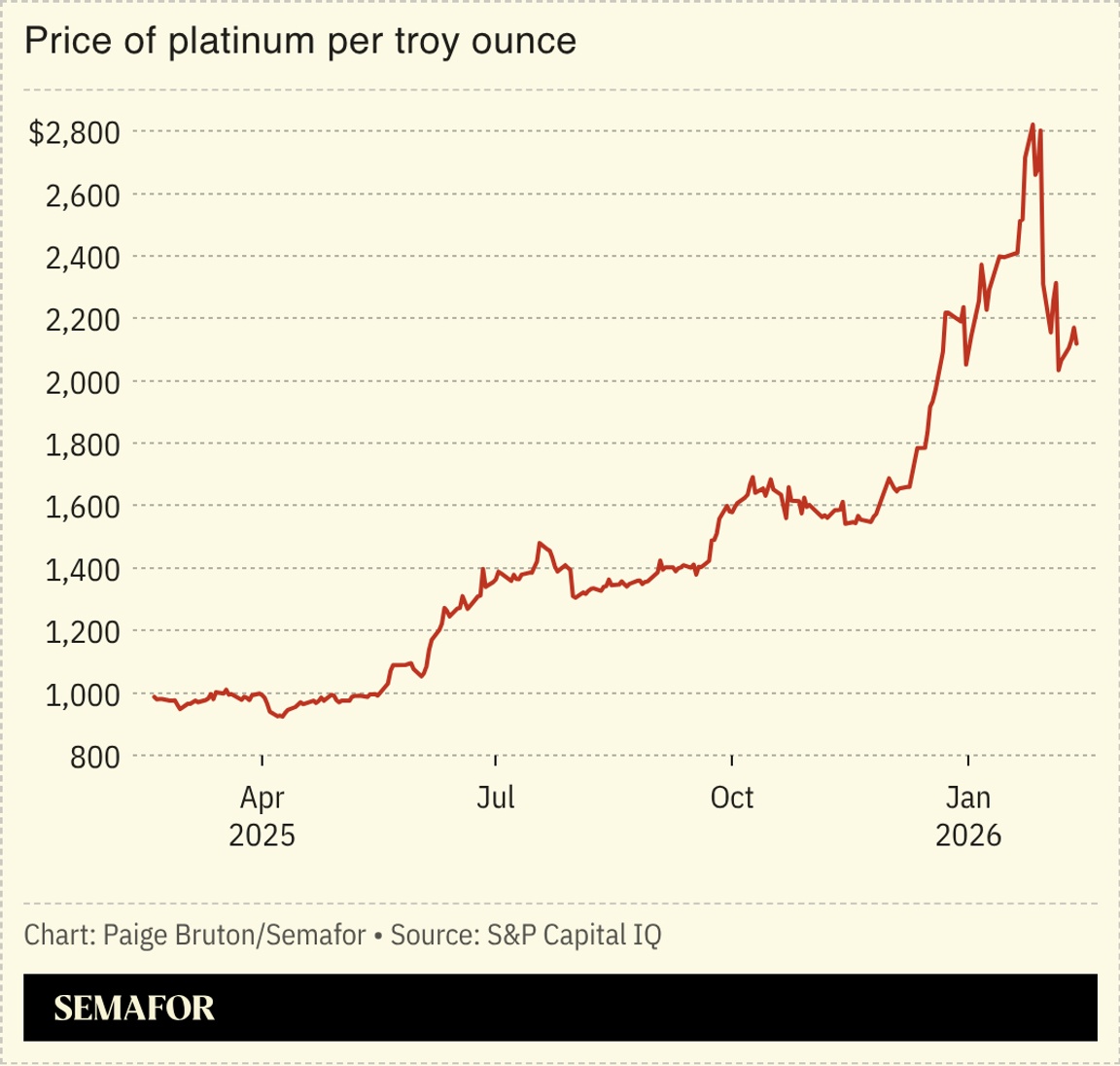 South Africa’s improved energy supply over the last two years has boosted efficiency at Valterra Platinum, the company’s CEO told Semafor. Craig Miller said the sharp reduction in power rationing enabled the major miner to reduce its working capital and invest more money into the business. Growth in Africa’s biggest economy was stymied for most of the last decade by rolling blackouts, known as loadshedding, but the situation has improved in part due to improved maintenance and increased solar energy use reducing demand on the grid. Miller, whose company is a former Anglo American subsidiary that spun off last year, said improving economic growth was helping to boost investor sentiment. Improved efficiency in state logistics services was contributing to that growth, he added, in a country that accounts for more than 70% of the world’s platinum supply and relies on mining exports for around a third of export earnings. South African President Cyril Ramaphosa last week said the government would move forward with dismantling Eskom, the long troubled state-owned power utility, to create a “fully independent” firm. — Alexis Akwagyiram |
|
Mali inks new gold mining deal |
 Emmanuele Contini/NurPhoto via Getty Images Emmanuele Contini/NurPhoto via Getty ImagesMali agreed to extend Barrick Mining’s gold mining permit for an extra 10 years following a longstanding dispute over control and revenues. In November, the two sides reached an agreement over two mines that are home to some of the world’s largest gold deposits. Mali’s military junta, like many governments across the continent, is trying to secure a larger share of profits from the country’s mineral resources against a backdrop of rising gold prices. As part of the renewal process, Reuters reported, Barrick identified gold reserves that would support six years of open-pit mining and 16 years of underground mining. The gold giant generated almost $900 million in revenue in 2024 from the Loulo-Gounkoto mining complex in western Mali, the country’s largest producer and Barrick’s most profitable mine. |
|
South Africa cashes in on adventures |
 The amount South Africa’s adventure tourism industry contributed to the economy in 2024, according to a new report. The sector generated about $656 billion in direct revenue and supported 91,000 jobs, found a white paper by the Southern Africa Tourism Services Association and Futureneer Advisors. “The findings underscore the scale of an industry often viewed as peripheral to mainstream travel, yet increasingly central to how tourism value is distributed,” noted Business Insider. The global adventure tourism market is projected to reach $1.68 trillion by 2032, growing at an annual rate of 9.42%. The report identified opportunities to expand the country’s offering by moving beyond traditional tourism hotspots, such as Cape Town and Kruger National Park, into other mountain regions and rural corridors. “Adventure tourism is no longer a niche market for adrenaline junkies. It’s a powerful economic force reshaping how and where tourism revenue flows across destinations,” said the chair of SATSA’s Adventure Chapter.
|
|
View: Abandon outdated narratives |
  Marvellous Durowaiye/File Photo/Reuters Marvellous Durowaiye/File Photo/ReutersThe world must abandon outdated narratives about Africa to understand Nigeria’s security challenges, the country’s foreign affairs minister argued in a Semafor column. “For generations, Africa has been interpreted through a set of inherited templates that were never designed to explain its realities,” wrote Yusuf Tuggar, with nations presented as reacting to global events rather than shaping them. “The danger is not simply misinterpretation. It is that the imagined version becomes more influential than the real one.” Nowhere is this clearer than in the way Nigeria’s security challenges are framed on the international stage, argued Tuggar, saying the persistent claim that the violence the country faces is primarily religious fits into the narrative that African conflict must always be traced to faith or culture. “This explanation collapses under scrutiny,” he said, saying the security landscape cannot be understood without looking to the wider Sahel region, where the 2011 collapse of Libya set off a chain reaction that destabilized several states at once. “Nigeria is one of those countries, responding not to an isolated crisis, but to a regional upheaval that reshaped the entire belt of West and Central Africa.” |
|
 The 28th annual Africa Business Conference at Harvard Business School brings together global leaders for a timely conversation on Africa’s future. Taking place on March 27-28 in Boston, this year’s conference theme, “Owning Tomorrow — Africa’s Agency in a Shifting World,” explores how Africa is shaping global culture, technology, and commerce on its own terms. Reserve your spot and use discount code SEMAFOR to attend at a special rate. |
|
 Business & Macro |
|
|