Hello! Another day, another U.S. environmental rule rollback.
The Trump administration has overturned an Obama-era legal analysis underpinning greenhouse gas rules. U.S. President Donald Trump, who has called climate change a "hoax," plans to formally rescind the 2009 scientific findings that tied carbon dioxide to health dangers – data that has guided pollution standards for more than 15 years.
The latest U.S. policy rollback follows a string of regulatory cuts and other moves intended to boost fossil fuel development and block the rollout of clean energy. However, businesses, investors, shareholder advocates, legal experts and environmentalists warn that the move will sow confusion and add costs for companies.
Before we get into all the sectors affected by the change, here are some follow-ups to Tuesday’s newsletter about tech and ESG: |
|
|
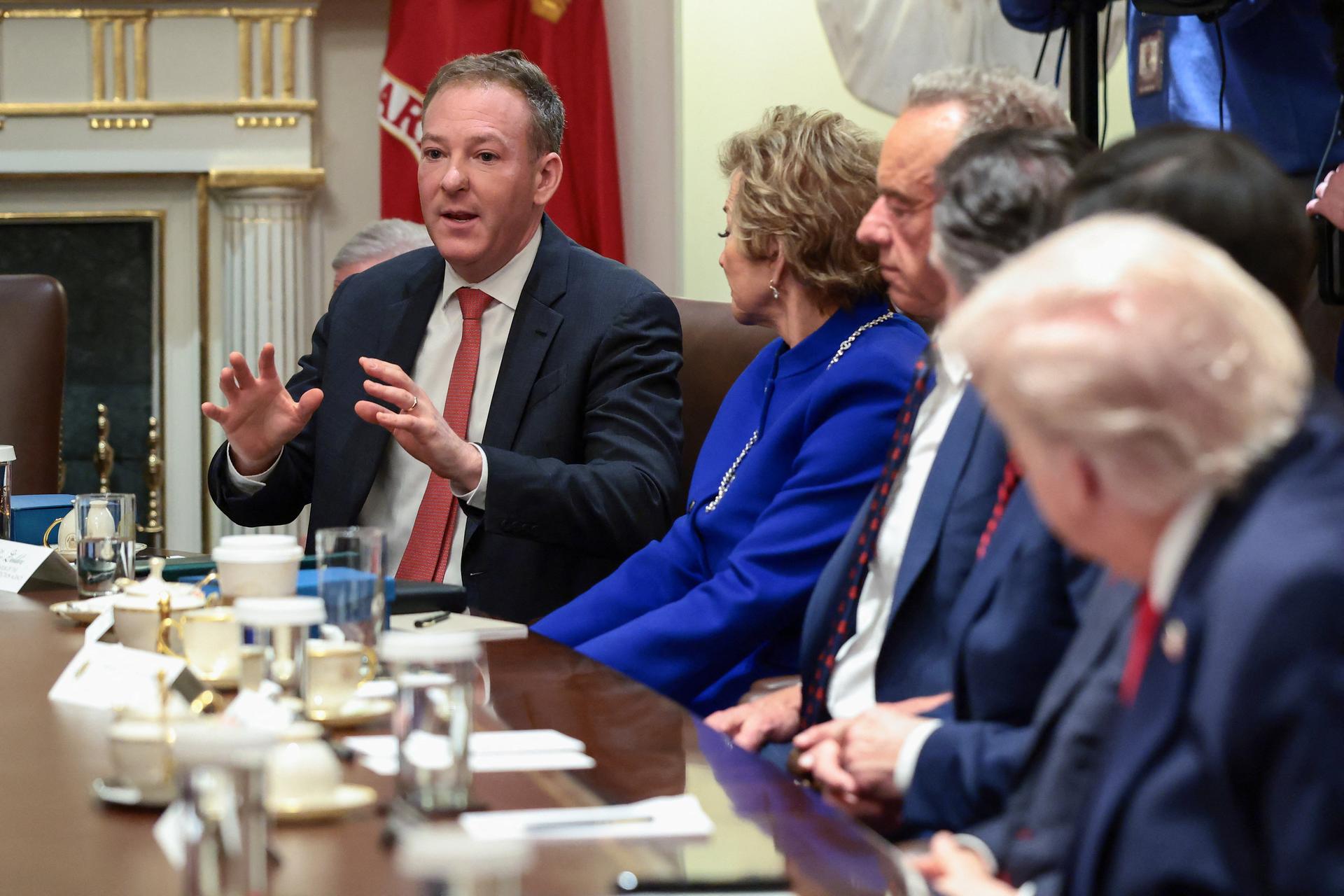
U.S. Environmental Protection Agency Administrator Lee Zeldin speaks during a cabinet meeting at the White House in Washington, D.C., U.S. REUTERS/Evelyn Hockstein |
The Environmental Protection Agency told Reuters that the repeal of what is known as the endangerment finding would be unveiled this week.
This is the legal foundation for U.S. climate change-related regulations and led the EPA to take action under the Clean Air Act of 1963 to curb emissions of carbon dioxide, methane, and four other heat-trapping air pollutants from vehicles, power plants and other industries.
An EPA spokesperson said the finding had been used by the Obama and Biden administrations to "justify trillions of dollars of greenhouse gas regulations covering new vehicles and engines."
The repeal would remove the regulatory requirements to measure, report, certify, and comply with federal GHG emission standards for cars, administration officials told the Wall Street Journal, but would not apply to stationary sources such as power plants. Reuters was unable to confirm those details. EPA Administrator Lee Zeldin has called the rescission "the largest act of deregulation in the history of the United States." |
|
|
What activists and investors say |
The move would hurt the global climate while helping China's fast-growing clean energy industry, said Dan Becker, director of the Center for Biological Diversity’s Safe Climate Transport Campaign. "They’re popping champagne corks ... in Beijing, where China’s EV makers will face no competition from the U.S. to dominate the world’s clean car market," he said.
Asset managers and shareholder activists say the move will leave companies in limbo, wondering whether they will have to course-correct under a future administration.
Little will likely change for large multinational companies that will have to follow tougher emissions standards around the world. Automakers may be given the freedom from federal reporting requirements, but their investors and other nations will continue to demand it, not least regulators in the European Union and elsewhere.
Besides, commitments by U.S. companies to get to net-zero emissions across their business by 2050 grew 9% in 2025, data from the non-profit Net Zero Tracker showed.
Plus, the repeal is vulnerable to legal challenge after a federal court ruled in January that the Department of Energy violated the law when it formed a climate science advisory group which produced a report meant to support the attempt.
Even power companies – who have generally favored Trump's deregulatory agenda – have expressed concern about the repeal of the endangerment finding, triggering a wave of lawsuits.
U.S. courts have long recognized a legal theory known as "public nuisance," which prohibits activities that unreasonably interfere with the health and safety of a community. Click here for a story about what this repeal means for future litigation. |
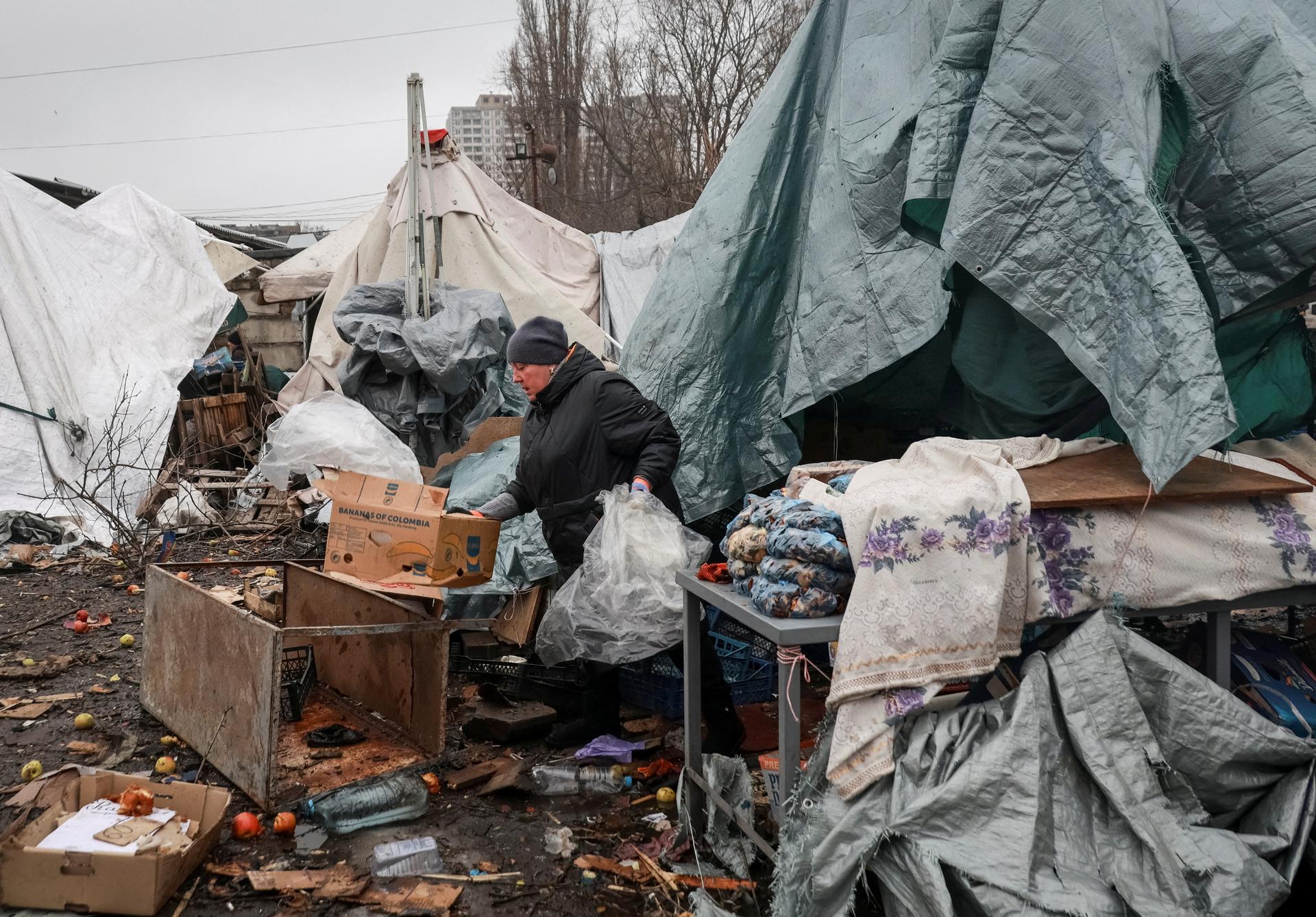
A vendor collects surviving goods at a street market hit by a Russian drone strike, amid Russia's attack on Ukraine, in Odesa, Ukraine. REUTERS/Nina Liashonok |
-
Russia-Ukraine energy: Russia has intensified its campaign of strikes on Ukraine's power grid, leaving tens of thousands in the capital Kyiv and the cities of Dnipro and Odessa without heat, power and water. Click here for the full report.
- Palestinian detainees food: Five months after Israel's Supreme Court ruled that its prisons were failing to provide enough food for Palestinian detainees and ordered conditions be improved, emaciated prisoners are still emerging with tales of extreme hunger and abuse. Click here for the full story.
-
Sudan crisis: Click here for a story on how Arab nomads have been stuck in the desert outside the central Sudanese city of al-Obeid, threatened by marauding bandits and ethnic tensions since the war between the Sudanese army and the paramilitary Rapid Support Forces (RSF) erupted in 2023. The war has left nearly 14 million people displaced, triggered rounds of ethnic bloodshed, and spread famine and disease.
-
Anti-anti-ESG: Is the pendulum swinging back for environment, social and governance (ESG) enthusiasts? Hard to tell after the EPA ruling, but a federal judge in Texas struck down a state law that blacklisted “woke” financial firms that used ESG factors in investment decisions. The judge called the law unconstitutional and ruled that it violated the First Amendment free-speech protections. Click here for the full story.
-
LGBT policies: My colleague Ross Kerber at Reuters Sustainable Finance newsletter wrote about the firms that are quietly getting on with LGBT policies, highlighting a new report that suggests many of the pro-diversity changes are mainly staying under the radar. Click here for the full edition of the Human Rights Campaign Corporate Equality Index for more.
|
|
|
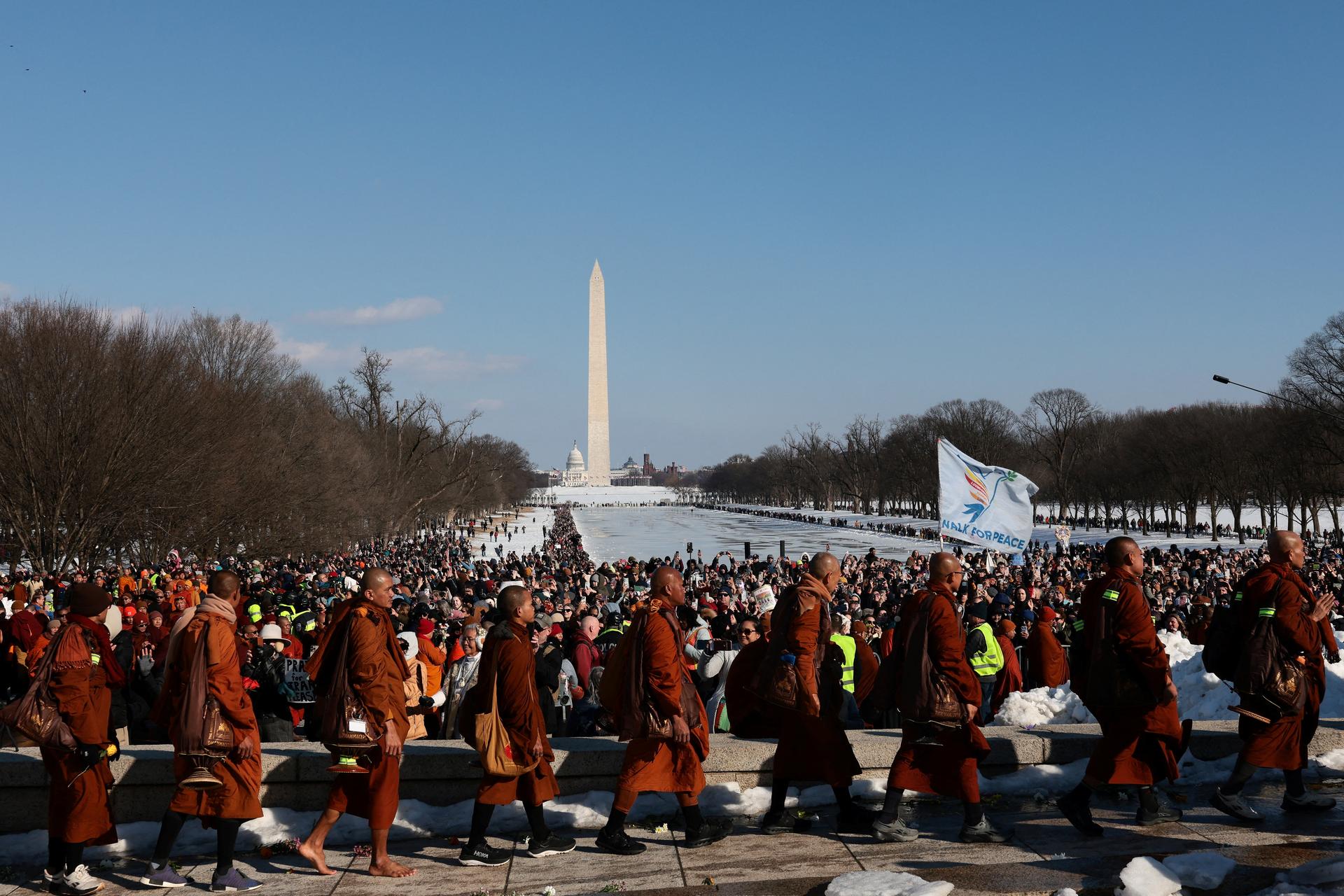
The group of Buddhist monks walks near the Lincoln Memorial, following their 2,300-mile "Walk for Peace", in Washington, D.C., U.S. REUTERS/Evelyn Hockstein |
Since some of the ‘Talking Points’ focus on the aftermath of war, I thought I’d highlight a story focused on peace for today’s spotlight on two dozen Buddhist monks who arrived in Washington, D.C., this week after a "Walk for Peace".
They have been cheered on by crowds of thousands during their 2,300-mile spiritual journey across nine states. Click here to read and watch more. |
|
|
Sustainable Switch was edited by Alexander Smith. |
|
|
| |
|
|
|
Sustainable Switch is sent three times a week. Think your friend or colleague should know about us? Forward this newsletter to them. They can also sign up here.
Want to stop receiving this email? Unsubscribe | | | |
|
|
|