| |  | | | | |  | By Megan R. Wilson | Did someone forward this newsletter to you? Sign up here to get it in your inbox. In today’s issue: The winner and loser of today’s congressional health affordable hearing. A bipartisan agreement to reveal the Trump administration’s drug pricing deals. Moderna becomes the first casualty of the Trump administration’s tightened vaccine approval approach. And more. Good afternoon, and welcome to the Health Brief newsletter. The House hearing on high drug costs on Wednesday follows another one last month that featured the CEOs of major health insurance companies, part of a series the House Energy and Commerce Committee is having on affordability in the health system. As Rep. Mariannette Miller-Meeks (R-Iowa) said on Wednesday: “The underlying fact is patients don't particularly care which part of the supply chain is to blame. They just know they're paying too much all the while seeing their premiums rise every year.” Do you have any story tips or health policy intel? What are your predictions for what comes next in the health policy world? Shoot me a note at megan.wilson@washpost.com. If you prefer to message me securely, I’m also on Signal at megan. 434. This newsletter is published by WP Intelligence, The Washington Post’s subscription service for professionals that provides business, policy and thought leaders with actionable insights. WP Intelligence operates independently from The Washington Post newsroom. Learn more about WP Intelligence. | | | |  | The Lead Brief | Large drugmakers have emerged as perhaps the biggest winner following a marathon hearing on Capitol Hill focused on the increasing cost of medicines. For nearly three and a half hours, lawmakers heard from executives of eight industry associations, including ones representing brand name and generic drugmakers, pharmacy benefit managers (PBMs) and large employers that provide health benefits for their workers. While the Pharmaceutical Research and Manufacturers of America, the organization representing brand name drugmakers better known as PhRMA, received a few pointed questions from lawmakers, members from both parties directed most of their ire at the PBM industry. Some of the questions directed to Lori Reilly, PhRMA’s chief operating officer, asked how policymakers could help the industry innovate in the U.S. amid fierce global competition. Why it matters: Health affordability is an issue that’s top of mind for Americans. About three-quarters of likely voters surveyed by health policy group KFF indicated that health care costs will affect their choices in the November midterm elections. Yet there hasn’t been a coalescing around legislation or a specific set of policies to address the cost of health care. Big Pharma has long been a reliable punching bag for policymakers — especially Democrats — but emerged from the hearing largely unscathed. And it wasn’t just policymakers: Others on the witness panel — including PhRMA, employer group ERISA Industry Committee and the National Association of Community Pharmacists — also offered critiques of the PBM industry. → In his opening statement to the House Energy and Commerce health subcommittee, the new leader of the PBM’s trade group offered a mea culpa. “I'd like to acknowledge that as an association, we have failed you. We have not done a good enough job articulating PBMs' value to you. We have not been the partner you need. We're going to change that,” David Marin, the CEO of the Pharmaceutical Care Management Association, told the panel. PBMs, which negotiate discounts with drugmakers and decide which medicines an insurance plan will cover, have faced increased scrutiny from state and federal policymakers — and regulators — in recent years. Marin, who joined the organization less than a month ago from drugmaker Viatris, promised lawmakers several more times throughout the hearing that he’d work to address their concerns with the industry. Lawmakers complained about consolidation in the industry, big PBMs’ outsize influence over independent pharmacies and tactics such as step therapy, where a patient is required to try to fail a medication before it will cover one prescribed by a provider. Action on the PBM front: - In the most recent government funding bill, Congress enacted several changes to how PBMs do business.
- Key provisions include impacting how PBMs craft contracts with pharmacies, bolstering transparency and reporting requirements and banning a practice in which PBMs charge an insurance company more for a drug than it reimburses a pharmacy to dispense it, called spread pricing, in commercial health plans.
- Still, advocacy groups have been pushing lawmakers to do even more.
- Sens. Josh Hawley (R-Missouri) and Elizabeth Warren (D-Massachusetts) on Tuesday introduced legislation that aims to tamp down on vertical integration in the health industry, in which a parent company owns several parts of the supply chain.
While Marin told lawmakers that the PBM industry is growing, critics argue it is also too consolidated. The three largest players — CVS Caremark, Express Scripts, and Optum Rx — are owned by insurance companies and handle 80 percent of the prescription market. Many also have their own affiliated pharmacies. “We see small players taking business from the big players all the time,” Marin said. | 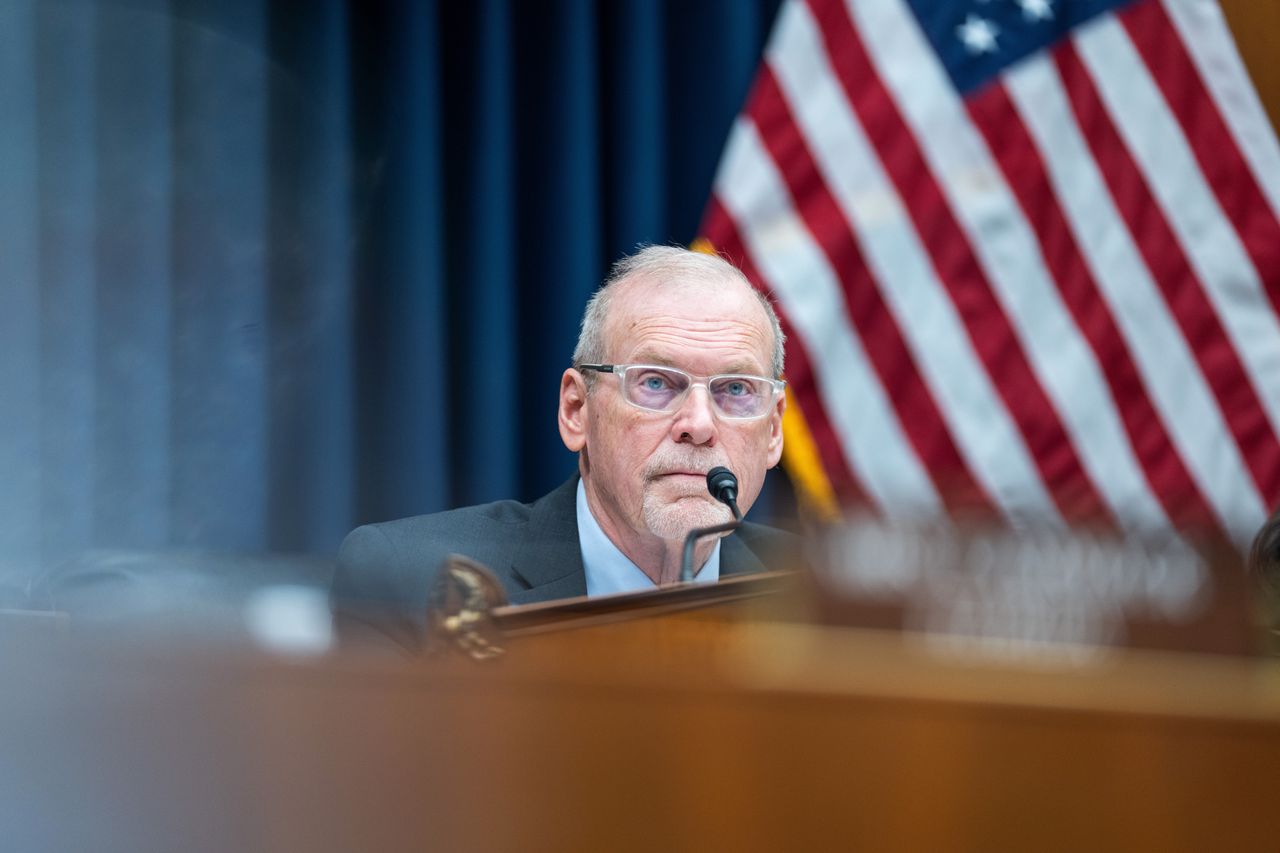 | | Rep. Morgan Griffith (R-Virginia), leader of the House Energy and Commerce health subcommittee, agreed with Democrats who want to know more about the Trump administration's drug pricing deals. (Allison Robbert/AP) | | | | | | Health on the Hill | A notable area of bipartisan agreement in the hearing: Wanting to know more about the Trump administration’s confidential drug pricing deals with major drugmakers. Reps. Frank Pallone Jr. (D-New Jersey), the top Democrat on the Energy and Commerce Committee, and Diana DeGette (D-Colorado) both said they wanted to uncover details from the administration’s most-favored nation (MFN) pricing arrangements with 16 companies. Rep. Morgan Griffith (R-Virginia), the chair of the panel’s health subcommittee, agreed. President Donald Trump directed more than a dozen pharmaceutical companies to lower their prices to align with other wealthy nations, known as MFN pricing policies. In exchange, they received tariff relief and, in some cases, expedited regulatory review of drugs in the pipeline. But the specifics within the agreements are confidential. “It's unacceptable that the federal government can cut secret deals with these companies and that we don't know anything about it,” Pallone said. Reilly, the PhRMA executive, told lawmakers that the industry group doesn’t have any knowledge about the inner-details of individual companies’ agreements with the administration because it could violate antitrust laws. In an exchange with DeGette, Griffith argued that, “The problem is, all of these agreements have secrecy deals.” Griffith agreed when she said lawmakers should “figure it out.” “We do need to know more about what’s going on,” Griffith later told Pallone. Griffith added that he would also like to get “transparency across the board” on the government’s efforts to lower drug prices, wanting to know more information about the Medicare drug negotiation process. | | | | | | Immunization Update | The Food and Drug Administration has declined to review Moderna’s application for the first mRNA-based flu vaccine, report my colleagues Rachel Roubein and Carolyn Y. Johnson in The Washington Post newsroom. The regulator’s decision shocked the vaccine maker, which said that the company had previously engaged with the FDA on the trial design and that the agency had indicated it would be acceptable. “We’re trying right now to reach out to the FDA and understand what would be necessary for them to start reviewing the submission,” Stephen Hoge, Moderna’s president, said in an interview with The Post. Why it matters: Several vaccine experts told my colleagues that the decision raises questions for vaccine-makers about shifting guidance from the FDA, which could deter future investments in expensive clinical trials. The decision comes amid two shifts: - The Trump administration’s decision to move away from funding projects with mRNA technology, the platform on which the covid-19 vaccine was built. Last May, the Biomedical Advanced Research and Development Authority pulled funds for Moderna to develop a vaccine against bird flu.
- The FDA’s stricter approach to vaccine approvals. Vinay Prasad, who leads the office overseeing vaccine approvals, specifically mentioned moving to tighten standards for the flu shot in a memo last year.
What the Department of Health and Human Services (HHS) is saying: Andrew Nixon, an agency spokesperson, said in a statement Wednesday that the application was rejected because “the company refused to follow very clear FDA guidance from 2024.” “Moderna exposed participants aged 65 and over to increased risk of severe illness by giving them a substandard of care against the recommendation of FDA career scientists,” Nixon said. “The most protective flu shots for seniors are a subset of high dose flu shots.” What the industry is saying: “I can’t comment on any specific company or decision. …. We are concerned about shifting standards. We need consistency, we need predictability from our regulatory bodies, and we need acceptance of vaccines,” said John Crowley, the CEO of the Biotechnology Innovation Organization at the House hearing on Wednesday when asked about the decision. What’s next: Moderna has requested a formal meeting with the FDA. It said the vaccine has been accepted for review in the European Union, Canada and Australia. | | | | | | Executive Health Brief | FDA Commissioner Marty Makary was on Capitol Hill Tuesday briefing Republican senators about his agency’s efforts on regulating mifepristone, one of the drugs used in medication abortions. Some of the GOP lawmakers in the private briefing, including Hawley and Sen. Bill Cassidy (R-Louisiana), expressed frustration with the “lack of progress” on a safety study launched by the FDA last year. Cassidy, who leads the Senate’s health panel, said in a statement he is disappointed that the study is “moving too slowly.” In a Tuesday interview with Tony Perkins, the president of the conservative Family Research Council, Hawley said, “It's not clear to me that they've even started the study.” Nixon, the HHS spokesperson, pointed to a FDA website about mifepristone that had been updated on Wednesday. “FDA is conducting a safety study of mifepristone,” the website reads. “The agency is taking care to do this study properly and in the right way. We are planning to complete the study as soon as possible while ensuring we are not cutting any corners from a scientific research standpoint.” Hawley and other conservatives are also demanding the Trump administration reinstate policies around obtaining the drug, including requiring patients to see a doctor in person to obtain mifepristone. The policies were rolled back by the Biden administration, opening the door to telehealth access to abortion drugs. “I just worry that the FDA is dragging its feet on putting any of these protocols back into place,” Hawley said on Perkins’ Washington Watch web program. “Once the FDA finishes its analysis of the data” of the safety study, the agency said on the recently updated webpage about mifepristone, it will decide whether to make substantive changes” to the drug’s safety requirements. Abortion rights advocates argue that the drug, first approved in 2000, is safe and opponents only want to reduce access. Medical groups, including the American College of Obstetricians and Gynecologists, call mifepristone a “a safe, effective, and integral part of the medical care.” | | | | | | | | | | | <
| |


_tstmp_1756933376-1920-1080.png)