| | The White House prepares to repeal a landmark climate finding, Taiwan’s exports soar, and China’s AI͏ ͏ ͏ ͏ ͏ ͏ |
| |  PRIPYAT PRIPYAT | BENGALURU |  TAIPEI CITY TAIPEI CITY |
 | Flagship |  |
| |
|
The World Today | 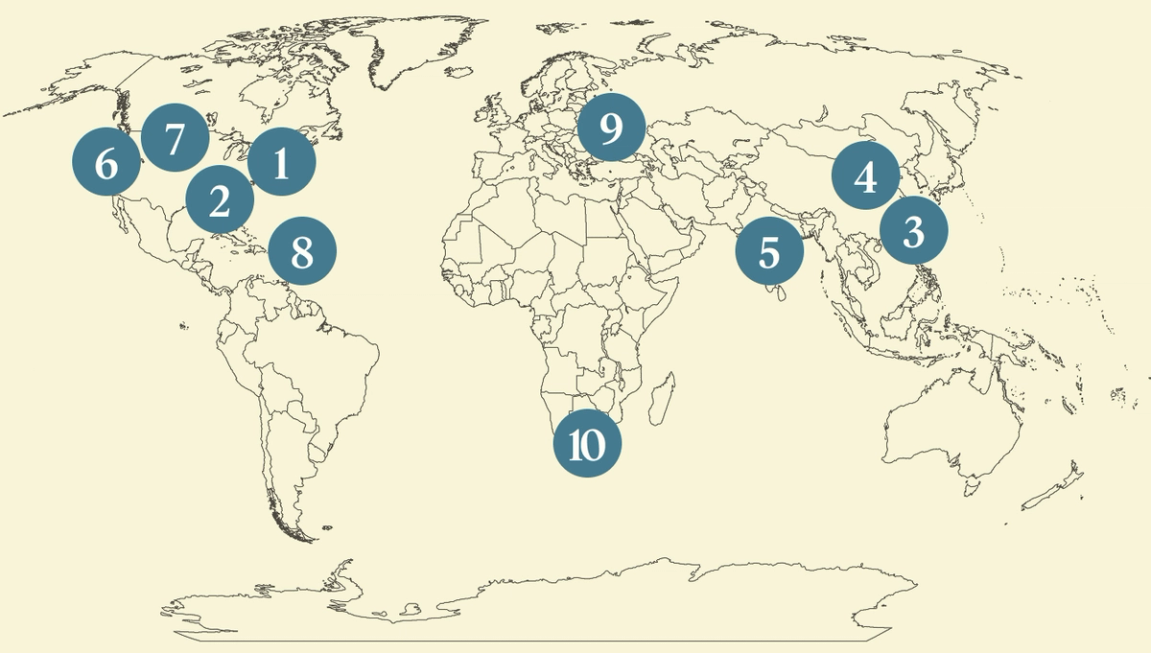 - US climate finding rollback
- AI pact over energy costs
- Taiwan’s exports soar
- China tech giants go to war
- Indian IT’s AI reckoning
- Industries retool around AI
- Storing nuclear waste
- Private-sector Epstein fallout
- Animals after nuclear disaster
- SA trophy hunting quotas
 An Icelandic film with a hint of mischievous magical realism. |
|
US to repeal landmark climate finding |
 Mike Blake/Reuters Mike Blake/ReutersThe Trump administration this week is expected to rescind a longstanding climate finding on which all greenhouse gas regulation is based, amounting to the furthest-reaching rollback of climate policy of President Donald Trump’s two terms. The “endangerment finding” — a 2009 scientific conclusion that greenhouse gases are worsening environmental disasters — provides the legal basis for US authorities to regulate those gases. Withdrawing it has long been a top priority for lawyers in Trump’s orbit, and could clear the way for the government to scrap emissions limits for vehicles and power plants. The change could spur states to pursue their own regulations, creating a fresh set of compliance headaches for companies, Semafor’s climate and energy editor wrote. |
|
White House seeks data center pact |
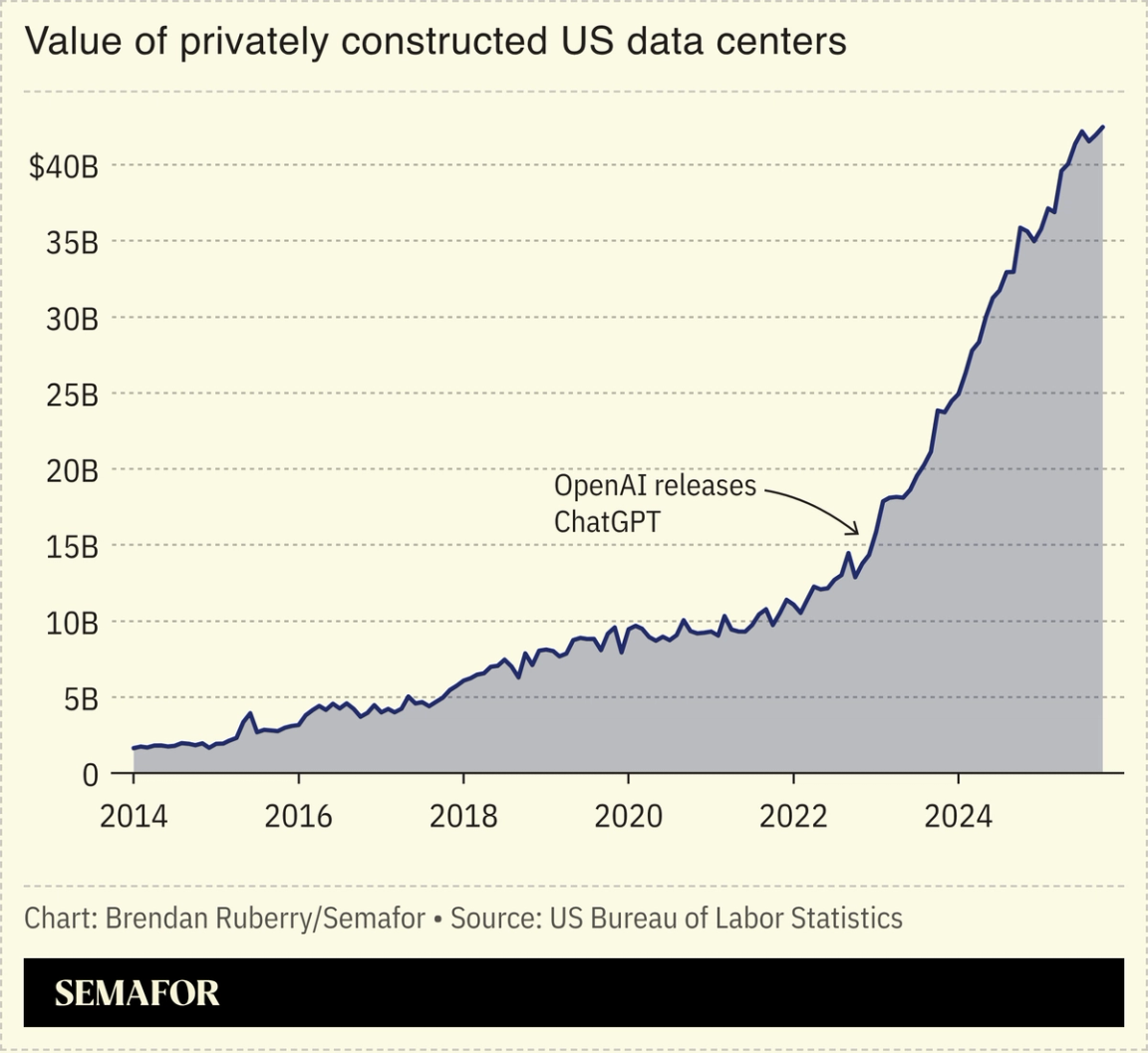 The Trump administration is reportedly pursuing a pact with large tech companies to help ensure their data centers do not raise household electricity prices. The voluntary agreement, Politico reported, is also aimed at ensuring that the resource-hungry facilities won’t strain water supplies or electricity grids. It would mark an ambitious effort to shape the country’s AI infrastructure footprint without direct regulations, as American communities increasingly push back on data center construction. The concern is a global one: The head of the UK’s grid operator said putting the facilities in the wrong place can raise energy costs. He recommended locating them in Scotland, which often has excess wind power. |
|
Taiwan exports start the year strong |
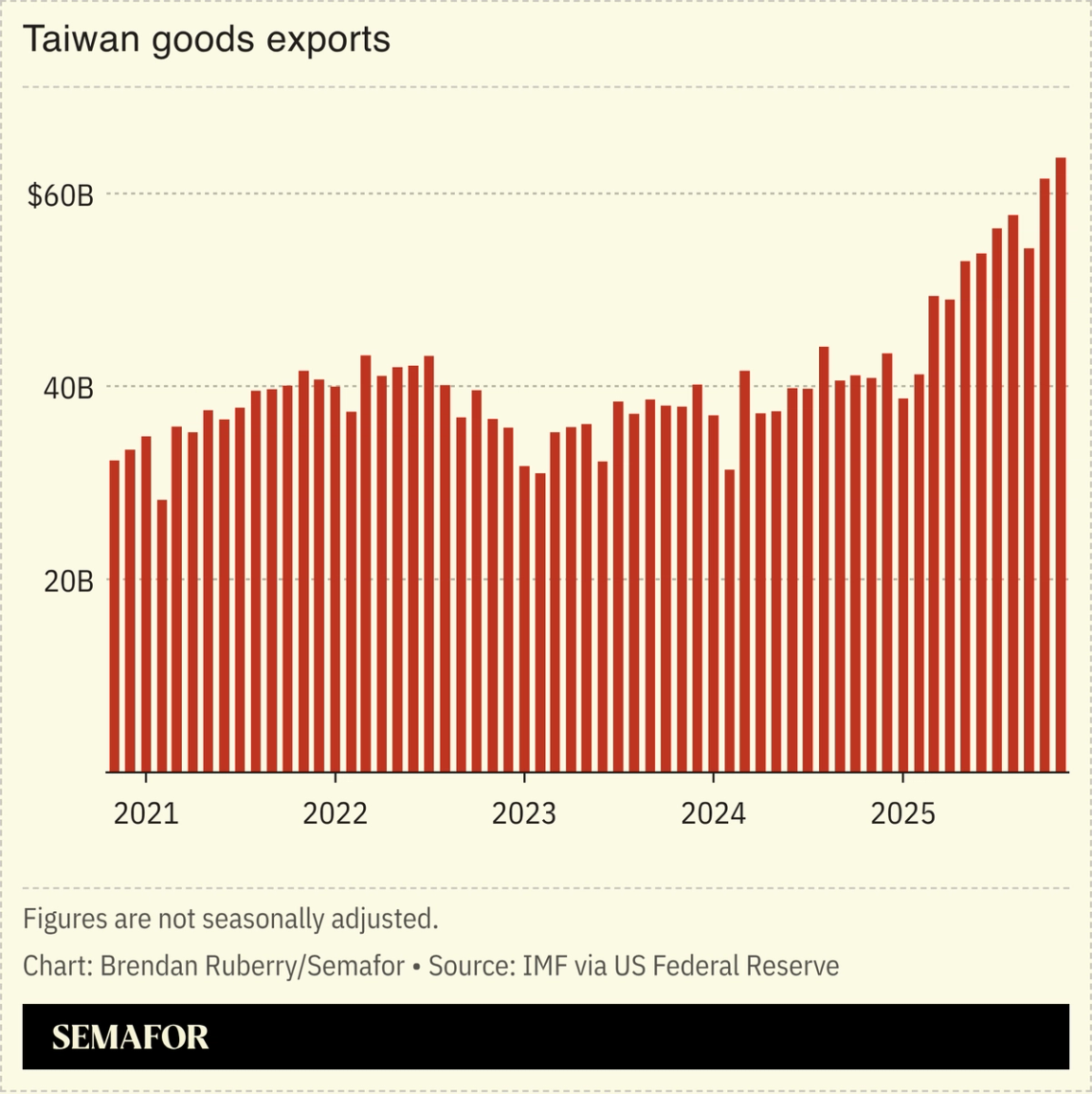 Taiwan’s exports surged in January, propelled by the AI boom and high demand for its chips. The 70% year-on-year growth marked the largest increase for any month since 2010. As global tech giants gobble up Taiwan-made hardware, something of a two-track economy has emerged, analysts said, in which traditional manufacturers are missing out on the export boom. The island’s tech dominance has become a bargaining chip in trade talks, as it faces pressure from Washington to move chipmaking capacity to the US. But Taipei rebuffed that proposal this week; it sees its semiconductor dominance — or “Silicon Shield” — as a deterrent against Chinese aggression. |
|
China’s AI race is now an all-out war |
 Aly Song/Reuters Aly Song/ReutersChina’s AI industry is gearing up for what may be its most pivotal week of the year, marked by flashy promotions and consumer giveaways. The country’s tech giants, including Alibaba, Baidu, and ByteDance, plan to release the newest versions of their flagship AI models around the Lunar New Year holiday, and are spending big to attract users, offering milk tea vouchers, cash handouts, and even robots. While the three have long competed to dominate the internet space, from e-commerce to short videos, the fight over AI market dominance is more like the “‘Battle of Midway’ — a turning point in the bigger war,” a Chinese tech analyst wrote: “Once lost, they might lose the entire future.” |
|
New AI tools weigh on Indian IT sector |
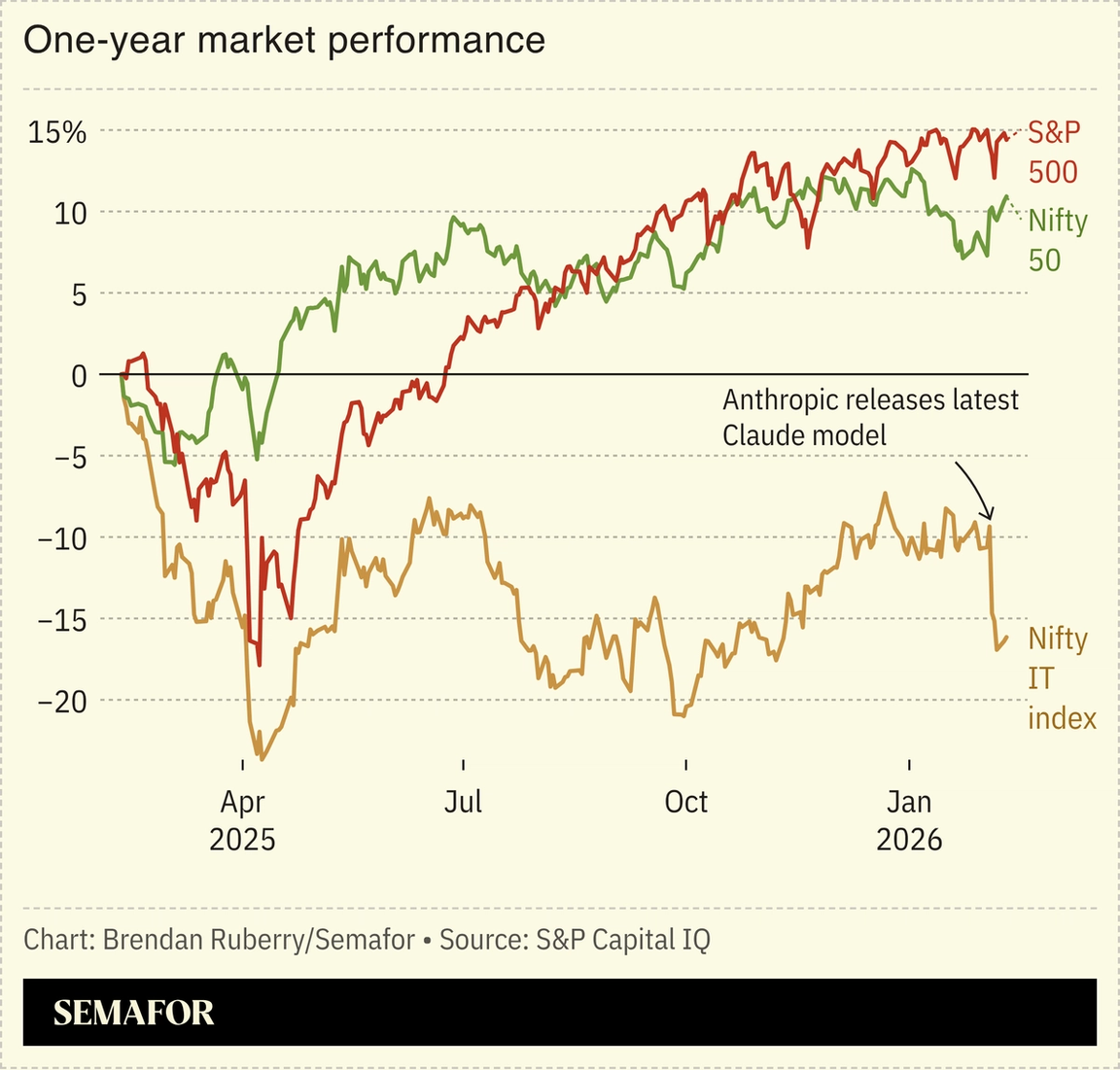 New AI workspace tools are forcing a reckoning in India’s extensive IT sector. Shares in the country’s biggest outsourcing firms have fallen after US startup Anthropic released new plugins that automate the kind of high-volume, repetitive work that Indian IT firms specialize in, Nikkei reported. Experts believe AI won’t kill the entire sector, but only the companies that adapt quickly will thrive. The selloff mirrored the global panic over the tech’s impact on the software industry. If AI indeed “triggers a rapid reorganization of work,” The Atlantic wrote, “the consequences will not stop at the economy.” Ironically, US tech companies are ramping up hiring in India, including for AI jobs, Rest of World reported. |
|
Sectors retool around AI data center demand |
 Noah Berger for AWS/Reuters Noah Berger for AWS/ReutersMore industries are retooling around AI after experiencing slowdowns in their core businesses. Amid an EV market slump, American manufacturers of EV batteries are converting their factories to instead produce cells that store energy, thanks to rising demand for such modules from AI data centers. And crypto’s recent collapse is driving miners to turn to AI, the Financial Times’ equities reporter wrote: Estimates of the computing power used in mining have fallen. Bitcoin miners are converting their servers to act as AI data centers, according to a Morgan Stanley report — potentially good news for the US power grid, as it struggles to meet growing AI demand. |
|
 Semafor is proud to announce its first slate of speakers for the 2026 Annual Convening of Semafor World Economy, taking place April 13-17 in Washington, DC. This global cohort of senior leaders from every major sector across the G‑20 are just some of the 400 top CEOs joining Semafor World Economy for five days of on-stage conversations and in-depth interviews on growth, geopolitics, and technology. See the first lineup of speakers here. |
|
US offers ‘radioactive carrot’ |
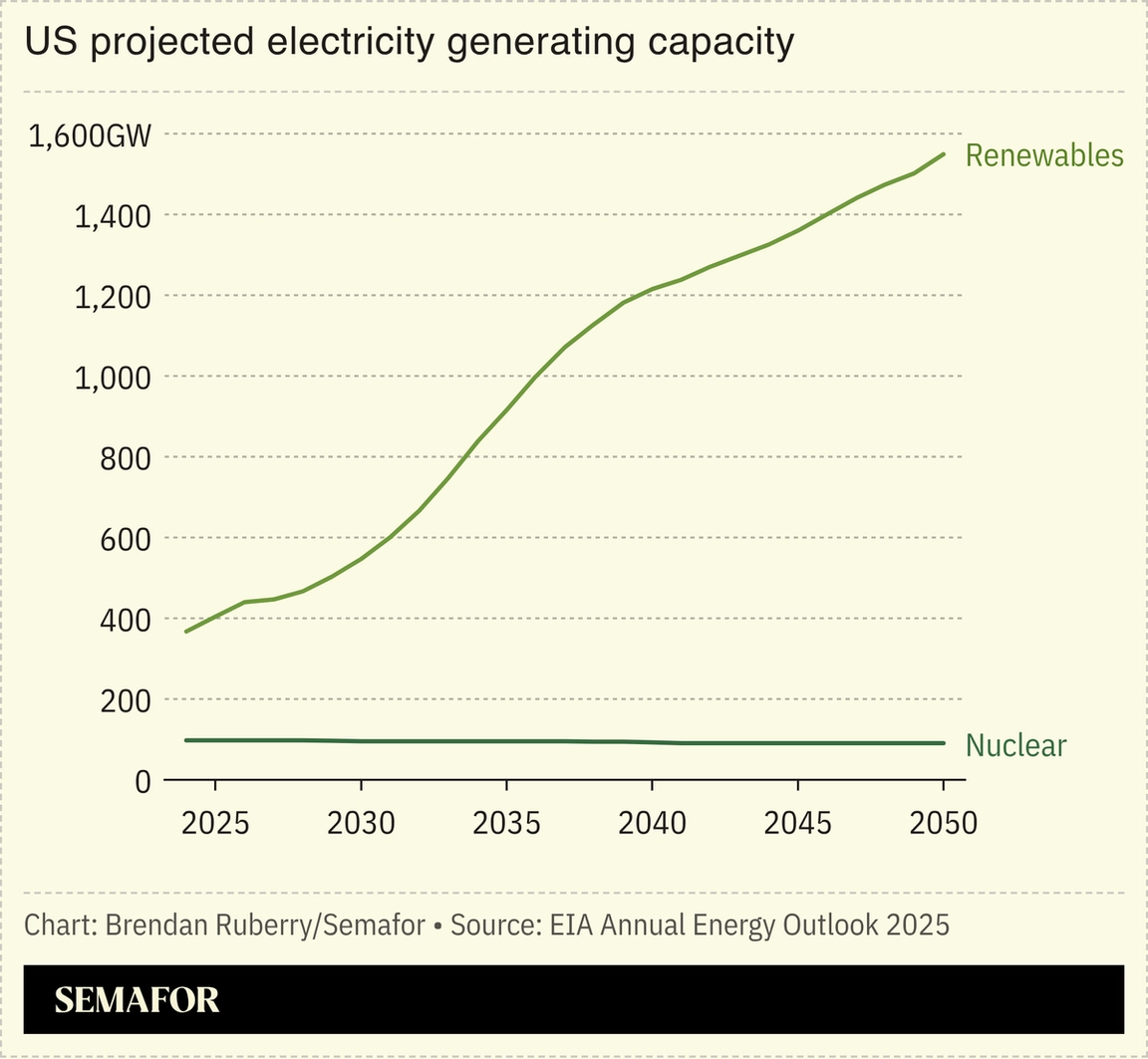 The US government is trying to convince states to host permanent nuclear waste disposal sites. The Trump administration is betting on small modular reactors as part of its efforts to quadruple nuclear power capacity by 2050 to power AI data centers. While these reactors are easier to assemble than older nuclear technology, they still produce toxic waste that must be likewise disposed of by “bury[ing] it at the bottom of a very deep hole,” Reuters wrote. But bottomless pits are hard to come by, and the 100,000 tons of radioactive waste stored across temporary sites is piling up. The government is seeking volunteer states to host permanent repositories in exchange for new energy investments: a “radioactive carrot,” if you will. |
|
 Elizabeth Frantz/Reuters Elizabeth Frantz/ReutersRepercussions from the Jeffrey Epstein files are rippling through the private sector. Canada’s second-largest pension fund suspended future investments in Dubai-based port operator DP World, whose CEO was in contact with the sex offender for years. Several musicians are distancing themselves from a top US talent agency led by Casey Wasserman — who is overseeing the 2028 Olympics planning — over past email exchanges with Epstein associate Ghislaine Maxwell. The latest files are threatening to topple the UK prime minister, but the fallout in Washington has so far been limited. US Commerce Secretary Howard Lutnick is now facing bipartisan calls to resign over his ties to Epstein; Lutnick said Tuesday he had lunch with Epstein on his island in 2012, but insisted they didn’t have a relationship. |
|
How nuclear disasters affect wildlife |
 Kim Kyung-Hoon/Reuters Kim Kyung-Hoon/ReutersThe evacuation of Fukushima in 2011 led to startling changes in the local wildlife. Wild boar were already prevalent in the area, and in the absence of humans they multiplied rapidly; escaped domesticated pigs bred with the boars, creating hybrid animals. The hybrids bred faster than most boar, because domestic pigs are bred for year-round reproduction, so their genes spread through the population. Nuclear disasters can be paradoxically good for nature: Around Chernobyl, the gray wolf population is thriving, as are the descendants of escaped domestic dogs. The radiation from the 1986 disaster appears not to bother them, although there is evidence that they have developed a greater resistance to cancer, while the feral dogs may have higher rates of cataracts. |
|
|


