| | Japan’s prime minister wins a strong mandate, Donald Trump sets a new peace deadline for the Ukraine͏ ͏ ͏ ͏ ͏ ͏ |
| |  Tokyo Tokyo | Abu Dhabi | Johannesburg |
 | Flagship |  |
| |
|
The World Today | 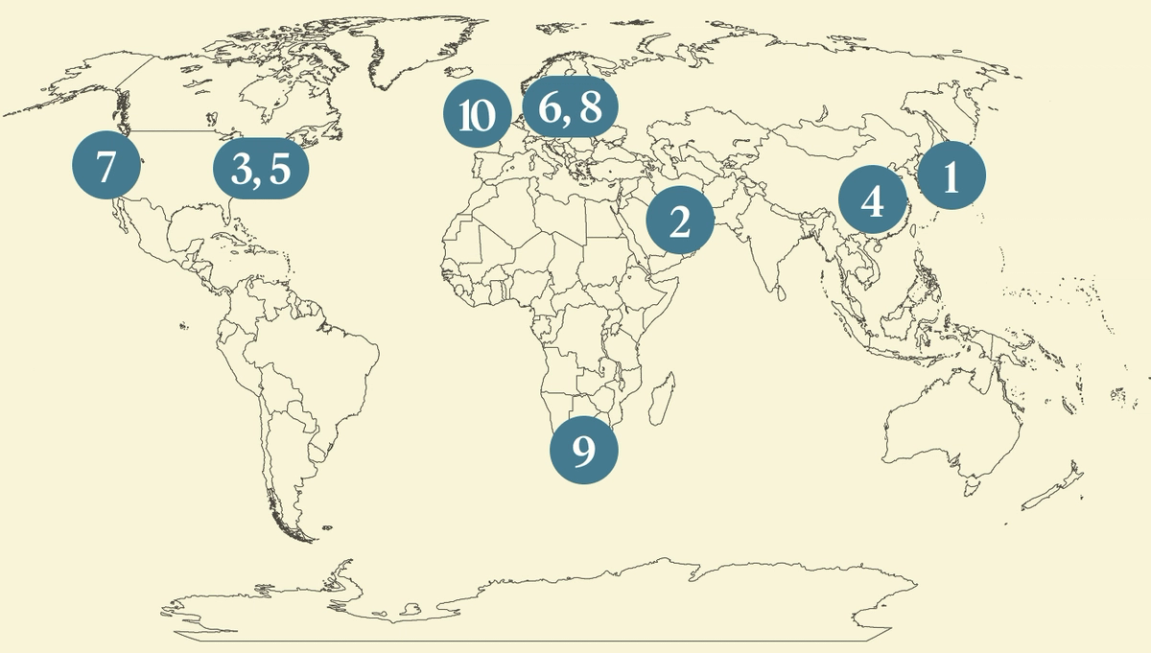 - Japan’s leader wins big
- New Ukraine peace deadline
- Trump’s domestic challenges
- Quantifying the global rupture
- Washington Post CEO is out
- Hims & Hers pulls GLP-1 pill
- Prediction markets’ big day
- Long wait times at EU borders
- How apartheid hurt everyone
- Bonobo plays make-believe
 A photographer known for “grainy, blurry, out-of-focus” street shots gets his due. |
|
Japan’s Takaichi scores strong mandate |
 Kim Kyung-Hoon/Reuters/Pool Kim Kyung-Hoon/Reuters/PoolJapanese Prime Minister Sanae Takaichi’s coalition won a legislative supermajority in Sunday’s election, projections show, cementing her grip on power and providing a strong mandate for her expansionary fiscal policy. The snap election was a gamble for Takaichi, who took office in October with a goal of turning around Japan’s ruling party. Stocks are poised to surge, with investors betting higher government spending will fuel growth, but Takaichi’s policies will likely weigh on Japanese bonds and the yen, analysts said. A better domestic footing also gives Takaichi leeway to pursue a more assertive stance on China while maintaining a close partner in US President Donald Trump. Beijing’s “efforts to isolate her completely failed,” an Asia Group principal said. |
|
Trump wants Ukraine peace by June |
 Talks in Abu Dhabi last week. UAE Ministry of Foreign Affairs/Handout via Reuters Talks in Abu Dhabi last week. UAE Ministry of Foreign Affairs/Handout via ReutersUkraine is looking to accelerate peace talks and capitalize on diplomatic momentum after US President Donald Trump said he wants a deal to end the war by June. Trump proposed the new deadline after two days of US-brokered talks between Ukraine and Russia in Abu Dhabi ended with no major breakthroughs. Ukrainian President Volodymyr Zelenskyy pegged the ambitious timeline to the US midterms, saying Trump will want a foreign policy win before he pivots to the November elections. But Trump is also resorting to a familiar playbook: He has “set and reset timelines” in Ukraine multiple times before and used similar tactics toward Hamas and Iran, NBC News wrote. |
|
Trump’s domestic challenges mount |
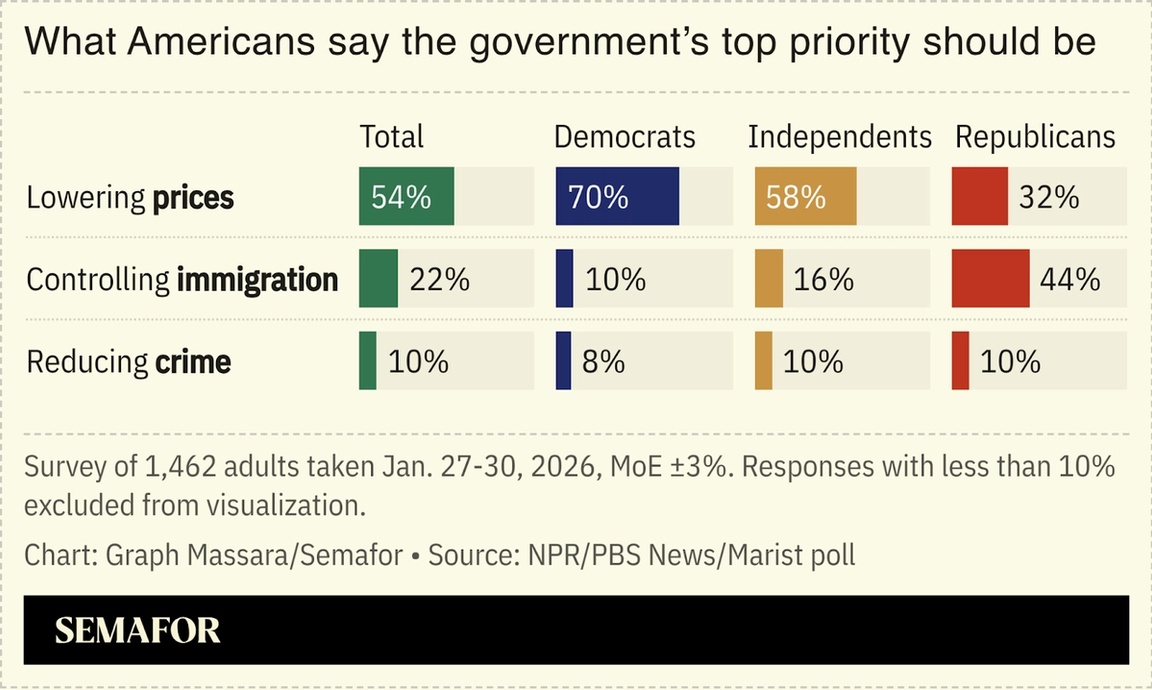 Pushback against US President Donald Trump’s domestic agenda is swelling as his administration tries to refocus attention on efforts to boost the economy. The White House spent much of the weekend doing damage control after Trump posted a video clip depicting Barack and Michelle Obama as apes; Trump deleted the video following bipartisan backlash, but he refused to apologize. The president is also headed into a shutdown clash with Democrats over immigration enforcement, as Republicans fear a poor showing in this year’s midterm elections. “Controversies of the White House’s own making are distracting from the economy, which is what top officials and GOP leaders badly want to talk about,” Semafor’s politics team wrote. |
|
Global powers pivot toward China |
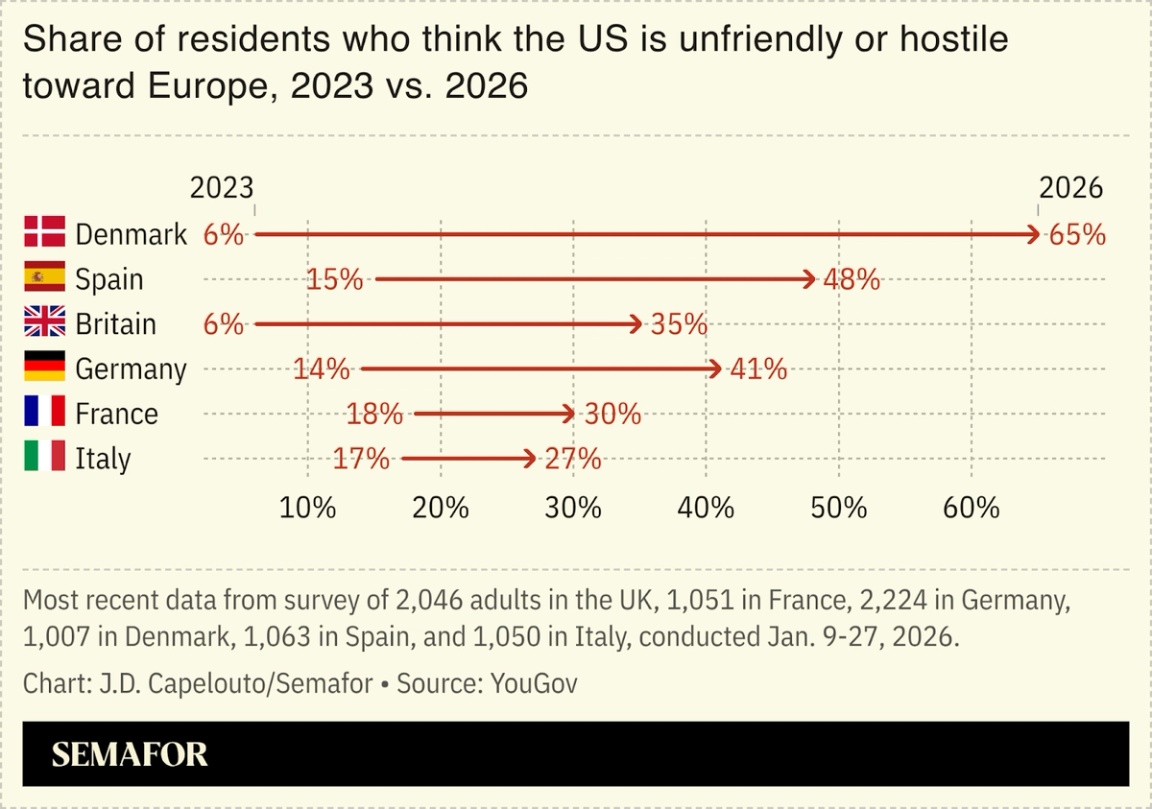 A new report quantifies what many geopolitical analysts have been saying for months: The global center of gravity is shifting away from the US and toward China. A Focaldata analysis of UN voting data and public opinion surveys showed world powers — especially in Europe — are less and less aligned with Washington’s stances, while diplomats from the world’s fastest-growing economies in particular are voting more with China. The findings come as Beijing looks to bolster economic ties with traditional US partners spurned by President Donald Trump’s volatile foreign policy. The shift could accelerate: “The US pressure campaign against European liberal democracy is only just beginning,” a Berlin-based expert wrote, adding that some officials in Europe are preparing to treat Washington as an outright adversary. |
|
Washington Post CEO steps down |
 Ken Cedeno/Reuters Ken Cedeno/ReutersThe Washington Post’s CEO abruptly resigned on Saturday, days after the newspaper laid off more than 300 journalists, capping a choppy two-year tenure. Will Lewis, a former Wall Street Journal publisher, was brought in by owner Jeff Bezos to transform the Post after years of genteel decline. But the paper made two crucial errors, Semafor Media Editor Max Tani wrote: Lewis tired to stop the Post from reporting on his own role in a UK phone-hacking scandal, and Bezos pulled an endorsement of Kamala Harris in 2024, drawing furor from subscribers. Lewis was also spotted at a Super Bowl party shortly after the layoffs, sparking internal frustration. The paper’s “roving identity crisis has come at an enormous cost,” Tani wrote. |
|
Hims & Hers pulls weight-loss pill |
 Michael Siluk/UCG/Universal Images Group via Getty Images Michael Siluk/UCG/Universal Images Group via Getty ImagesTelehealth company Hims & Hers said it would no longer sell a copycat of a popular weight-loss pill following regulatory scrutiny from US officials. The brand’s cheaper version of Novo Nordisk’s Wegovy pill was potentially illegal, federal authorities had warned: Hims & Hers has marketed itself as a low-cost way for Americans to get access to in-demand medications using “compounded,” near-identical versions that aren’t reviewed by federal drug regulators. The episode reflects the market frenzy stemming from the global boom in weight-loss medications in recent years, but Hims & Hers has wider ambitions, like “personalized” testosterone medications. It evokes “concierge treatments enjoyed by the rich,” The Atlantic wrote. |
|
Sports betting’s Super Bowl showdown |
 Carlos Barria/Reuters Carlos Barria/ReutersSunday’s Super Bowl isn’t just a football matchup — it’s a showdown between prediction markets and traditional sportsbooks. The annual American football championship is expected to bring in record trading volumes on prediction platforms like Kalshi and Polymarket, where — thanks to a legal loophole — Americans can bet on a wide range of “yes” or “no” outcomes spanning sports, politics, and pop culture, like the opening song of Bad Bunny’s halftime show. Traditional gambling stocks have fallen in recent weeks as the prediction markets have started taking up more oxygen, though existing sportsbooks are still forecast to see an uptick in volume amid surging popularity for online sports betting in the US more broadly. |
|
 When now-President Donald Trump decided to put on an apron and serve customers at a McDonald’s drive-thru on the 2024 campaign trail, it put Tariq Hassan, then McDonald’s chief marketer, in a tight spot. On this week’s Mixed Signals, Ben and Max sit down with the former Golden Arches CMO to discuss the Trump episode, why he thinks ad-makers should still engage with journalists, and what goes into a good celebrity Super Bowl ad. |
|
Long airport waits for new EU border system |
 David W Cerny/Reuters David W Cerny/ReutersNew biometric border control systems in Europe are causing multi-hour waits at airports. Skiers arriving in Geneva reported waiting three hours at passport control, while travelers experienced long delays in Tenerife in the Canary Islands. The new Entry-Exit System requires non-EU citizens to have their fingerprints and a photograph taken at an automated kiosk when they first enter the EU’s Schengen free-movement zone; the registration lasts three years and will replace ink stamps in passports, but it is creating bottlenecks as millions of people use it for the first time. Airports warned that during peak travel times, delays could reach six hours. The system is intended to modernize border management and prevent illegal overstaying, as concerns over European migration levels rise. |
|
How apartheid hurt all South Africans |
 People read the news that apartheid laws will be removed, in Johannesburg, 1991. Juda Ngwenya/Reuters People read the news that apartheid laws will be removed, in Johannesburg, 1991. Juda Ngwenya/ReutersAmericans who present South Africa’s democratic transition as a cautionary tale for an increasingly diverse US ignore that white people also suffered under apartheid, a US-born South African writer argued. Though the brunt of oppression doubtless fell on Black people, life in a “police state” also brutalized white citizens, Eve Fairbanks argued in The Dial. Widespread surveillance, censorship, and paranoia strangled public life, and white protesters and military conscripts were often tortured. Most white South Africans “will tell you that they are better off now”: Violent crime has halved. Contrary to claims endorsed by Elon Musk that a white American minority would be “slaughtered,” mass revenge against South Africa’s former colonial rulers “simply did not happen,” Fairbanks wrote. |
|
|


