Niall Ferguson: Trump, the Midterms, and the Six-Year Itch Nearly every two-term president, from Truman to Obama, hits a wall in year six. Can Donald Trump avoid domestic-political disaster?
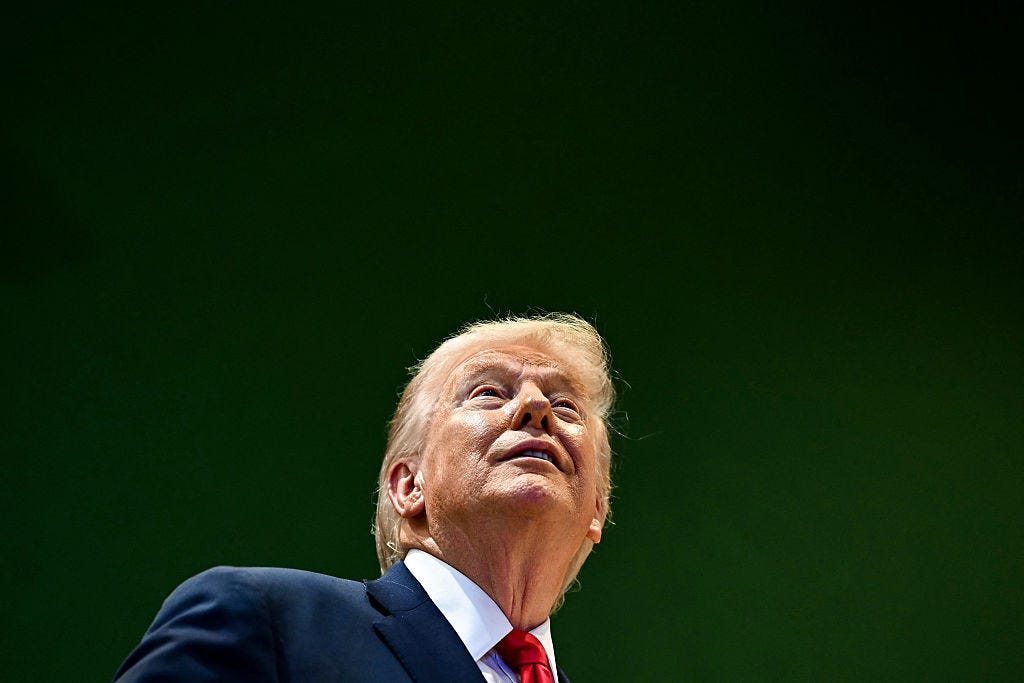
Donald Trump after speaking at Davos on January 21, 2026. (Fabrice Coffrini/AFP via Getty Images)
There are no cycles of history—apart from those that are constitutionally mandated. Article I, Section 2 of the U.S. Constitution states: “The House of Representatives shall be composed of Members chosen every second Year.” Article I, Section 3 says that a third of senators will come up for reelection every two years. Article II, Section 1 defines a presidential term as four years. And the 22nd Amendment says that “No person shall be elected to the office of the President more than twice.” All this has the unintended consequence that every president who wins a second term almost inevitably falls victim to what has long been known as the Six-Year Itch. The second year of the second term has historically been a time of trial and tribulation for the occupant of the White House. Presidents generally face a stalling domestic agenda, public ennui, and either a scandal, a natural disaster, or an international crisis. The president’s party nearly always fares poorly in the midterm elections, and if things go really badly, the president is written off as a lame duck for the remainder of his term. Despite the Trump administration’s extraordinary dynamism last year—a product of the four-year interlude enjoyed only by Grover Cleveland before him—and despite his continuing ability to outsmart his foreign counterparts—seen most recently at Davos—Donald Trump increasingly looks like the next victim of this domestic-political cycle. A second term is a second term, consecutive or not...
Become a paid subscriber Get access to our comments section, special columns like TGIF and Things Worth Remembering, tickets in advance to our live events, and more. UPGRADE TODAY |