| | Trump is optimistic about reaching a deal with Iran, gold and silver prices plunge, and Alcaraz beco͏ ͏ ͏ ͏ ͏ ͏ |
| |  | Flagship |  |
| |
|
The World Today | 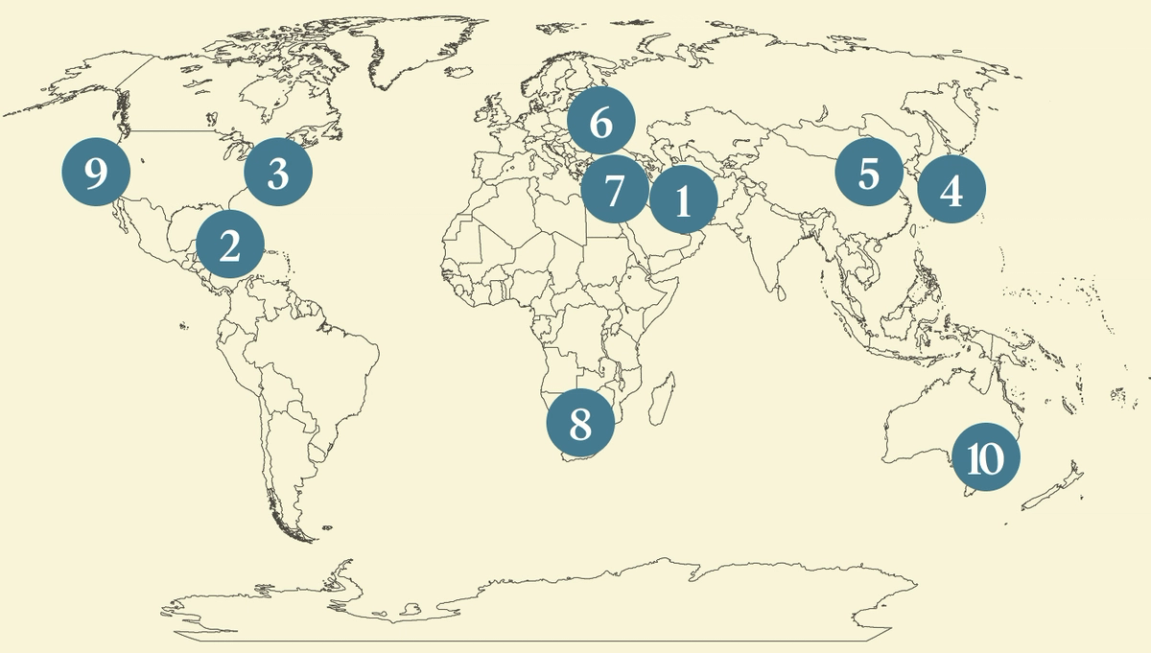 - Trump touts Iran ‘deal’
- Cuba, US officials talk
- Gold, silver plunge further
- Japan’s rare earths plan
- Xiaomi-Ford deal reported
- Russian strikes on Ukraine
- Rafah crossing reopens
- Africa’s economic surge
- Bad Bunny’s Grammy win
- Alcaraz wins in Australia
 The London Review of Substacks, and an ‘elegant yet melancholic’ exhibition of the work of a late Japanese composer and artist. |
|
Trump positive on Iran ‘deal’ |
 Ayatollah Ali Khamenei. Office of the Iranian Supreme Leader/WANA via Reuters Ayatollah Ali Khamenei. Office of the Iranian Supreme Leader/WANA via ReutersUS President Donald Trump’s positive remarks about reaching a “deal” with Iran lowered tensions over a potential American attack on the Islamic Republic. The comments were part of a surge in diplomacy aimed at averting conflict; Qatar’s prime minister visited Tehran, while a senior Iranian official traveled to Moscow. In a sign of confidence that an attack may be off the cards for now, oil prices fell and Gulf stock prices rose. The risks of a US intervention backfiring on Washington are significant: Air defenses for American troops in the Middle East are still being upgraded, and analysts worry that military action against Iran’s regime “could hasten its collapse,” The New York Times noted, “with uncertain consequences.” |
|
Cuba, US officials hold talks |
 A blackout in Havana. Norlys Perez/Reuters A blackout in Havana. Norlys Perez/ReutersPresident Donald Trump said US officials were holding talks with Cuba’s leadership, after he threatened a blockade on the island nation as part of efforts to overthrow the regime in Havana. Having ousted Venezuela’s leader, Trump has stepped up warnings against Cuba, saying the country would be “failing pretty soon” if it didn’t reach a deal with Washington. Cuba has long relied on Venezuelan oil imports, but shipments have ceased since the US captured Venezuela’s president, while the Trump administration has pressured Mexico — another major crude supplier to Havana — to stop its sales, too. Washington has also threatened tariffs on any country that sells oil to Cuba, exacerbating what experts say is the worst economic crisis since independence in 1902. |
|
Gold, silver plunge further |
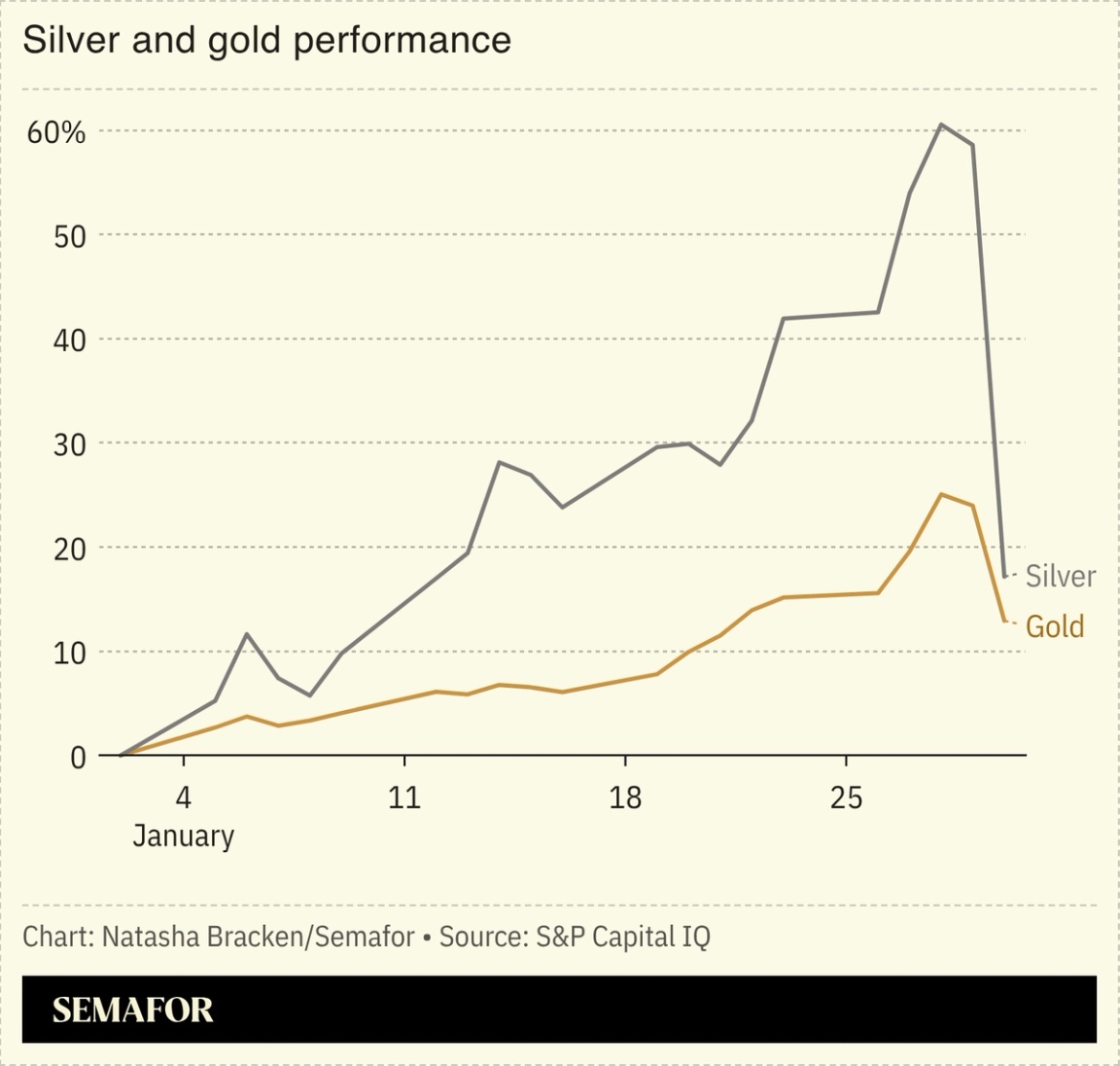 A precious-metals sell-off intensified, driven in part by US President Donald Trump’s seemingly hawkish choice for the next Federal Reserve chair. The selection suggested borrowing costs will stay high, driving gains in the dollar and a rout of gold and silver, which each fell more than 5% after plunging on Friday. “The scale of the unwind… is something I haven’t witnessed since the dark days of the 2008 global financial crisis,” one analyst told Reuters. Still, experts were bullish, arguing that a surge in capital expenditures would drive a longer-term commodity supercycle: “We’re in the foothills of the Himalayas right now,” a Carlyle partner told the Odd Lots podcast. “We’re not even close to the real mountain peaks yet.” |
|
Japan pursues rare earths |
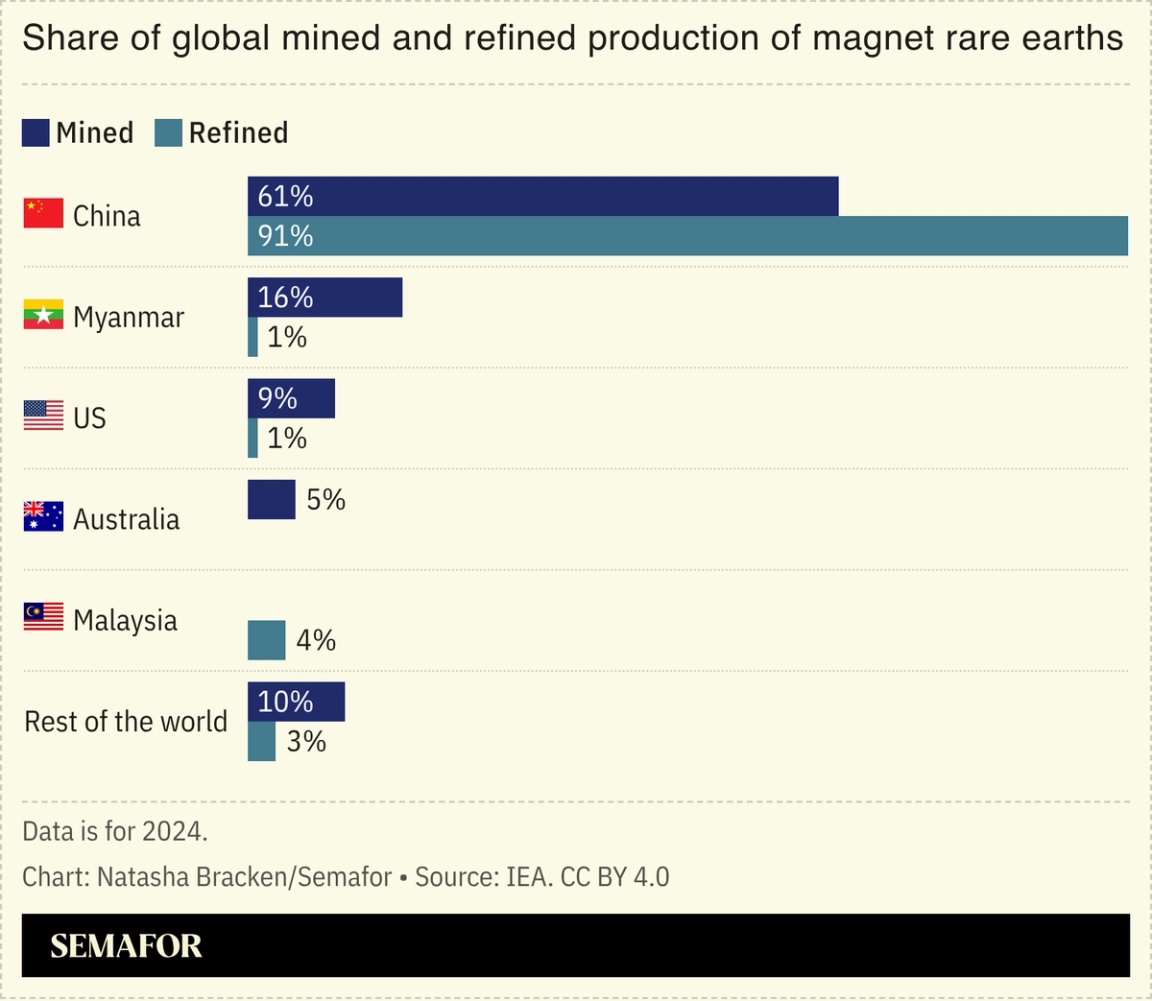 Japan said it would accelerate plans to mine rare earths from the deep ocean, in order to reduce reliance on China. A mining vessel has been placing equipment near a coral island 1,200 miles (1,900 kilometers) from Japan, intended to pull metal-bearing mud from the seabed for tests by early next year, and Tokyo said Monday it had successfully retrieved rare earth sediment. Rare earths are vital for defense and the energy transition, but China accounts for about three-fifths of global mining and 91% of refined output, and, after a recent diplomatic spat, Beijing banned exports of some products to Japan. Advances in technology make them feasible to access on the ocean floor, but mining may damage undersea ecosystems. |
|
Xiaomi reportedly eyes US venture |
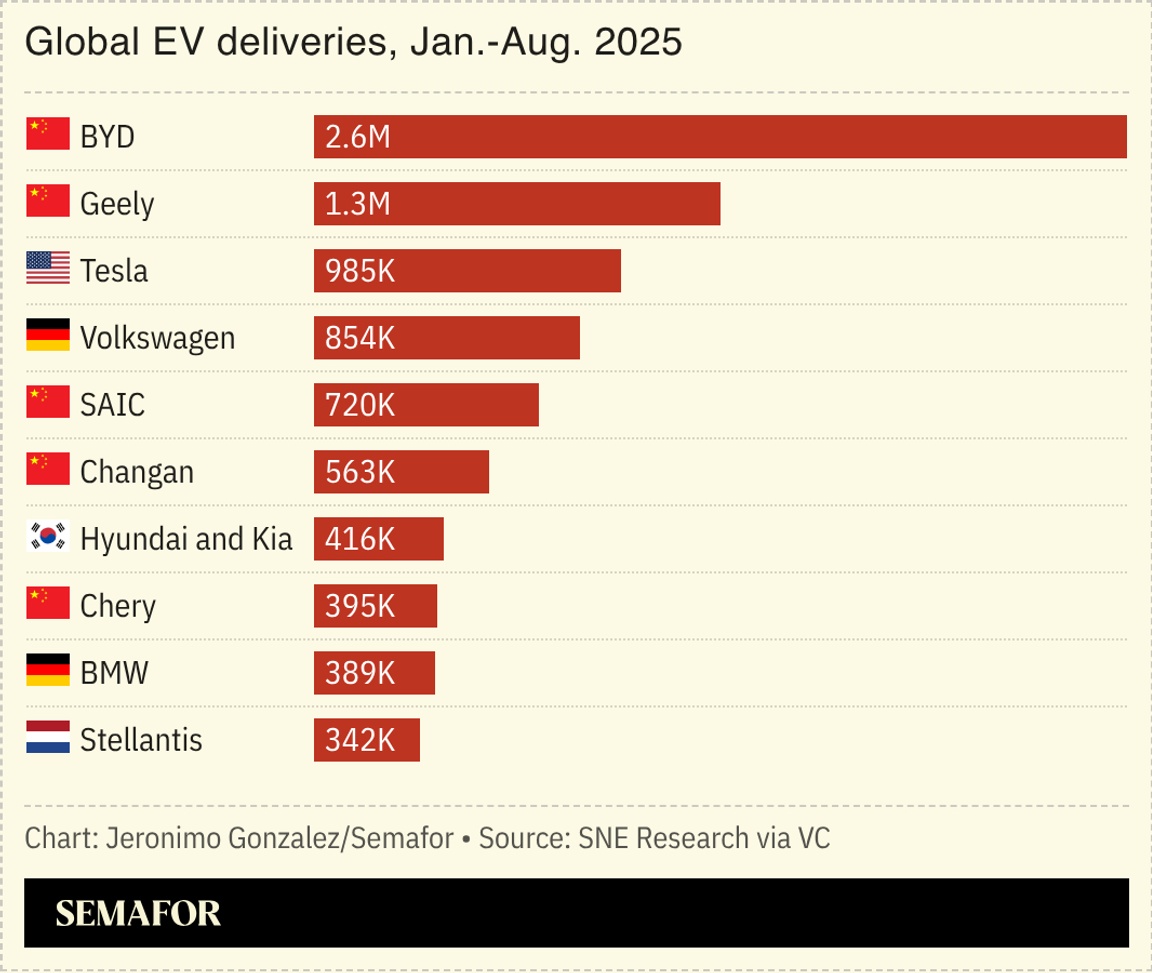 Ford reportedly held talks with Xiaomi about manufacturing the Chinese firm’s electric cars in the US. Former US President Joe Biden in effect banned Chinese vehicle imports by imposing a 100% tariff, and his successor Donald Trump added duties on software and hardware. The collaboration would give Xiaomi — which Washington believes has ties to the Chinese military — a beachhead in the US, allowing restrictions to be bypassed, the Financial Times reported. Ford and Xiaomi denied talks took place. Ford’s CEO admires Chinese EVs and has said they pose an “existential threat” to Western carmakers, although China’s manufacturers have their own struggles: BYD saw sales drop for a fifth consecutive month as domestic demand collapsed. |
|
Russia’s deadly Ukraine strikes |
 Valentyn Ogirenko/Reuters Valentyn Ogirenko/ReutersRussia carried out deadly strikes in Ukraine overnight, despite US President Donald Trump saying Moscow had agreed to halt attacks during an ongoing period of cold weather. A drone killed 12 mine workers on a bus, while a separate attack hit a maternity hospital, injuring six. Temperatures are forecast to hit -20°C (-4°F) this week; Russian attacks on energy infrastructure have left millions without power or heating. Trump said Russian President Vladimir Putin had agreed to an aerial ceasefire, but the Kremlin never confirmed the move. Peace talks between Russia, Ukraine, and the US are to continue in the UAE this week, but Kyiv is unlikely to agree to Moscow’s demand for additional territorial concessions. |
|
Gaza’s Rafah crossing reopens |
 An aerial view of trucks lining up outside Gaza. Vantor/Handout via Reuters An aerial view of trucks lining up outside Gaza. Vantor/Handout via ReutersIsrael reopened the Rafah crossing linking Gaza to Egypt to some pedestrian traffic. The crossing has been largely closed since May 2024, when Israeli forces captured the Palestinian side, and its reopening is part of a ceasefire between Israel and Hamas. But it still cannot be used to bring aid in, and though humanitarian support has increased via crossings from Israel, such assistance remains insufficient for the territory’s undernourished population. A recently published US diplomatic memo from 2024 describes northern Gaza as an “apocalyptic wasteland,” and suggests any reconstruction will take decades, Reuters reported. The Hamas-run health ministry estimates that 71,000 people have died, a figure Israeli military sources have privately accepted, according to The Times of Israel. |
|
African growth set to outpace Asia’s |
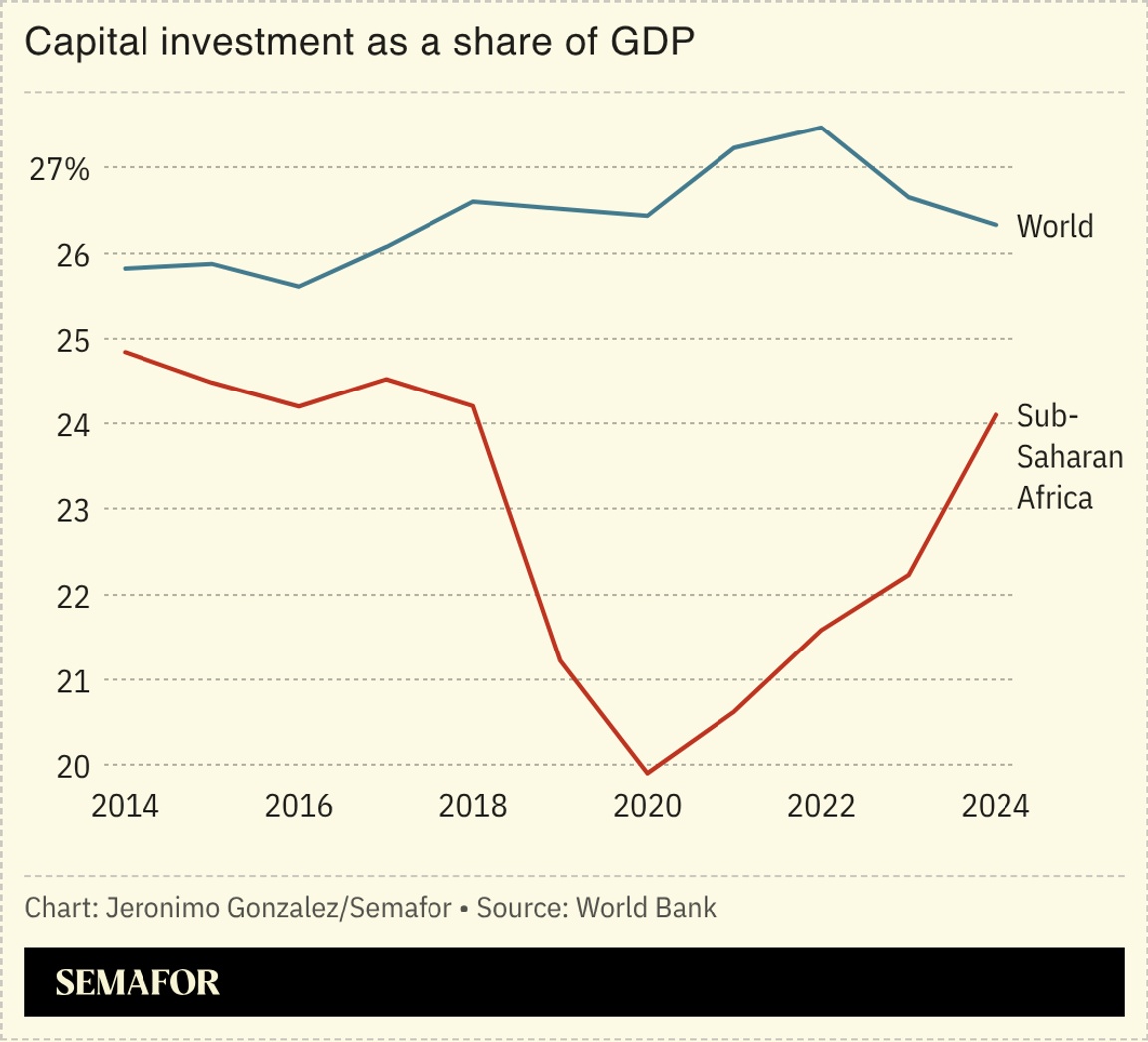 Africa’s economic growth this year is forecast to outpace Asia’s for the first time, according to the International Monetary Fund, though experts warned that Africa needs major investment. The continent’s economics prospects have been buoyed by its demographics: It’s home to the planet’s youngest population, and is forecast to account for a quarter of the world’s people by 2050. However, the region will have to invest heavily in education and create hundreds of millions of formal jobs to meet its potential, the head of the French Development Agency told RFI. African policymakers say a mispricing of risk on the continent means they’ll struggle to meet their economies’ capital needs, Semafor Africa’s editor wrote. |
|
Bad Bunny honors immigrants |
 Bad Bunny. Daniel Cole/Reuters Bad Bunny. Daniel Cole/ReutersBad Bunny won the album of the year Grammy for DeBÍ TiRAR MáS FOToS, the first non-English language record to win the award. The 31-year-old Puerto Rican star — who will perform at Sunday’s Super Bowl halftime show — said his win was dedicated to immigrants, matching the tone of the event, during which numerous artists criticized the US campaign against undocumented migrants. The artist is set to soon resume a global tour, one that will skip the US because he has said he does not want his fans to be at risk of immigration raids. “I want to dedicate this award to all the people that had to leave their homeland, their country, to follow their dreams,” Bad Bunny said. |
|
Alcaraz makes history in Australia |
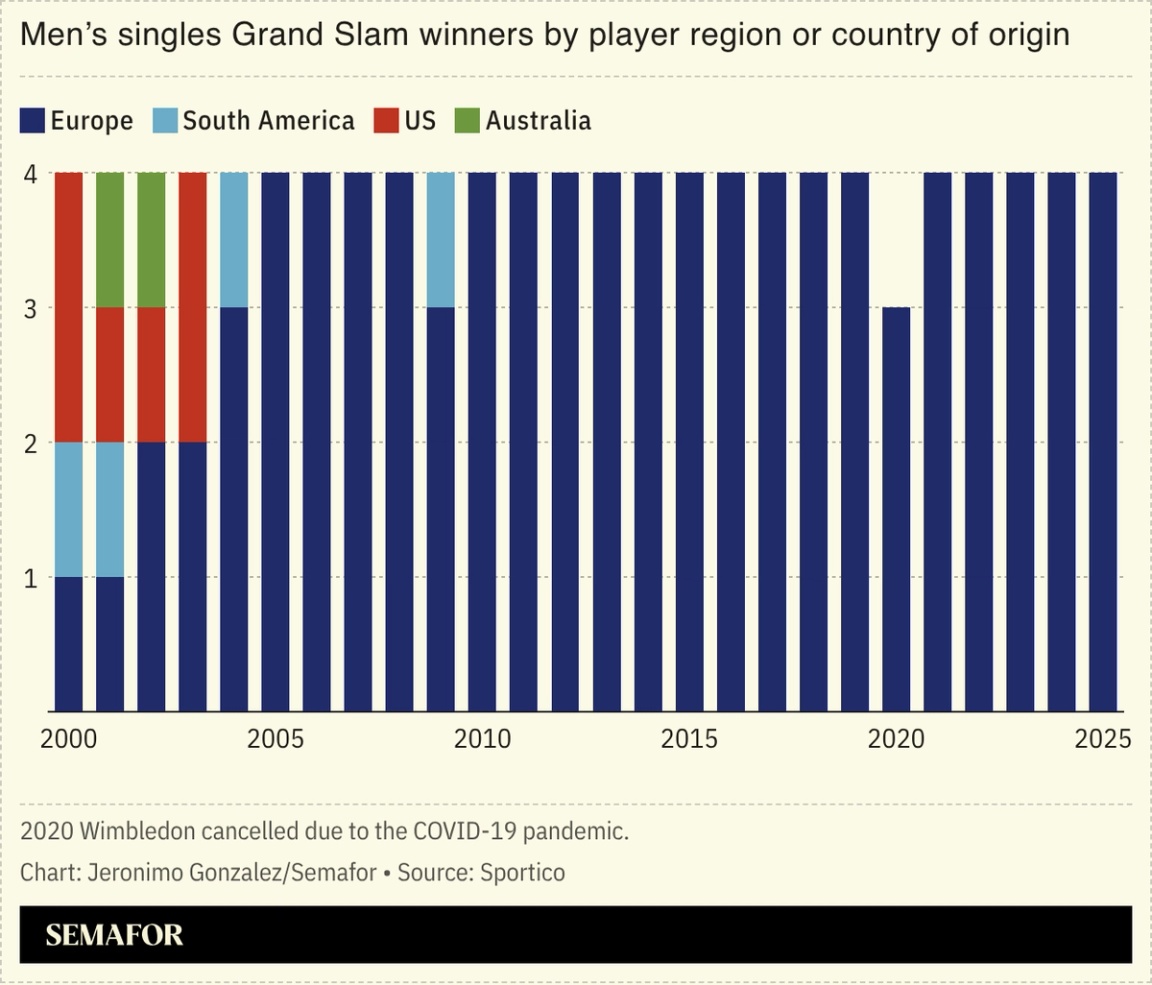 Carlos Alcaraz’s win at the Australian Open made him, at 22, the youngest man to complete a career tennis Grand Slam. He beat Novak Djokovic in four sets in Melbourne, putting him at seven Slams, and cementing a generational changing of the guard. Djokovic and Roger Federer — who dominated global tennis for years — did not achieve wins at all four majors until they were 29 and 27 respectively, both hindered by Rafael Nadal’s extraordinary dominance on clay. Alcaraz, a Spaniard, is continuing Europe’s tennis dominance: The last non-European man to win a Slam was Argentina’s Juan Martín del Potro in 2009. |
|
|


