|
The National Oceanic and Atmospheric Administration (NOAA) formed the National Centers for Coastal Ocean Science (NCCOS) in 1999 as the focal point for NOAA’s coastal ocean science efforts. We provide coastal managers with the scientific information necessary to decide how best to protect environmental resources and public health, preserve valued habitats, and improve the way communities interact with coastal ecosystems.
$15.2 Million Awarded for Harmful Algal Bloom and Hypoxia Research
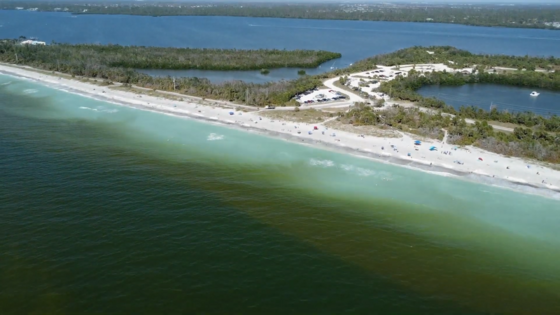
NCCOS’ Competitive Research Program has awarded $15.2 million in funding to support harmful algal bloom (HAB) and hypoxia research. The funding supports projects to advance detection, monitoring, forecasting, control, and mitigation efforts across the nation. Continue reading
New Study Calculates Sargassum's Multi-Million Dollar Hit to US Coastal Economies
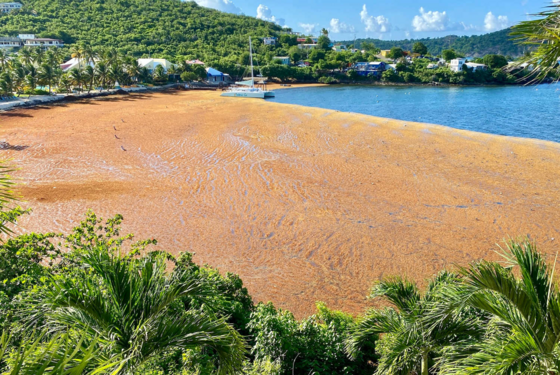
A recently published article quantifies the economic damage caused by recurring sargassum seaweed events across the coasts of Puerto Rico, the U.S. Virgin Islands (USVI), and coastal Florida. NCCOS’ Competitive Research Program–funded research is timely: although the ecological and public health impacts of sargassum inundation events (SIEs) are well documented, the direct financial toll on state and local governments, and the private sector has not been thoroughly quantified for these key U.S. territories and states. Continue reading
Findings Published from Second Round of Coral Reef Socioeconomic Monitoring in Northern Mariana Islands
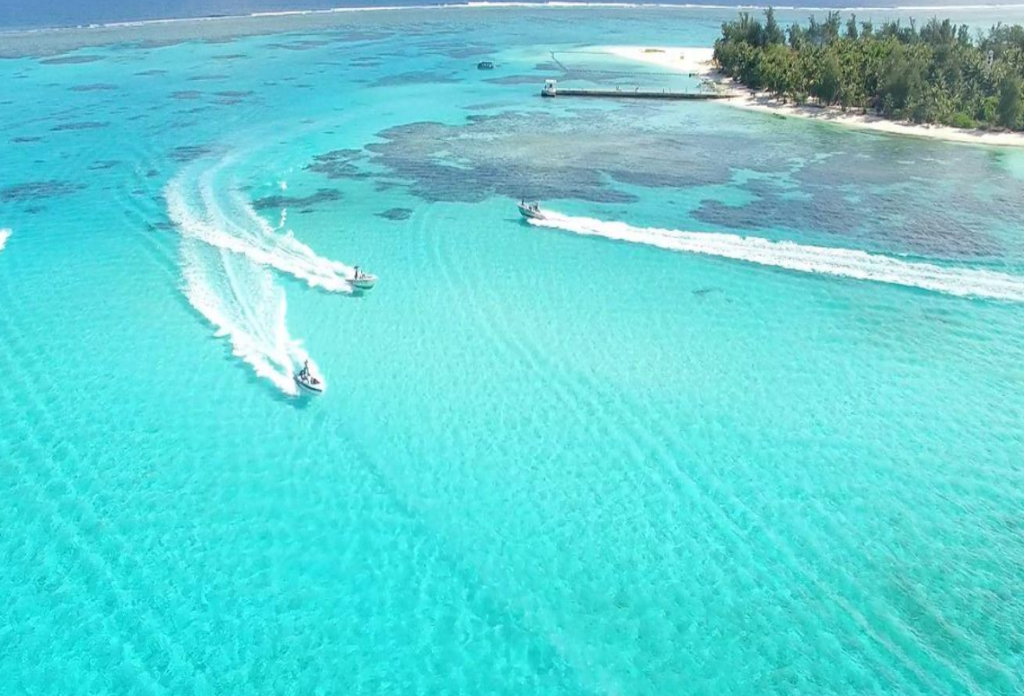
The socioeconomic component of NOAA’s National Coral Reef Monitoring Program (NCRMP) monitors human use of coral reef resources, knowledge, attitudes, and perceptions of coral reefs and coral reef management, and demographics of the populations living in coral reef areas. Monitoring is conducted across seven U.S. coral jurisdictions on a rotating basis. The NCRMP socioeconomic team has published their most recent report, which presents primary data collected for the second socioeconomic monitoring cycle in the Commonwealth of the Northern Mariana Islands (CNMI). The household survey was conducted in person from February to March 2024. The first monitoring cycle was completed in 2016. Continue reading
2025 Lake Erie Harmful Algal Bloom Seasonal Assessment
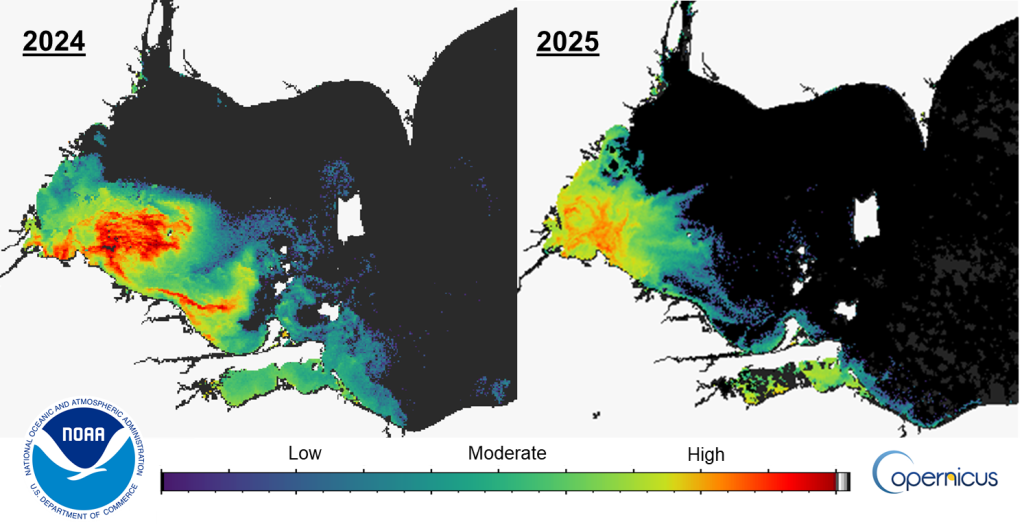
The 2025 western Lake Erie cyanobacterial bloom had a severity index (SI) of 2.4, which is considered a mild bloom, and less intense than 2024 (SI of 4.2). The SI captures the amount of biomass over the peak 30-days of the bloom, calculated using satellite imagery (determined from three 10-day composites with the maximum amount of biomass). Continue reading
Study Quantifies Water Cleaning Capacity of South Carolina's Farmed Oysters (VIDEO)
As coastal populations continue to grow, so too do the pressures on our waterways.
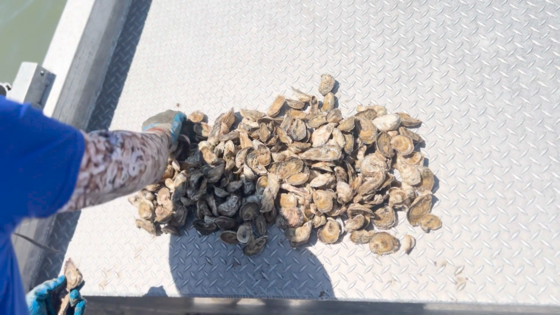
Rivers and streams carry nitrogen from fertilizers and stormwater runoff right into estuaries. In excess, this nutrient can fuel large algal blooms that suck oxygen out of the water, killing fish and other aquatic life. But nature has a solution — oysters!
Continue reading
New Model Enables Rapid Flood Prediction in Miami to Support Risk Management
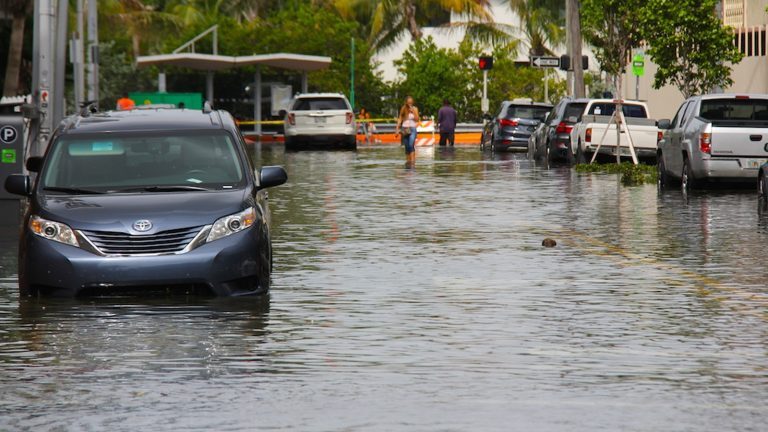
An NCCOS-supported research team developed a new model to rapidly simulate flood patterns in Miami, Florida, and better manage storm hazards. The model introduces a novel approach to represent the infiltration of rainwater into the ground, improving flood predictions by tracking changes in the height of the groundwater table during storms. Continue reading
The Log Book: Where Are They and How Did They Get Here? Investigating PFAS in Alaskan Salmon and Rainbow Trout
While Baranof Island’s hungry brown bears were fishing for salmon and bulking up on fat reserves to prepare for the Alaskan winter, NOAA NCCOS and NOAA Fisheries researchers sought out salmon for a different reason: to sample for per- and polyfluoroalkyl substances (PFAS). Continue reading
From Santa Barbara to the Gulf: Scientists Synthesize Decades of Data to Protect a Changing Texas Coast
Trapped inside on a cool, sunny day in Santa Barbara, California, a group of scientists are deep in discussion. It’s November 2023, and the group is at the National Center for Ecological Analysis and Synthesis (NCEAS), a synthesis center in the U.S. that has supported hundreds of scientific synthesis working groups like this one. Continue reading
|