|
|
|
|
Good morning. Competition continues to heat up in the rapidly growing business of weight loss, as drugmakers race to grab a share of the generic Ozempic market. We’ll be exploring this and much more in our new series, launching today, called Skinny Inc. – that’s in focus this Friday, along with a widening trade balance. |
|
|
|
|
|
|
|
|
|
|
|
|
|
|
|
|
Labour: Uber is pushing back against Halifax over proposed rules that would allow the city to control how rideshare drivers are licensed |
|
|
|
|
Court: MDA Space is facing a proposed class-action lawsuit over executive trades that took place before the loss of a major contract last summer |
|
|
|
|
World: Canadian miner Vizsla Silver says 10 workers have been abducted from its mining site in Mexico |
|
|
|
|
|
|
|
|
|
|
|
|
|
|
|
A custom-designed production line in Lake Como, Italy, is shown in the final stages of acceptance testing last fall before being shipped to Edmonton. Alberto Bernasconi/The Globe and Mail
|
|
|
|
|
|
|
|
|
|
|
|
|
|
|
|
|
Hi, I’m Chris Hannay, and I write about the business of health care for The Globe. |
|
|
|
|
On an earnings call last August, Richard Saynor, the chief executive officer of Swiss generics giant Sandoz Group AG, was asked about the company’s plans for making obesity drugs. |
|
|
|
|
|
|
|
|
“I think the first Capital Markets Day, we didn’t even talk about GLP-1s,” Saynor said, referring to the class of drugs that includes Ozempic and Mounjaro. |
|
|
|
|
“I think now, every meeting, I have I talk about GLP-1s,” he added. |
|
|
|
|
And where in the world is Sandoz hoping to launch their generic GLP-1 first? |
|
|
|
|
|
|
|
|
|
|
Earlier this month, Canada became the first major market where it is legal to sell generic semaglutide, the active ingredient in Ozempic and Wegovy – the diabetes and weight-loss drugs from Danish drug maker Novo Nordisk that have taken the world by storm. |
|
|
|
|
|
|
|
|
|
Pharmacist Khalid Bhatti, of Durham Care Clinic and Pharmacy in Oshawa, Ont., and his staff specialize in helping patients who need treatment for diabetes and obesity. EDUARDO LIMA/The Globe and Mail
|
|
|
|
|
Six companies have so far applied to Health Canada to sell generic semaglutide here. None have so far been approved, but companies say they expect the first approved products to start rolling out by the summer. |
|
|
|
|
These pharmaceutical companies believe this will be a huge opportunity. And they are not the only ones. Pharmacies are rolling out new services for patients interested in GLP-1s, such as at Shoppers Drug Mart, owned by Loblaw Companies Ltd. The company recently launched its first centrally managed virtual care program where customers can receive and fill prescriptions for drugs such as Ozempic. |
|
|
|
|
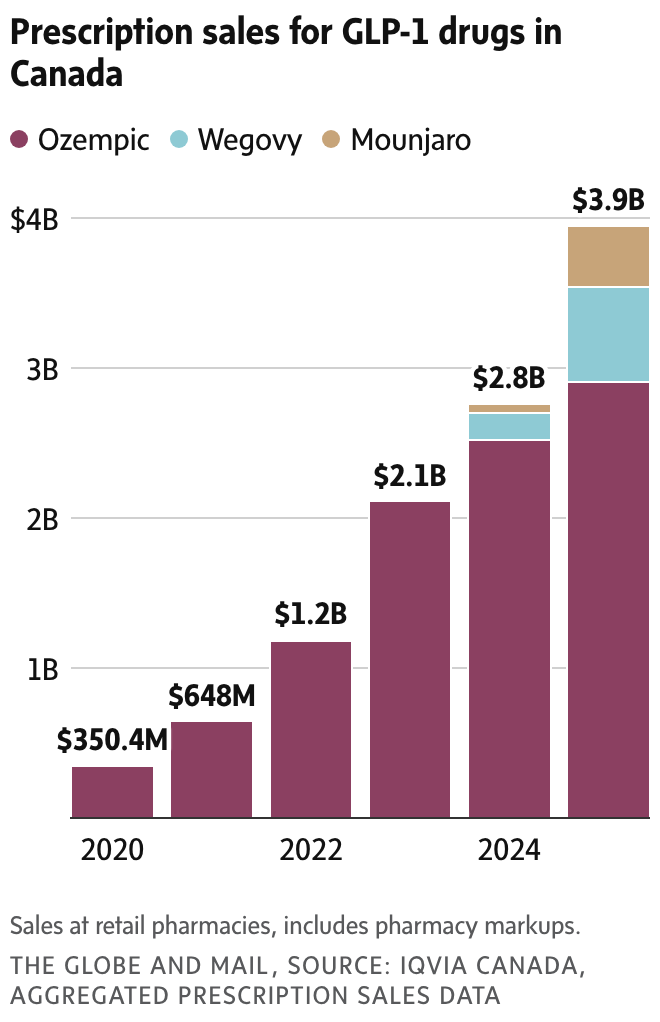
One look at the sales data can tell you why: Nearly $4-billion worth of GLP-1 drugs (Ozempic, Wegovy, Mounjaro and Zepbound) were sold in 2025, according to aggregated prescription data from IQVIA Canada. That’s up 31 per cent from 2024, and nearly double the 2023 sales. |
|
|
|
|
|
|
The demand is expected to continue going up when generics enter the picture because their prices will be lower, thereby widening the pool of Canadians who can afford to take the drugs. |
|
|
|
|
|
|
|
|
|
|
It explores the business, medical and cultural ramifications of this widely taken class of drugs, and what will happen this year as generics come on the market. We go into more detail on the series in today’s morning update newsletter. |
|
|
|
|
Today we also published a wonderful companion piece by my colleague Kelly Grant, who digs deeper into the stories of patients and medical experts on how these drugs do (and sometimes don’t) work. |
|
|
|
|
|
|
|
|
|
|
|
|
|
|
|
|
|
|
|
|
|
|
|
|
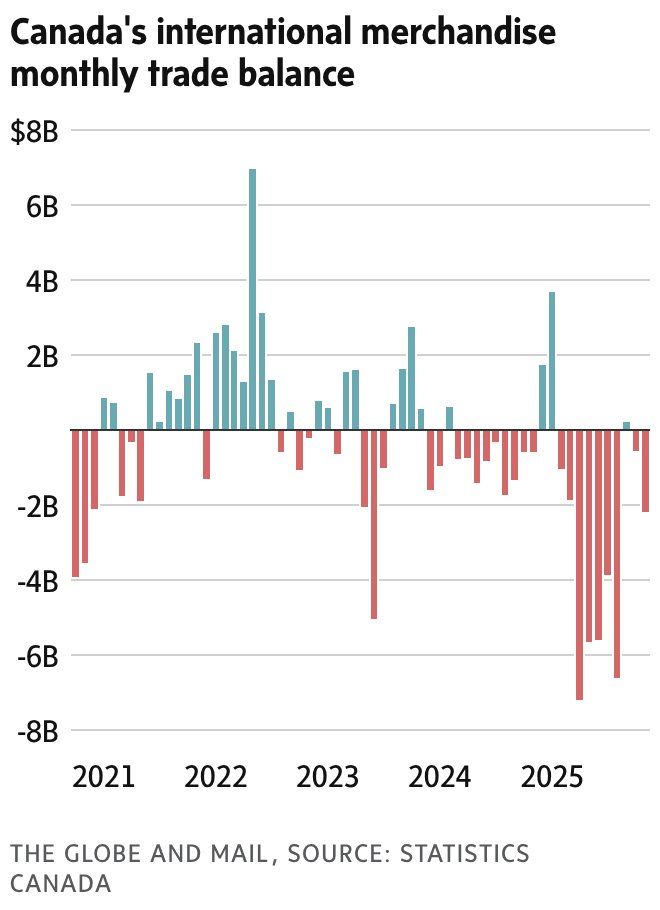
Canada’s trade deficit widened in November as gold shipments plunged and exports of automobiles and parts hit a three-year low. Trade with the United States continued to slide, while there were some signs that Canada’s diversification push is gaining traction. Economics reporter Mark Rendell writes more about the gap. |
|
|
|
|
|
|
|
|