Dreaming of moving to Europe but not sure if you can afford it? The Economist’s European Carrie Bradshaw Index — named after the solo-living protagonist in “Sex and the City” — can help determine where a median wage earner can afford a one-bedroom flat. We mapped 39 European cities, only eight of which passed the affordability test, with Bonn, Germany, being the most affordable and Istanbul, Turkey, the least affordable. See how the other cities stacked up.
Stocks wavered on Wednesday as investors awaited the barrage of postmarket earnings from Big Tech (more on that below). The S&P 500 finished flat after briefly crossing the 7,000 milestone for the first time ever. Tech was the best-performing sector ETF, powering the Nasdaq 100 higher, while the Russell 2000 dropped. The Federal Reserve held its policy rate at a range of 3.5% to 3.75% at its January meeting, as expected.
|
|
|
Three stalwart members of the Magnificent 7 reported earnings last night, and while it was beats all around, the market reaction showed that capital expenditure on the AI race is still certainly on investors’ minds. First, the numbers: |
But what does it all mean? Well, let’s look under the hood here. |
-
Over at Microsoft, capital expenditure for the quarter was $37.5 billion, up 66% year on year and ahead of analysts’ consensus forecast of $36.6 billion.
-
Meta’s capex outlook for 2026 is $115 billion to $135 billion, exceeding the $110.6 billion estimate from analysts. Full-year estimated expenses of $162 billion to $169 billion are also much more than the consensus call for $151 billion.
-
Tesla’s capital expenditures will increase substantially this year, exceeding $20B, well above analysts’ expectations of $11B, as the company invests in new factories and AI infrastructure. Tesla also revealed it’s invested $2 billion in xAI.
|
|
|
For the first time, Tesla released the number of Full Self-Driving subscriptions, saying it had 1.1 million active subs, up from 0.8 million in the same quarter last year. That’s just above 12% of cumulative Tesla deliveries, similar to what Tesla disclosed last year. |
Hyperscalers have been boosting their capital spending as they pour money into the data centers required to fuel their AI ambitions.
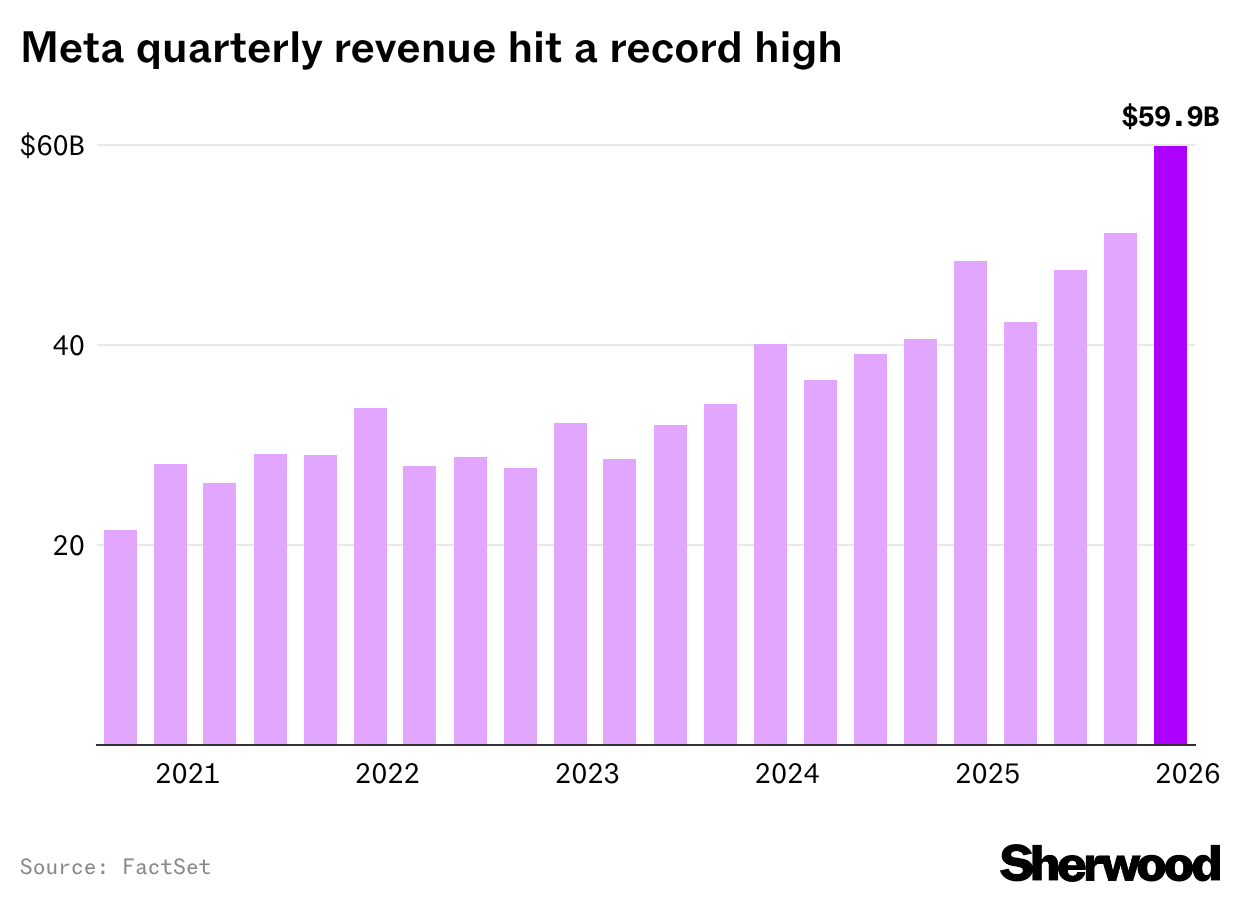
Meta’s capex had been growing faster than its revenue, something that has been raising investor scrutiny more than it has for the tech giant’s peers, which have cloud business revenue to more directly offset their spending on AI. But this time, it was Microsoft’s ballooning capex that worried investors, while Meta’s record revenue washed away investors’ fears — for now.
|
|
| The view that changes everything. |
When you can see the wall of orders waiting at $75, or the thin support below current prices, you're not just trading—you're strategizing. That's the TotalView advantage.
Nasdaq TotalView displays the full open order book depth on Nasdaq, including every single quote and order at every price level for all U.S. securities trading on Nasdaq. Identify support and resistance levels in real-time and make decisions with institutional-grade insights, the same data that professional traders rely on to anticipate price movements.
While most retail investors rely on top-line info, you'll have a full view of what's building beneath the surface before it impacts price. Open your trading eyes with Nasdaq TotalView. |
|
|
As the AI boom rumbles into its fourth year of dominating the market, retail traders, professional investors, and Wall Street analysts alike have largely settled on a simple strategy for catching the next wave of gains: find an emerging bottleneck in the build-out of massive data centers that power AI. Then buy lots of it. |
|
|
|