europe
Why is the U.K. such an outlier on newborn screening?
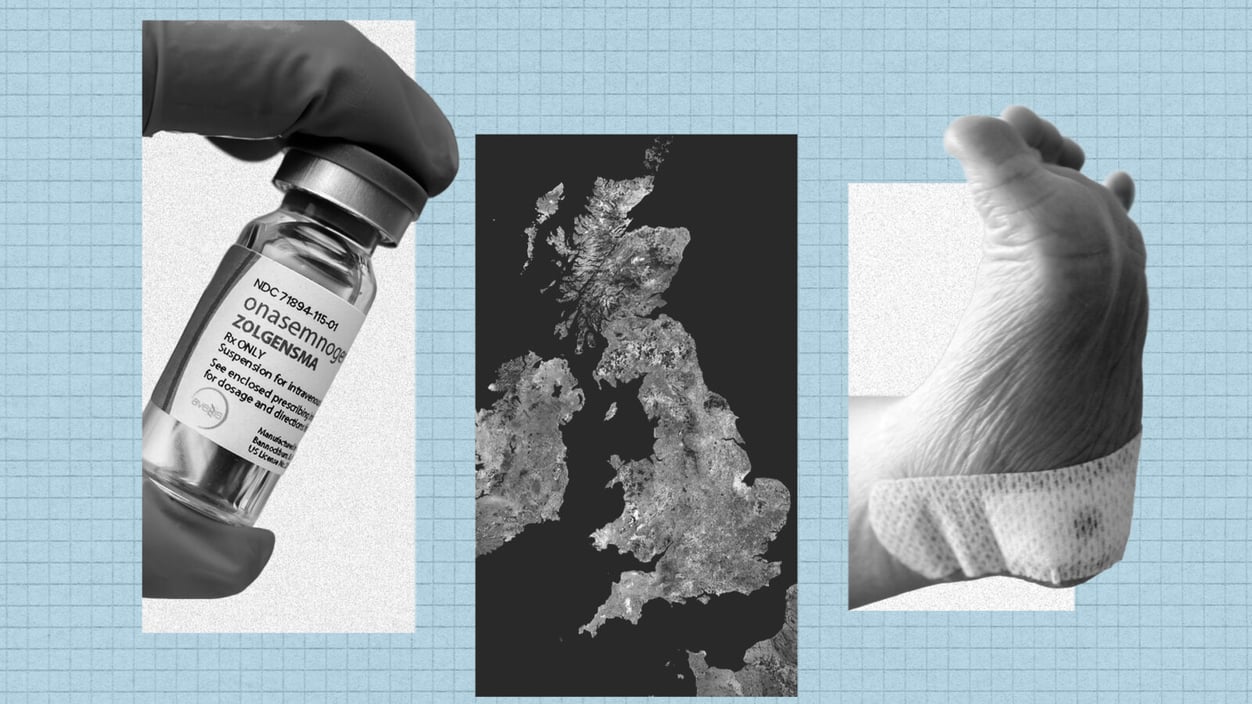
Illustration: Camille MacMillin/STAT; Photos: Adobe
In the U.K., like many other countries, babies have a few drops of blood taken soon after they’re born to be tested for a number of conditions. The idea is to identify and start treating diseases before they can cause harm. But unlike other countries, the U.K. tests babies for only 10 diseases. In the U.S., federal authorities recommend screening for three dozen conditions, having added two more to the list just last month. The U.K. has added one condition in the past decade.
“As a clinician you feel so sad when you diagnose the next baby with SMA. You think, your life could have been so different if I had met you six months before,” Sithara Ramdas, a pediatric neurologist, said about spinal muscular atrophy, a rare disease that erodes muscle cells. A number of new therapies, when given early enough, can help kids with SMA. But the U.K. doesn’t screen for it.
Read more from STAT’s Andrew Joseph about why the U.K.’s process moves so slowly, and how advocacy from a celebrity has amped up the pressure to reconsider the current strategy.
one big number
1.63 million
That’s how many excess deaths there were among Black people compared to white people in the U.S. between 1999 and 2020. While the weathering hypothesis posits that increased levels of stress from discrimination lead to specific health consequences like inflammation, little data has directly connected stress and inflammation to mortality rates.
Now, a new study sheds some light on the theory. A study published yesterday in JAMA Network Open analyzed survey data and blood samples from more than 1,500 people in the St. Louis area and found that higher cumulative levels of stress across the lifespan and inflammation accounted for about half (49%) of the increased mortality risk among Black people in the study population. The findings align with the weathering hypothesis, the authors write, but more research is needed on additional factors that may contribute to the remaining proportion of excess deaths.