Hi! Netflix is reportedly considering making its $83 billion Warner Bros. offer all cash, per Bloomberg — for context, were that literally paid as physical one dollar bills, it would weigh roughly the same as the Washington Monument. Today we’re exploring: |
- Closing out: Diageo may sell off parts of its China business as the nation’s alcohol consumption declines.
- Plane selling: Boeing overtook Airbus on aircraft orders for the first time in seven years.
- Residin’ solo: A viral app has put a spotlight on the rising number of people living alone.
|
Have feedback for us? Just hit reply - we'd love to hear from you! |
Diageo is considering selling parts of its struggling China business |
According to recent Bloomberg reporting, Diageo — the beverage behemoth that counts Guinness, Johnnie Walker whisky, Don Julio tequila, and more in its expansive drinks cabinet — is mulling the options for its assets in China, including potentially selling them off. |
The rumored move comes roughly two weeks into the tenure of new CEO Sir David Lewis, known colloquially by the British press as “Drastic Dave,” owing to his severe turnaround efforts in executive positions at companies like Unilever. Under Lewis’ leadership, Diageo is looking to trim its global portfolio. China, a market that the drinks maker pointed to for dragging down net sales by around 2.5% in its first quarter of FY26, seems like quite a sensible place to start.
The fact that nationals don’t seem to be drinking nearly as much as they did 10 years ago probably hasn’t helped Diageo’s China plight, either. |
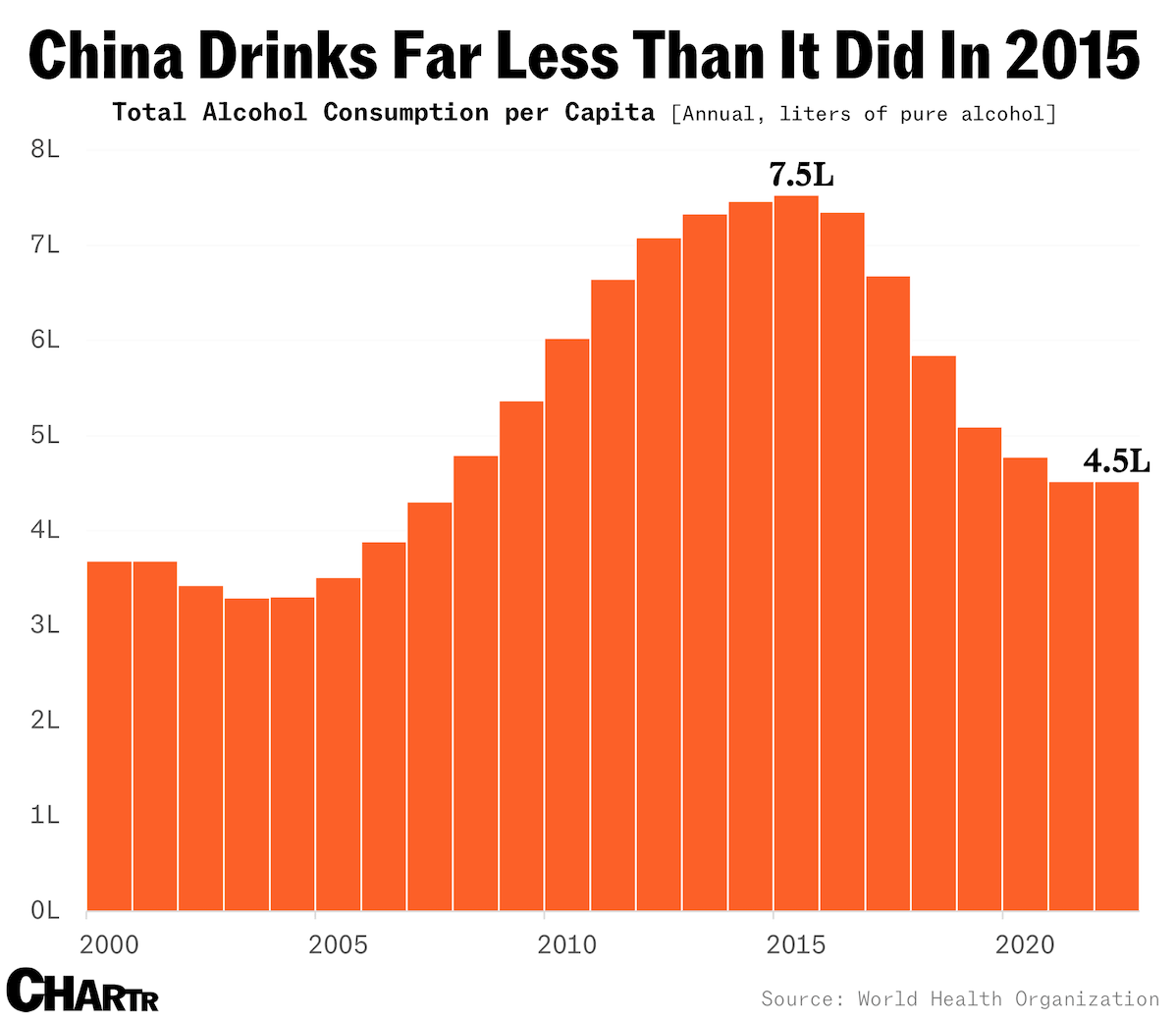
Though Diageo specifically singled out declining consumption of Chinese white spirit, or Baijiu, the country’s 5,000-year-old national alcoholic beverage, to explain slumping sales in the region, China’s alcohol consumption rates more broadly have slipped in recent years. Per figures from the World Health Organization, the average Chinese person aged 15 or older drank the equivalent of 7.53 liters of pure alcohol in 2015; in 2022, the latest year the health body has numbers for, that consumption rate had shrunk to just 4.52 liters.
One recent study of China’s drinking drop-off picked out public health campaigns, stricter taxes and market regulations, shifting demographics, and more stringent government policies — just last summer the state cracked down on government workers buying drinks at official engagements as part of a wider “anti-extravagance” movement — as key contributors to the national decline.
|
|
|
Boeing overtook Airbus on aircraft orders in 2025 after years of turmoil |
For the first time in seven years, Boeing is finally back on top in the plane-making industry, at least in terms of orders, after years of production disruptions and safety crises.
The Seattle-based company racked up 1,173 net aircraft orders in 2025, beating its European competitor Airbus’ 889 orders and reclaiming the sales crown for the first time since 2018.
The surge was driven by a string of airline deals, often announced alongside government-led trade negotiations — including the company’s largest-ever order from Qatar Airways, which was revealed during President Trump’s Middle East tour.
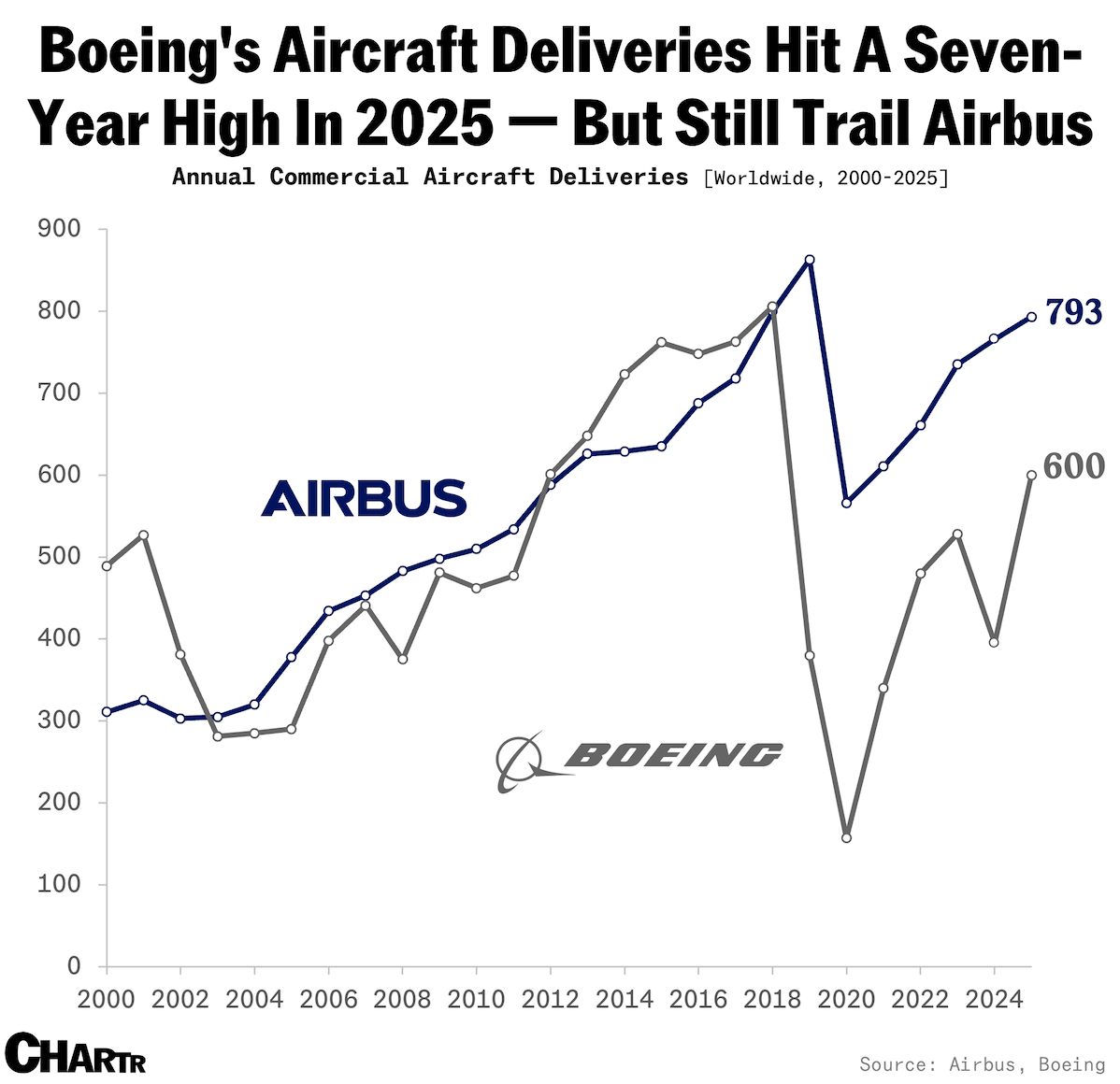
Boeing’s aircraft deliveries — often the more important metric for plane makers, given that they receive most of the payment for the jet upon handover — also climbed to their highest annual total since 2018, having delivered 600 planes last year. Still, that figure lags Airbus’ 793 deliveries, as industry-wide engine shortages continued to delay output and added to Boeing’s lingering issues.
|
Since 2018, the Boeing business has endured years of turbulence following two fatal crashes involving its flagship 737 Max aircraft, as well as a high-profile incident where a door blew off an Alaska Airlines 737 Max 9 mid-flight in early 2024. Those setbacks were succeeded by tighter production limits and a seven-week labor strike that further disrupted output.
Under CEO Kelly Ortberg, Boeing has since focused on stabilizing production and labor relations while strengthening its balance sheet. In late 2025, the FAA eased restrictions on the company, raising caps on 737 Max production.
And the momentum has carried into this year: just last week, Boeing announced a 110-plane order from Alaska Airlines, the largest in the airline’s history, while Delta has also made an order for at least 30 Dreamliners, with those deliveries set to start in the early 2030s.
|
More Americans are living alone than ever before |
On Monday, the viral app “Sile Me” (which roughly translates from Mandarin as a very literal “Are You Dead?”) became China’s most popular paid Apple App Store download. The app offers just one function: a button that users can press to confirm that they’re alive. If they fail to do so for two consecutive days, the app will reach out to an emergency contact.
|
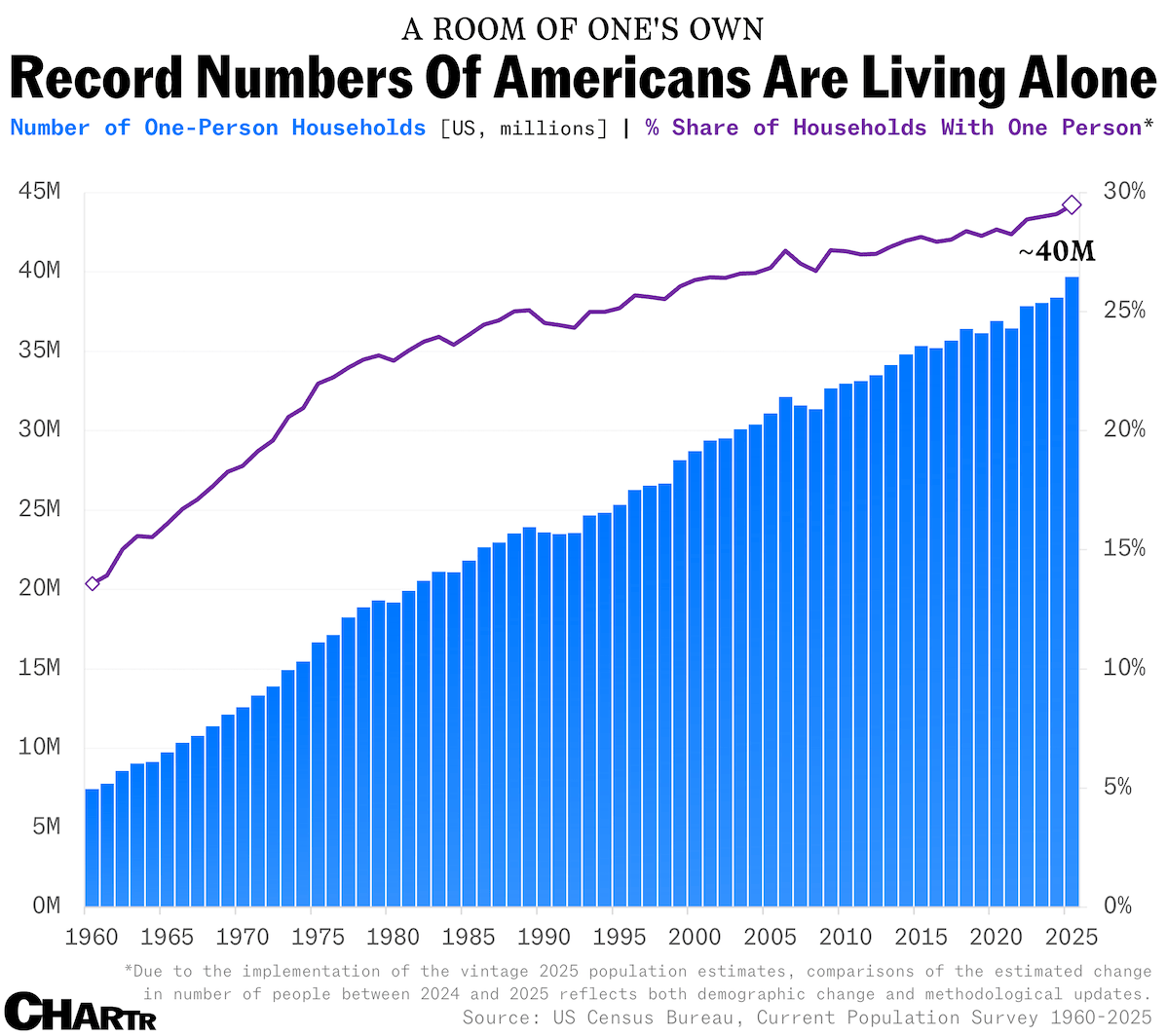
The app’s sudden popularity puts a spotlight on the growing cohort of solo dwellers in the Eastern nation. Research suggests that there could be as many as 200 million one-person households in China by 2030 — and while a rapidly aging population explains some of that rise, younger people now also appear to be embracing living alone. In America, it’s no different. Data from the Census Bureau’s Current Population Survey for 2025 reveals that the number of one-person households in the US is edging close to a record 40 million, with the share of American households made up of just one person hitting an all-time high of 29%. |
This includes an estimated ~1.3 million extra one-person households in 2025 compared with the prior year, though the Bureau noted that this may be reflective of methodological updates. Even so, the significant rise over the last decade indicates a broader societal shift that’s been playing out around the globe.
Like China, the surge in US solo dwellings is also being driven at the older end of the demographic spectrum: America’s population aged 65 and older, statistically the most likely cohort to live alone, is expected to keep booming. |
|
|
-
Some good news: The 5-year survival rate for Americans with cancer has hit a record-high 70%, according to new data from the American Cancer Society.
-
Zoe Saldaña, who’s starred in the three top-grossing movies ever made, is now the highest-grossing actor in history, with her role in “Avatar 3” taking her global haul to around $15.5 billion.
-
According to a new Indeed report, 7 of the top 10 US jobs in 2026 — based on wage growth, job postings, and salary — are in the healthcare industry.
-
Sore point: Tennis player Sebastian Ofner missed out on qualifying for the Australian Open after mistakenly celebrating at 7-1 up in the final set, before going on to lose 13-11.
-
OpenAI is set to air a minute-long ad at the Super Bowl — known for being one of the most expensive TV commercial slots — for a second consecutive year, per the Wall Street Journal.
|
|
|
-
Definitely maybe: Charting the subjectivity of uncertain language.
-
Our World in Data explored how putting solar panels on land used for biofuels could power the world’s EV fleet.
|
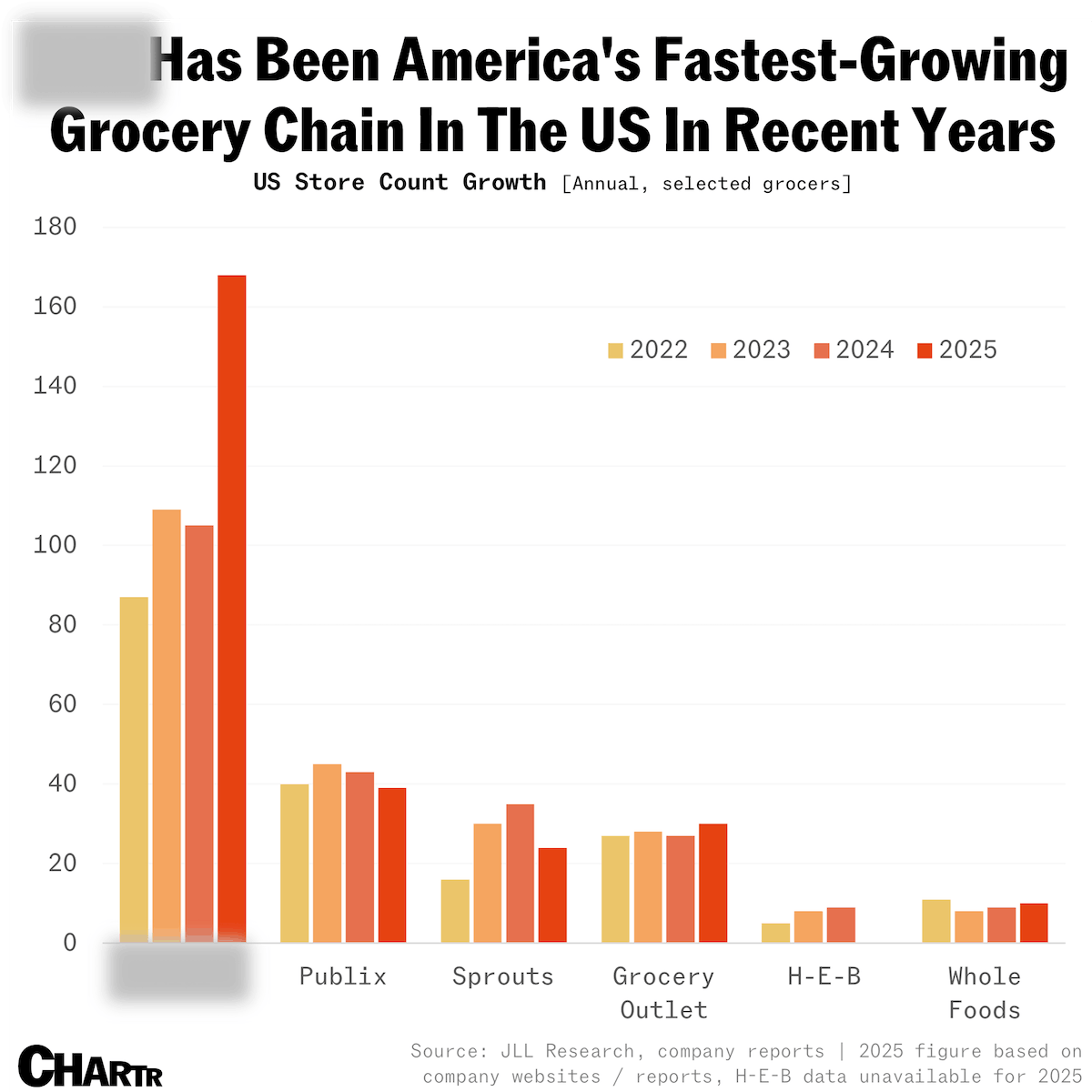
Off the charts: Which budget chain has become the fastest-growing grocer in the US by store count over the last few years? [Answer below]. |
Not a subscriber? Sign up for free below. |
Sherwood Media, LLC produces fresh and unique perspectives on topical financial news and is a fully owned subsidiary of Robinhood Markets, Inc., and any views expressed here do not necessarily reflect the views of any other Robinhood affiliate... See more |
|
|
SHERWOOD MEDIA, LLC, 85 Willow Road, Menlo Park, CA 94025 |
|
|
|