|
Dear all,
Please find below your weekly update from the UK Health Security Agency (UKHSA).
If you have any questions please get in touch by emailing externalaffairs@ukhsa.gov.uk
As always, you can also follow UKHSA on X, on Instagram, on BlueSky, and on LinkedIn for all the latest updates. You can also find the latest news from UKHSA on our news page on GOV.UK.
Best wishes,
UKHSA External Affairs Team
New and updated stories
- Winter infection surveillance - flu levels ‘stubbornly stable’ in older age groups despite overall decline
- Winter vaccines still available for those eligible
- Norovirus - remains within expected levels
- UKHSA Conference 2026 – new website now live
- Blog: Back to school - 5 things you can do help manage winter illness
- Blog: What are the symptoms of adenovirus and how does it spread?
- January is Cervical Cancer Awareness Month
- Inclusion health data and intelligence resource
- New research highlights indoor air quality knowledge gaps and calls for coordinated monitoring
- Tribute to Professor Angus Nicoll CBE
- Recording: Communicating vaccines webinar: Vaccines in pregnancy
Ongoing issues
- Chickenpox vaccine added to routine childhood vaccination programme
- Give children the best start: New Year vaccination reminder
- New pilot will see health visitors reach families facing barriers to vaccines
- Sign up to receive weather-health alerts
- Food Alert from FSA: Nestlé recalls several SMA Infant Formula and Follow-On Formula as a precaution because of the possible presence of cereulide (toxin)
- Toolkit: preventing the spread of infection this winter
- Advice accepted on spring 2026 COVID-19 vaccination programme
- Avian influenza - updated guidance and new blog
- Report a Notifiable Disease Tool
Events
- UKHSA & RCGP TARGET antibiotic webinars
- UKHSA Conference 2026 – save the date!
UKHSA communications toolkits
- Information on how to access the range of communication toolkits we produce for stakeholders
UKHSA data, analytics and surveillance:
- Statistics at UKHSA
- UKHSA data dashboard
- Notification of Infectious Diseases report
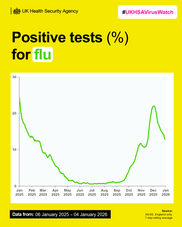
We continue to gather surveillance data for flu, COVID-19, respiratory syncytial virus (RSV) and other viruses. We publish this data alongside the relevant public health advice.
Levels of respiratory viruses such as flu and RSV are continuing to fall at the start of the New Year.
While the data is encouraging, it’s important to note that levels of respiratory viruses among those aged 85 years and over, who are the most vulnerable to severe illness and hospitalisation, have not declined. It’s vital that people still take precautions to reduce the spread of these viruses.
In the week between 29 December 2025 and 4 January 2026:
- influenza activity showed mixed trends and is circulating at medium levels
- COVID-19 activity showed mixed trends and is at baseline levels
- respiratory syncytial virus (RSV) activity showed mixed trends and is circulating at medium levels
Our blog highlights some of the actions people can take to avoid catching respiratory infections - including flu, COVID-19 and RSV - this winter.
|
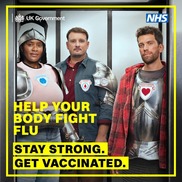
We know that flu is unpredictable and it is always possible that there could still be further increases over the next couple of months. Eligible groups can still get their flu vaccine and those who are eligible include:
- everyone over 65
- those who are pregnant
- children from the age of 2 years (as of 31 Aug) to school year 11
- those with certain long-term health conditions
Flu vaccination appointments are still available on the NHS national booking system and anyone who hasn’t yet had their vaccine should take it up for the remaining winter period to protect themselves.
The RSV vaccine is available to those aged 75 to 79, those who turned 80 years old after 1 September 2024 and is also offered to pregnant women at or beyond the 28-week mark, as the vaccine helps protect the newborn baby.
Vaccination helps provide the best protection against severe illness and hospitalisation for those at higher risk.
|
Norovirus - remains within expected levels
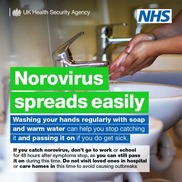
Norovirus activity has increased in recent weeks but remains within expected levels.
Overall, norovirus laboratory reports between weeks 52 of 2025 and week 1 of 2026 (22 December 2025 to 4 January 2026) were 12.5% lower than the 5-season average for the same 2-week period and 13.7% lower than during the previous 2-week period.
The rate is now highest in individuals aged 65 years and over
Our blog helps to explain more about norovirus, what to do if you catch it, and how to help stop the spread.
|

The UKHSA Conference 2026 will take place on Tuesday 22 and Wednesday 23 September at Manchester Central, with the theme 'Securing health together: Partnership, prevention, preparedness'.
The conference will bring together partners from across public health, health protection and the wider health security community to share learning, showcase innovation and strengthen collaboration.
Our new-look website is now live - offering delegates, speakers and exhibitors an improved user experience, bringing together everything you need to get the most from this year's conference in one place.
Further details on abstract submission, sponsorship and exhibition opportunities, programme developments and registration will follow in the coming weeks.
Visit the UKHSA Conference 2026 website for the latest information, and email us at conference@ukhsa.gov.uk to join our mailing list for updates direct to your inbox.
|
Adenovirus might not be a household name like flu or the common cold, but it's one of the most common causes of viral infections. Most people will have had at least one adenovirus infection before they turn 10, and because there are many different types, it's possible to be infected more than once throughout your life.
At UKHSA, we monitor weekly positivity data for common respiratory viruses including adenovirus, human metapneumovirus (hMPV), parainfluenza and rhinovirus, and you can see the latest figures on the Data Dashboard. This happens alongside our surveillance of flu and COVID-19.
Our new blog covers what adenovirus is, its symptoms, how it spreads, how it is treated, how to avoid its spread and when to seek medical advice.
|
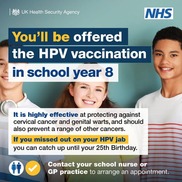
Girls and boys are offered the HPV vaccine in school year 8. It is highly effective at protecting against cervical cancer and can help protect against other cancers including mouth cancer and some types of head and neck cancer. Having this vaccine will also protect you against the 2 types of HPV that cause the majority of cases of genital warts.
Across social media we are encouraging parents and carers to look out for the HPV vaccine permission form and return it to the school.
Girls under 25 and boys born after 1 September 2006 who missed their HPV vaccine at school can also catch up at their GP.
Even if you've had an HPV vaccination it's important that you attend your cervical screening appointment when invited. Cervical screening saves approximately 5,000 lives a year in the UK.
Stakeholders can support NHS England's cervical cancer elimination campaign with their communications toolkit. You can also help promote the benefits of the HPV vaccine on social media with these social media assets.
|
The ‘Inclusion health data and intelligence resource for England: An overview of published data and intelligence’ is a new interactive resource developed by the Department of Health and Social Care, Office for Health Improvement and Disparities, UKHSA, and NHS England to support work on inclusion health at a local level in England.
The populations included are:
- People experiencing homelessness
- Gypsy, Roma and Traveller communities
- Sex workers
- Migrants in vulnerable circumstances
- People subject to modern slavery
- People in contact with the justice system
- People experiencing drug and/or alcohol dependence
This interactive inclusion health resource contains a summary of statistics already in the public domain and provides supporting information for organisations and networks to facilitate informed decision-making.
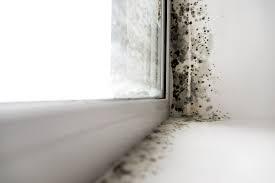
In December 2025, the Committee on the Medical Effects of Air Pollutants (COMEAP) published two statements examining what is known about indoor air pollution and where the evidence gaps lie.
While the health effects of some indoor pollutants are well established (tobacco smoke, radon, asbestos, carbon monoxide, and bioaerosols from damp and mould), much less is known about other pollutants. These include volatile and semi-volatile organic compounds, particles generated during cooking, and nano- and micro-plastics. COMEAP also flagged a concern around buildings becoming more airtight to improve energy efficiency and support net-zero targets, which could risk indoor air quality worsening without proper ventilation.
COMEAP is recommending:
- A coordinated programme of monitoring, potentially through a new Indoor Air Quality Observatory
- An initial focus on pollutants already known to be hazardous to health
- An integrated approach to assessing net-zero and air quality policies together, to maximise health benefits and avoid unintended consequences
The full statements can be found on GOV.UK:
- The first statement on indoor air quality evidence will be useful for healthcare and public health professionals, local authorities, regulators, and those responsible for designing, constructing and maintaining buildings.
- The second statement is aimed at researchers and analysts interested in methods for estimating indoor air pollution health effects.
|

Professor Angus Nicoll has sadly passed away earlier in January. Angus was a major figure in communicable disease surveillance and control in the UK, in Europe and globally.
Angus worked as a consultant epidemiologist at the Public Health Laboratory Service (PHLS) Communicable Disease Surveillance Centre (CDSC) between 1990 and 2005. He had several key roles including Head of the HIV/STI department, and then third Director of CDSC. He moved to the newly established European Centre of Disease Control and Prevention in 2005, where he has in charge of the Flu and Respiratory Disease group, including through the 2009/10 influenza pandemic. Angus was a highly respected expert and mentor, but also friend for so many in the world of public health.
Friends and colleagues of Angus can find details of his funeral and contribute to an online commemoration book for his family online:
Tribute to Angus Nicoll, 1950 - 2026
|
|