Greetings from London!
China has been a remarkable story in the auto industry and one without parallel. Major global automakers poured into the market in the 1980s and 1990s, confidently agreeing to Beijing’s condition that they had to form a joint venture with a local partner. For decades, they dominated the market, as early Chinese efforts to make cars were in many cases rank failures – including a model from Brilliance that got zero stars in Euro NCAP crash testing in 2009.
But within the last five years, fast-moving Chinese automakers began churning out slick new models, above all EVs, and have steadily taken market share from their traditional rivals. Domestic automakers’ share of China’s car market rose to 61% in 2024 from 42% in 2017, and consultancy AlixPartners predicts it will rise to 76% in 2030.
If that forecast pans out, major Western automakers will be left struggling to find a way to stay in the game in China. Which brings us to today’s Auto File… |
|
|
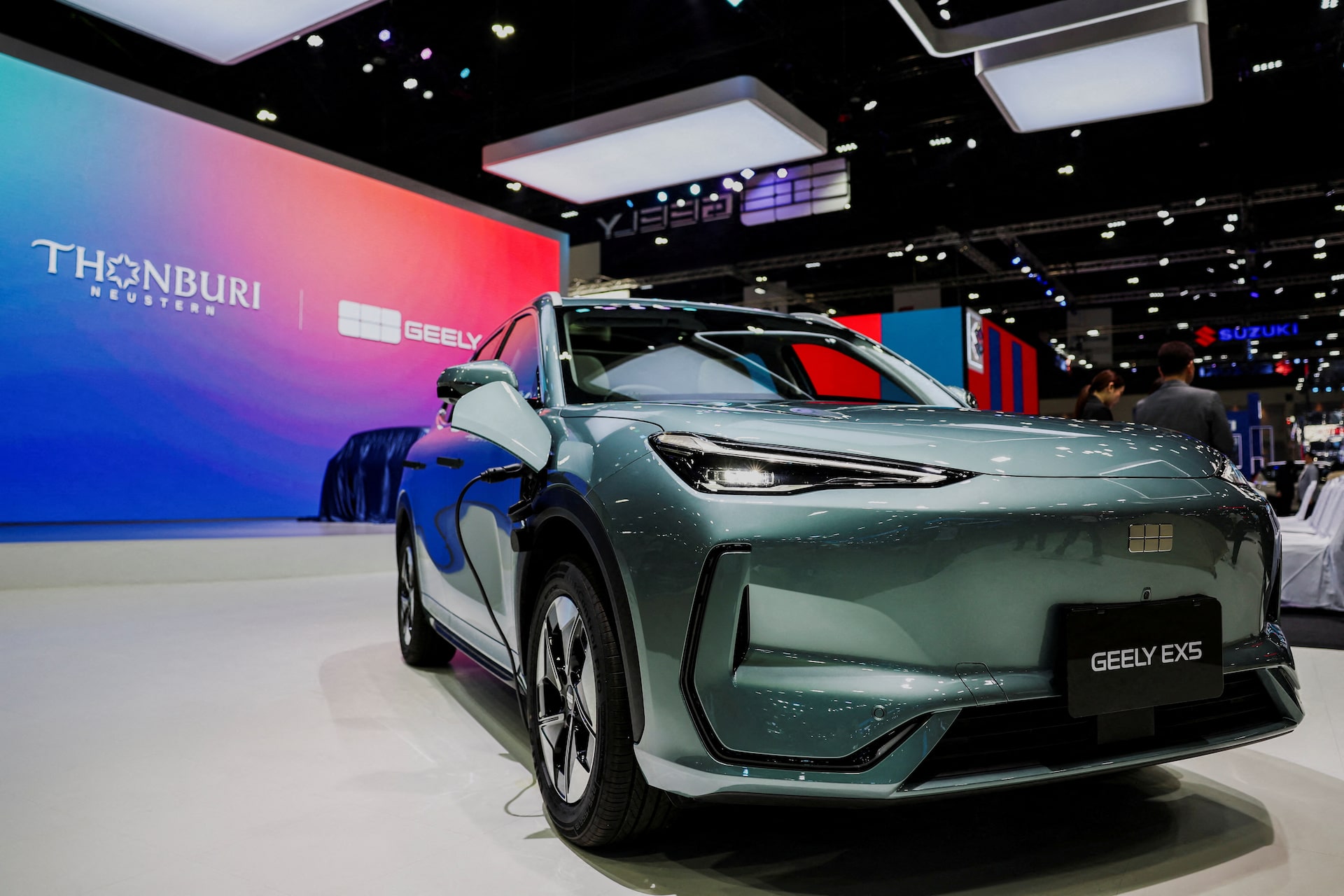
Geely has knocked VW into third place in China - REUTERS/Chalinee Thirasupa. |
Volkswagen has of course become the poster child for the decline of global automakers in China. The sprawling German car group was the market leader in China for a quarter of a century, but was knocked into second place by BYD in 2024 and last year was another bad one for VW in the world’s largest car market.
The company reported a 17.4% drop in sales in China in the fourth quarter, officially slipping to third place behind BYD and Geely.
Volkswagen lost market share, but interestingly, so did BYD amid fierce competition from Geely and other Chinese automakers, such as Leapmotor, mainly in the budget car segment. The German company has responded with a lineup of upcoming EVs developed in China specifically for Chinese consumers, which are set to hit the market over the next few years.
Volkswagen is also looking to export cars developed and made in China to more overseas markets. But in the meantime, it looks like Volkswagen will continue to lose share in China, confronting CEO Oliver Blume with a rather urgent to-do list. |
|
|
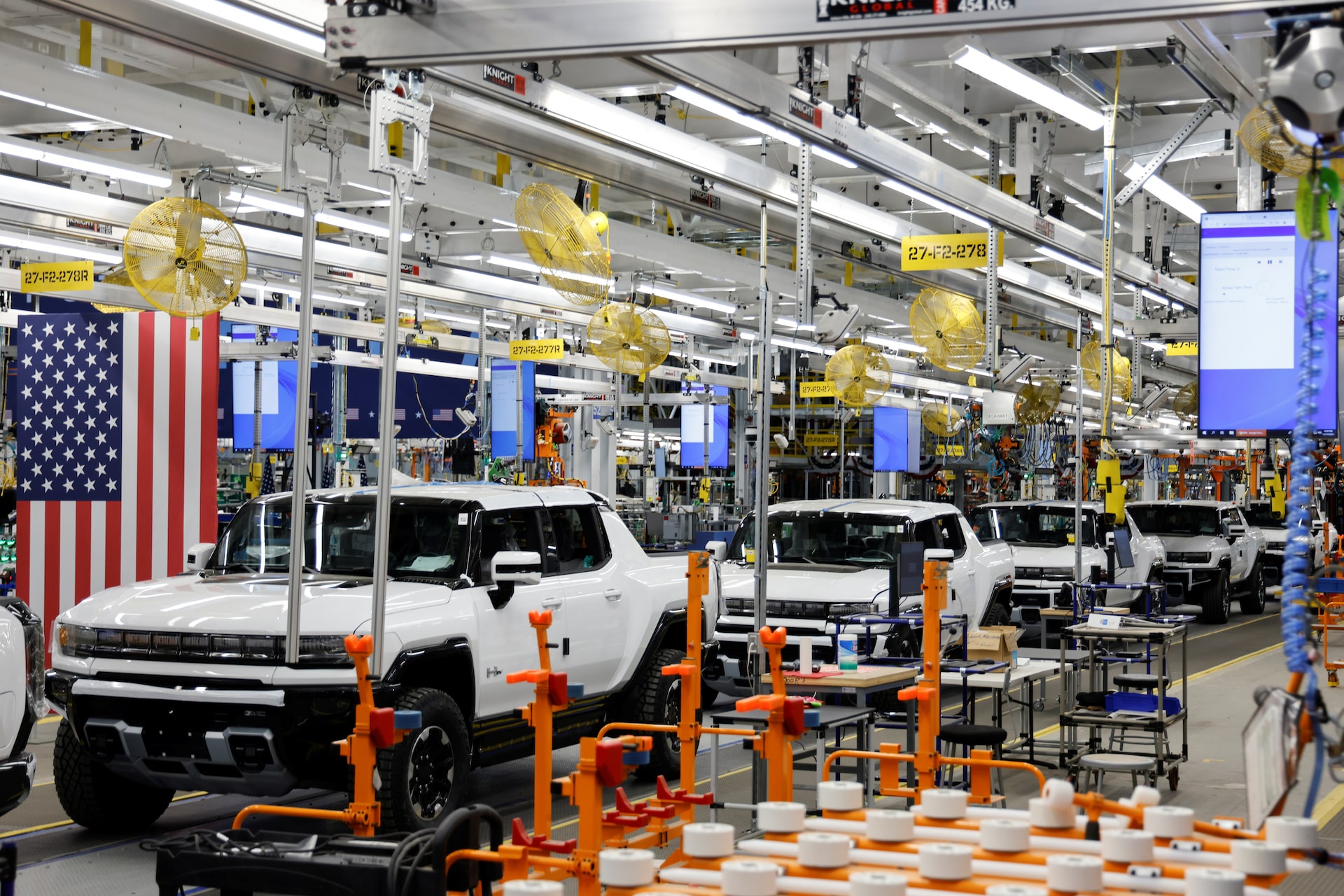
Trump policies have hit GM's EV plans - REUTERS/Jonathan Ernst. |
General Motors announced a $6 billion charge to unwind some electric-vehicle investments, becoming the latest automaker to pull back from EVs in response to the Trump administration's policies and fading demand for electric cars.
As Reuters colleagues Kalea Hall and Nora Eckert report, most of GM's writedown - a $4.2 billion cash charge - is related to contract cancellations and settlements with suppliers, who had planned for much higher production volumes before the market turned. You can read more about it here.
GM said the writedown would not affect its U.S. lineup of roughly a dozen EV models, which is the U.S. industry’s broadest offering of battery-powered vehicles.
Speaking this week in Detroit, GM CEO Mary Barra said the Trump administration’s moves to kill a $7,500 EV tax credit and rolling back tailpipe-emissions rules had forced GM to rapidly adapt its product plans and cut billions of dollars of investments in EVs.
But Barra said the automaker still believes EVs eventually will take off in the U.S. as charging becomes easier and prices come down, and that GM still sees battery-powered vehicles as “the end game.” |
|
|
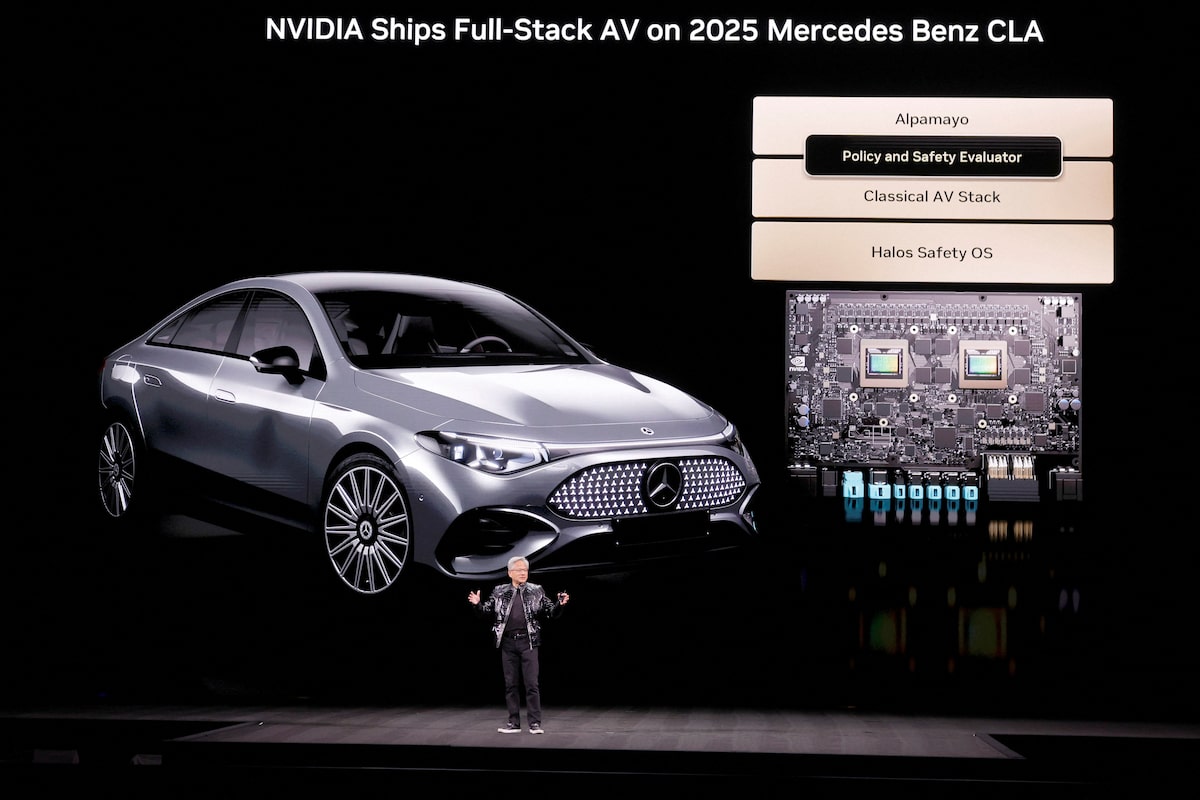
Nvidia is big on self-driving cars - REUTERS/Steve Marcus. |
Partnering for self-driving cars |
It would be an understatement to say that the self-driving car industry has had a rocky road over the last few years.
After much hyperbole late in the last decade that self-driving cars were within reach – in particular from Tesla CEO Elon Musk – the industry was hit by immensely expensive failures as automakers including GM and Ford shuttered their autonomous vehicle units.
This time tech suppliers, chipmakers including Nvidia, and some automakers are betting on AI and a web of partnerships to spark new progress. AI, they argue, will be a game changer and act as an “accelerant” to make robotaxis a reality. Their core message is that this time, really, everything will be different.
But as Reuters colleague Abhirup Roy reports, many interested automakers still have major questions. You can read all about it here. Apart from concerns about high costs and scalability, they want to know if there is enough customer demand to make money out of an expensive wager.
Rather than risk fresh investments in fully self-driving capability, major automakers want revenue-generating driver assistance technology that is already available but requires drivers to pay constant attention. |
|
|
Polestar’s European bet pays off |
It’s been a long time since we’ve seen any good news from EV maker Polestar. But as Reuters colleagues Marie Mannes and Zaheer Kachwala report, the company’s fourth quarter sales jumped 27%.
You can read all about it here. The jump in sales reflects greater focus on Europe, which now accounts for about 78% of Polestar’s sales, as the EV maker faces tough competition in China and tariffs in the United States.
But the automaker still has a long way to go. Even with that jump, Polestar’s sales totalled just over 60,000 cars, making it a minnow in the car industry.
High debt, persistent losses, and launch delays have pummelled Polestar’s shares, prompting a reverse stock split to avoid a NASDAQ delisting.
Polestar has also relied heavily on majority Chinese owner Geely to help fund its loss-making operations. |
|
|
China's car sales are expected to be flat this year after slowing growth in 2025 and last year’s robust EV exports will be hard to sustain, a Chinese industry association said.
BMW will launch 10 new cars in India this year, including EVs and its popular MINI brand, while boosting local sourcing to lower costs as luxury car sales in the country remain stubbornly small.
Indian automaker Maruti Suzuki plans to add up to 1 million units of annual production capacity after buying land worth about $550 million, expanding manufacturing to meet rising domestic auto demand.
Chinese EV maker Xpeng aims to become better known as a “physical AI” company rather than just a carmaker, as it gears up to launch street trials of robotaxis and start mass producing humanoid robots later this year.
China's Dongfeng is in talks with an investor about producing passenger cars in |
|
|
|