| Forwarded this email? Subscribe for more |


 |
| By The Free Press |
It’s Tuesday, January 13. This is The Front Page, your daily window into the world of The Free Press—and our take on the world at large. Today: Pastor Ryan P. Burge on why the pews are empty; Kat Rosenfield on the dangerous illusions that led to Renee Good’s death; Gabe Kaminsky on Trump’s botched crackdown on nonprofits. Plus: River Page asks, “Is woke back?” All that and more.
But first: Why 2026 could be a turning point in world history.
We’re celebrating a new year and new additions to our newsroom. For a limited time, enjoy 20 percent off a subscription to The Free Press. |
“What President Trump will do next, only he knows. The world will have to keep waiting and guessing. I’m not gonna broadcast it.”
So said White House Press Secretary Karoline Leavitt on Monday. She was answering a question on Iran, and how the president would respond to Tehran’s bloody crackdown on protesters. (And later in the day, the president made his latest move: a 25 percent tariff on all countries doing business with Iran.) But Leavitt could have been talking about any number of foreign-policy questions when she said that “the world will have to keep waiting and guessing.”
Trump’s decisions have driven world events so far this year, and a great deal rests on what the president will do next. That’s always true—but especially at the start of 2026.
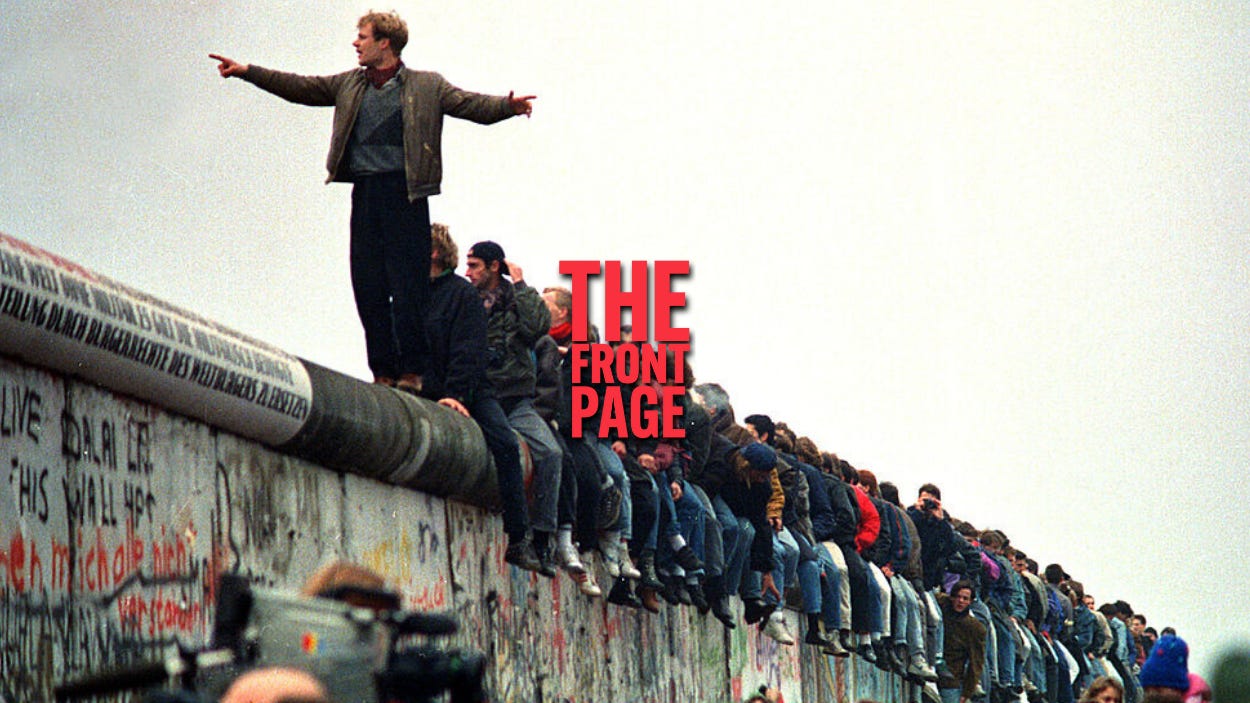
In our lead story today, Matt Pottinger, who worked as deputy national security adviser during Trump’s first term, and Roy Eakin argue that 2026 could prove to be the most consequential year in world history since 1989. They survey the world’s flashpoints, from Tehran to Taiwan, and ask: Will 2026 mark the start of a new era? And will that era bring peace and prosperity—or disorder and conflict?
—Oliver Wiseman
 |
Tune In: Will the Iranian Regime Fall?
For the latest on the situation in Iran catch up on our Monday livestream, featuring three experts on the country: Michael Doran, Roya Hakakian, and Behnam Ben Talebu. They talk to host Rafaela Siewert about what is unfolding in Iran, what will come next, and whether the U.S. will take action.
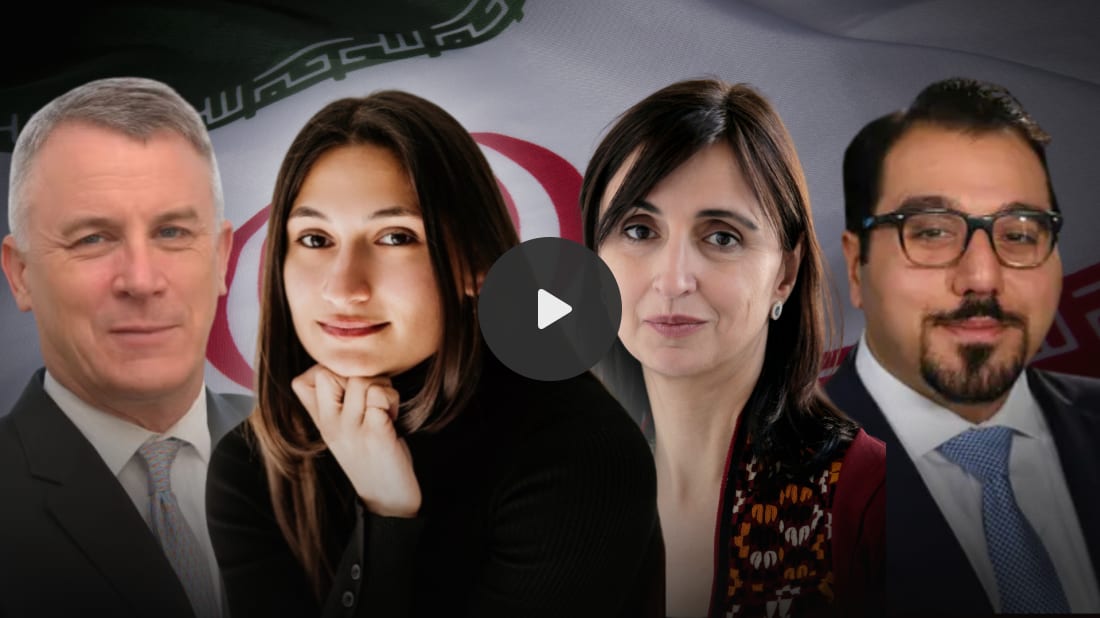
And for a look at a troubling truth about how the Iranian protests are being viewed in the West, read the latest from Yascha Mounk. “The sympathies of every single person who believes in freedom and equality and the basic rights of women should be with those courageous millions in Iran,” writes Yascha. “And yet, across the West, there has been a deafening silence in the face of these historic protests.” Read his full op-ed:
 |
Arthur Brooks: The Problem with Your New Year’s Resolution | ||||||
 | ||||||
|

Minneapolis Isn’t a Movie | ||||||
 | ||||||
|
Is Woke Back? | ||||||
 | ||||||
|