|
Gangster affordability
Trump's strategy for bringing down prices might work in the short term, but the long-term costs will be high.
|

| |||||||||||||||


 |
“Damn it feels good to be a gangsta/ Gettin' voted into the White House” — Geto Boys
I recently listened to an audiobook about the Napoleonic Wars. Overall, the book wasn’t very good, but there was one interesting part where it described Napoleon’s ruling style as being mafia-like. His insistence that other European countries buy French exports, his attempts to shut Britain out of European trade, and a bunch of his other economic policies were fundamentally gangster-ish — they were ad hoc impositions of personal power, often with an eye toward taking revenge on personal enemies and entrenching his own authority.
I immediately recognized this as Donald Trump’s style of governance. Like Napoleon, Trump isn’t interested in creating durable institutions that will outlive him — indeed, he regards any such institutions as threats to his own personal power. Many observers have labeled this approach “personalism” or “patrimonialism”, but it’s really just gangsterism. Trump treats America like a mafia organization, and himself as the godfather.
That’s what I thought about when I watched this remarkable video from Fed Chair Jerome Powell:
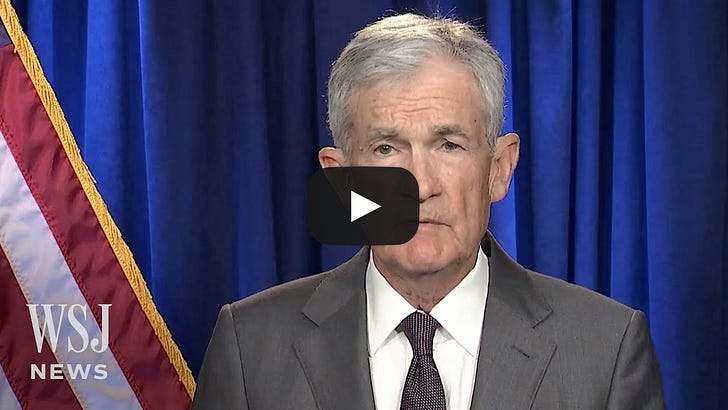
Powell reveals that Trump’s Justice Department has been investigating the Fed, with an eye to pressuring the Fed to cut interest rates:
On Friday, the Department of Justice [threatened] a criminal indictment related to…a multi-year project to renovate historic Federal Reserve office buildings.
I have deep respect for the rule of law and for accountability in our democracy. No one—certainly not the chair of the Federal Reserve—is above the law. But…This new threat is not about my testimony last June or about the renovation of the Federal Reserve buildings…The threat of criminal charges is a consequence of the Federal Reserve setting interest rates based on our best assessment of what will serve the public, rather than following the preferences of the President.
This is about whether the Fed will be able to continue to set interest rates based on evidence and economic conditions—or whether instead monetary policy will be directed by political pressure or intimidation.
This is remarkable and unprecedented. Nothing like this has ever happened in the history of the Federal Reserve. Powell is a consummate professional, who cares only about doing his job, and would only make a statement like this under extreme duress.
If a guy like Powell is accusing Trump of threatening lawsuits over interest rate policy, you know he’s not just going on a hunch or spinning a conspiracy theory — there must have been some very explicit backchannel communications from the White House indicating that the Fed could avoid a DOJ lawsuit by lowering interest rates.
This fulfills my pre-election prediction that Trump would spend much of his second term feuding with the nation’s institutions, and that the Fed would be a prime target. The shape of Trump’s strategy against the institutions is now clear. His two main weapons are A) executive orders, and B) DOJ lawsuits. He obeys the courts when they rule against him, but follows none of the traditional norms of the executive branch, using the DOJ and other administrative agencies as arms of his personal political machine. Trump has used this approach against law firms and media organizations that have challenged him, and now he’s running the same playbook against the Fed. It’s all very Napoleonic — which is a nice way of saying it’s gangster-ish.
The more interesting question is what Trump hopes to accomplish by forcing the Fed to cut rates. The conventional wisdom is that Trump is worried about a recession, possibly caused by his own tariffs, and wants rate cuts in order to boost the economy and employment. According to this theory, Trump is basically what I call a “macro-progressive” — he fears unemployment, and he doesn’t worry too much that low rates will cause inflation.
That’s consistent with Trump’s massive binge of deficit spending. Like the progressives at think tanks like the Roosevelt Institute, Trump may believe that inflation is best controlled with administrative measures, supply expansions, and price controls, rather than by the more traditional tools of high interest rates and fiscal austerity.
But I’m beginning to think there’s also something else going on here. Trump’s populist instincts are still strong. He knows that affordability, not jobs, is the American public’s main economic concern right now. For example, here’s a Gallup poll from last month:
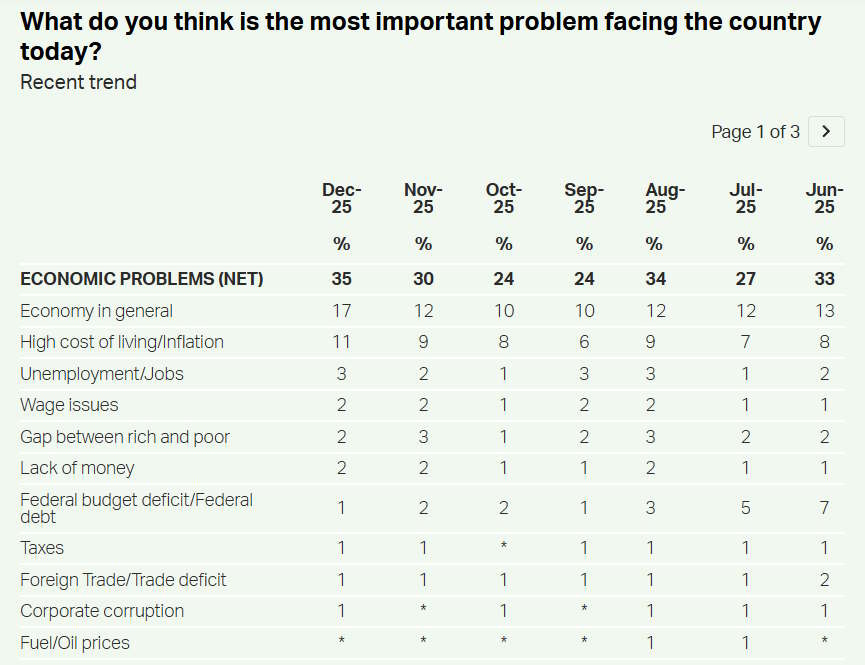 |
General concern over “the economy” takes the top spot as usual, but worries about inflation and the cost of living top worries about unemployment, by a lot. In fact, inflation is the thing that voters seem to be most upset at Trump about, specifically: