Explore a new teaching resource to help teach the conflicts
CFR Education

January 11, 2026

Dear Educator, 


Eleven days into 2026, and there is already a lot to unpack. Trying to make sense of all the issues around the world is complicated, even for those who study foreign policy.


Fortunately, the Council on Foreign Relations’ Center for Preventive Action (CPA) surveyed over 600 foreign policy experts about which global conflicts are most concerning and how to identify opportunities for conflict prevention.


A survey like this can seem challenging to teach, but there is now an easy way to do so! Continue reading to learn about the survey's findings and explore a new teaching activity for your classroom.

Happy learning, 


Caroline Netchvolodoff 
Vice President, Education 
Council on Foreign Relations 


Foreign Policy Expert's Top Priorities 

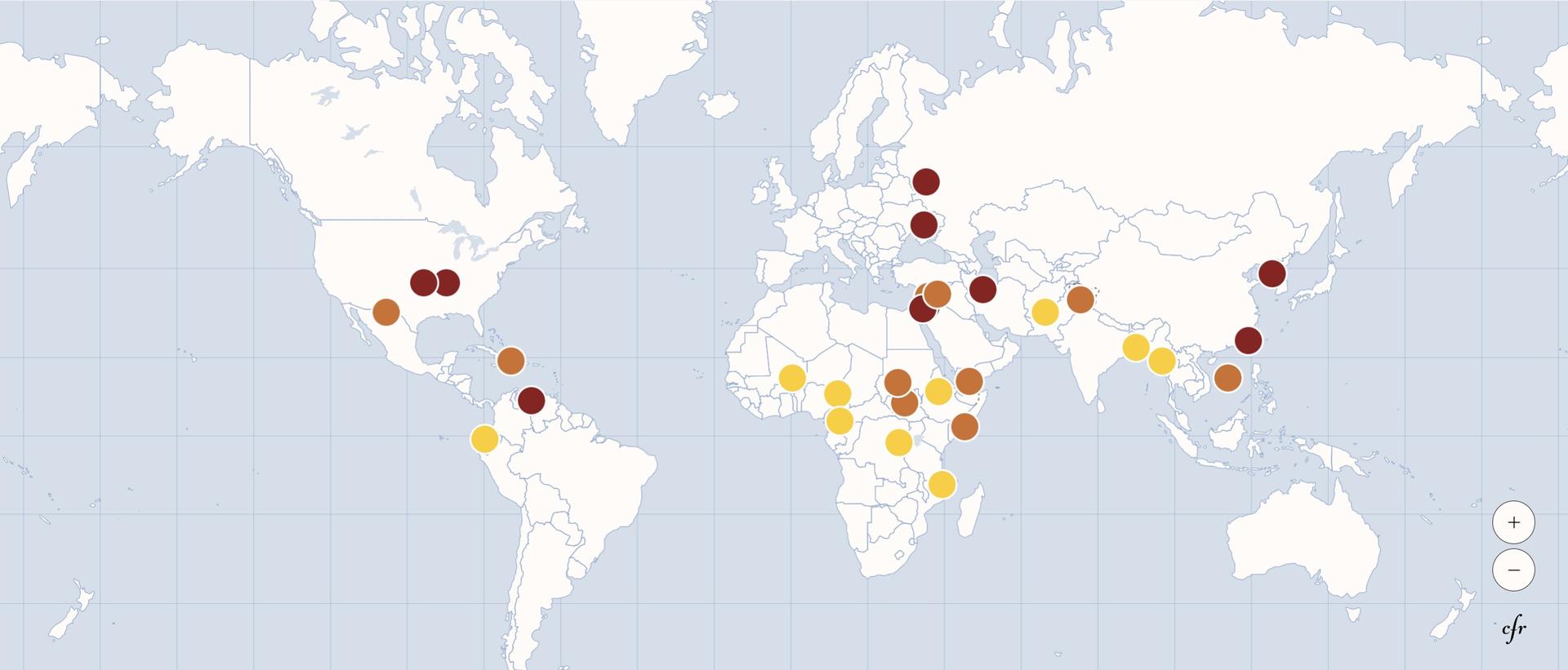
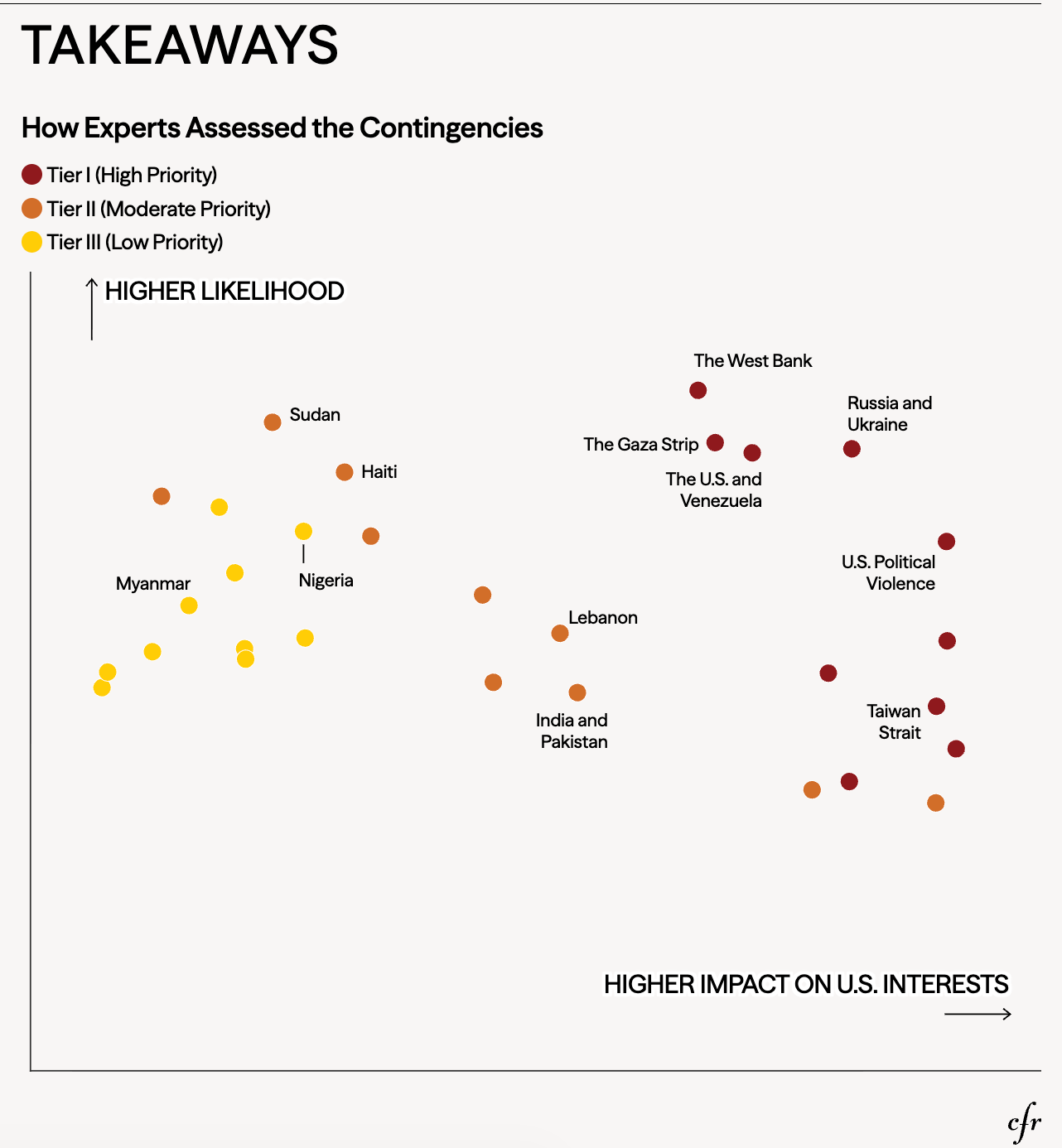
The Preventive Priorities Survey evaluates thirty ongoing or potentially violent conflicts based on their likelihood of occurring or escalating this year, as well as their potential impact on U.S. interests.


This year, experts deemed five conflict-related scenarios as highly likely to emerge or escalate and to have a high impact on U.S. interests. They are most concerned about conflict-related risks in the Middle East and eastern Europe, including the potential for increased clashes between Israeli security forces and Palestinians in the West Bank, renewed fighting in the Gaza Strip, and intensified attacks in the Russia-Ukraine war.


Experts further warn of renewed armed conflict between Iran and Israel; a disruptive, artificial intelligence–enabled cyberattack on U.S. infrastructure; a cross-strait crisis between China and Taiwan; and resumption of North Korean nuclear weapons tests.


However, as the survey name indicates, these conflicts can be prevented. At the end of the report, you'll find scenarios in which the United States can best use its influence to mitigate the conflicts.


Explore the full survey results here. 


Teaching the Preventive Priorities Survey 

In this two-part activity, your students will first use the provided handout to evaluate thirty ongoing or potential conflicts based on their own knowledge of these issues. Please note that a "don't know" option is available for each potential scenario.

The second part of the activity uses CFR Education simulations to help your students understand how decisions surrounding foreign conflicts are made and the extent to which the United States could influence the outcome of a conflict. 


You can choose between simulations that can be completed in one class period, such as Nuclear Negotiations with Iran and A Threat to Taiwan, or opt for a longer experience with simulations like Russia and NATO in the Baltics in 2016.

Try the activity 

Three Ways to Teach About Venezuela in a Nonpartisan Way

Direct U.S. military strikes in Venezuela were one of the scenarios deemed a Tier 1 conflict, meaning it had a high likelihood of occurring and would have a high impact on the United States. Now that this has occurred, how do you teach your students about it? This blog walks you through three ideas. 

Read the blog
 

Partner Spotlight: Retro Report

Professional Development Opportunity for the

Tri-state Area 

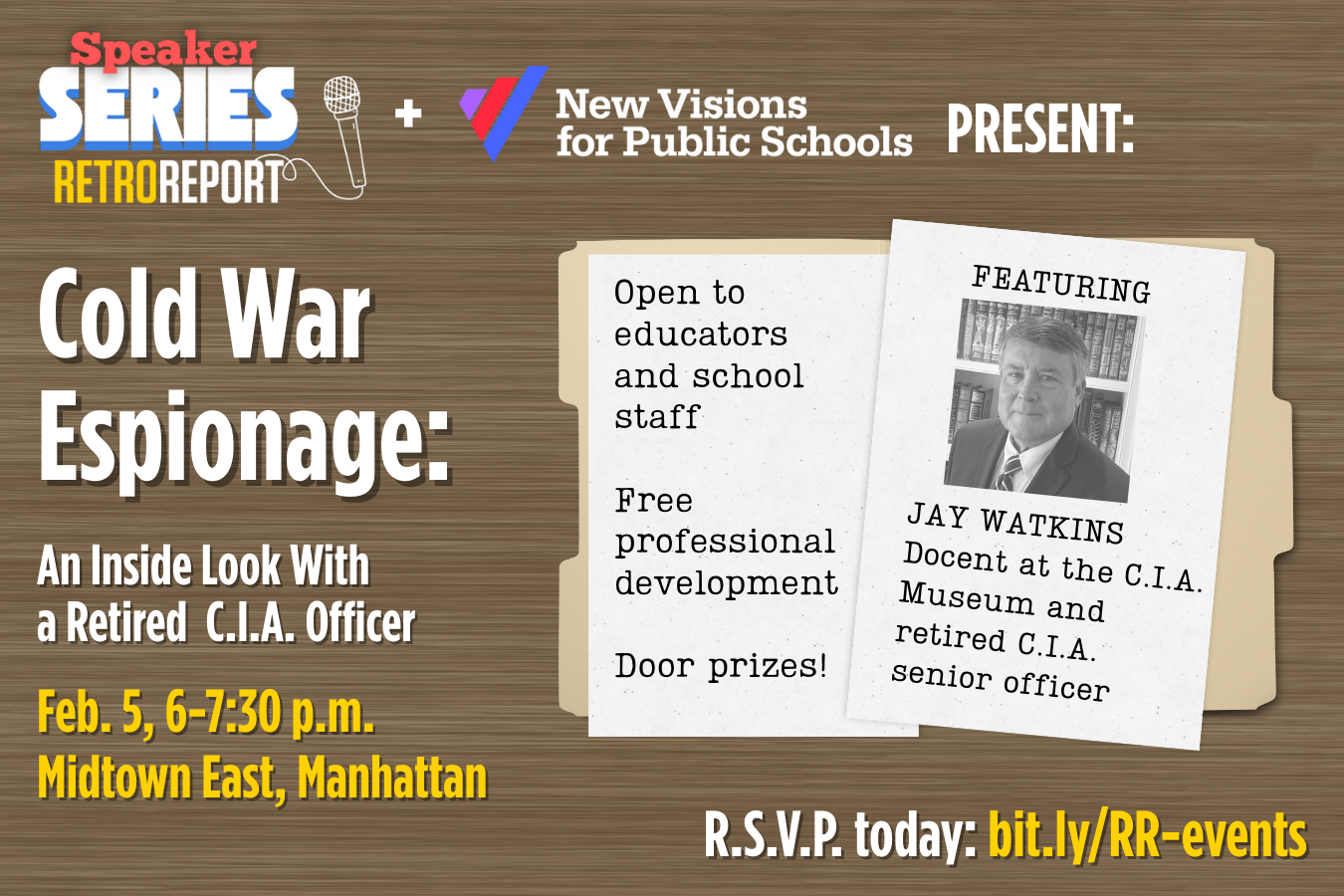
Ever wish you could ask a CIA officer a question? Now you can. Retro Report is hosting an exclusive professional development session in the Tri-state area about Cold War education. Guest speaker Jay Watkins, a retired CIA officer and docent at the CIA Museum, will give a presentation on espionage tactics and gadgets used during the Cold War. This is a free in-person event at the CIA Museum, open to educators and school staff.

Register here
Image

Council on Foreign Relations. All rights reserved.

58 East 68th Street – New York, NY 10065

1777 F Street, NW – Washington, DC 20006

 
FacebookTwitterYouTube

Manage Your Email Preferences