Last year’s sweeping cuts to foreign aid by the United States and peer countries threaten to reverse decades of progress toward lowering cases of vaccine-preventable diseases, improving maternal and child health, and expanding access to health innovations. Yet there is still opportunity for positive reform. Countries can use 2025’s tumult as a launchpad to create new synergies, clarify mandates, and improve equity in global health.
To kick off the new year, Nigeria’s coordinating minister of health and welfare, Muhammad Ali Pate, the African Union’s high representative for financing the union, Donald Kaberuka, and the the London School of Hygiene & Tropical Medicine’s Handa professor of global health, Peter Piot, take stock of the current global health ecosystem’s strengths and weaknesses and offer 10 considerations to help guide reform initiatives.
Following December’s congressional reauthorization of the U.S. International Development Finance Corporation (DFC), CFR’s Prashant Yadav, William Henagan, Thomas J. Bollyky, and Elena Every, along with Brown University’s Stephanie Psaki, explore how the DFC can leverage its institutional legacy, expanded mandate, and sustained U.S. engagement in global health security to make highly effective investments that advance American interests.
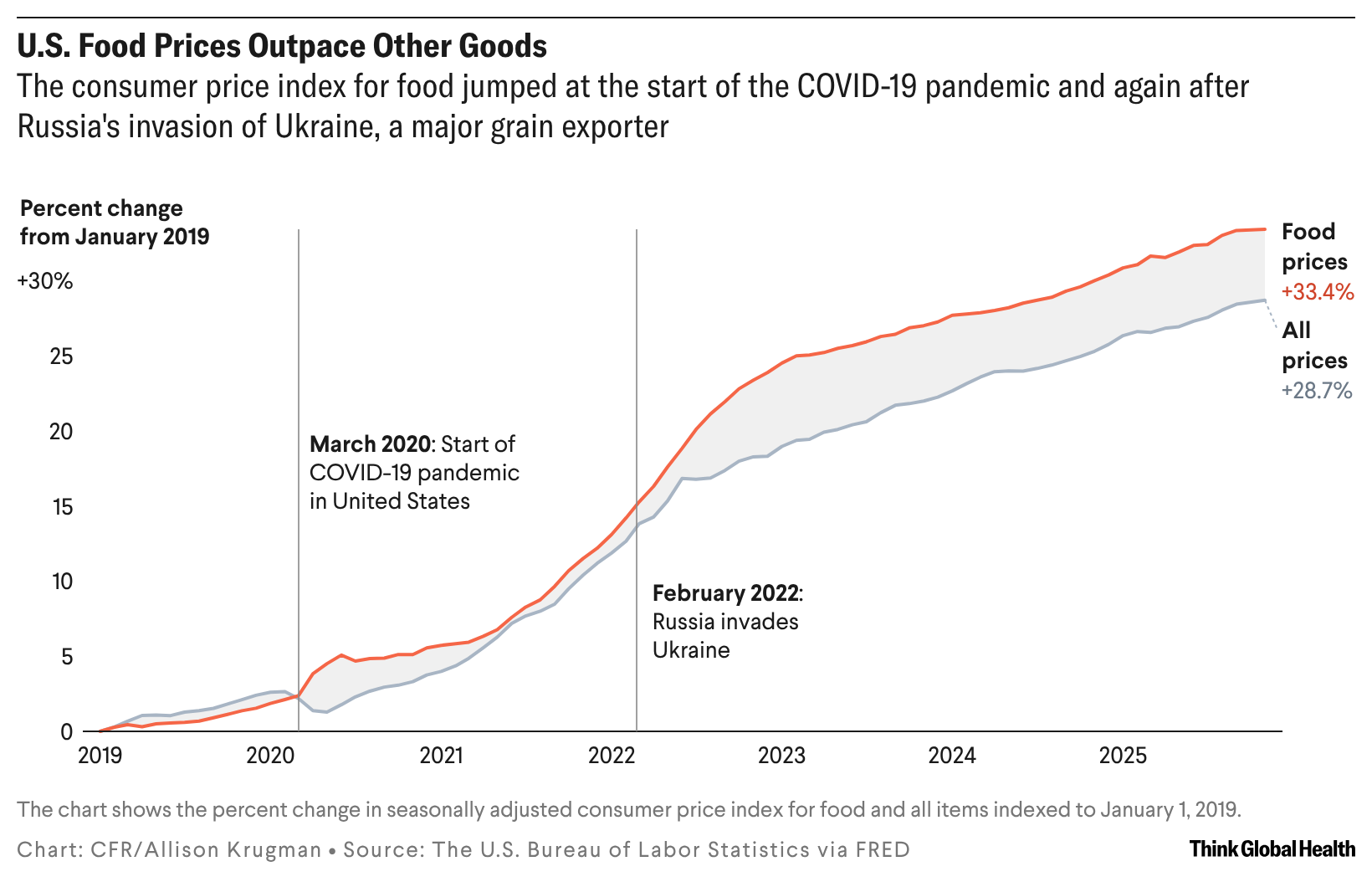
To round off this week’s newsletter, journalist Anika Nayak analyzes how new federal work requirements for Supplemental Nutrition Assistance Program (SNAP) recipients could lead to more than 1 million older adults losing their food assistance.
Until next week!—Nsikan Akpan, Managing Editor, and Caroline Kantis, Associate Editor