|
 |
Happy New Year Bulwark fam! I had a great two weeks with family and am ready to hit the ground running. First up, I have a scoop for you on the next blue city that will face an increase in federal immigration enforcement: Phoenix.
Thanks, as always, for reading Huddled Masses and sharing it far and wide. More than once this holiday season I found myself feeling gratitude not just for my colleagues, but for our badass community that is always supportive and looking for ways to fight back or at least stay on top of each new insane thing the Trump administration is up to. This year could get ugly—but we’ll tackle it together.
–Adrian
Scoop: ICE Plans to Descend on Phoenix
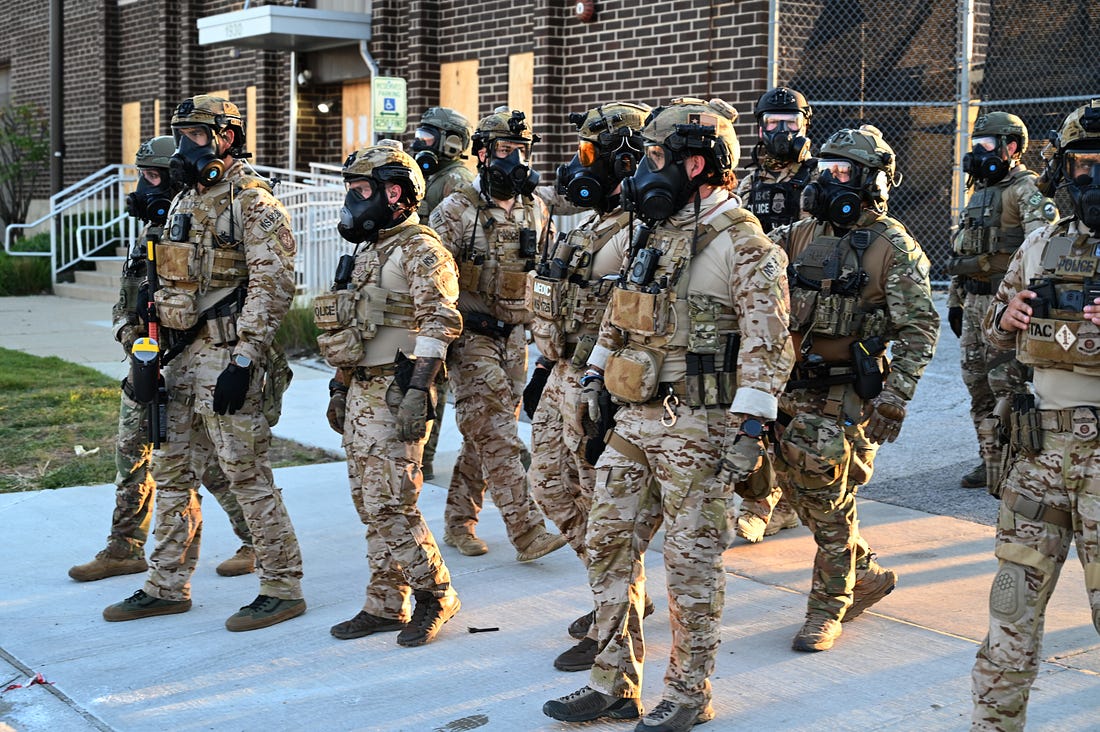
Following L.A., Chicago, and Charlotte, DHS now intends to scale up arrests—and its network of detention facilities—in Maricopa County.
|
| |||||||||||||||


 |
ALTHOUGH DONALD TRUMP’S IMMIGRATION AGENDA is becoming less and less popular with voters, the president has shown no interest in slowing it down or scaling it back in the new year.
In fact, the federal crackdown is likely to only grow in scope and intensity, as Reuters reported. And as three former DHS officials in contact with their former colleagues at the agency each described to me, the expectation among current officials is that one Democratic-led city in particular is about to become the next focus of arrests, detentions, and deportations: Phoenix.
A more robust DHS presence in the Phoenix metropolitan area would mark a new phase in the Trump operations—not just because it would take place in one of the country’s most significant swing states (and a border one, at that), but because it would likely involve a greater expenditure of federal resources than prior operations in other cities have required.
ICE is flush with cash following last year’s passage of the president’s signature piece of legislation, the “Big Beautiful Bill.” And the administration is looking to use that money to dramatically expand its detention capabilities. Residents in Arizona have already been fighting plans to turn the former Marana prison outside Tucson into a detention center. And the Washington Post reported recently that ICE is planning to construct seven large-scale industrial holding centers—including a facility in Glendale.
One of the three former senior DHS officials said that adding thousands more beds in the areas surrounding Phoenix would allow the administration to turn the city into a “hub of removal” in the Southwest.
“Right now, if you put 5,000 more beds in Phoenix, you have more expansive throughput,” the former senior DHS official said. An increase on that level would make it possible for federal agents to significantly expand their operations in other Western cities, including Denver, Las Vegas, and L.A.
“Arizona becomes another hub like [the Rio Grande Processing Center],” the official added.
As part of its growing presence in Arizona, DHS is expected to build controversial soft-sided facilities, the former official relayed. The tent-like structures are easier to put up quickly, but they are difficult to manage humanely because of their greater exposure to the elements, which contributes to a variety of serious problems for detainees. Soft-sided facilities have already been controversial during Trump’s second term: Florida opened a detention center in the Everglades, soon nicknamed “Alligator Alcatraz” by the administration, and continues to operate it in spite of horrifying reports about the conditions being faced by the 6,725 men who have been or are currently being held there. (A court case is pending that could result in the closure of the detention camp; it has already survived multiple legal challenges to its continued operations.)
Elsewhere, the use of soft-sided detention centers has expanded. The $1.24 billion facility in Fort Bliss held 1,000 detainees when it opened in August; it is intended to hold up to 5,000 people.
The timeline of increased operations in the Phoenix area is unclear. While it’s a safe bet that the administration plans to use the same playbook it used in other cities, there could be some notable differences.
Andrea Flores, who served as the director of border management on the National Security Council during the Biden administration and oversaw coordination between ICE and CBP, warned that the use of soft-sided facilities as overflow immigration detention space raises significant humanitarian concerns.
“It’s extremely expensive, and these are not spaces people should be in for a long time, frankly—they were very poorly managed even under Biden,” she told me. “The concern is you expand soft-sideds to expand detention space, but just because you do doesn’t mean you can expand removals. Then you’re just going to have a bunch of people detained in the desert.”
Flores added that in its obsessive quest to remake immigration enforcement, the Trump administration has been treating every novel idea as a good one. That fixation on novelty has led to the implementation of some truly bad ideas.
“Alligator Alcatraz was unique and also a failure,” she said. “It didn’t necessarily ramp up deportations, it just put them in intensely inhumane conditions.”
DHS spokesperson Tricia McLaughlin did not respond to a request for comment on the prospect of an enforcement ramp-up in the Phoenix metro area in January.