|
Sometimes, the best spiritual formation books are the ones that state the obvious. It’s not because the information is necessarily new to us (likely, it is framed in a fresh way), but because—like much of the wisdom and truth of Scripture—we need to be reminded of it again and again. We forget, we get distracted, we are told lies, and sometimes we believe them. Church leaders, pastors, and lay leaders, who focus much mental energy on spiritual things, are not exempt from this. |
|
Dordt University theology professor Justin Ariel Bailey offers three books to read in the new year that remind us specifically of the body––our own physical bodies and the body of Christ. |
|
Features Editor, Christianity Today |
Three Books on Christian Ministry and Church Life |
|
Justin Whitmel Earley, The Body Teaches the Soul: Ten Essential Habits to Form a Healthy and Holy Life (Zondervan, 2025) |
|
When I was in high school, I was taught that the key to spiritual vitality was having a "quiet time," which meant getting alone with God to read Scripture and pray. I am thankful for this practice, which is still foundational for my life with God. But as I’ve grown older, I’ve also felt the limitations of this approach. Prioritizing contemplation, I’ve often failed to appreciate the significance of my body. Prioritizing personal devotion, I’ve often undervalued the importance of the body of Christ. |
|
Justin Whitmel Earley argues that rather than idolizing or ignoring our physical bodies, we should seek to image God through them. His title is a nod to Bessel van der Kolk’s popular book on trauma, The Body Keeps the Score. Like van der Kolk, Earley frames recovery as a matter of both training and healing. We can "garden" our bodies to lead our souls in the right direction, and this is a matter of attention as much as action. As he puts it, "To live with close attention to your body is to live with close attention to your soul." To this end, Earley combines biblical reflection with scientific research to prescribe ten domains of bodily attention. |
|
Beginning with breath, he discusses what it means to integrate the brain and shows how exercise can lead to "antifragility" (where stress makes us stronger). Along the way, he gently reorients dysfunctional habits related to food, sex, rest, and technology. But Earley’s book is no endorsement of wellness culture or our endless quest self-optimization; my favorite chapters were about reckoning with illness and remembering death. Sickness and death are unavoidable reminders of a broken world, but also of the Christian hope—"the redemption of our bodies" (Rom. 8:23). |
|
Carmen Imes, Becoming God’s Family: Why the Church Still Matters (IVP Academic, 2025) |
|
If Earley writes to convince readers that the Christian life is "a habit project" rather than a "head project," Carmen Joy Imes shows that it is also a group project. In her book, she layers a powerful, cumulative case that God’s plan has never been simply to save solitary souls but to gather together a new family "from every nation, tribe, people and language" (Rev. 7:9). Extending the project of two earlier books (Being God’s Image and Bearing God’s Name), she offers a fresh retelling of the biblical narrative, cast in familial terms: family trauma (the exile), family reunion (the coming of Christ), and the family business (making disciples). |
|
Imes is clear-eyed, deftly naming the failures of God’s family, from the mistreatment of Hagar by Abraham and Sarah to the misguided project of Christian nationalism. And yet, she writes with a hope rooted in the gospel, which allows us to glimpse God’s glory "at work in ordinary gatherings made up of all sorts of people." Imes challenges Christians to find their home in the household of God, where God’s people gather to wait for God to do what only God can do. |
|
Andrew Louth, The Origins of the Christian Mystical Tradition: From Plato to Denys (Oxford University Press, 1980, 2007) |
|
Andrew Louth’s book is older and does heavier theological lifting, the sort we might expect from an early church scholar. Nevertheless, Louth’s historical excavation underwrites the arguments of Imes and Earley in significant ways. Tradition is a complicated term, yet there is a reason why Louth’s book is found on theologian Sarah Coakley’s shortlist of essential works of recent theology. |
|
Louth shows how early church fathers wrestled with and resisted the development of a solitary and elitist spirituality, where "God and soul" are the only things that matter. To be sure, these Platonic streams exert a powerful gravity on Christian mysticism, one that lingers to the present day. |
|
Louth concludes that the Fathers undermine "any tendency towards seeing mysticism as an elite, individualist quest for ‘peak’ experiences." The spiritual (mystical) life is irreducibly embedded in the community of the church, and nourished by bodily practices that orient everyday experiences, not extraordinary ones. |
|
We should keep getting alone with God, as Jesus did (Luke 5:16); but life with God includes so much more than "quiet times." Spiritual vitality can never be purely "spiritual" or a solitary pursuit. It is something that can only occur as disciples pay attention to their bodies and find their place together in the body of Christ. |
Because Christ Reigns, The Church Can Flourish |
|
Isaiah tells us of the coming Messiah, "Of the greatness of His government and peace there will be no end." At Christianity Today, we believe that because Christ reigns, the Church can flourish—even in a world that still aches for His peace. |
|
Through in-depth journalism, redemptive storytelling, and resources that disciple believers, CT helps the global Church live faithfully in this "already and not yet" Kingdom—seeing the world through the lens of Christ’s truth and hope. |
|
As one reader shared, "CT helps us learn to be faithful and see the world in a faithful way." |
|
|
|
|
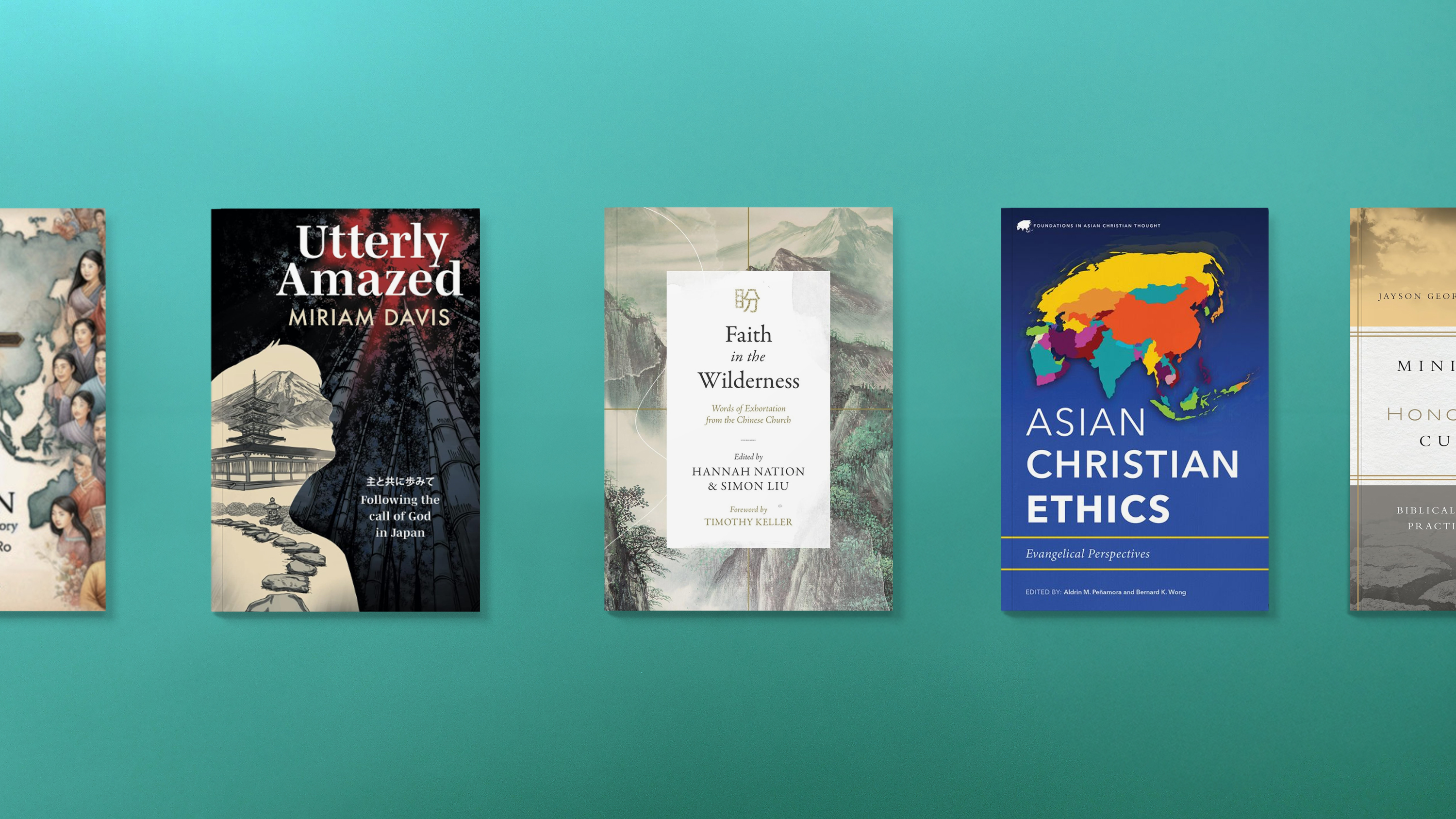
The following books were selected by Kazusa Okaya, a PhD candidate at Durham University and a researcher at the Kyoritsu Christian Institute at Tokyo Christian University.
|
|
|
|
|
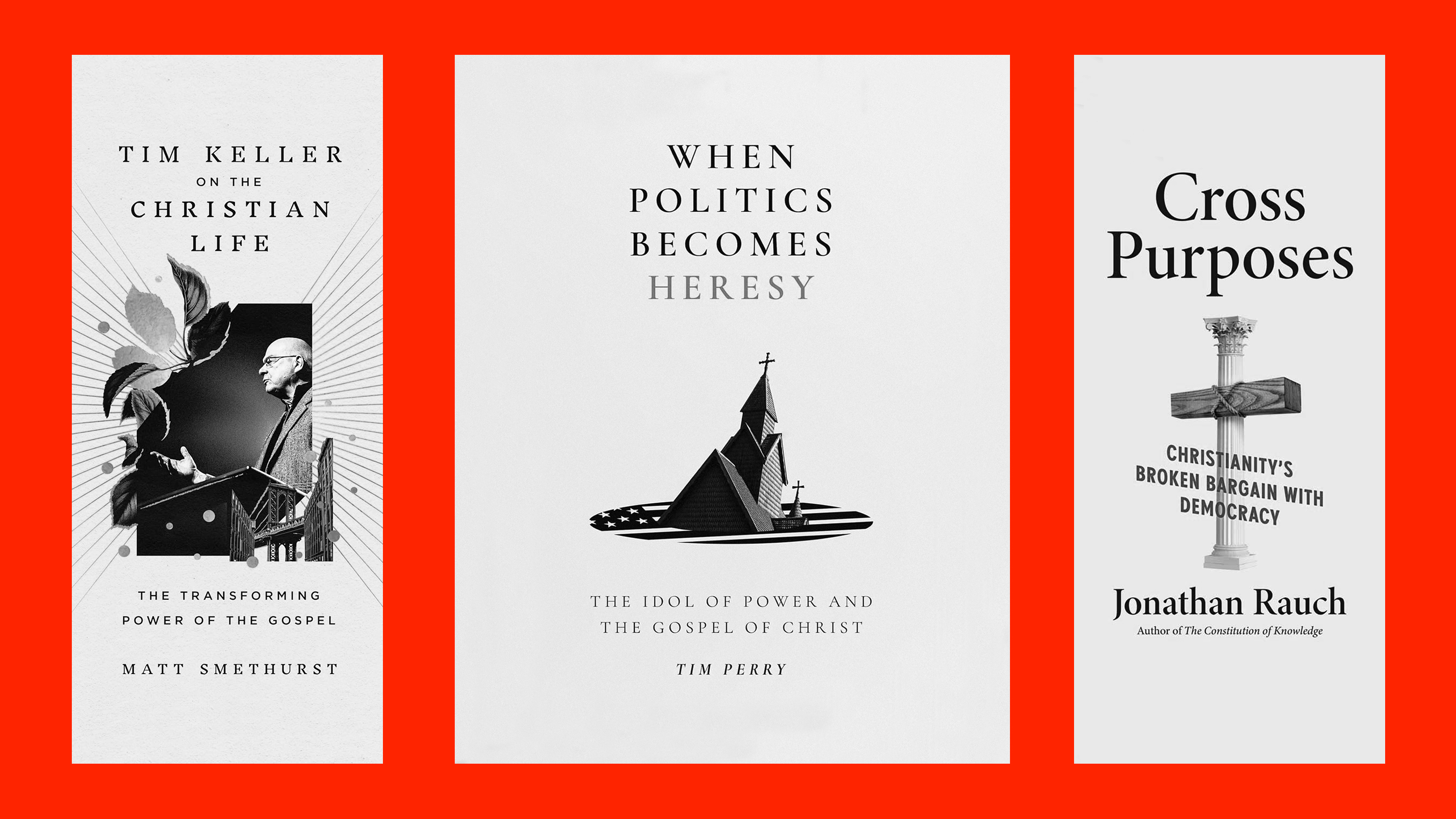
Books have always been important to Christianity Today. Since our founding almost seven decades ago, CT has prioritized words alongside the Word.
|
|
|
|
|
|
|
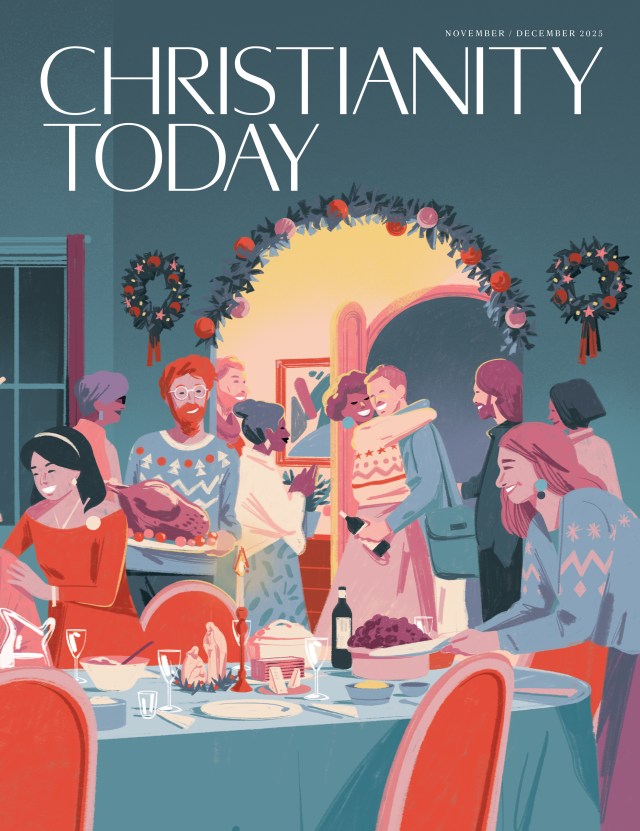
As we enter the holiday season, we consider how the places to which we belong shape us—and how we can be the face of welcome in a broken world. In this issue, you’ll read about how a monastery on Patmos offers quiet in a world of noise and, from Ann Voskamp, how God’s will is a place to find home. Read about modern missions terminology in our roundtable feature and about an astrophysicist’s thoughts on the Incarnation. Be sure to linger over Andy Olsen’s reported feature "An American Deportation" as we consider Christian responses to immigration policies. May we practice hospitality wherever we find ourselves. |
|
more from christianity today |
|
CHRISTIANITY TODAY WEEKLY: CTWeekly delivers the best content from ChristianityToday.com to your inbox each week. |
|
CT PASTORS: Each weekly CT Pastors issue equips you with the best wisdom and practical tools for church ministry. |
|
Each issue contains up-to-date, insightful information about today’s culture, plus analysis of books important to the evangelical thinker. |
|
Delivered free via email to subscribers weekly. Sign up for this newsletter. |
|
You are currently subscribed as npxlpxnaph@nie.podam.pl. Sign up to more newsletters like this. Manage your email preferences or unsubscribe. |
| | |