| | Analysts warn that US aggression in the Caribbean could have wider geopolitical impacts, ambiguous p͏ ͏ ͏ ͏ ͏ ͏ |
| |  | Flagship |  |
| |
|
The World Today | 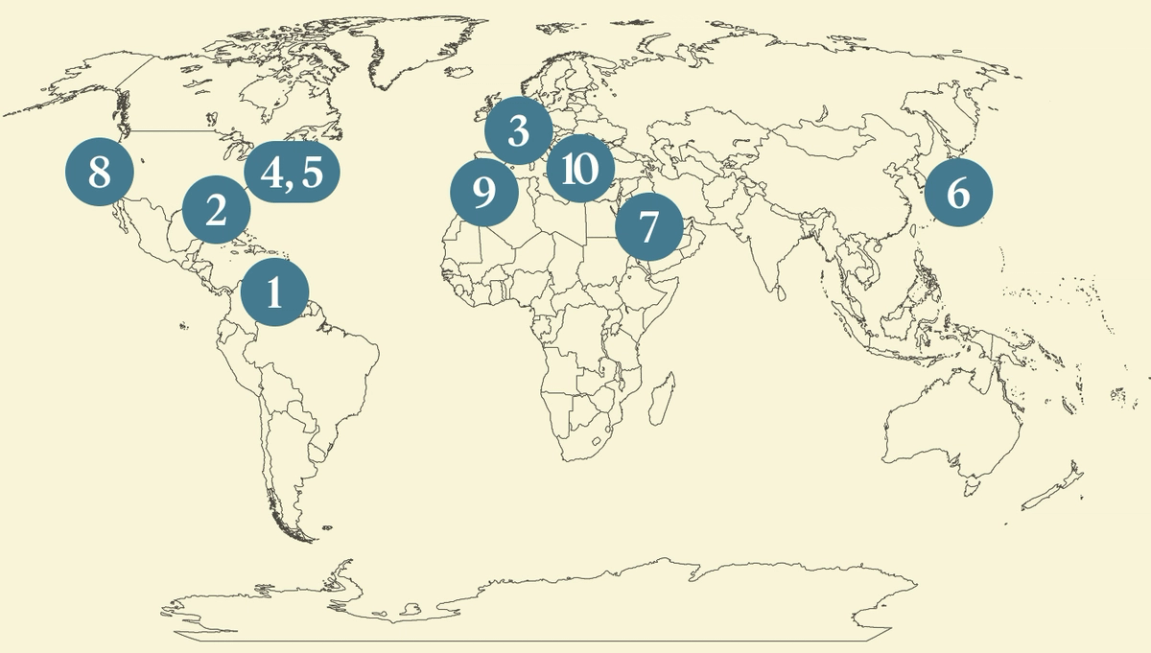 - Venezuelan campaign impact
- Ukraine peace talks in Miami
- Europe’s growing rearmament
- Vance’s TPUSA tightrope
- CBS in independence row
- Japan to restart reactor
- Saudi’s uneven liberalization
- Power outage hits Waymos
- AFCON gets underway
- Rise of Christmas markets
 The London Review of Substacks, and Semafor’s media editor highlights two books he enjoyed this year. |
|
US Caribbean campaign’s impact |
 DHS/Handout via Reuters DHS/Handout via ReutersThe US military campaign on Venezuela risks spilling into wider geopolitical conflicts, two prominent analysts argued. The Trump administration has for weeks struck vessels in the south Caribbean it argued were trafficking drugs to the US, and recently imposed a blockade on Venezuela including seizing oil tankers off its coast. The moves could undermine Washington’s capacity to drum up international support against a potential Chinese invasion of Taiwan, which Beijing claims as its own, China expert Craig Singleton told Reuters. “When Washington blurs terms, it weakens its ability to call out coercion elsewhere,” he said. Meanwhile, the White House’s campaign against Caracas may really be about regime change in Cuba, which relies heavily on Venezuelan oil imports, Fareed Zakaria argued on CNN. |
|
Miami Ukraine peace talks ‘productive’ |
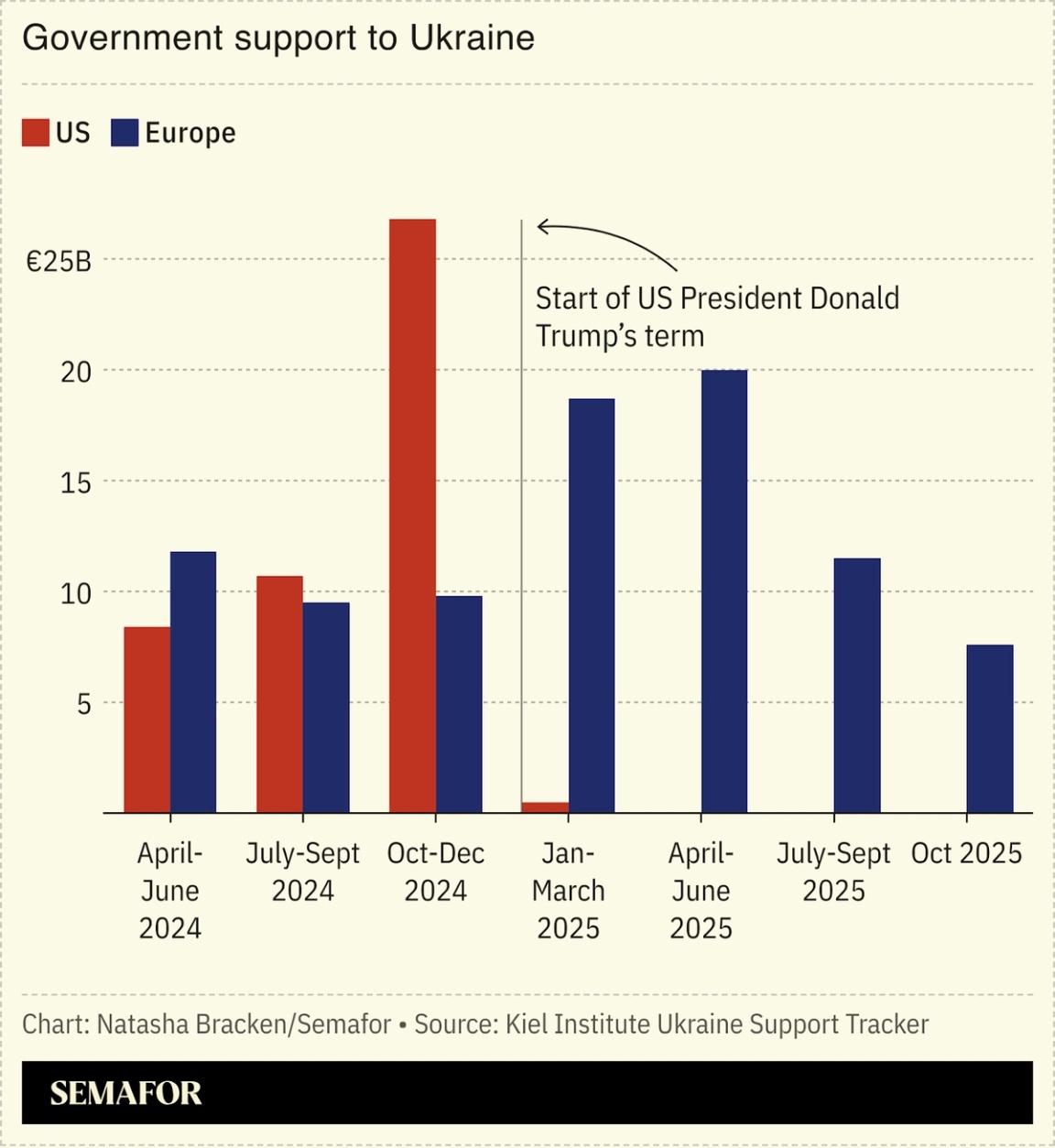 US and Ukrainian officials hailed “productive and constructive” talks in Miami over the weekend, though no major breakthrough for a ceasefire in Ukraine was announced. Talks focused on security guarantees for Ukraine, part of a 20-point proposal put forward by Kyiv in response to a US peace plan that appeared to favor Russia. Meanwhile US special envoy Steve Witkoff said separate talks with Russia were positive too, though Moscow appeared to pour cold water on the optimism, with a senior Kremlin official saying the conversations were “rather unconstructive.” Russian President Vladimir Putin also appeared to reject any progress in ceasefire discussions. “The strategic initiative is completely in the hands of the Russian forces,” he said. |
|
France plans new aircraft carrier |
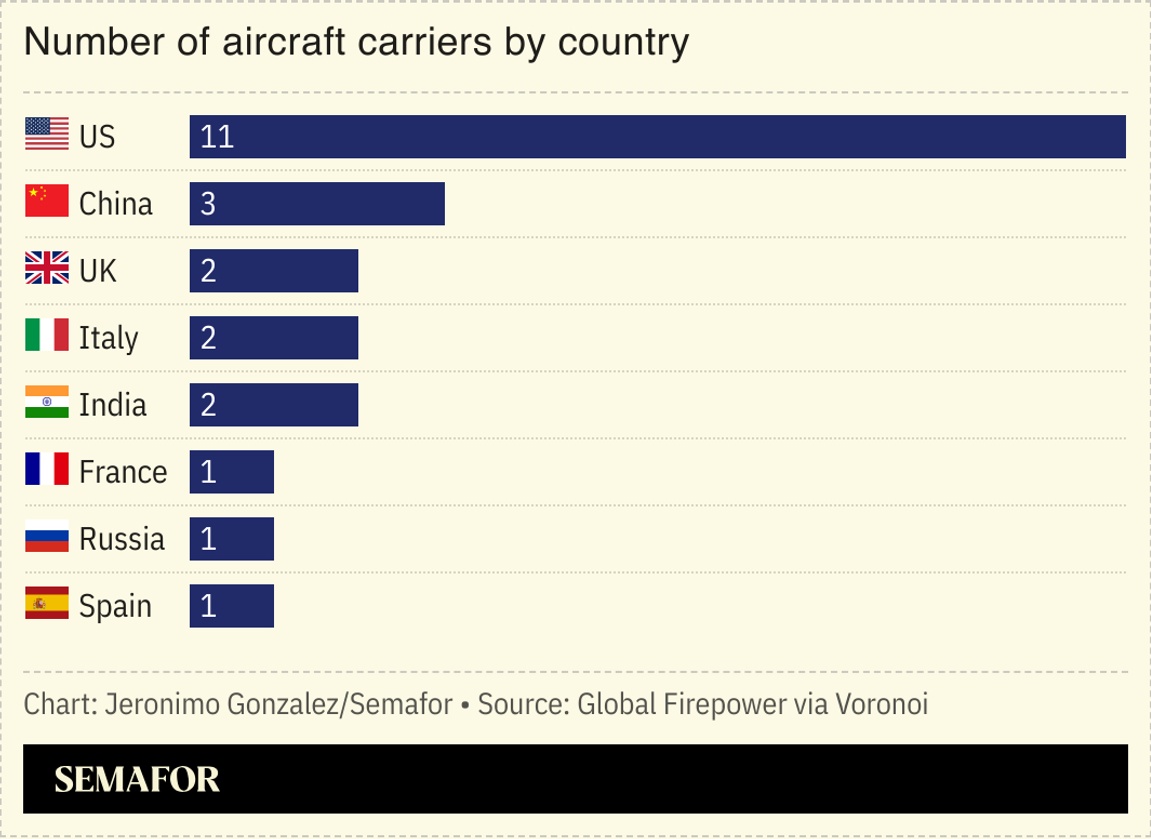 French President Emmanuel Macron said his country would build its first aircraft carrier in decades, the latest sign of Europe’s rapidly increasing rearmament. Though the vessel will not be ready until 2038 at the earliest, Macron said it was necessary to boost France’s maritime capabilities: The country currently has only one carrier — commissioned in 1986 — in operation. Meanwhile Germany recently announced that it would seek to recruit 80,000 more soldiers, DW reported, part of a wider campaign to modernize its armed forces. Berlin is planning to spend as much as 3.5% of its GDP on defense by 2029, in what would be “the country’s most ambitious military expansion since reunification,” Politico said. |
|
Vance walks tightrope at TPUSA conference |
 Cheney Orr/Reuters Cheney Orr/ReutersUS Vice President JD Vance refused to take sides in the ongoing row over antisemitism and bigotry at a major conservative conference, revealing the tightrope the heir apparent to Donald Trump has to walk. The Turning Point USA conference, founded by slain conservative activist Charlie Kirk, has seen divisions as some right-wing leaders accuse others of intolerance. Vance avoided the issue, saying Republicans “have far more important work to do than canceling each other.” He has previously been more outspoken, bluntly criticizing the holocaust-denying right-wing activist Nick Fuentes, and his reluctance now suggests that he has “his eyes on the future,” The New York Times argued, although he is yet to declare a presidential bid in 2028. |
|
 CBS Editor-in-Chief Bari Weiss. Mike Blake/Reuters CBS Editor-in-Chief Bari Weiss. Mike Blake/ReutersCBS News delayed airing a documentary after the White House refused to comment, raising questions about the channel’s editorial independence. The 60 Minutes investigation was scheduled for Sunday, and apparently documented US deportations of Venezuelans to the notorious El Salvador prison CECOT. The decision to pull the show came from new Editor-in-Chief Bari Weiss, The Washington Post reported. Weiss was appointed this year after CBS owner Paramount Skydance bought her outlet The Free Press, and critics have accused her of avoiding conflict with US President Donald Trump. A 60 Minutes host said in an internal email that by pulling the show because the administration would not comment in essence handed the White House “a ‘kill switch’ for any reporting they find inconvenient.” |
|
Japan ready to restart giant reactor |
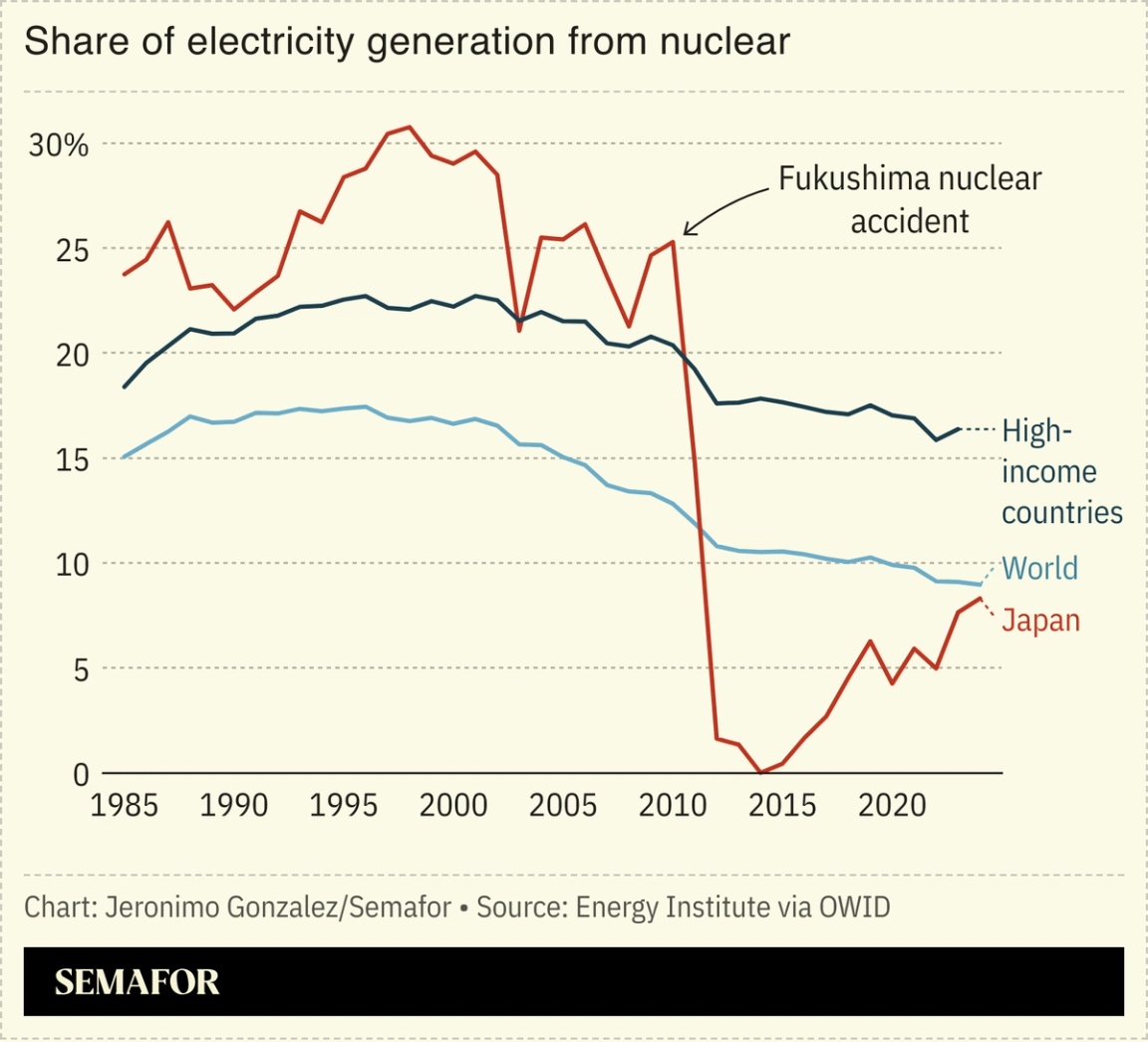 Japan is expected to greenlight the reopening of the world’s largest nuclear power plant today, part of a wider global nuclear renaissance. Kashiwazaki-Kariwa was one of 54 reactors shuttered after the 2011 earthquake that triggered the Fukushima meltdown and Tokyo’s — and much of the world’s — pivot away from nuclear. But demand for reliable clean energy has grown, and new Prime Minister Sanae Takaichi is pro-nuclear. Dozens of countries have pledged to triple nuclear capacity by 2050, with particular focus on new “small modular reactors” which can be built and installed more cheaply: India’s Adani Group is planning a major buildout of SMRs to power the global AI data center demand. |
|
Saudi steps up executions |
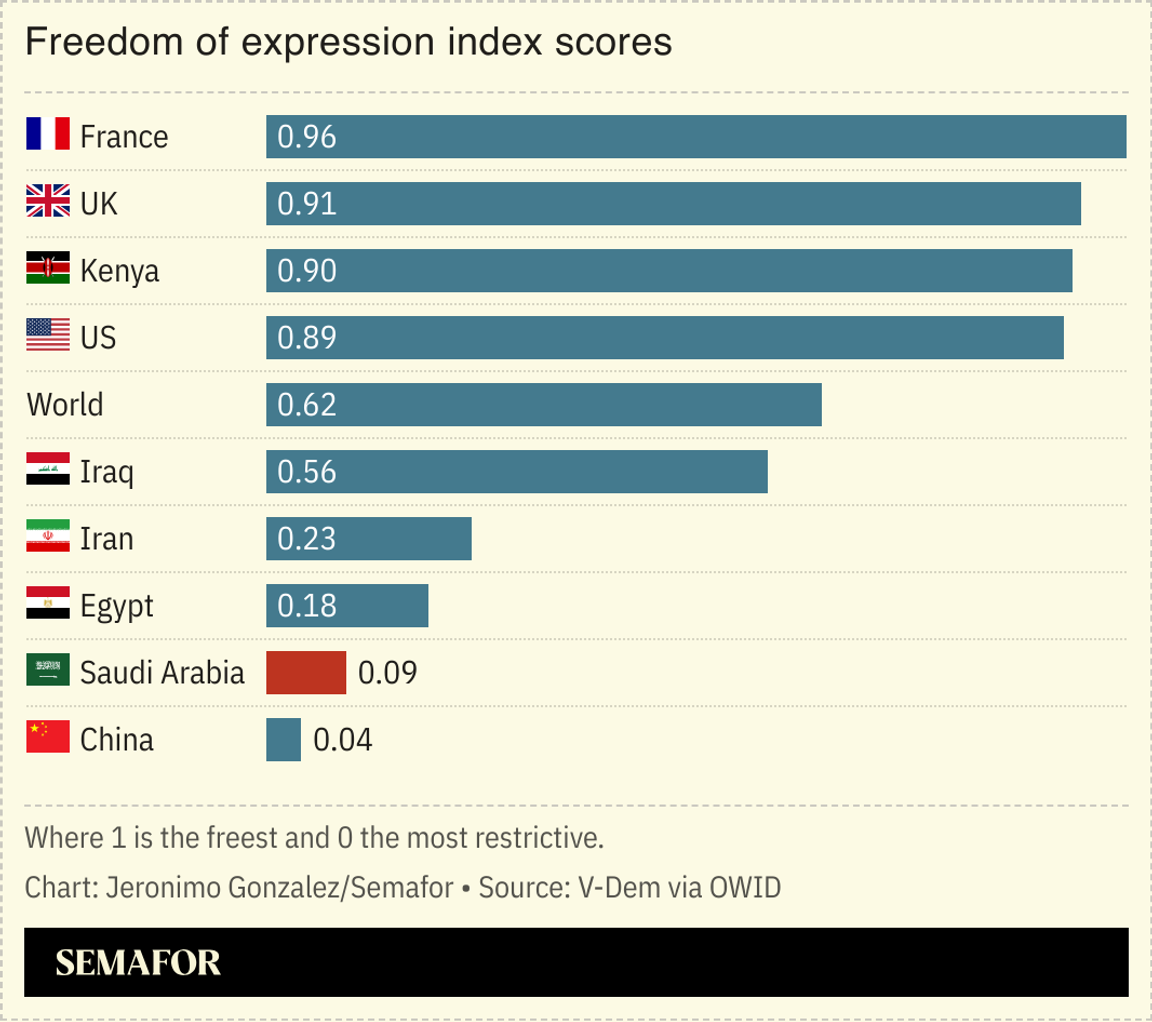 Saudi Arabia registered a record number of executions in 2025, setting a new bar for the second year in a row. At least 347 people have been executed in the kingdom so far this year, including government critics and at least one journalist, the BBC reported. While Saudi Arabia has liberalized broad sectors of its economy in recent years, including greater participation of women in the labor force and a recent easing of a ban on alcohol sales, Riyadh has also tightened its restrictions on dissent. Its freedom of expression index remains among the lowest in the world, while due process violations for many of those detained remain “rampant,” Human Rights Watch argued earlier this year. |
|
Power outage stumps Waymos |
 Video obtained by Reuters. Video obtained by Reuters.A power outage in San Francisco left Waymo cars stranded, unable to navigate as the city’s traffic lights went dark. The robotaxis did not lose power themselves, but appear to have been unable to adjust quickly to a major unforeseen change to their environment. Dozens of autonomous vehicles blocked intersections. The company said that its cars are designed to cope with broken traffic lights, but “the sheer scale of the outage” halted them. Waymo’s cars are far safer per mile than human drivers, and no doubt the firm will be ready for future power cuts, but some citizens told The New York Times they worried about self-driving tech’s ability to adjust to other unexpected events such as earthquakes or wildfires. |
|
 Stay informed with Foreign Affairs This Week — a free roundup of the week’s top articles curated by the editors of Foreign Affairs, delivered every Friday. From global insights to must-read analysis, it’s the smartest way to end your week. Sign up today and stay ahead of the conversation. |
|
AFCON showcases Morocco’s ambitions |
 Stringer/Reuters Stringer/ReutersThe Africa Cup of Nations men’s soccer tournament kicked off in Morocco. The host country is the favorite for this year’s competition, which it sees as a showcase for both its economic ambitions and its co-hosting of the 2030 World Cup. Accordingly, it has invested huge sums: For the first time in AFCON history, every team has its own headquarters and hotel, as they would at other major tournaments, and the continent’s only high-speed rail line connects the stadiums. Rabat has also spent heavily on its soccer development, and the men’s team became the first African nation to reach a World Cup semifinal in 2022. Morocco began the tournament with a win, albeit a nervy one, over minnows Comoros. |
|
|


